





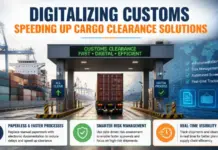




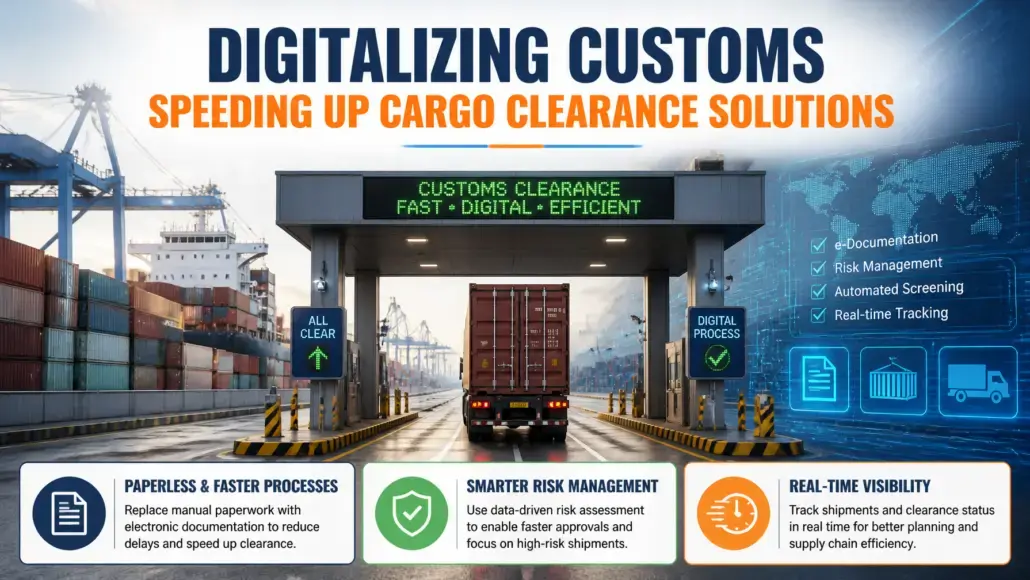
In the fast-paced world of international logistics, the speed at which goods move is often determined not by the speed of the vessel or the truck, but by the efficiency of the administrative processes at the border. Digitalizing customs for faster cargo clearance has become a critical priority for governments and businesses looking to streamline trade and enhance economic competitiveness. Historically, customs clearance has been a paper-heavy and labor-intensive process, fraught with delays, manual errors, and a lack of transparency. These inefficiencies act as a significant barrier to trade, increasing costs for manufacturers and consumers alike. This administrative modernization is particularly crucial for the food and pharmaceutical sectors, where enhancing cold chain logistics in global shipping relies on the rapid, paperless verification of temperature-sensitive certificates. Transport Advancement notes that by transitioning to fully digital environments, customs authorities can replace slow, manual checks with automated systems that process information in seconds, allowing legitimate trade to flow more freely while maintaining high levels of security and compliance.
The shift toward digital customs is driven by the need for greater visibility and predictability in the global supply chain. In a digitalized system, all trade-related documents—such as commercial invoices, bills of lading, and certificates of origin—are submitted electronically through a centralized ‘single window’ platform. This allows all relevant government agencies to access and verify the data simultaneously, rather than requiring the trader to submit separate physical copies to different departments. This level of coordination significantly reduces administrative overhead and minimizes the time cargo spends waiting at the border. Furthermore, digitalization enables customs authorities to adopt a risk-based approach to inspections, focusing their resources on high-risk shipments while allowing low-risk goods to pass through with minimal intervention. This balance of facilitation and control is the hallmark of a modern, efficient border management system.
The Role of International Frameworks and the TFA
The push for digitalizing customs for faster cargo clearance is supported by major international agreements, most notably the World Trade Organization’s (WTO) Trade Facilitation Agreement (TFA). The TFA sets out a series of measures for streamlining and simplifying customs procedures, including the mandatory publication of trade information online and the use of electronic payments. For developing nations, implementing these digital standards is a key driver for economic growth, as it lowers the barrier to entry for local businesses looking to access global markets. By reducing the time at the border, countries can significantly improve their ranking in the World Bank’s Logistics Performance Index, making them more attractive destinations for foreign direct investment.
One of the most effective tools for implementing the TFA is the Authorized Economic Operator (AEO) program. Under an AEO program, businesses that demonstrate high levels of security and compliance in their supply chain operations are granted trusted trader status. This status provides them with tangible benefits, such as priority clearance, reduced physical inspections, and the ability to submit simplified customs declarations. Digitalizing the application and monitoring processes for AEO programs allows customs authorities to manage thousands of trusted partners with minimal administrative burden. For the trader, the AEO status is a mark of quality that facilitates smoother interactions with customs authorities worldwide, effectively creating a green lane for global commerce.
Enhancing Compliance Through Automation and Data Integrity
A cornerstone of digitalizing customs for faster cargo clearance is the implementation of automated compliance systems. These systems use predefined rules and algorithms to verify that shipments comply with all local and international regulations, including tariff classifications, rules of origin, and safety standards. By automating these checks, customs authorities can ensure a high degree of consistency and accuracy, reducing the potential for human error or corruption. For businesses, this means a more predictable clearance process and a lower risk of unexpected fines or delays. Automated compliance also allows for the seamless integration of trade data with other government systems, such as tax and statistical offices, providing a comprehensive view of national trade flows.
Data integrity is another crucial benefit of the digitalization process. Electronic documents are much harder to forge than their paper counterparts, and the use of digital signatures and secure data exchanges ensures that the information received by customs is accurate and hasn’t been tampered with. Advanced technologies such as blockchain are increasingly being explored to create immutable records of a shipment’s journey, providing an extra layer of trust and transparency for all stakeholders. By creating a reliable and transparent digital trail, customs authorities can more easily identify fraudulent activity and ensure that the correct duties and taxes are collected. This transparency also benefits legitimate traders, who can use their digital compliance history to achieve faster clearance times and fewer physical inspections.
Case Studies: Pioneering Digital Customs Environments
Several countries have set a high standard for digitalizing customs for faster cargo clearance. Singapore’s TradeNet, launched as early as 1989, was the world’s first nationwide electronic trade documentation system. Today, it processes over 30,000 declarations per day, with most approvals granted within minutes. This efficiency has been a key factor in Singapore’s status as a global logistics hub. Similarly, Dubai’s Mirsal II system provides a fully paperless customs environment, integrating with the port and airport systems to provide a seamless trade experience. These pioneers have demonstrated that the investment in digital infrastructure pays off through increased trade volumes and improved government revenue collection.
The Role of Connectivity and Global Standards
For digitalizing customs for faster cargo clearance to be truly effective, it must be supported by high levels of connectivity and the adoption of global data standards. Trade is an international activity, and a digital system in one country is of limited value if it cannot communicate with the systems of its trading partners. International organizations, such as the World Customs Organization (WCO), play a vital role in developing standardized data models that allow for the seamless exchange of information across borders. When customs authorities use a common language for their data, they can pre-clear shipments before they even arrive at the border, further accelerating the flow of goods. This level of international cooperation is essential for creating a truly global, paperless trade environment.
The future of digital customs will likely see even greater integration with emerging technologies such as artificial intelligence and big data analytics. AI can be used to scan through massive volumes of trade data to identify subtle patterns that might indicate illicit trade, such as the misdeclaration of goods or the use of shell companies for smuggling. Transport Advancement believes that by utilizing predictive modeling, customs authorities can stay one step ahead of sophisticated criminal networks while simultaneously facilitating the movement of legitimate trade. Furthermore, the use of IoT devices on containers and vehicles can provide real-time updates on a shipment’s status and location directly to customs systems, further reducing the need for manual reporting. As these technologies become more prevalent, the traditional border will become increasingly invisible for compliant traders.
Breaking Down Border Bottlenecks Digitally
The digitization of regulatory paperwork is significantly reducing cargo dwell times. Leading logistics providers like Maersk have integrated robust digital customs clearance portals into their core service offerings, allowing shippers to submit and process documentation seamlessly without physical handoffs. Similarly, Kuehne+Nagel is actively utilizing automated compliance software and digital dashboards to guarantee trade facilitation, sharply reducing the administrative delays that traditionally choke border and port gateways.
Addressing the Digital Divide and Implementation Challenges
Despite the clear benefits, the journey toward digitalizing customs for faster cargo clearance is not without its obstacles. One of the primary challenges is the digital divide between different nations. Developing countries may lack the necessary IT infrastructure, high-speed internet connectivity, and technical expertise to implement complex digital customs systems. Overcoming this requires significant international support, including technical assistance and funding from organizations like the World Bank and the International Monetary Fund. Furthermore, the digitalization process requires a fundamental change in the organizational culture of customs authorities, moving away from a mindset of gatekeeping toward one of facilitation.
Cybersecurity is also a paramount concern. As customs systems become more interconnected and data-dependent, they become attractive targets for cyberattacks aimed at disrupting trade or stealing sensitive commercial information. Ensuring the resilience of digital customs infrastructure requires a security by design approach, incorporating robust encryption, multi-factor authentication, and continuous threat monitoring. Additionally, there are legal challenges related to the recognition of electronic documents and digital signatures across different jurisdictions. Harmonizing these legal frameworks is essential for creating a truly global paperless trade environment. The commitment to digitalizing customs is a long-term endeavor, but the progress made in recent years clearly indicates that the future of trade is digital, secure, and highly efficient.
References
- Maersk advances the future of customs with expanded Maersk Trade & Tariff Studio
- Your one-stop digital customs solution for seamless control and transparency
