




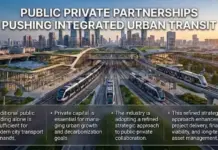



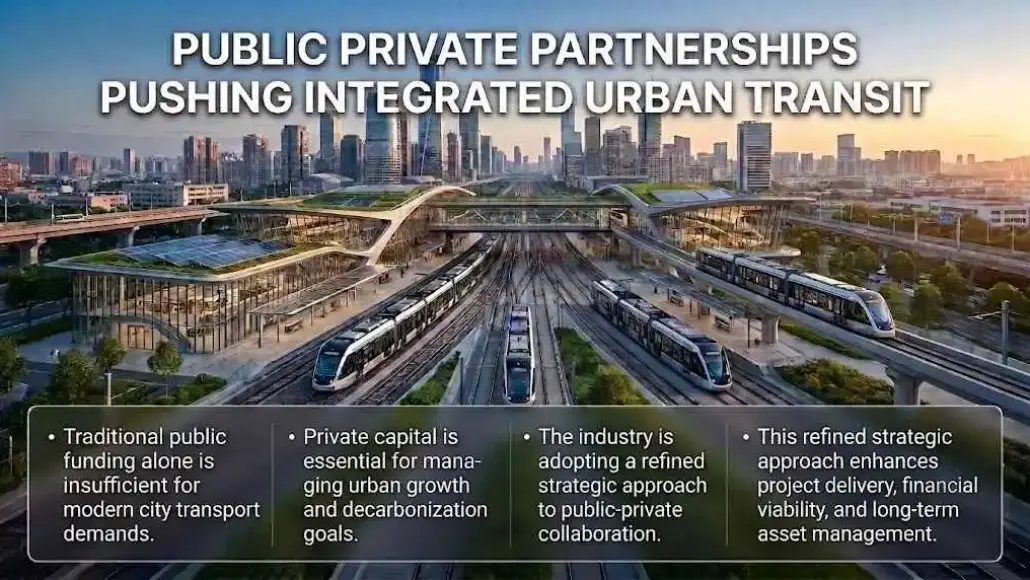
The massive capital requirements for modernizing city transport networks are increasingly exceeding the capacity of traditional public funding alone. As metropolitan areas struggle with growing populations and the urgent need for decarbonization, the collaboration between the public sector and private capital has become a cornerstone of infrastructure strategy. In early 2026, Transport Advancement notes that the global transport industry is seeing a refined approach to public private partnerships for integrated urban transit. These partnerships are moving beyond simple construction contracts toward long term, performance based models that align the incentives of government agencies, private investors, and technology providers to deliver more reliable and sustainable mobility solutions.
The scale of the challenge is highlighted by the persistent infrastructure financing gap. Data from the World Bank indicates an annual global transport infrastructure financing gap of between 244 billion and 944 billion dollars through 2030. To address this, private participation in infrastructure has seen a significant uptick, reaching over 100 billion dollars in 2024. This increase is driven by a move toward more sophisticated risk sharing arrangements, where the private sector takes on the technical and operational risks it is best equipped to manage, while the public sector ensures that the project meets social and environmental objectives.
The Dominance of the DBFOM and Availability Payment Models
The most successful contemporary public private partnerships are typically structured under the DBFOM model, which stands for Design, Build, Finance, Operate, and Maintain. This integrated approach ensures that the private consortium is responsible for the entire lifecycle of the asset, encouraging higher quality construction and more efficient maintenance. A key trend in 2024 and 2025 has been the shift away from patronage risk models toward availability payment mechanisms. In an availability based structure, the public authority makes regular payments to the private partner based on the infrastructure being available and meeting predefined performance standards, rather than on the number of passengers using the service.
This shift is evident in major global projects such as the Sydney Metro City and Southwest extension. Launched commercially in August 2024, this project operates under an availability based concession through 2034, allowing the operator to focus on reliability and service quality without the volatility of farebox revenue. Similarly, the multi billion pound Elizabeth line operating concession in London, awarded to a consortium including Tokyo Metro and Go Ahead, follows a performance based model where Transport for London retains the revenue risk. These structures are more attractive to institutional investors, such as pension funds, who seek stable and predictable returns on their capital.
Unbundling Risks and Managing Technical Interfaces
One of the most complex challenges in integrated urban transit public private partnerships is the management of interfaces between different contractors and systems. To mitigate these risks, many authorities are now unbundling high risk civil works from the long term systems and operations concessions. For example, the CAD 9 billion Ontario Line in Canada utilizes a separate 30 year availability contract for the rolling stock, systems, and operations, while the heavy tunneling and civil infrastructure are handled through different procurement packages. This approach prevents a delay in one area from paralyzing the entire project and allows for more specialized expertise in each sector.
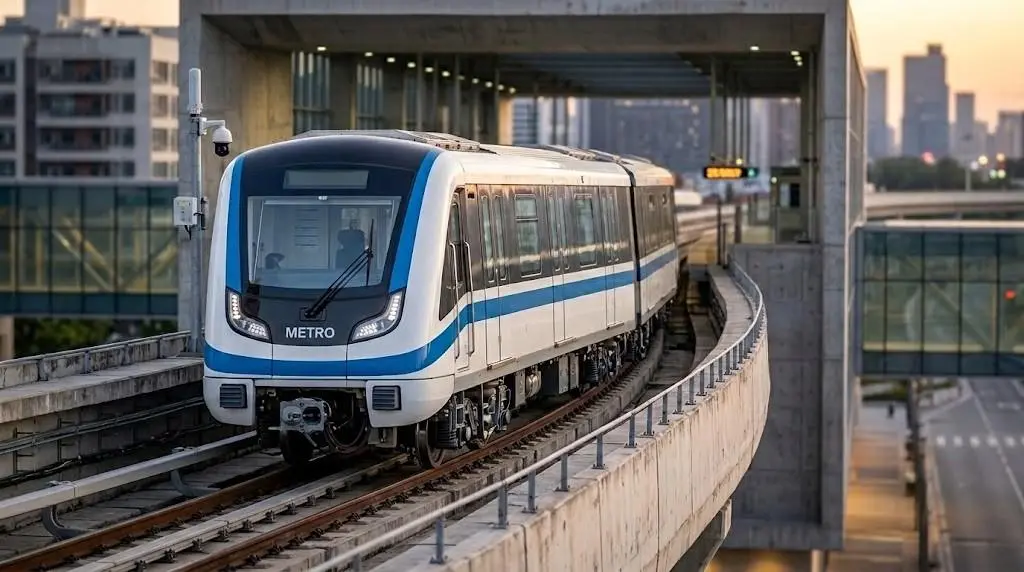
Systems integration risk is particularly acute in projects involving high levels of automation, such as GoA4 driverless metro systems. The integration of signaling, platform screen doors, and rolling stock requires precise coordination to ensure safety and reliability. By separating these technical components from the broader civil works, authorities can ensure that the systems concessionaire is directly responsible for the operational performance of the technology. This strategy is being successfully employed in the development of the Grand Paris Express, one of the largest automated metro networks currently under construction.
Land Value Capture and Transit Oriented Development
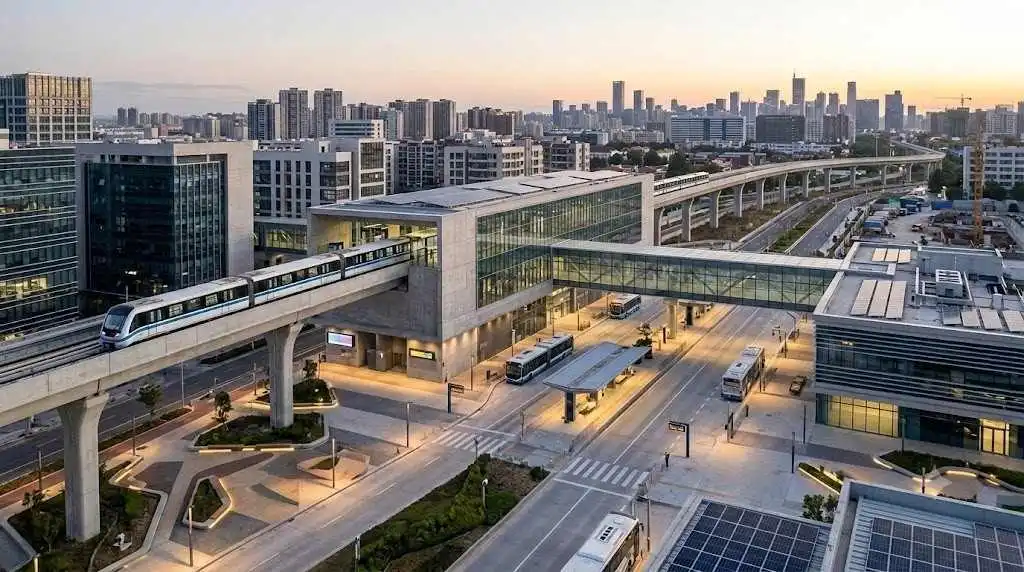
The integration of real estate development into transit public private partnerships is a powerful tool for enhancing project feasibility and equity returns. Known as Transit Oriented Development, this model involves building high density residential and commercial spaces directly above or around new transit hubs. The increased property values generated by the transit project can be captured through ground leases, property taxes, or direct development rights, providing a dedicated source of revenue to fund the infrastructure. Hong Kong’s MTR is the global benchmark for this Rail plus Property model, which has allowed it to fund major rail expansions without ongoing government subsidies.
In 2025 and 2026, more cities are adopting similar land value capture mechanisms. The Siu Ho Wan Depot project in Hong Kong, for instance, is transforming a maintenance yard into a new community with 20,000 flats, with the real estate profits funding the rail asset renewals. In Singapore, the East Coast Integrated Depot saves 44 hectares of land by stacking multiple rail and bus facilities, creating new space for urban development. For private partners, the inclusion of commercial rights in transit public private partnerships can significantly improve the internal rate of return, making the project more competitive and attractive to a wider range of investors.
Addressing the Cost of Debt and Refinancing Risks
The financial climate for major infrastructure projects remains challenging due to elevated interest rates and the long gestation periods of transit assets. The cost of debt service is a major consideration for B2B decision makers, as it directly impacts the affordability of the project for the public sector and the returns for private equity. Many public private partnerships now incorporate refinancing provisions that allow the consortium to benefit from lower interest rates once the construction risk has passed and operations have commenced. This flexibility is essential for maintaining the financial health of the project over a 30 year concession period.
Moreover, the use of blended finance, which combines commercial debt with concessional loans from development banks, is helping to bridge the funding gap in emerging markets. The World Bank and the European Investment Bank provide critical support for urban rail projects by offering longer tenors and lower rates than are typically available in the private market. In 2025, the São Paulo Metro Line 6 project utilized milestone based availability payments backed by local development bank financing, demonstrating how diverse funding sources can be coordinated to deliver large scale urban infrastructure.
Sustainability, ESG, and Regulatory Compliance
Environmental, social, and governance criteria are now fundamental to the procurement and management of transit public private partnerships. Investors and lenders are increasingly demanding that projects demonstrate a clear contribution to decarbonization and climate resilience. This includes tracking the embodied carbon in construction materials such as steel and concrete, as well as ensuring that the operating energy for the system comes from renewable sources. Compliance with regulations such as the EU Corporate Sustainability Due Diligence Directive is becoming a standard requirement for private partners involved in large scale infrastructure. Aligning these partnerships with broader climate goals is a prerequisite for securing capital for financing resilient urban transit infrastructure in an era of environmental volatility.
The social impact of transit projects is also under greater scrutiny. Integrated urban transit must be accessible, equitable, and capable of supporting the needs of a diverse population. Public private partnerships are increasingly including performance metrics related to passenger environment, accessibility, and community engagement. By linking payments to these social outcomes, public agencies can ensure that the private partner is motivated to deliver a service that genuinely serves the public interest. This holistic approach to infrastructure value is key to maintaining public support for the use of private capital in essential services.
The Strategic Path Toward Collaborative Procurement
The future of public private partnerships for integrated urban transit lies in a move toward more collaborative and progressive procurement models. Early Contractor Involvement is becoming more common, allowing the public and private partners to collaboratively refine the project design, risk register, and target costs before reaching financial close. This reduces the likelihood of costly disputes and delays during the construction phase and leads to a more balanced and sustainable partnership. For B2B stakeholders, the ability to build trust and maintain open communication throughout the lifecycle of the project is as important as the technical and financial details.
As we look toward the end of the decade, the integration of new technologies such as 5G, AI, and autonomous systems will continue to evolve the role of the private partner in transit public private partnerships. The focus will shift from just building and maintaining physical assets to managing complex digital ecosystems that connect millions of people. By fostering innovation and efficiency through well structured partnerships, the transport industry can deliver the high quality, integrated transit systems that modern cities require to thrive.
In conclusion, public private partnerships are a vital tool for meeting the global demand for urban mobility. Transport Advancement believes that by adopting performance based availability payment models, unbundling technical risks, and leveraging land value capture, authorities can attract the private capital and expertise needed to bridge the infrastructure funding gap. The success of these projects depends on a clear alignment of interests, a robust regulatory framework, and a commitment to long term sustainability and social value. Through continued collaboration, the public and private sectors can build a more resilient and integrated future for urban transit.
References
- World Bank
- UITP
- EIB
- Metrolinx
- EIB
- Transport for London
