















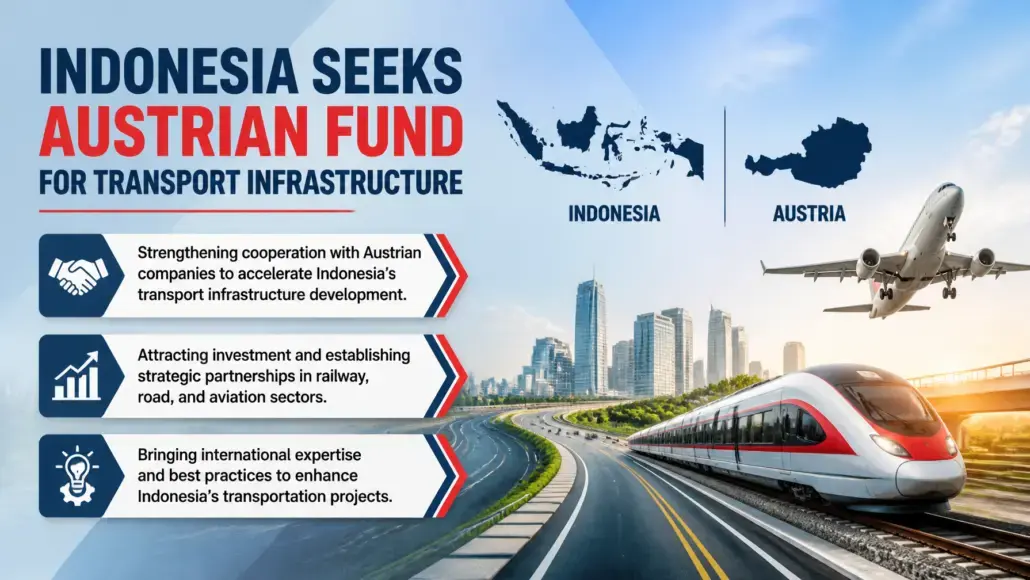
The Indonesian government is looking to strengthen cooperation with Austrian companies to accelerate the development of its transport infrastructure, with particular attention to the railway, road, and aviation sectors. The initiative aims to attract investment, establish strategic partnerships, and bring international expertise into domestic transportation projects. Acting Deputy for Industry, Employment, and Tourism Coordination at the Coordinating Ministry for Economic Affairs Dida Gardera highlighted the importance of private sector participation and international collaboration in addressing Indonesia’s infrastructure financing gap.
Speaking at the Indonesia-Austria Transportation Infrastructure Investment Business Forum, as confirmed here on 10th November 2026, Gardera said, “National infrastructure development cannot rely solely on the state budget. Private sector participation, support from financing institutions, and strategic partnerships are crucial elements to meet Indonesia’s investment requirements.”
“We see significant opportunities for Austrian companies to participate, particularly by contributing their expertise, technology, innovation, and knowledge transfer to national transport development,” he added.
Strategic Projects to Strengthen National Connectivity
Gardera explained that expanding transport infrastructure is essential for improving connectivity across Indonesia, lowering logistics costs, and supporting more balanced economic development among different regions. He also identified Indonesia’s National Strategic Projects (PSN) as an important driver of productivity and competitiveness. These projects are intended to accelerate infrastructure delivery while supporting the creation of new regional economic hubs.
The ministry further outlined the responsibilities of the Committee for the Acceleration of Priority Infrastructure Delivery (KPPIP), which supports the implementation of priority infrastructure projects. Its responsibilities include assisting with project preparation, monitoring and controlling project progress, developing debottlenecking measures, and evaluating implementation. These mechanisms are intended to support the delivery of infrastructure initiatives and address challenges affecting project execution.
Austria Sees Opportunities for Bilateral Cooperation
Austrian Ambassador to Indonesia Alexander Rieger welcomed the business forum, highlighting its importance in introducing Austrian enterprises to investment and development opportunities within Indonesia’s transportation sector. He said the engagement could help companies understand the country’s priorities and identify areas where their capabilities could contribute to ongoing and future projects.
“We hope this business forum gives Austrian companies a clear overview of Indonesia’s railway, road, and air transport infrastructure sectors, as well as its development priorities, helping them identify prospective business partnerships and technology transfer opportunities,” Rieger said.
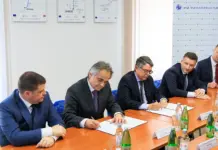
The forum also functioned as a business matchmaking platform, bringing Austrian companies together with representatives from Indonesian ministries, state agencies, industry players, and other relevant stakeholders to discuss potential areas of cooperation. Through these discussions, both sides had an opportunity to explore concrete partnership possibilities across the transportation industry. The Indonesian government expects stronger bilateral engagement to encourage the adoption of advanced global technologies and engineering practices in domestic projects. At the same time, the collaboration is expected to create commercial opportunities for businesses in both countries while supporting Indonesia’s broader transport infrastructure development objectives.
