











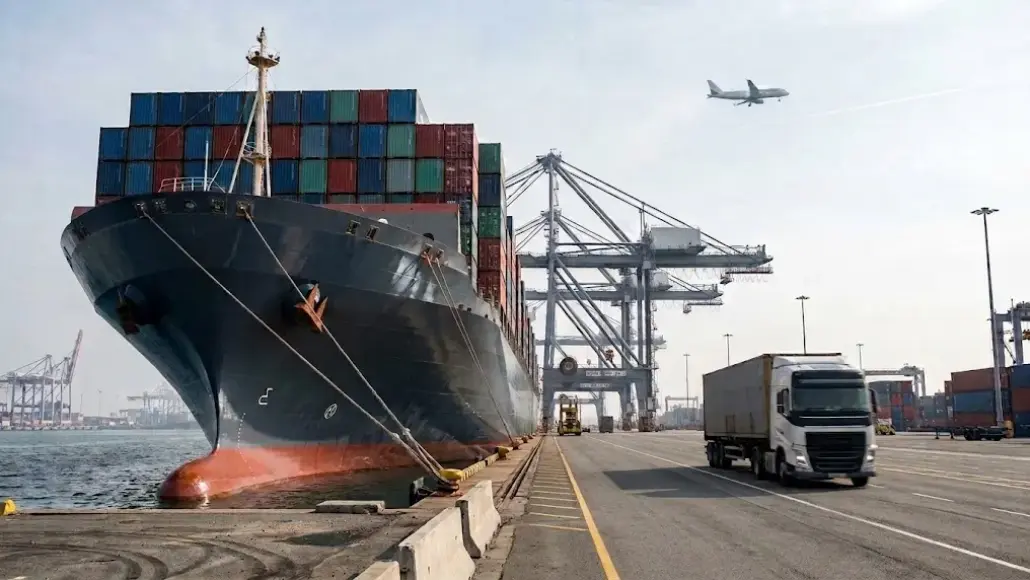
Global trade is entering a more regional, volatile and integrated phase, shaped by shifting trade lanes, geopolitical tension, climate disruption and technological change. The whitepaper identifies a $60.7 billion opportunity in the global multimodal transportation services market, which is projected to grow from $98.61 billion in 2025 to $159.30 billion by 2032. Containerised shipping carries approximately 35% of total trade volumes and 60% of its commercial value, making the integration of maritime transport with rail, road and inland waterways increasingly important.
This whitepaper examines the regionalisation of trade and the emergence of new corridors. Key data points include:
-
Between 2017 and 2024, the average geographical distance between trading partners declined by around 7%.
-
Southeast Asia’s manufacturing output increased from around $1.8 trillion in 2018 to $2.17 trillion in 2024.
-
Africa’s manufacturing contribution to GDP is expected to rise from around 13% in 2020 to 22% by 2043.
-
An estimated 30% of global container traffic passed through the Red Sea in 2023.
-
More than $50 billion in port infrastructure investment in Africa is highlighted.
Shorter Supply Chains and Digital Transformation
The whitepaper describes the rise of shorter and more adaptive supply chains through nearshoring and friend-shoring. These approaches are presented as ways for businesses to bring production closer to end markets, improve agility, reduce exposure to long-distance disruption and respond to changing supply chain conditions.
Artificial intelligence is another major theme. AI is transforming trade operations through faster documentation, predictive logistics and improved planning accuracy. The whitepaper notes that a majority of supply chain leaders have adopted AI in at least one operational area. Reported impacts include:
-
Reduced documentation lead times
-
Lower workload for logistics coordinators
-
Faster handoffs
-
Improved exception management
Disruption as the New Normal
The whitepaper identifies trade imbalances, equipment constraints, port congestion, geopolitical volatility and climate disruption as persistent pressures on global logistics. Container equipment can become concentrated in some regions while shortages occur elsewhere. European ports including Antwerp and Rotterdam have faced unloading delays associated with capacity constraints, low river levels and extreme weather.
Geopolitical disruption has also affected maritime routes. Attacks on commercial vessels in the Red Sea have resulted in diversions around the Cape of Good Hope, adding up to two weeks to journey times. Meanwhile, drought has reduced transit capacity through the Panama Canal, while low water levels on major European rivers have constrained inland shipping. These conditions reinforce the need for flexibility, redundancy and multimodal transport options.
DP World and Integrated Marine Services
DP World’s strategy positions marine services as integrated enablers within end-to-end supply chains, supported by assets, multimodal connectivity, infrastructure, sustainability measures and digital capability. In 2025, DP World’s Marine Services expanded its owned container fleet by approximately 47,000 TEUs, strengthening control and flexibility in equipment deployment. Its BOXBAY high-bay storage system enables direct access to individual containers without reshuffling, supporting yard efficiency, space utilisation, cargo visibility, throughput and reliability.
DP World combines sea, rail and road transport to tailor logistics solutions around speed, cost, resilience and emissions. Its feedering and coastal services connect hubs with underserved and emerging markets across Europe, the Middle East, the Indian Subcontinent, Southeast Asia, Africa and the Americas. Shortsea, coastal and feedering services connect more than 200 ports globally, including island and shallow-draft markets.
Digitalisation and Multimodal Logistics in India
The whitepaper highlights India through the Sanchana Inland Container Depot, where containers are consolidated and moved by dedicated block train to Mundra Port before onward shipment by sea. The rail-and-shortsea solution:
-
Reduces reliance on road transport
-
Improves transit times
-
Cuts CO2 emissions by approximately 65% compared to road-only alternatives
Infrastructure expansion in India, West Africa and the United Kingdom, alongside digital control towers and transport management platforms, is also supporting connectivity, visibility and decision-making.
The Multimodal Decade Ahead
The whitepaper concludes that the projected market expansion from $98.61 billion to $159.30 billion by 2032 represents a $60.7 billion opportunity. Three priorities emerge:
-
Developing new trade corridors through coordinated investment
-
Deploying multimodal, coastal and feeder solutions to extend hub reach and resilience
-
Strengthening digital foundations for visibility, data sharing and decision-making across transport modes
Click here to read the complete whitepaper to know more about the developing trends in multimodal transport in the road ahead for global trade.
