























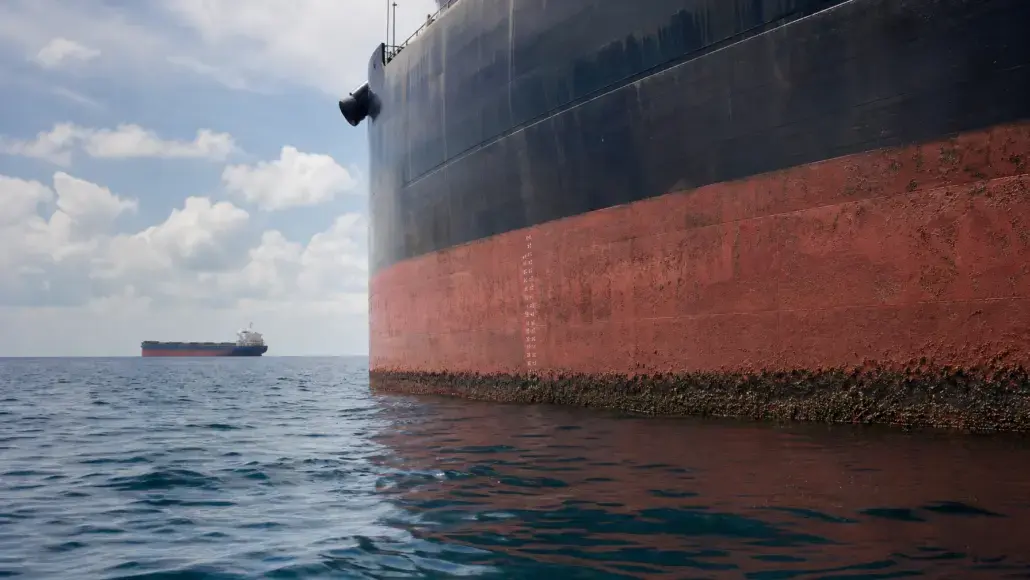
Commercial vessel operators face an unforgiving economic equation where bunker fuel expenditure represents over 50 percent of total voyage operating costs. As international decarbonization mandates tighten and fuel prices fluctuate, shipowners are looking closely at underwater hull hydrodynamics to curb energy waste. Marine biofouling, the rapid accumulation of marine organisms on a ship’s underwater surface, causes substantial frictional resistance that burns millions of dollars in excess fuel. The deployment of advanced bio based hull coatings is providing shipowners with an environmentally compliant solution that lowers commercial shipping expenses while meeting strict global emissions standards.
The hydrodynamics of ocean transport explain why hull cleanliness dominates operational efficiency calculations. Even a microscopic layer of organic slime just one millimeter thick increases hull frictional resistance by up to 15 percent. If macrofouling such as barnacles, tubeworms, and macroalgae colonizes the hull plates, hydrodynamic drag surges by 35 to 40 percent. To maintain scheduled transit speeds, ship engines must burn substantially more bunker fuel, driving operating costs higher and damaging the vessel’s regulatory carbon rating.
Regulatory Pressure on Traditional Antifouling Chemistries
For decades, the commercial maritime industry addressed biofouling using self-polishing copolymer paints infused with chemical biocides, primarily cuprous oxide and synthetic organic co-biocides. While effective at poisoning marine organisms, these toxic substances continuously leach into surrounding harbor waters, accumulating in marine sediments and contaminating coastal food webs.
Environmental regulations have moved decisively to restrict or eliminate biocidal hull treatments:
- The International Maritime Organization updated its Biofouling Management Guidelines, urging national administrations to enforce stringent biofouling inspection standards.
- Regional port authorities in California, New Zealand, Australia, and across the European Union have banned in-water hull scrubbing for vessels coated with biocidal paints to prevent harbor contamination.
- Port states increasingly turn away commercial vessels exhibiting moderate hull fouling to prevent the introduction of invasive aquatic species into local marine ecosystems.
- Stricter drydock wastewater treatment regulations have increased the cost and complexity of stripping and reapplying toxic biocidal coatings during routine ship surveys.
- International chemical frameworks continue to lower permissible leaching thresholds for copper compounds, accelerating the commercial phase-out of traditional paints.
Shipowners who fail to keep their hulls clean face severe operational penalties under the International Maritime Organization Carbon Intensity Indicator framework. Vessels with fouled hulls slip into degraded carbon intensity ratings, triggering mandatory corrective action plans and impairing their commercial charter values.
Biotechnology and Foul-Release Material Science
Modern material science has addressed these environmental and hydrodynamic challenges by turning to biotechnology and biomimetic surface engineering. Rather than poisoning marine organisms through toxic biocidal leaching, bio based hull coatings alter the physical and chemical characteristics of the hull surface so that marine larvae, algae, and barnacles cannot adhere firmly.
These sustainable coatings utilize bio-derived polymers, renewable plant-based resins, and non-toxic silicone hydrogels. Many innovative formulations take inspiration from nature, mimicking the microscopic surface architecture of shark skin or marine mammal dermis. These biomimetic micro-textures disrupt the settling mechanisms of settling organisms without releasing chemical toxins into the marine environment.
Other bio-based formulations incorporate natural enzyme complexes immobilized within the coating matrix. These enzymes break down the organic bio-adhesives that barnacles and mussels secrete when attempting to attach to steel hull plates. Because the enzyme reaction is purely catalytic and localized to the boundary layer, the coating remains non-toxic to free-swimming marine life while providing long-lasting antifouling protection.
When vessels cruise through ocean waters at speeds exceeding ten knots, the hydrodynamic shear force of rushing seawater naturally detaches any slime or organisms that attempted to settle during port stays. The hull remains self-cleaning throughout commercial voyages.
Commercial Payback and Fuel Reduction Economics
From a fleet management standpoint, adopting advanced bio based hull coatings represents a high-return capital investment with attractive commercial payback windows. Premium bio-based foul-release coatings carry higher initial procurement and surface preparation costs than standard biocidal paints. However, the resulting fuel savings quickly overcome the initial price difference.
Documented sea trials and verified commercial fleet performance data throughout 2025 demonstrated that vessels coated with high-performance foul-release hydrogels achieved sustained fuel consumption reductions between 8 and 12 percent across typical deep-sea trading profiles. For an ultra-large container vessel or Capesize bulk carrier burning forty tonnes of fuel oil per day, an 8 percent efficiency improvement yields hundreds of thousands of dollars in net fuel savings annually.
The financial advantages extend across the entire drydock maintenance cycle:
- Extended coating service life of up to sixty months without significant performance degradation, matching standard regulatory drydock intervals.
- Ultra-smooth surface profiles that reduce initial hull roughness down to less than fifty micrometers, minimizing baseline frictional resistance from day one.
- Permitted in-water cleaning in major international ports, because non-biocidal coatings release zero chemical poisons during underwater hull grooming.
- Lower drydock labor costs and reduced hazardous waste disposal fees compared to handling toxic biocidal paint residues.
- Superior retention of vessel Carbon Intensity Indicator performance grades, protecting commercial charter revenue premiums on long-term time charters.
By preserving smooth hydrodynamic profiles across five-year operating cycles, shipowners protect their vessels from the steady fuel penalties that plague conventional biocidal coatings as their chemical leaching rates decline over time.
Littoral Fouling Pressures and Operational Feeder Profiles
The operational advantages of non-toxic foul-release coatings are particularly pronounced for vessels operating in coastal and nearshore environments. Shallow coastal harbors, warm tropical waters, and river estuaries exhibit dense biological activity that accelerates biofouling colonization within hours of vessel docking.
Frequent port turnarounds, shallow estuarine transits, and variable water temperatures characteristic of the Rise of Short-Sea Shipping in Regional Trade make non-toxic slime release technologies particularly vital for coastal fleet profitability. Because coastal feeder vessels spend substantial time maneuvering in port approaches and berthed at quaysides, their hulls experience severe biological fouling pressure that rapidly degrades fuel economy. Bio-based coatings resist biofouling during low-speed port maneuvers while releasing accumulated slime as soon as the vessel accelerates into coastal transit corridors.
Furthermore, short-sea operators sailing through environmentally sensitive waters, such as the Baltic Sea and coastal marine sanctuaries, avoid environmental fines and port bans by proving that their hulls do not release toxic copper ions into fragile ecosystems.
Hydrodynamic Telemetry and Long-Term Fleet Management
To verify coating performance, leading shipping lines pair bio-based hull applications with continuous hydrodynamic monitoring systems. Shaft torque meters, high-precision differential GPS, and automated fuel flow sensors record real-time speed and power performance across varying weather conditions. Naval architects use this telemetry to isolate hull frictional resistance from wind and wave effects.
Data gathered from commercial fleets confirms that bio-based foul-release systems maintain consistent hull smoothness over multi-year deployments, whereas conventional biocidal coatings suffer from progressive surface roughening as their biocides deplete. As commercial shipowners navigate the double challenge of escalating carbon taxes and volatile bunker prices, bio based hull coatings deliver a proven, sustainable mechanism to minimize hydrodynamic friction and drive down operating costs across international shipping lanes.
