








Global supply chains rely heavily on marine terminals that function as high-speed industrial transfer nodes rather than static storage yards. To prevent costly logistics bottlenecks, modern container terminals are integrating automated handling equipment, private wireless networks, and artificial intelligence into unified operational ecosystems. The rapid deployment of smart port systems transit solutions is compressing dwell times, cutting operational overhead, and accelerating the flow of raw materials and finished manufactured goods through international maritime gateways.
The commercial necessity for smart terminal infrastructure has intensified alongside modern just-in-sequence manufacturing practices. Industrial sectors such as automotive assembly, aerospace production, and advanced electronics operate with lean inventories that leave zero margin for unpredicted maritime port delays. When critical machinery parts or chemical inputs stall inside terminal yards, assembly lines thousands of miles inland risk immediate shutdown. Smart terminal architectures resolve this vulnerability by treating container handoffs as a continuous, mathematically optimized industrial pipeline.
Architectural Core of the Connected Marine Gateway
A modern smart port replaces fragmented manual oversight with centralized digital terminal operating systems connected to thousands of Internet of Things sensors. Every container, crane, vehicle, and berth slot is monitored, scheduled, and controlled in real time. Rather than relying on human dispatchers to assign container moves sequentially, algorithmic optimization engines calculate optimal movement paths across the quayside and storage stacks simultaneously.
The technological architecture supporting modern smart port operations includes:
- Dedicated 5G private wireless networks that deliver ultra-low latency telemetry and high-bandwidth control across vast metal container yards.
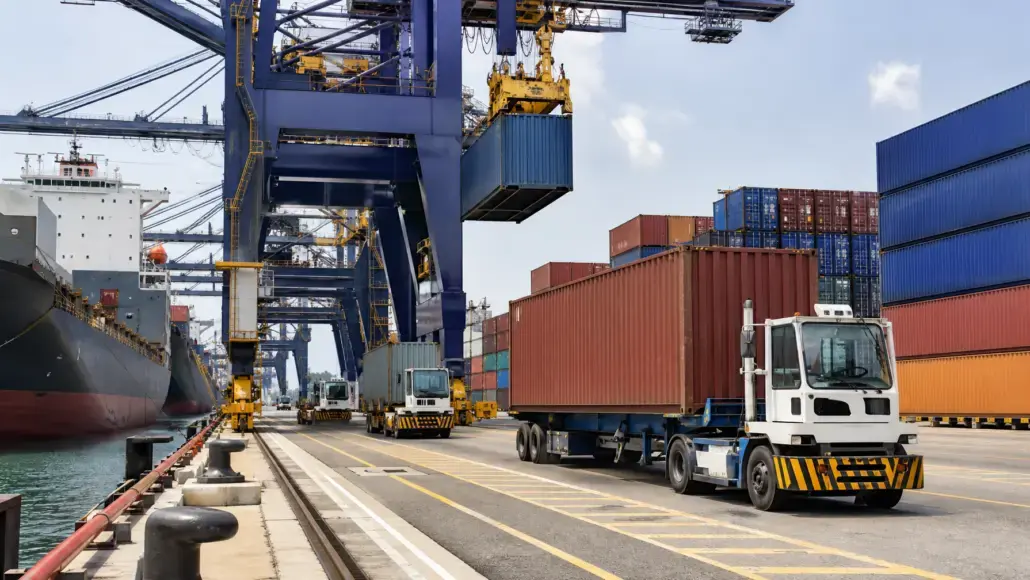
- Automated guided vehicles and battery-electric terminal tractors that transport containers between shipside cranes and storage blocks without human drivers.
- Automated stacking cranes equipped with laser scanning and computer vision that position containers within millimeter tolerances.
- High-definition digital twin platforms that simulate entire terminal operations in three dimensions to identify impending traffic bottlenecks hours before they materialize.
- Optical character recognition cameras and automated weight sensors at gate portals that validate truck credentials and container seals while vehicles remain in motion.
These integrated technologies remove manual touchpoints that historically caused delays, safety hazards, and clerical errors during vessel discharge operations.
Just-In-Time Vessel Arrivals and Quayside Coordination
Container transit acceleration begins well before a vessel reaches the harbor breakwater. Historically, commercial ships sailed at high speeds across oceans only to drop anchor outside congested ports for days, burning expensive bunker fuel while waiting for an available berth. Smart port systems eliminate this waste through just-in-time vessel arrival protocols. Coordinating navigational approaches through smart port systems transit platforms allows ocean carriers to reduce marine fuel consumption while ensuring immediate quayside crane readiness upon arrival.
Using real-time telemetry from vessel tracking services and meteorological forecasting platforms, terminal operating systems coordinate with incoming ships hundreds of nautical miles offshore. Port algorithms advise ship captains on the exact navigational speed required to arrive precisely when their designated berth and crane gangs become available. This coordination reduces anchorage waiting times by over 60 percent, eliminates vessel queue bunching, and cuts shipboard greenhouse gas emissions in coastal waters.
Once docked, automated ship-to-shore gantry cranes take over. Advanced smart terminals utilize dual-hoist and tandem-lift cranes guided by computer vision algorithms that compensate dynamically for vessel sway and tidal drift. These cranes achieve handling rates exceeding 35 container moves per hour per crane, allowing mega-vessels to complete cargo discharge and reloading up to twenty hours faster than conventional facilities.
Terminal Yard Automation and Cargo Velocity
The container storage yard represents the most mathematically complex zone within any marine facility. In conventional terminals, containers are stacked in dense blocks where retrieving a specific import box often requires moving three or four overlying containers. This unproductive reshuffling consumes fuel, ties up equipment, and lengthens truck waiting times.
Smart ports eliminate this friction using predictive stacking algorithms. By analyzing historical delivery trends, customs release timeframes, and motor carrier appointment bookings, the terminal operating system positions high-priority industrial shipments at the top and edges of container stacks. Automated rail-mounted gantry cranes carry out housekeeping moves during off-peak night hours, reorganizing the stacks so that containers scheduled for morning collection are immediately accessible.
By synchronizing automated stacking cranes with predictive dispatch algorithms, smart port systems transit operations ensure that containers move through yard storage blocks without unnecessary handling cycles. As a direct outcome of this optimization, industrial goods transit times through the yard drop substantially. Specialized industrial freight, such as temperature-sensitive chemicals and refrigerated agricultural exports, receives continuous monitoring through smart reefer power grids that alert technicians instantly to voltage irregularities or temperature excursions.
Digital Infrastructure and Automated Cargo Handover
The interface between the marine terminal and landside transport modes has traditionally represented a severe operational choke point. Manual gate inspections, physical paperwork verification, and visual container seal checks routinely generated vehicle queues stretching for kilometers along port access roads. Smart port systems replace physical paperwork with automated digital gate portals.
Drayage trucks equipped with radio frequency identification tags and pre-cleared mobile appointment codes enter gate portals at driving speeds. Overhead scanners read container numbers, capture optical images of structural damage, scan security seals, and record vehicle weights in under ten seconds. The driver’s smartphone automatically receives a digital navigation map directing the vehicle to the exact yard block and slot where an automated crane is already en route with the assigned container.
Rapid physical container movement through automated terminals requires synchronized digital documentation, ensuring that Blockchain Integration Secures Maritime Logistics Chains against documentation fraud, customs release delays, and bill of lading discrepancies. By marrying physical automation with cryptographically secured electronic data interchange, terminals eliminate the administrative friction that historically caused cleared cargo to sit idle on quaysides for days.
Industrial Economic Benefits and Global Terminal Deployments
The quantifiable returns on smart port investments are evident across leading international gateways. Major automated installations, including the automated deep-water berths at Rotterdam’s Maasvlakte II, Singapore’s Tuas mega-port, and China’s automated facilities in Qingdao and Shanghai, have driven average container dwell times down from over five days to under 48 hours for expedited industrial cargo. China’s Ministry of Transport reported over 60 fully automated marine terminals operating across its coastline by late 2026, creating an interconnected coastal network optimized for industrial export speed.
For industrial shippers, compressed port dwell times unlock substantial working capital savings. Freight forwarders moving high-value components can compress total supply chain cycle times, reducing the volume of buffer inventory held in domestic warehouses. Furthermore, automated container handling reduces physical cargo damage claims by more than 75 percent compared to manual operations, providing manufacturing supply chains with unparalleled delivery reliability.
As international trade patterns adapt to nearshoring and distributed manufacturing models, the competitive advantage of gateway ports will depend entirely on cargo velocity rather than mere geographical size. Facilities that deploy comprehensive smart port systems transit architectures ensure their position as vital, high-efficiency bridges across global industrial supply chains.
