









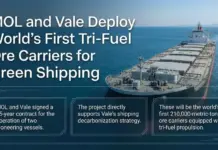

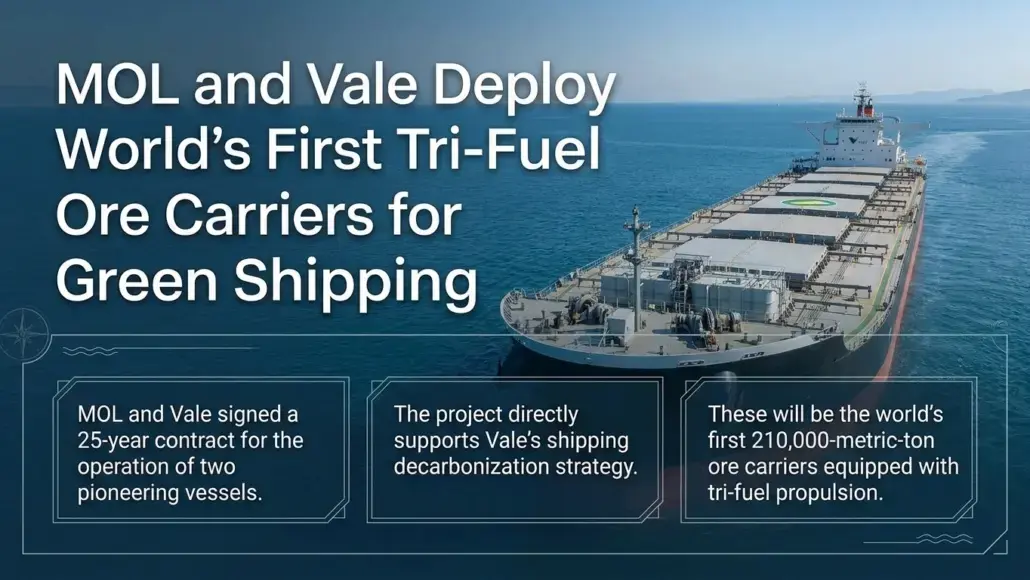
Mitsui O.S.K. Lines, Ltd. (MOL) announced that MOL Ocean Bulk Pte. Ltd., which operates the MOL Group’s overseas Capesize bulker business, has entered into a 25-year contract with Vale International S.A., a subsidiary of Vale S.A., for the transportation of iron ore using two vessels.
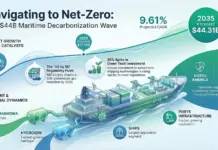
The project forms part of Vale’s Shipping decarbonization strategy and will introduce the world’s first 210,000-metric-ton ore carriers equipped with a tri-fuel propulsion system. The tri-fuel ore carrier vessels will be capable of operating on ethanol, methanol, and conventional heavy fuel oil. Delivery of the two vessels is scheduled for 2030, after which they will primarily be used for the transoceanic transport of the company’s iron ore.
Tri-Fuel Propulsion Expands Fuel Flexibility
The vessels will combine tri-fuel engines with an LNG/ammonia-ready design, allowing either fuel to be used in the future. They will also feature a range of energy-saving technologies developed for next-generation newbuilding vessels. The tri-fuel ore carrier design is intended to give operators greater flexibility in selecting fuels based on availability, decarbonization benefits, and economic considerations. According to the project details, this wider choice of fuels will provide practical options for reducing greenhouse gas (GHG) emissions from marine transport.
Ethanol is another important component of the vessels’ fuel flexibility. On a full lifecycle basis, covering fuel production through consumption, ethanol could potentially reduce carbon emissions by up to approximately 90% compared with heavy fuel oil (Note 1). The renewable fuel has attracted growing attention in recent years, while its ease of handling is expected to support wider adoption in marine fuel applications. With the ability to operate on multiple fuels, the tri-fuel ore carrier concept is designed around changing fuel availability and decarbonization requirements.
MOL Targets Shipping Decarbonization
The vessel project also supports the MOL Group’s environmental objectives under its “BLUE ACTION 2035 Phase 2” environmental vision. The group aims to achieve net-zero greenhouse gas (GHG) emissions by 2050. Through operating the vessels, MOL intends to advance its own decarbonization targets while contributing to reductions in Vale’s marine transport-related Scope 3 emissions (Note 2).
Beyond the operation of the vessels themselves, the MOL Group plans to pursue further decarbonization of the shipping industry and support sustainable resource transport through cooperation with customers and partners across the entire fuel supply chain for ethanol and methanol. This collaboration will cover activities ranging from procurement and supply to bunkering, extending the project’s focus beyond vessel operations and into the broader fuel supply chain.
Furthermore, Vale has been involved in various agreements to bring alternative fuel-powered shipping. One such effort included an agreement with Shandong to build the world’s first two ethanol-powered, ocean-going Guaibamax bulk carriers.
