








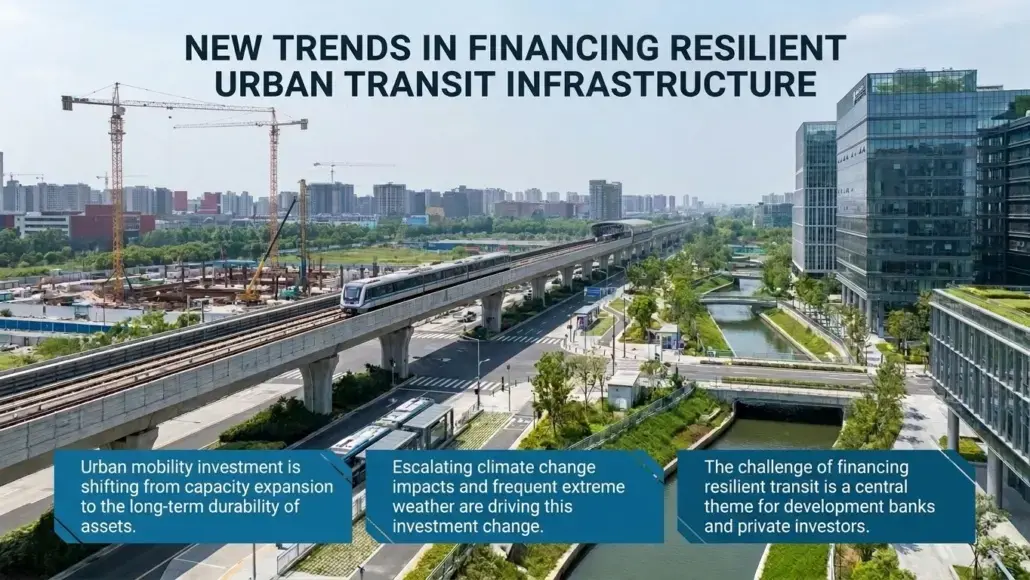
The global transport sector is facing an urgent need to modernize aging networks while simultaneously preparing for the escalating impacts of climate change. As extreme weather events become more frequent and severe, the focus of urban mobility investment is shifting from simple capacity expansion to the long term durability of assets. In early 2026, the challenge of financing resilient urban transit infrastructure has become a central theme for international development banks, private investors, and municipal governments. The scale of the investment required is staggering, yet the economic cost of inaction is significantly higher. Transport Advancement notes that by integrating climate adaptation into the core of financial planning, the transport industry is developing new mechanisms to secure the capital needed for a more stable and reliable urban future.
The infrastructure funding gap remains a critical barrier to global resilience goals. According to the World Bank, the annual global transport infrastructure financing gap is estimated to be between 244 billion and 944 billion dollars through 2030. Urban mobility represents the largest portion of this capital shortfall, particularly in rapidly growing metropolitan areas where existing systems are already under strain. To address this, there is a clear trend toward leveraging private participation in infrastructure, which reached 100.7 billion dollars across 315 projects in 2024. This 16 percent increase from 2023 indicates a growing appetite among private investors for regulated, long term transit assets that incorporate robust resilience standards.
The Emergence of Green Bonds and Sustainable Finance
Green bonds have emerged as one of the most effective tools for financing resilient urban transit infrastructure. These instruments allow issuers to raise capital specifically for projects that deliver environmental benefits, such as reducing carbon emissions or enhancing climate adaptation. In February 2026, the European Investment Bank issued a landmark 4 billion euro benchmark bond aligned with the new European Green Bond Standard (EuGBS). This issuance demonstrates the increasing maturity of the sustainable finance market and the demand for high quality, transparent investment vehicles. For transit agencies, green bonds provide access to a broader pool of capital, often at more favorable rates than traditional debt, provided they can demonstrate measurable progress toward sustainability and resilience targets. These sustainable funding mechanisms are increasingly being delivered through structured public private partnerships (PPP) for integrated urban transit to ensure long term asset durability.
The standardization of green finance frameworks is vital for building investor confidence. The transition toward EuGBS aligned benchmarks ensures that bond proceeds are allocated to projects with rigorous environmental criteria and verified impact reporting. This transparency is particularly important for transit projects, which often involve complex, multi year construction timelines and diverse environmental impacts. By providing clear definitions of what constitutes a resilient and sustainable project, these frameworks help to eliminate greenwashing and ensure that capital is directed toward genuine climate adaptation.
Estimating the Costs of Climate Adaptation
The financial requirements for building and maintaining resilient urban systems are significant. Recent research from the World Bank suggests that resilient and low carbon urban development in all low and middle income countries will cost between 256 billion and 821 billion dollars per year through 2050. These costs include the implementation of physical defenses against flooding, the reinforcement of rail lines against extreme heat, and the deployment of advanced drainage systems. For an individual transit operator, the cost of retrofitting existing assets for climate resilience can increase project budgets by 10 to 20 percent. However, these upfront costs are often offset by lower insurance premiums and reduced maintenance expenses over the lifecycle of the asset.
Urban areas in developed economies also face substantial funding challenges. In the United States, cities are navigating a 40.8 billion dollar infrastructure funding gap across 484 specific climate projects. Public transit infrastructure is particularly vulnerable to extreme heat, which can cause rail buckling and damage electronic signaling equipment. The 2025 Report Card for US public transit infrastructure highlighted that without significant investment in resilient design, the reliability of these systems will continue to decline, leading to increased operational disruptions and economic losses.
Strategic Roles of Development Banks and International Agencies
International development banks play a pivotal role in de risking resilience projects and attracting private capital. The World Bank committed 11.2 billion dollars across 53 new transport projects in fiscal year 2025, with a heavy emphasis on climate resilience and sustainable mobility. These commitments often serve as a catalyst for broader investment, as the involvement of a multilateral lender provides a level of political and financial security that private investors find attractive. By providing technical assistance and concessional financing, development banks help cities in emerging markets to implement sophisticated resilience strategies that would otherwise be financially out of reach.
The European Investment Bank has similarly prioritized transport digitalization and electrification as part of its resilience strategy. In 2024 and 2025, the EIB provided over 7.8 billion dollars annually for sustainable transport projects, including the rollout of digital signaling systems and the transition to zero emission bus fleets. These investments not only reduce the carbon footprint of urban transit but also enhance its operational resilience by replacing legacy systems with more flexible and reliable digital architectures. The synergy between decarbonization and resilience is a key driver of current B2B investment trends.
Innovative Financing Models and Risk Allocation
The complexity of resilient transit projects is driving a shift toward more collaborative financing models, such as public private partnerships. The DBFOM model, which stands for Design, Build, Finance, Operate, and Maintain, is increasingly being adapted to include specific resilience performance metrics. In these arrangements, the private partner assumes the risk of meeting these metrics, providing a powerful incentive for innovative engineering and efficient project management. For example, a transit agency might structure availability payments based on the system’s ability to remain operational during defined extreme weather events. This approach ensures that the private sector is directly invested in the long term durability of the infrastructure.
Risk allocation remains one of the most challenging aspects of financing resilient urban transit infrastructure. The high cost of debt and the long gestation periods of major rail projects require a careful balance between public and private interests. To mitigate these risks, many authorities are moving toward availability payment structures rather than relying on patronage risk, which can be highly volatile in a changing climate. By guaranteeing a steady stream of payments based on infrastructure availability, public agencies can reduce the cost of capital and attract more conservative institutional investors, such as pension funds and insurance companies.
Engineering Resilience into Urban Design
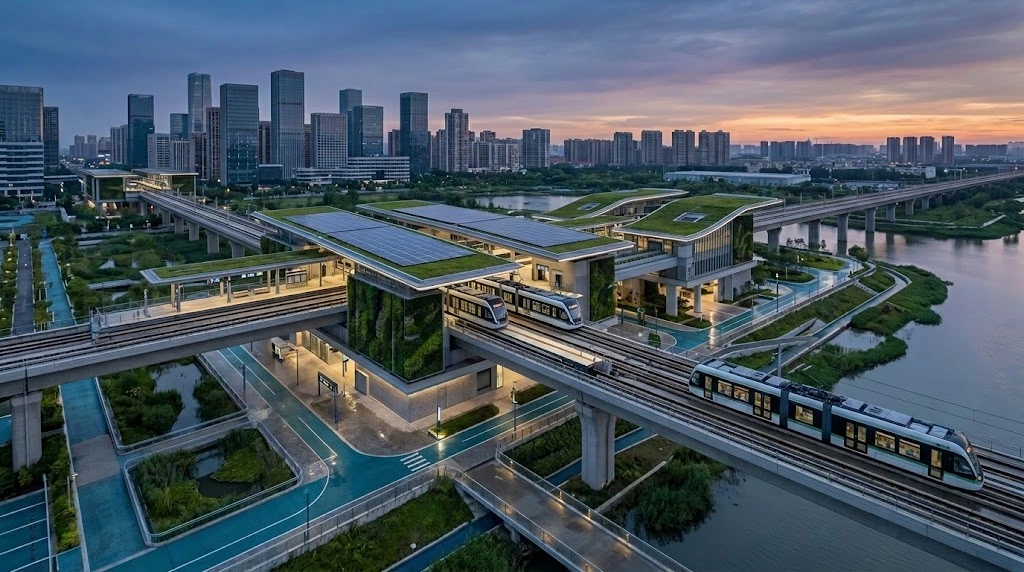
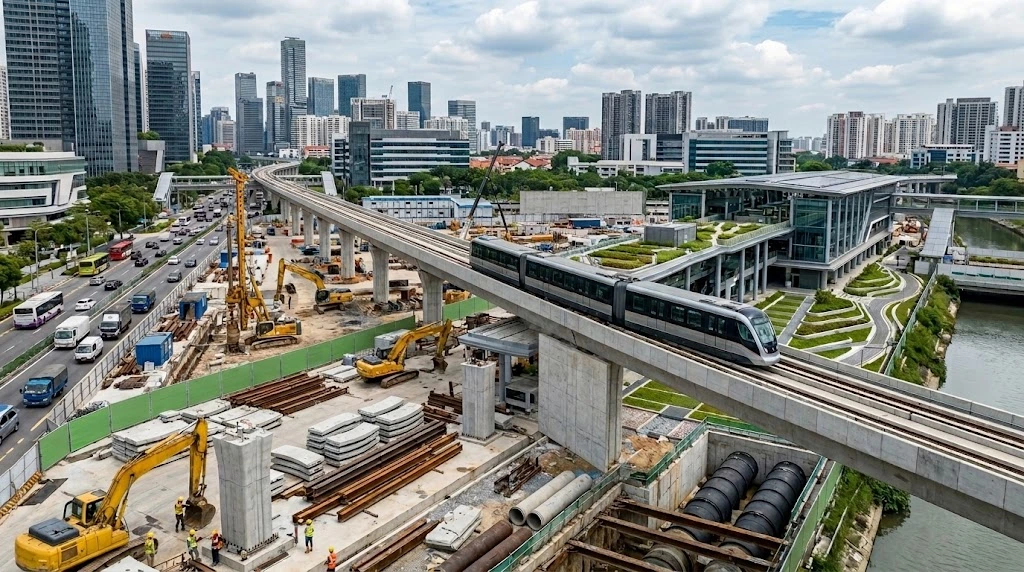
Resilient design is not just about building stronger walls; it is about creating flexible systems that can recover quickly from disruptions. Modern transit projects are increasingly incorporating blue and green infrastructure to manage storm water and reduce urban heat island effects. For instance, the use of permeable surfaces and urban wetlands around metro stations can significantly reduce the risk of flooding while also providing public amenities. From a B2B perspective, these integrated solutions offer opportunities for collaboration between transit operators, urban developers, and environmental engineering firms.
Technological innovation is also playing a major role in enhancing infrastructure resilience. The use of digital twins and real time monitoring systems allows operators to simulate the impact of various climate scenarios and to detect potential vulnerabilities before they lead to failure. In 2025, transit agencies in major global cities began using AI driven predictive analytics to manage drainage systems and to optimize cooling for underground stations during heat waves. The integration of these digital tools into the financial and operational planning of transit projects is becoming a standard requirement for securing sustainable finance.
The Economic Return on Resilience Investment
The business case for financing resilient urban transit infrastructure is supported by strong economic data. Transit infrastructure investments have a documented economic return on investment of 4 to 1 or even 5 to 1, driven by improvements in productivity, social mobility, and environmental health. When the costs of avoided disaster damage and reduced operational downtime are included, the ROI becomes even more compelling. Institutional investors are increasingly recognizing that resilient assets are less likely to become stranded and are better positioned to maintain their value in a low carbon economy.
Furthermore, the integration of land value capture mechanisms can provide a dedicated source of funding for resilience upgrades. By capturing a portion of the increased property values around resilient transit hubs, cities can generate the revenue needed to service green bonds and other debt instruments. This model, which has been highly successful in cities like Hong Kong and Singapore, is being studied by municipalities worldwide as a way to self fund the transition to a more resilient urban future. The ability to link infrastructure performance to real estate value is a powerful tool for aligning the interests of public and private stakeholders.
Preparing for a Volatile Future
As we look toward the end of the decade, the focus on resilient infrastructure will only intensify. The transition to zero emission transport and the need to adapt to a changing climate are two sides of the same coin. Financing resilient urban transit infrastructure requires a holistic approach that combines technical expertise, financial innovation, and political commitment. By leveraging the power of green bonds, sustainable finance, and collaborative partnerships, the transport industry can build the foundations for an urban mobility system that is not only efficient and equitable but also durable enough to withstand the challenges of the 21st century.
The next few years will be a critical period for scaling these financial mechanisms. The success of early EuGBS aligned bonds and resilience focused PPPs will provide the evidence needed to attract even larger volumes of capital. For B2B decision makers, the message is clear: resilience is no longer an optional extra but a fundamental requirement for the long term viability of urban transport assets. Transport Advancement believes that by acting quickly to secure the necessary financing, the industry can ensure that the cities of the future remain vibrant, connected, and resilient in the face of climate change.
References
- World Bank
- European Investment Bank
- UITP
- McKinsey
- IEA
