















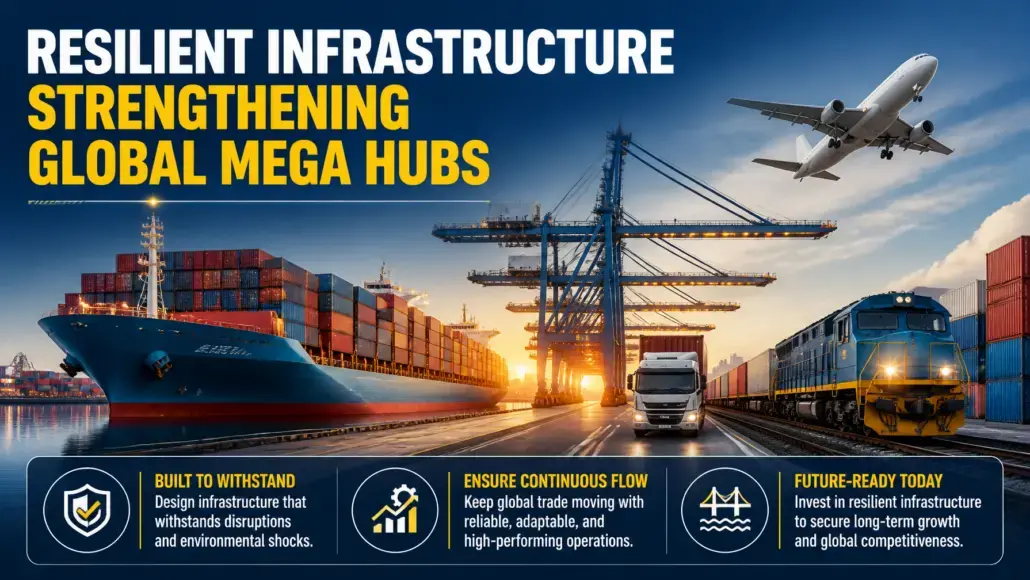
In an era defined by rapid globalization and increasing environmental volatility, the concept of resilient infrastructure for mega hubs has transitioned from a theoretical ideal to a practical necessity. Mega hubs, the massive sea, air, and land terminals that serve as the primary nodes for global trade, are the lifelines of the modern economy. When these hubs function smoothly, they facilitate the effortless flow of goods across continents. However, their sheer scale also makes them vulnerable to a wide array of disruptions, ranging from extreme weather events and rising sea levels to sudden spikes in demand and technological failures. Resilience in this context refers to the ability of these facilities to not only withstand these shocks but to recover quickly and adapt to new operational realities. Building this resilience requires a comprehensive approach to engineering and design that prioritizes long-term stability over short-term cost savings, ensuring that the global supply chain remains robust in the face of uncertainty.
The process of designing resilient infrastructure for mega hubs begins with a deep understanding of the local and global risks involved. Engineers must account for the increasing frequency of catastrophic storms, which are now occurring with alarming regularity. This means designing terminals with advanced flood defenses, reinforced structures, and elevated critical systems that remain operational even during severe flooding. Furthermore, resilience extends to the digital realm. As mega hubs become increasingly dependent on automated systems and data exchanges, their digital infrastructure must be shielded from cyber threats and power outages. Transport Advancement notes that by building redundancy into both physical and digital systems, planners can ensure that a failure in one area does not lead to a total collapse of operations. This multi-layered approach to security and stability is what allows a mega hub to maintain its role as a reliable pillar of international commerce.
Engineering for Climate Adaptation and Environmental Shifts
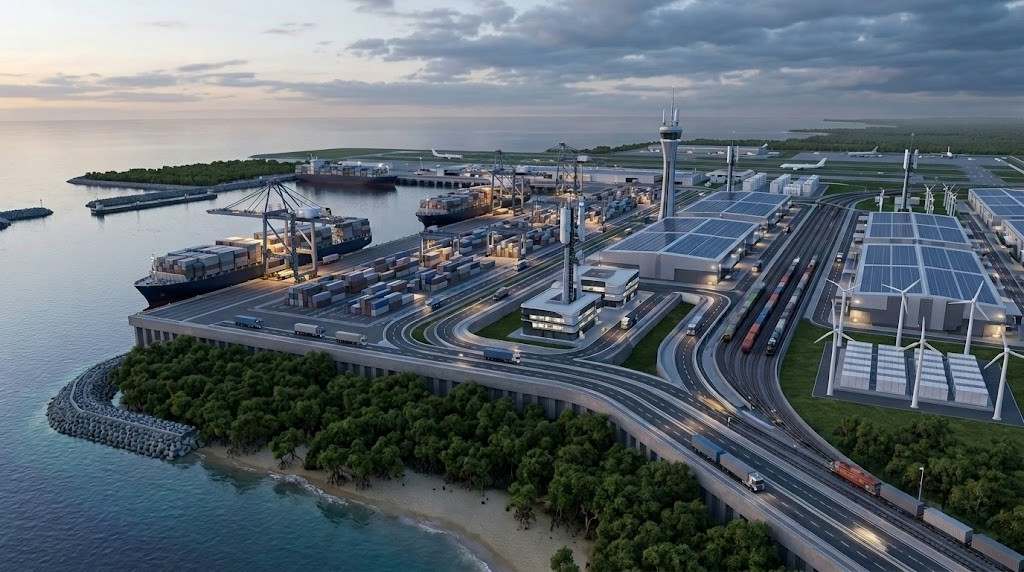
One of the most pressing challenges in designing resilient infrastructure for mega hubs is the reality of climate change. Many of the world’s most important logistics nodes are located in coastal areas, making them directly susceptible to rising sea levels and intensified storm surges. Resilient design in these locations involves more than just building taller walls; it requires a sophisticated integration of natural and engineered solutions. This might include the creation of buffer zones using mangroves or artificial reefs, which can absorb wave energy, alongside the construction of massive tidal barriers. The goal is to create a dynamic defense system that can evolve alongside the environment. By incorporating flexible design principles, engineers can ensure that infrastructure can be upgraded or modified as climate projections change, preventing the early obsolescence of these multi-billion-dollar investments.
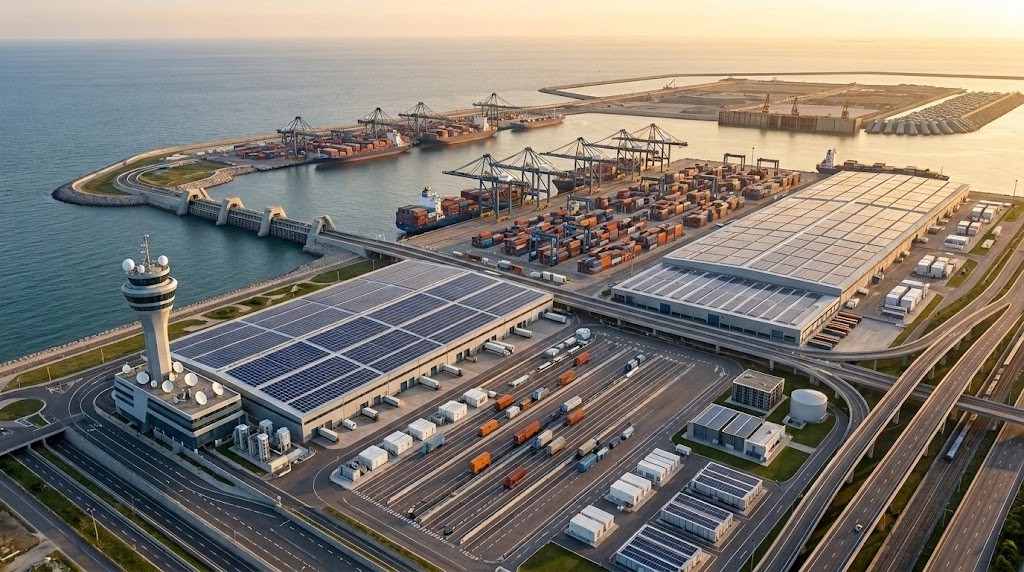
Beyond coastal protection, resilience also means managing the internal environment of the hub. As global temperatures rise, the cooling requirements for massive warehouses and data centers increase significantly. Resilient infrastructure must therefore include highly efficient, sustainable energy systems that can operate independently of the main power grid if necessary. The use of microgrids, solar arrays, and large-scale battery storage allows mega hubs to maintain critical functions during regional power failures. Additionally, the design of terminal layouts must facilitate efficient heat dissipation and airflow to protect both equipment and personnel. By prioritizing environmental adaptation at every stage of the design process, planners can create hubs that are not only resilient but also contribute to the broader goals of sustainability and carbon reduction, aligning economic growth with environmental stewardship.
Structural Innovations and Seismic Resilience
For mega hubs located in seismically active regions, such as those along the Pacific Rim, resilience takes on an even more specialized structural dimension. The engineering of these facilities must incorporate advanced seismic isolation techniques to protect the integrity of the massive cranes and storage systems. This includes the use of base isolators—essentially giant shock absorbers—that allow the structure to move independently of the ground during an earthquake. Additionally, flexible joints in piping and electrical conduits ensure that critical services are not severed by ground shifts. These structural innovations are essential for maintaining the operational capacity of the hub immediately following a disaster, preventing the long-term trade disruptions that can occur when key infrastructure is damaged.
The materials used in construction also play a vital role in long-term resilience. The development of high-performance, corrosion-resistant concrete and steel allows mega hubs to withstand the harsh saline environments of coastal locations. In many modern port projects, such as the massive Tuas Port in Singapore, engineers are using innovative land reclamation techniques and reinforced caisson structures that are designed to last for over a century. These materials not only provide strength but also reduce the need for frequent and disruptive maintenance. By investing in superior materials and structural design at the outset, terminal operators can ensure that their infrastructure remains a reliable asset for generations, regardless of the environmental challenges it may face.
Managing Demand Surges and Operational Scalability
Resilience is not only about surviving disasters; it is also about handling the inherent volatility of global trade. The ability to manage sudden surges in cargo volume without succumbing to gridlock is a hallmark of resilient infrastructure for mega hubs. This requires a modular and flexible approach to terminal design, where capacity can be expanded or reconfigured in response to shifting market demands. In a resilient hub, the flow of traffic—both maritime and terrestrial—is managed through intelligent systems that can dynamically adjust to prevent congestion. This includes the use of smart gates, automated yard management, and dedicated corridors for autonomous vehicles. Building this level of operational agility is best achieved through the implementation of modular design for scalable terminal expansion, which allows infrastructure to grow alongside shifting global trade patterns. By reducing friction at every point of the logistics chain, these hubs can absorb spikes in activity that would paralyze less sophisticated facilities.
The integration of advanced data analytics plays a crucial role in this operational resilience. By analyzing vast amounts of historical and real-time data, hub operators can predict when demand will peak and proactively allocate resources to handle the load. This predictive capability allows for a more efficient use of infrastructure, reducing the need for massive, underutilized physical expansions. Furthermore, a resilient infrastructure design fosters collaboration between the various stakeholders in the hub, including shipping lines, rail operators, and trucking companies. By creating shared digital platforms for information exchange, the entire ecosystem can react as a single, coordinated unit. This level of integration ensures that the mega hub remains a seamless link in the global supply chain, providing the stability and efficiency that the modern world depends on.
Cybersecurity and the Protection of Digital Assets
As mega hubs become more automated and data-driven, their resilience is increasingly tied to the strength of their cybersecurity. A cyberattack on a major terminal’s operating system could be just as devastating as a physical storm, leading to a total halt in operations and a significant breach of sensitive trade data. Resilient infrastructure design must therefore include robust, multi-layered cyber defenses that protect both information technology (IT) and operational technology (OT) systems. This involves the use of decentralized network architectures, constant monitoring for unusual activity, and the implementation of air-gapped systems for the most critical control functions. Protecting the integrity of the data that flows through the hub is essential for maintaining the trust of shipping lines and global traders.
Furthermore, digital resilience means having the capability to recover quickly from a cyber incident. This includes maintaining comprehensive, offline backups of all critical software and data, as well as having well-rehearsed incident response plans. In an era where rare events are becoming more common, the ability to restore operations in a matter of hours rather than days is a key differentiator for a resilient mega hub. By treating cybersecurity as a core component of infrastructure design, rather than an afterthought, planners can ensure that the hub remains a secure and reliable node in the global economy. This proactive approach to digital security is a fundamental requirement for any facility that aims to be a leader in 21st-century logistics.
Making Global Trade Nodes Future-Ready
Global port operators are actively redesigning physical infrastructure to withstand both climate change and volatile trade demands. DP World’s integration of high-capacity Rail-Mounted Gantry cranes at its London Gateway hub precedes the opening of the world’s first all-electric fourth berth. This development directly answers the dual mandate of managing climate volatility and scaling operational capacity. By increasing rail freight share and running exclusively on an electrified grid, the terminal insulates itself from fossil fuel supply chain disruptions while mitigating local emission profiles.
Future-Proofing Through Collaboration and Innovation
The task of designing resilient infrastructure for mega hubs is a continuous process that requires collaboration between engineers, governments, and private industry. As new technologies emerge and environmental conditions shift, the definition of resilience will continue to evolve. Future hubs will likely incorporate even more advanced features, such as self-healing materials that can repair cracks in concrete, and AI-driven systems that can autonomously adjust a facility’s defense mechanisms in response to real-time weather data. The focus will also shift toward greater integration with the surrounding urban environment, ensuring that the hub supports the resilience of the local community as well.
Ultimately, the goal of resilient design is to create infrastructure that is not only strong but also wise. Transport Advancement believes that by prioritizing adaptability, sustainability, and technological integration, we can build mega hubs that are capable of thriving in an uncertain world. The investment in resilience is an investment in the stability of the global economy, ensuring that the flow of goods remains uninterrupted even in the face of the most significant challenges. As we look toward the future, the lessons learned from the design of today’s mega hubs will serve as the foundation for a more robust and resilient global trade network. The commitment to innovation and foresight is what will ensure that these massive logistics nodes continue to serve as the engine of global prosperity for decades to come.
References
- NEW CRANES BOOST RAIL CAPACITY BY 50 PER CENT AT DP WORLD LONDON GATEWAY
