









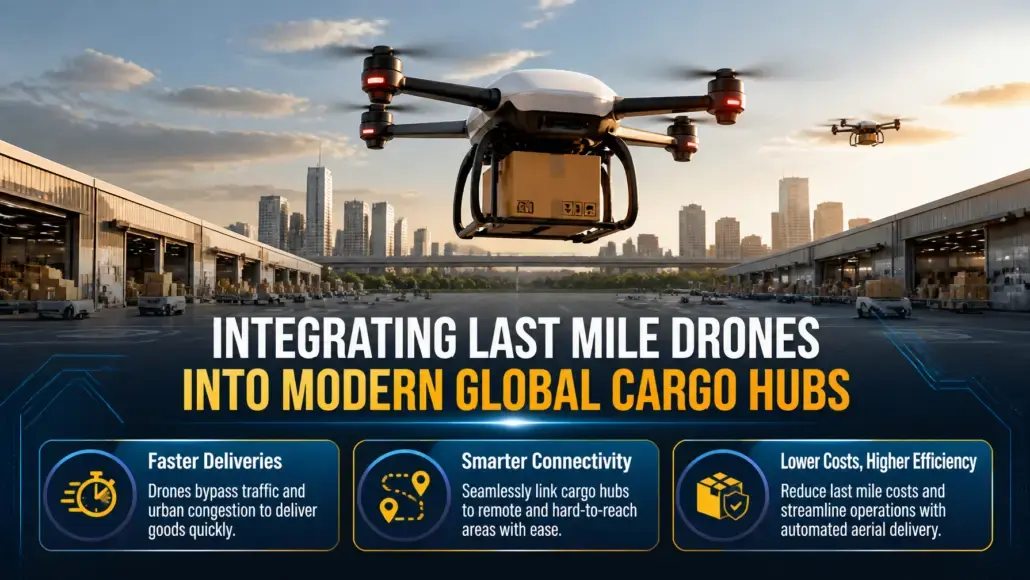
The ‘last mile’ has long been recognized as the most expensive, complex, and inefficient segment of the global supply chain. It is here that goods face the greatest friction, navigating through congested urban streets, varying terrain, and unpredictable traffic patterns. Integrating last mile drones into cargo hubs represents a bold leap forward in addressing these challenges, offering a way to bypass traditional ground-based bottlenecks entirely. Unmanned aerial vehicles (UAVs) provide a fast, direct, and increasingly cost-effective method for delivering small-to-medium-sized packages from regional distribution centers directly to the consumer’s doorstep or local pickup point. As the technology matures and regulatory frameworks evolve, the integration of these aerial systems is transforming cargo hubs into multi-modal command centers that leverage both land and air to achieve unprecedented levels of logistical speed and precision.
The shift toward drone-enabled logistics is driven by the rapid growth of e-commerce and a rising consumer demand for near-instant delivery. Traditional delivery vans, while effective for larger loads, are often ill-suited for the rapid distribution of single, high-priority items in densely populated areas. Transport Advancement notes that by integrating last mile drones into cargo hubs, logistics providers can offload these smaller shipments to a fleet of autonomous aircraft, freeing up road capacity and reducing the time-to-delivery from hours to minutes. This aerial layer of logistics is not just an additive feature. It is a fundamental reconfiguration of how goods are moved within the urban environment. The result is a more responsive and resilient delivery network that can maintain high performance even during peak periods or in the face of ground-level disruptions. These aerial systems represent the final frontier of a broader movement toward automation, complementing the rise of autonomous cargo handling systems that have already transformed the interior of modern container terminals.
Technological Foundations: BVLOS and Autonomous Flight
The true potential for integrating last mile drones into cargo hubs is unlocked through the capability for Beyond Visual Line of Sight (BVLOS) operations. In the early stages of drone development, pilots were required to keep the aircraft within their sight at all times, limiting the range and economic feasibility of the technology. Today, advanced autonomous flight systems—incorporating GPS, LiDAR, and satellite-based communication—allow drones to navigate complex flight paths over long distances without direct human intervention. This shift is essential for creating a truly scalable aerial delivery network, where a single operator in a cargo hub can oversee dozens of simultaneous flights across a wide geographic area.
 Ensuring the safety of BVLOS operations requires a sophisticated suite of detect and avoid (DAA) technologies. Modern delivery drones are equipped with 360-degree sensor arrays that can identify and avoid other aircraft, power lines, and birds in real-time. This situational awareness is integrated with centralized air traffic management systems, which provide the drone with a constantly updated digital map of its surroundings. As artificial intelligence becomes more integrated into these flight controllers, drones will be able to autonomously make even more complex decisions, such as identifying the safest landing spot in a cluttered backyard or adjusting their flight path to account for sudden changes in wind speed. This level of autonomy is what makes the vision of a dense urban drone delivery network a practical reality.
Infrastructure Requirements for Seamless Drone Integration
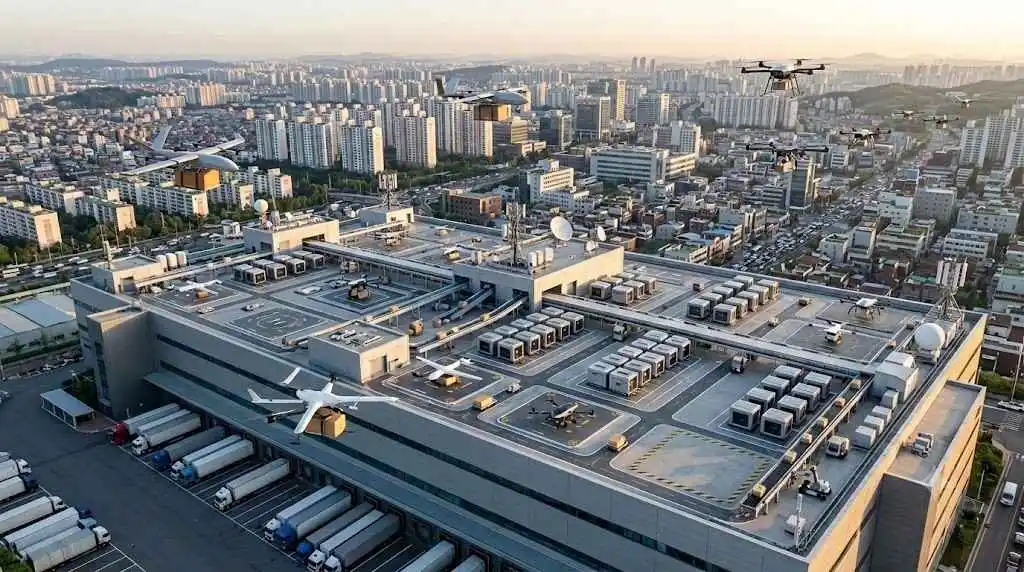
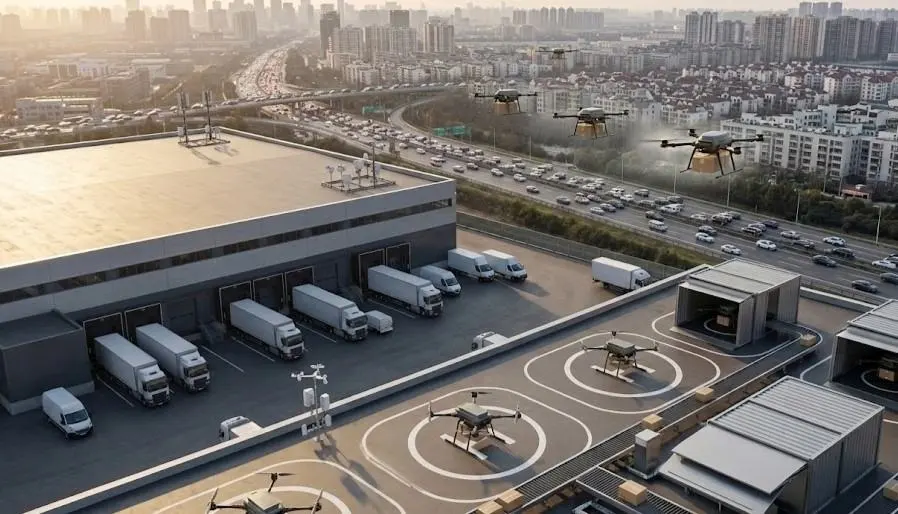
Successfully integrating last mile drones into cargo hubs requires a significant evolution in terminal infrastructure and airspace management. A drone-ready hub is not merely a warehouse with a landing pad; it is a sophisticated facility designed to support the continuous launch, recovery, and maintenance of a large fleet of UAVs. This involves the creation of dedicated drone ports—often integrated into the roofs of existing buildings—equipped with automated loading systems, battery swapping stations, and precision navigation beacons. These ports must be capable of handling high volumes of traffic while ensuring that drones can operate safely in close proximity to other hub activities. The layout of the hub must facilitate a seamless transition of goods from traditional transport modes, like trucks or planes, into the drone delivery system, minimizing the time a package spends in the sorting process.
Beyond the physical facility, the digital infrastructure for airspace management is equally critical. Integrating last mile drones into cargo hubs necessitates the implementation of Unmanned Aircraft System Traffic Management (UTM) systems. These platforms act as a digital air traffic control, coordinating the movements of multiple drones to prevent collisions and ensure they remain within authorized corridors. By utilizing real-time data from weather sensors and ground-based radar, UTM systems can dynamically adjust flight paths to account for changing conditions. This level of synchronization is essential for scaling drone operations safely within busy urban environments. Furthermore, the data generated by these systems provides valuable insights into flight performance and delivery efficiency, allowing hub operators to continuously optimize their aerial operations.
The Role of Drone-in-a-Box Solutions
A key innovation in the integration process is the development of Drone-in-a-Box (DiaB) solutions. These are self-contained, automated docking stations that provide a secure home for the drone when it is not in flight. When a delivery request is received, the box opens, and the drone is automatically loaded with the package and launched. Upon its return, the drone lands back in the box, where its battery is either recharged or swapped for a fresh one, and the aircraft is inspected by automated sensors for any mechanical issues. This system allows for 24/7 autonomous operations with minimal human oversight, making it ideal for deployment at distributed cargo hubs and micro-fulfillment centers.
DiaB solutions are particularly effective for rural or hard-to-reach areas, where they can act as autonomous relay points for a larger logistics network. By placing these units at strategic intervals, a logistics provider can extend the range of its drone fleet without needing to build a full-scale terminal at every location. The integration of these automated docking stations into the broader logistics ecosystem is a major step toward the full automation of the last mile. As the technology for these units becomes more compact and affordable, we can expect to see them integrated into everything from neighborhood grocery stores to the roofs of apartment buildings, creating a ubiquitous and highly responsive delivery network.
Autonomous Drone Integration in Last-Mile Logistics
The integration of unmanned aerial systems into last-mile logistics has transitioned from localized experimentation to commercial deployment, addressing critical bottlenecks in urban congestion, delivery speed, and carbon emissions. On the residential fulfillment front, Amazon marked the international expansion of its Prime Air service outside the United States by launching drone operations in Darlington, England; using its autonomous MK30 hexacopter equipped with advanced detect-and-avoid sensors, the system delivers consumer parcels weighing up to 5 pounds within 60 minutes across a 7.5-mile radius. Simultaneously, express carriers are tackling heavier logistics workflows, highlighted by DHL Express entering a partnership with Abu Dhabi-based LODD Autonomous to explore integrating the ‘Hili’ hybrid VTOL aircraft into its UAE express network. Featuring a 250 kg payload capacity and a 700 km range, the Hili platform bridges middle- and last-mile freight between distribution hubs and service points. Together, these initiatives showcase a two-pronged evolution in aerial delivery: precision-targeted consumer drop-offs on one end, and high-capacity, autonomous cargo corridors on the other.
Economic and Environmental Impacts of Aerial Delivery
The economic case for integrating last mile drones into cargo hubs is compelling. While the initial investment in technology and infrastructure is significant, the long-term operational savings are substantial. Drones are inherently more efficient for small-package deliveries than large, fuel-consuming vans, particularly in areas with high traffic density. By reducing the reliance on human drivers for the final stage of delivery, companies can lower labor costs and mitigate the impact of driver shortages. Additionally, drones offer a superior level of scalability; during periods of high demand, a hub can deploy additional UAVs more quickly and easily than it could acquire and staff new delivery vehicles. This flexibility allows logistics providers to maintain high service levels without over-committing to expensive physical assets.
From an environmental perspective, drone delivery offers a promising path toward a greener supply chain. Most commercial delivery drones are electric, producing zero tailpipe emissions during their journey. Transport Advancement believes that by shifting a significant portion of last mile deliveries from the road to the air, cities can see a reduction in both carbon emissions and traffic congestion, contributing to better air quality and more livable urban spaces. Furthermore, the direct routing possible with aerial delivery means that drones cover less distance to reach their destination than ground vehicles, further reducing energy consumption. As the energy density of batteries improves and the efficiency of electric motors increases, the environmental benefits of integrating last mile drones into cargo hubs will only grow. This alignment of economic efficiency and environmental stewardship makes drone delivery a cornerstone of the future sustainable logistics landscape.
Public Perception, Noise Management, and the Social License to Operate
One of the most significant hurdles for integrating last mile drones into cargo hubs is not technological, but social. The widespread use of drones over residential areas raises concerns regarding privacy, safety, and noise pollution. For the technology to achieve broad acceptance, logistics providers must work closely with communities and regulators to address these issues. Noise management is a particularly critical area of focus. Developers are creating new propeller designs and flight patterns that minimize the acoustic footprint of the drone, ensuring that they are no louder than a passing car. Furthermore, the use of encrypted communication and clear data privacy policies is essential for building public trust.
Winning the social license to operate also involves demonstrating the clear benefits of drone delivery to the community. This includes the rapid delivery of medical supplies, the reduction of traffic congestion in residential neighborhoods, and the creation of new high-tech jobs. By being transparent about their operations and actively engaging with local stakeholders, cargo hub operators can ensure that drone integration is seen as a positive development for the city as a whole. As we look toward the future of Urban Air Mobility (UAM), the successful integration of delivery drones will serve as a crucial test case for the broader use of autonomous aircraft in our daily lives. The journey toward an aerial-enabled city is a collaborative effort that requires a balance of innovation, regulation, and social responsibility.
References
- Inside Amazon’s first-ever drone delivery site in the UK
-
DHL Express Signs MoU with LODD Autonomous to Explore Hili Drone Integration
