





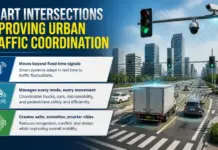


The integration of AI traffic congestion management systems is transforming urban mobility, utilizing predictive modeling to anticipate flow spikes and reduce gridlock in smart cities.
The implementation of satellite based rail signaling is transforming railway operations, providing a reliable and cost-effective solution for remote track control in rural and underserved areas.
The development of Cyber-Physical Traffic Systems is a major leap forward for urban movement, integrating digital intelligence with physical infrastructure to enable smarter mobility and safer roads.
The development of smart asphalt V2I connectivity is transforming the future of transportation, embedding digital intelligence directly into the pavement to enable connected roadways.
The global urban transit landscape is currently undergoing a silent but profound transformation that is redefining the boundaries of public transportation. In cities from...
Hitachi Rail has secured the signalling contract for the construction of NS3A and NS6 MRT stations on Singapore's North-South Line (NSL), marking another step...
The nervous system of any railway network is its signalling system, the invisible layer of technology that ensures trains move safely and efficiently across...
Last year, together with DRONEII, we conducted a Drone Barometer Survey to produce a free whitepaper with perspectives from the drone industry. The paper...
From Michelin Challenge Bibendum to Movin’On: a new leg in our collective journey towards sustainable mobility.
For almost 20 years, the Michelin Challenge Bibendum was...
How designed assets such as traffic signs and road markings have a wider reach post-handover, and some of processes required to achieve deliverable targets.
This...