















The global landscape of transportation is currently undergoing a fundamental paradigm shift, moving away from isolated, mechanical systems toward an era of total integration. Transport Advancement notes that at the heart of this transformation are Cyber-Physical Traffic Systems (CPTS), which represent the ultimate fusion of digital intelligence and physical infrastructure. These systems are not just about adding sensors to roads. They are about creating a continuous, closed-loop interaction between the digital world of software and algorithms and the physical world of vehicles, commuters, and asphalt. By bridging this gap, cities can achieve a level of smarter mobility that was once the stuff of science fiction, where the transport network behaves as an intelligent, self-optimizing organism that responds to every event with millisecond-level precision.
The concept of a cyber-physical system implies that the digital and physical components are so tightly intertwined that they cannot be separated. In the context of traffic, this means that every physical movement—a car turning a corner, a pedestrian crossing a street, or a bus arriving at a stop—is instantly mirrored and analyzed in the digital domain. Conversely, the digital system can influence the physical world by adjusting traffic signals, providing speed recommendations to vehicles, or even taking control of autonomous fleets to prevent a collision. This bidirectional flow of information is the key to unlocking new levels of safety, efficiency, and sustainability in urban environments, making cyber-physical traffic systems the essential backbone of the 21st-century smart city.
The Architectural Pillars of Cyber-Physical Integration
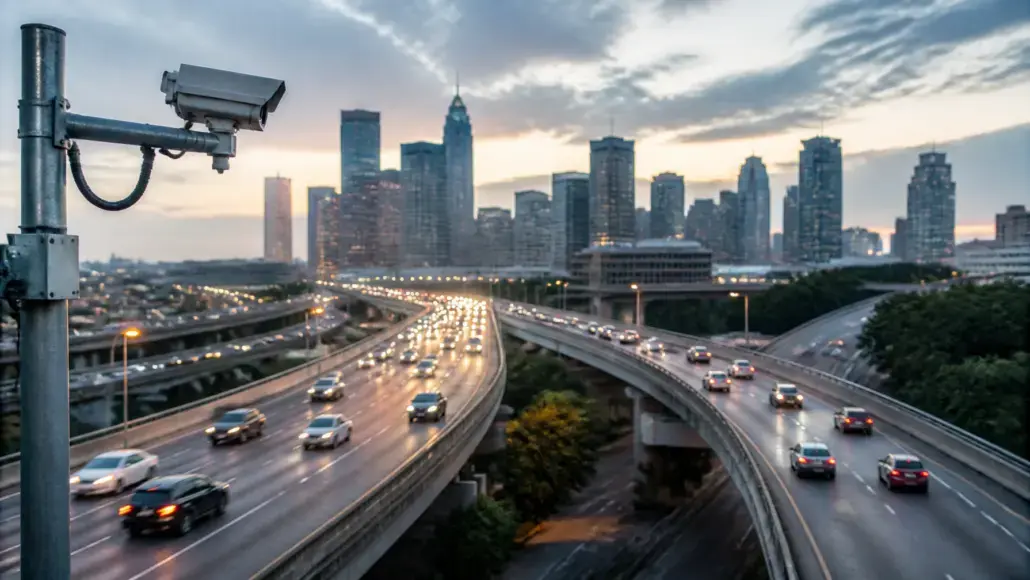
The architecture of a CPTS is built upon three fundamental pillars: pervasive sensing, high-speed communication, and intelligent actuation. Pervasive sensing involves the deployment of a dense network of sensors—LIDAR, cameras, radar, and acoustic sensors—that provide a high-resolution, 360-degree view of the urban environment. High-speed communication, facilitated by 5G and 6G networks, ensures that this massive amount of data can be transmitted and processed with near-zero latency. Intelligent actuation is the final step, where the digital system uses the processed information to make physical changes to the environment, such as dynamically reconfiguring lanes or optimizing the flow of autonomous vehicle platoons.
Real-Time Traffic Monitoring and Digital Twins
A core component of any CPTS is the creation of a real-time digital twin of the city’s traffic network. This digital replica is not just a map; it is a simulation that runs in parallel with the physical world, constantly updating itself as new sensor data arrives. By analyzing the behavior of the digital twin, the system can identify the early warning signs of congestion or potential accidents. For example, the system might detect that the braking pattern in a specific area is becoming more aggressive, indicating the presence of a hazard that is not yet visible to individual drivers. This level of real-time traffic monitoring allows for proactive interventions that prevent problems before they occur, significantly improving the safety and reliability of smarter mobility.
V2X Connectivity and Collaborative Movement
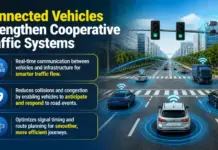
One of the most powerful features of cyber-physical traffic systems is their ability to facilitate Vehicle-to-Everything (V2X) communication. This allows the infrastructure to talk to the vehicles, and the vehicles to talk to each other. In a CPTS-enabled city, an intersection can negotiate with a group of approaching autonomous vehicles to determine the optimal crossing sequence that minimizes delay and maximizes safety. This collaborative movement represents the ultimate form of traffic management, where the rules of the road are not static but are dynamically generated by the system in real-time. This reduces the need for traditional traffic lights and stop signs, creating a much smoother and more efficient flow of urban mobility.
Enhancing Safety and Accident Prevention
Safety is a primary driver for the adoption of cyber-physical technology. By providing a super-human level of awareness, CPTS can eliminate many of the common causes of accidents, such as blind spots, distractions, and delayed reaction times. For example, if a pedestrian steps into the street from behind a parked car, the sensor network can detect the movement and instantly send a stop command to any nearby autonomous vehicles, or alert the driver of a traditional car through a heads-up display. Furthermore, the system can monitor the condition of the physical infrastructure, detecting potholes or structural weaknesses in bridges and scheduling maintenance before a failure occurs. This proactive approach to safety is a hallmark of the most advanced intelligent transportation systems.
Intelligent Transportation Systems and Emergency Response
In the event of an emergency, the CPTS can transform into a high-speed prioritization network. By integrating with emergency service dispatch systems, the CPTS can clear the path for ambulances, fire trucks, and police cars in real-time. The system can create a green wave that extends across the entire city, ensuring that life-saving help arrives at the scene in the shortest possible time. Furthermore, the system can provide emergency responders with real-time situational awareness, showing them the exact location of the incident and the surrounding traffic conditions. This integration of smarter mobility and emergency management is a vital component of urban resilience and public safety.
Traffic Automation and the Rise of Autonomous Fleets
The move toward CPTS is an essential prerequisite for the widespread adoption of autonomous vehicles. Without a high-fidelity digital-physical interface, autonomous cars are forced to rely solely on their on-board sensors, which can be limited by weather or obstacles. In a CPTS-enabled city, the infrastructure acts as a co-pilot, providing the vehicle with a comprehensive view of the environment that extends far beyond the range of its own cameras. This allows for the safe and efficient operation of autonomous fleets, which can be coordinated by the central system to optimize the overall flow of traffic. This level of traffic automation is the key to reducing the number of vehicles on the road and fostering a more sustainable and equitable transportation network.
The Economic and Environmental Impact of Cyber-Physical Systems
The implementation of cyber-physical traffic systems offers significant economic and environmental benefits. By reducing congestion and smoothing the flow of traffic, these systems lead to lower fuel consumption and a significant reduction in greenhouse gas emissions. For businesses, the improved efficiency of the transport network means lower logistics costs and faster delivery times. For the individual, it means reclaiming hundreds of hours each year that were once lost to gridlock. Furthermore, the improved safety of the network reduces the multi-billion-dollar economic burden of traffic accidents, including healthcare costs and lost productivity. The investment in CPTS is therefore a powerful engine for long-term economic growth and environmental sustainability.
Supporting Multi-Modal and Inclusive Mobility
CPTS are not just for cars; they are a vital tool for the optimization of all transport modes. By integrating data from bikes, scooters, transit vehicles, and pedestrians, the system can create a more balanced and inclusive urban environment. For example, the system can detect when a group of cyclists is approaching a busy intersection and automatically extend the green light to allow them to cross safely. It can also provide real-time information to transit riders about the exact arrival time of their bus or train, improving the overall user experience. This focus on multi-modal smarter mobility ensures that the benefits of digital transformation are shared by all citizens, regardless of how they choose to move.
Challenges in Cybersecurity and Data Privacy
The move toward total digital-physical integration introduces new challenges in terms of cybersecurity and data privacy. As the transport network becomes more reliant on software and communication links, it becomes a potential target for cyberattacks. Ensuring that the CPTS is cyber-resilient—with robust encryption, multi-layered security protocols, and air-gapped control systems—is a top priority for developers and policymakers. Furthermore, the massive amount of data collected by the system must be handled in a way that respects the privacy of individual citizens. Establishing clear legal and ethical frameworks for the use of traffic data is essential for maintaining public trust and ensuring the long-term success of smarter mobility initiatives.
Conclusion: The Intelligent Fabric of the Future City
In conclusion, the rise of cyber-physical traffic systems represents a fundamental maturation of the modern city. Transport Advancement believes that by weaving a digital fabric through the physical infrastructure of our roads and transit networks, we are creating a more responsive, safe, and efficient environment for everyone. This technological evolution is not just about building better roads; it is about building a better quality of life—one that is defined by the seamless orchestration of our movement and the intelligent protection of our safety. As we look toward the 2030s and beyond, CPTS will be the invisible hand that guides the city, ensuring that the pulse of urban life remains strong and vibrant. This is the promise of cyber-physical mobility: a future where the city and the citizen are in constant, data-driven harmony, and where every journey is as safe as it is efficient. Through the lens of cyber-physical traffic systems, we see a world where the complexities of urban movement are mastered, and the path toward a smarter and more sustainable future is clearer than ever before. The future is connected, intelligent, and cyber-physical, and it is arriving one intersection at a time.
