












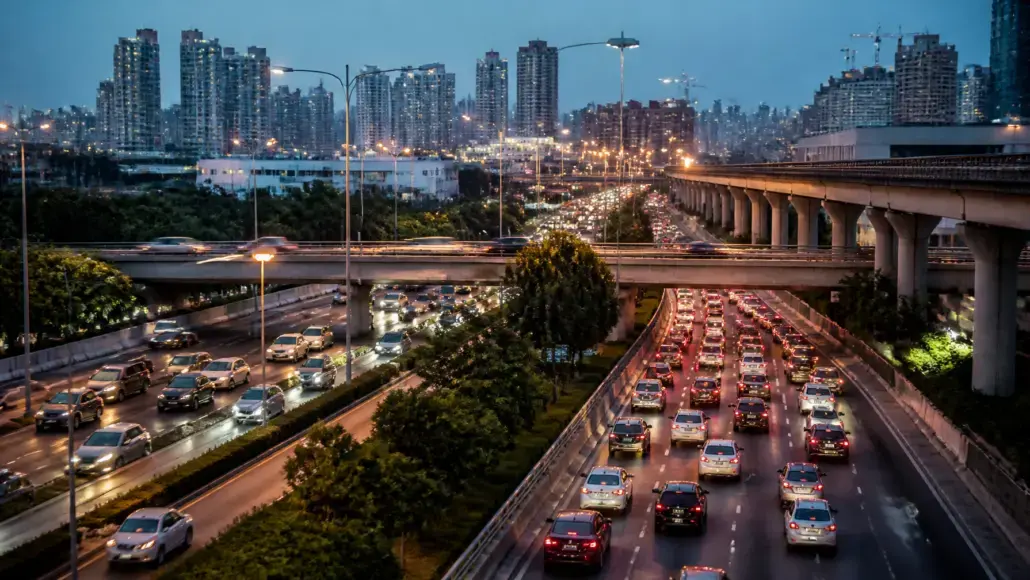
The rapid urbanization of the global population has brought our transport infrastructure to a critical tipping point. In major metropolitan areas, traffic congestion is no longer just an inconvenienceit is a major economic drain and a significant contributor to environmental degradation. As we look toward the future of smart cities, the adoption of AI traffic congestion management has emerged as the most viable solution for restoring urban flow. By moving away from static, timer-based systems toward dynamic, data-driven platforms, cities can now predict and respond to traffic spikes before they manifest as gridlock. This technological shift represents a fundamental evolution in civil engineering, where the management of the digital twin of the city is just as important as the physical asphalt itself.
Transport Advancement highlights that predictive modeling is the engine that drives this new era of mobility. By harvesting data from thousands of sources, including roadside sensors, GPS signals from smartphones, and connected vehicle networks, AI systems can create a high-resolution, real-time map of a city’s movement. These systems don’t just see where the traffic is. They understand why it is there and where it is going. This deep level of insight allows transport authorities to implement autonomous roadway traffic control strategies that were once impossible. Whether it’s adjusting the timing of a thousand traffic lights in unison or suggesting alternative routes to commuters via their navigation apps, AI is the silent orchestrator of the modern urban environment.
The Architecture of AI-Driven Urban Flow Prediction
The foundation of any AI traffic congestion management system is a robust and distributed data ingestion layer. Modern cities are equipped with an array of sensors, ranging from inductive loops buried in the pavement to high-resolution cameras with edge-computing capabilities. These sensors provide the raw ground truth of vehicle counts, speeds, and classifications. This data is then combined with historical patterns, weather reports, and even social media feeds to provide a comprehensive picture of the urban environment. The AI models, often based on neural networks and deep learning, process this massive influx of information to identify the subtle precursors of a traffic jam.
Real-Time Predictive Modeling and Anomaly Detection
One of the most powerful features of AI traffic is the ability to perform real-time predictive modeling. Unlike traditional systems that only respond to a jam once it has occurred, AI can forecast traffic conditions up to 60 minutes in advance with remarkable accuracy. This allows for anticipatory traffic management, where the system can start diverting traffic or changing signal priorities long before the first brake light is tapped. Furthermore, AI excels at anomaly detection—identifying the signature of an accident or a breakdown amidst the normal flow of traffic. By alerting emergency services and adjusting the surrounding traffic flow within seconds, these systems can prevent the ripple effect of congestion that typically follows a minor incident.
Autonomous Signal Control and Grid Synchronization
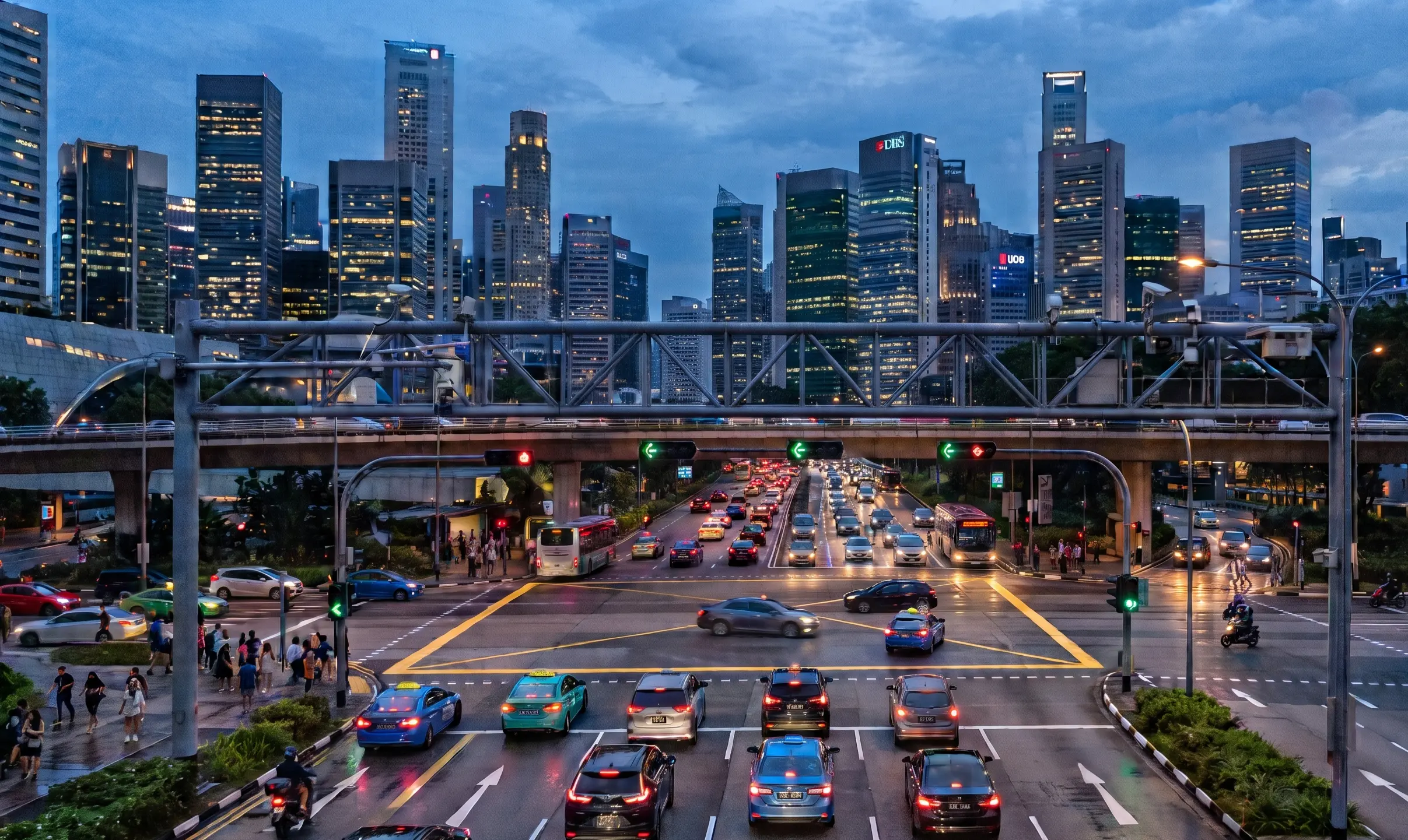 The most visible application of AI traffic congestion management is in the synchronization of traffic signals. Traditional green waves are often pre-programmed based on average traffic speeds, but they quickly break down during peak hours or weather events. AI-driven signal control uses reinforcement learning to constantly optimize the timing of entire grids. By viewing the city as a single, connected network rather than a collection of independent intersections, the AI can prioritize the movement of transit vehicles, emergency services, and high-occupancy lanes while minimizing the total delay for all users. This system-wide optimization is the key to unlocking significant gains in urban throughput without the need for expensive new road construction.
The Economic and Environmental Impact of Reduced Gridlock
The economic cost of traffic congestion is staggering, with billions of dollars lost annually in wasted time and fuel. By improving urban flow, AI traffic congestion management directly boosts the productivity of the workforce and reduces the cost of logistics for businesses. Furthermore, the environmental benefits are equally profound. Stop-and-go traffic is one of the most inefficient ways to operate a vehicle, leading to significantly higher emissions of carbon dioxide and particulate matter. By smoothing out the traffic flow and reducing idling time, AI-driven systems are a vital tool in the fight against urban air pollution and climate change.
Improving Public Transit and Shared Mobility
AI-driven traffic management is not just for private cars. It is a powerful enabler for public transit. By giving buses and light-rail vehicles signal priority—where the light turns green as the vehicle approaches—cities can make public transport faster and more reliable. This transit-first approach encourages more people to leave their cars at home, further reducing the overall demand on the road network. Furthermore, AI can optimize the routing of shared mobility services, such as ride-hailing and bike-sharing, ensuring that these resources are distributed where the predicted demand is highest. This integration of diverse transport modes into a single, AI-managed ecosystem is the hallmark of the Mobility as a Service (MaaS) revolution.
V2X Connectivity and the Future of Autonomous Roadways
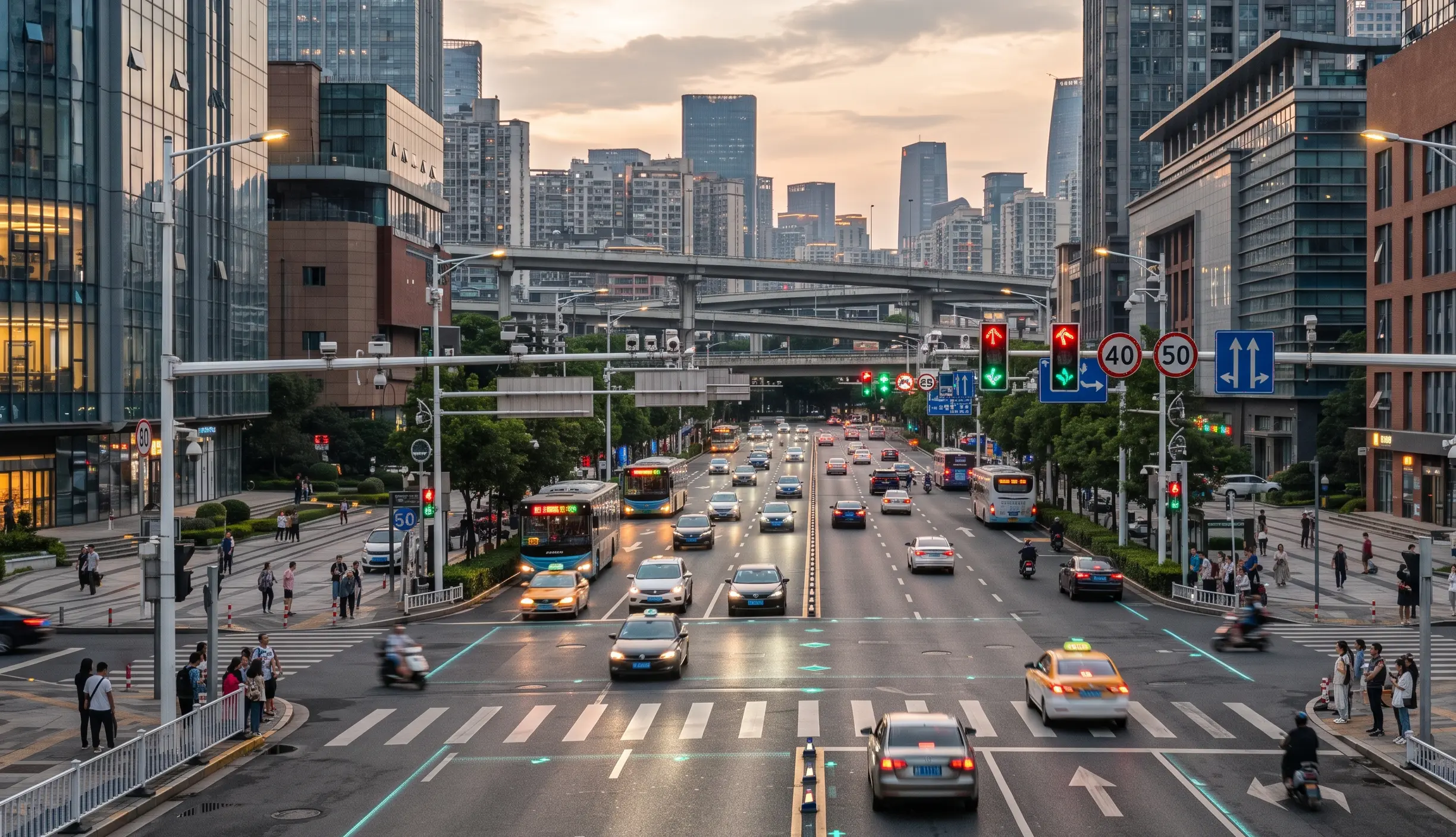 The next frontier for AI traffic congestion management is the integration of Vehicle-to-Everything (V2X) connectivity. In this future scenario, the traffic management system communicates directly with the onboard computers of connected and autonomous vehicles. The system can request that a platoon of trucks slow down by 2 mph to allow a gap for merging traffic, or it can provide precise speed recommendations to cars to ensure they always arrive at the next intersection on a green light. This level of collaborative movement represents the ultimate form of roadway control, where the city and the vehicles work together as a single, harmonious organism.
Strategic Implementation and Ethical Considerations
The rollout of AI-driven traffic systems requires a strategic approach that balances technological innovation with public trust. Data privacy is a paramount concern, as the systems rely on tracking the movement of millions of individuals. Ensuring that all data is anonymized and aggregated is essential for maintaining public support. Furthermore, the algorithms themselves must be transparent and free from bias. For example, the AI must not prioritize traffic flow in wealthy neighborhoods at the expense of disadvantaged ones. Establishing clear ethical guidelines for the use of AI in public infrastructure is a critical task for urban planners and policymakers as we move toward the 2030s.
Challenges in Infrastructure Integration and Interoperability
One of the biggest hurdles to the adoption of AI traffic is the aging and fragmented nature of current infrastructure. Many cities have a patchwork of legacy systems from different manufacturers that do not communicate with each other. Creating a unified, interoperable platform that can ingest data from any source and control any hardware is a significant engineering challenge. Furthermore, the physical installation of thousands of new sensors and communication nodes requires significant capital investment. However, as the cost of AI and IoT technology continues to fall, the return on investment for these smart city projects is becoming increasingly clear, with many cities seeing a payout in as little as three to five years through reduced congestion and improved safety.
The Role of Digital Twins in Urban Planning
The use of Digital Twins—high-fidelity virtual replicas of the city—is a game-changer for long-term urban planning. Transport authorities can use their digital twin to simulate the impact of a new road, a major construction project, or a change in zoning laws before any physical work begins. By running thousands of what-if scenarios, planners can identify the most effective interventions and avoid costly mistakes. This data-driven approach to planning ensures that the physical growth of the city is perfectly synchronized with its movement needs, creating a more sustainable and livable urban environment for future generations.
Conclusion: Orchestrating the City of Tomorrow
In conclusion, the adoption of AI traffic congestion management represents a fundamental shift in how we perceive and manage urban movement. Transport Advancement believes that by leveraging the power of predictive modeling, real-time data analysis, and autonomous control, cities are moving away from the chaos of gridlock toward a future of seamless flow. This technological evolution is not just about moving cars faster. It is about reclaiming our time, protecting our environment, and building a more resilient and equitable urban society. As we look toward the smart cities of the future, AI will be the invisible hand that orchestrates the complex dance of millions of people and vehicles, ensuring that the heart of the city continues to beat with efficiency and vitality. This is the promise of AI-driven mobility: a world where the journey is as efficient as the destination, and where the city’s flow is a testament to the power of human innovation. Through the lens of AI traffic congestion management, we see a future defined by precision, sustainability, and a relentless commitment to the quality of urban life. The gridlock of the past is being replaced by the intelligence of the future, creating a smoother path for us all.
