






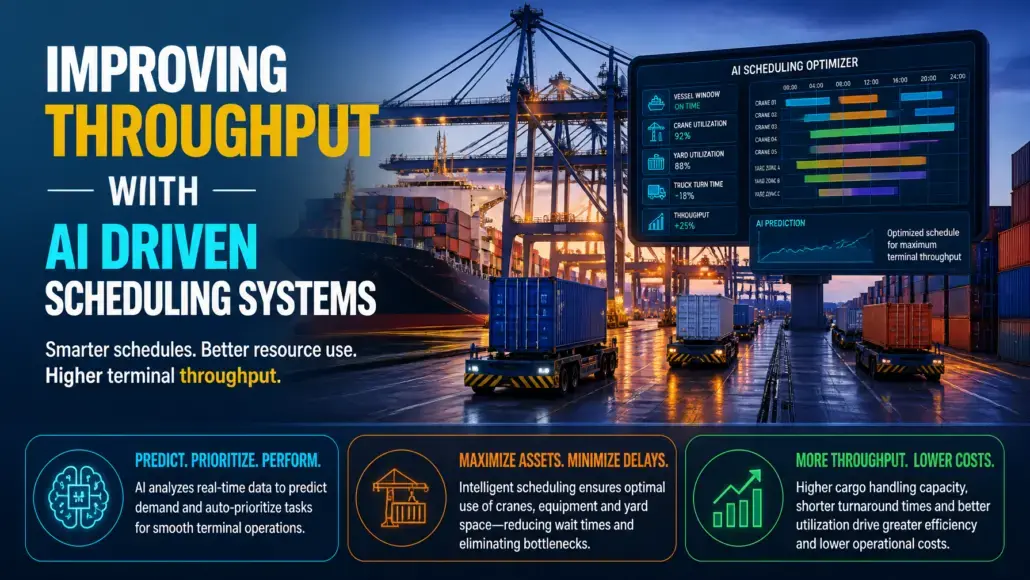
In the high-stakes world of global logistics, the efficiency of a terminal is measured by its throughput—the volume of cargo it can process in a given timeframe. As ports and distribution centers face increasing pressure from rising trade volumes and larger vessels, traditional scheduling methods are often found wanting. Improving throughput with AI driven scheduling has emerged as a game-changing solution, allowing facilities to move beyond manual, reactive planning toward a more predictive and optimized approach. Artificial intelligence and machine learning algorithms are uniquely suited to the complexities of terminal operations, where hundreds of variables—from vessel arrival times and crane availability to trucking schedules and yard capacity—must be balanced simultaneously. Transport Advancement notes that by processing vast amounts of data in real-time, AI systems can generate schedules that are far more efficient than those created by human planners alone, ensuring that every asset in the terminal is utilized to its full potential.
The transition to AI driven scheduling represents a shift toward smart terminal management, where data is the primary driver of operational decisions. In a traditional setting, a change in one variable, such as a delayed vessel, can trigger a cascade of disruptions that are difficult to manage. AI systems, however, can instantly recalculate the entire terminal schedule to accommodate the change, minimizing the ripple effect across the operation. This agility is crucial for maintaining high levels of productivity in an environment where unpredictability is the only constant. By optimizing the sequence of crane moves, the movement of yard tractors, and the assignment of berthing slots, AI helps to eliminate idle time and reduce the time cargo spends in the terminal. The result is a more fluid and reliable logistics node that can handle greater volumes without the need for massive physical expansions.
Deep Dive into Reinforcement Learning for Logistics
One of the most advanced forms of AI used in terminal management is Reinforcement Learning (RL). Unlike traditional algorithms that follow a fixed set of rules, RL systems learn through a process of trial and error, receiving rewards for actions that improve throughput and penalties for those that cause delays. In a simulated terminal environment, an RL agent can run through millions of scenarios in a matter of hours, discovering highly efficient scheduling patterns that a human planner might never consider. For example, the system might find that by slightly delaying the unloading of one vessel to prioritize another with a tighter departure window, it can significantly improve the overall flow of the entire port.
This capability for continuous learning means that the AI driven scheduling system becomes more effective the longer it is in operation. It begins to understand the specific nuances of a terminal—such as which berths are most affected by tides or which stacking areas are prone to congestion during certain times of the day. By incorporating these insights into the scheduling process, the AI can create plans that are not just theoretically optimal, but practically robust. This level of sophistication is particularly valuable in mega-ports where thousands of container movements occur every day, and even a 1% improvement in efficiency can translate to millions of dollars in annual savings. The use of RL is transforming the role of the terminal manager from a scheduler to an overseer of a self-optimizing system.
Optimizing Resource Allocation and Yard Management
One of the most significant benefits of improving throughput with AI driven scheduling is the optimization of resource allocation. In a large container terminal, the efficient use of quay cranes, stacking cranes, and horizontal transport vehicles is essential for maintaining flow. AI algorithms analyze historical performance data and real-time operational status to determine the most effective distribution of these assets. For instance, the system can predict which cranes are likely to finish their tasks early and proactively reassign them to other vessels, preventing bottlenecks at the quay. This dynamic allocation ensures that labor and machinery are always focused on the highest-priority tasks, maximizing the terminal’s overall capacity.
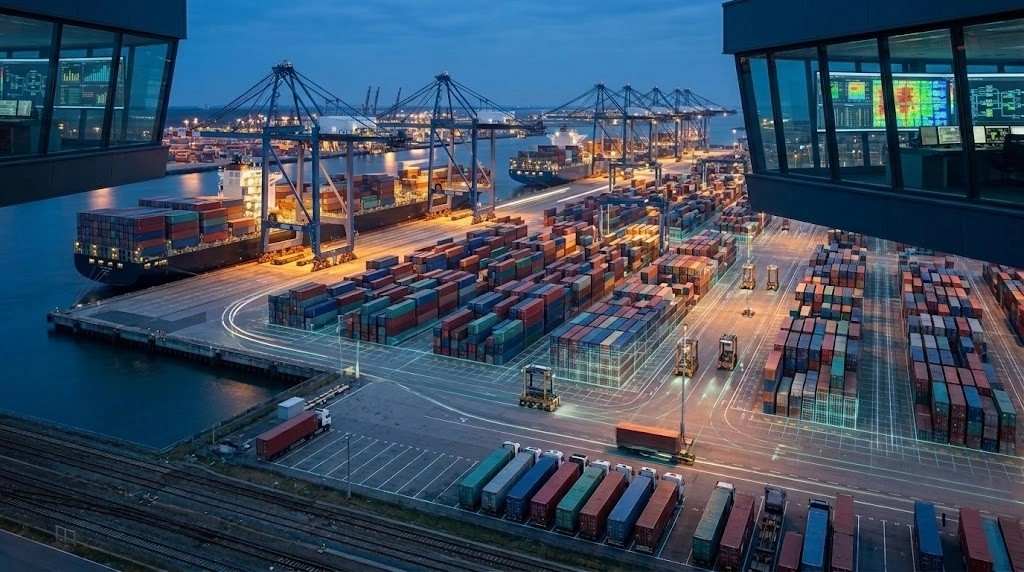
Yard management also stands to benefit significantly from AI integration. The placement of containers in the terminal yard is a complex puzzle that directly impacts the speed of both loading and unloading operations. AI-driven systems optimize container stacking patterns based on expected departure times, vessel destination, and weight requirements. By minimizing re-handles, the unnecessary movement of containers to reach one buried beneath them, AI significantly speeds up the delivery process to both trucks and trains. Furthermore, AI can manage the flow of external trucks entering the terminal, using gate appointment systems to smooth out traffic peaks and reduce congestion at the entrance. This level of coordination between the yard and the gate ensures that the entire terminal operates as a single, synchronized unit, providing a superior level of service to all stakeholders in the supply chain.
The Power of Digital Twins in AI-Driven Ports
A critical tool in the implementation of AI driven scheduling is the digital twin—a virtual replica of the entire physical terminal. By feeding real-time data from sensors, GPS, and operational software into this virtual model, terminal operators can simulate the impact of different scheduling decisions before they are implemented on the ground. A digital twin allows for what-if analysis- what if three mega-vessels arrive simultaneously? What if a major crane undergoes emergency maintenance? The AI system can test thousands of scheduling responses within the digital twin, identifying the one that maintains the highest throughput with the least risk.
This marriage of AI and digital twin technology provides a level of operational visibility that was previously impossible. It allows for the synchronization of ship-to-shore operations with inland logistics, ensuring that the terminal does not become a bottleneck for the broader supply chain. For example, the system can coordinate the arrival of a train with the unloading of a specific set of containers, allowing for direct transfer and further reducing yard dwell time. This holistic optimization is the key to creating a truly seamless logistics network. As the data fidelity of digital twins increases, the accuracy and impact of AI driven scheduling will only grow, cementing its role as the backbone of modern port productivity.
Predictive Analytics and Future-Ready Operations
The true power of improving throughput with AI driven scheduling lies in its predictive capabilities. Rather than simply responding to the current state of the terminal, AI systems use historical data to forecast future conditions. This allows operators to anticipate periods of high demand and adjust their staffing and equipment maintenance schedules accordingly. For example, if the AI predicts a surge in imports due to seasonal trends or a specific shipping cycle, the terminal can proactively clear yard space and increase gate capacity. This foresight prevents the kind of gridlock that often plagues terminals during peak periods, ensuring a consistent and reliable flow of cargo throughout the year.
As the technology continues to evolve, AI systems will become even more integrated with the broader logistics ecosystem. As these predictive systems evolve, they will bridge the gap between terminal operations and the final stage of delivery, particularly when integrating last mile drones into cargo hubs to complete the autonomous loop. By connecting with data from shipping lines, rail operators, and inland warehouses, terminal AI can optimize its operations based on a complete view of the supply chain. This holistic approach will further enhance throughput by ensuring that the terminal is perfectly aligned with the needs of its partners. Moreover, the move toward AI driven scheduling is a critical step toward the full automation of terminal operations. As robotic systems become more common, the intelligent brain provided by AI will be essential for coordinating their movements and ensuring they operate safely and efficiently. The commitment to AI-driven innovation is what will define the next generation of logistics hubs, making them faster, smarter, and more resilient than ever before.
AI as the Catalyst for Terminal Efficiency
Artificial intelligence is moving beyond experimental phases into core operational scheduling. Konecranes has structured a dedicated AI Enablement division to optimize the interaction between human operators and automated machines, utilizing predictive analytics to continuously refine equipment scheduling and maximize port throughput.
Impact on Sustainability and Environmental Responsibility
Improving throughput with AI driven scheduling also has a significant positive impact on the environment. By reducing the time vessels spend at berth and minimizing the idling time of trucks at the terminal gates, AI helps to lower the overall carbon emissions of the logistics sector. A more efficient terminal means that ships can spend less time in port, allowing them to travel at lower, more fuel-efficient speeds between destinations—a practice known as slow steaming. Furthermore, by optimizing the paths of yard vehicles and reducing unnecessary container moves, AI directly lowers the energy consumption of the terminal’s own machinery.
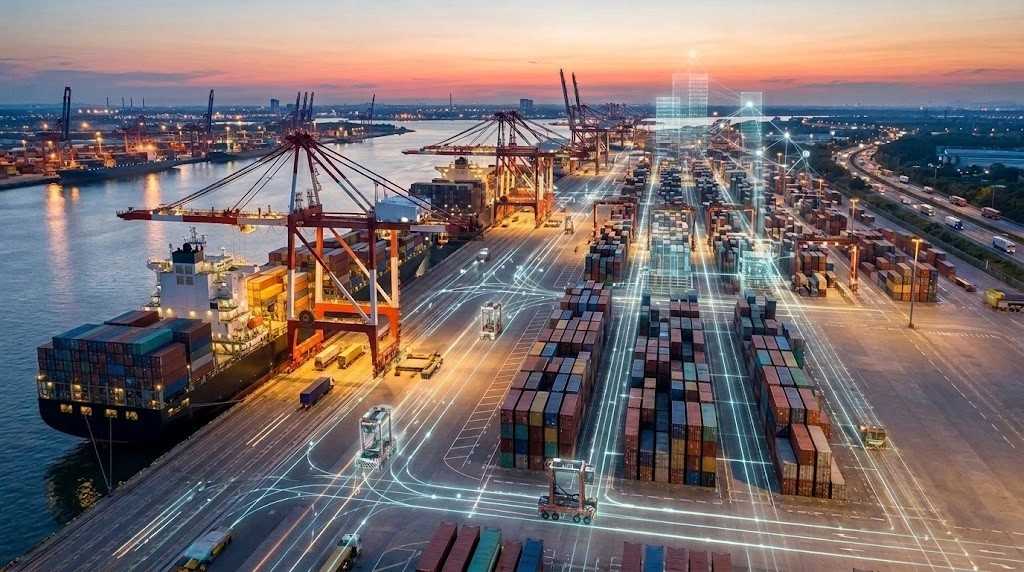
In many parts of the world, port cities are under increasing pressure to reduce air pollution and noise. AI-driven optimization helps to address these concerns by smoothing out the flow of traffic and ensuring that terminal operations are as quiet and efficient as possible. By maximizing the use of existing infrastructure, AI also reduces the need for disruptive physical expansions that can damage local ecosystems. This alignment of economic productivity and environmental stewardship is a key driver for the adoption of AI in the logistics industry. As global trade continues to grow, Transport Advancement believes that the ability to process more cargo with a smaller environmental footprint will be a major competitive advantage for the ports of the future.
References
- From GenAI to human-machine collaboration: Niina Hagman charts Konecranes’ AI path forward
