














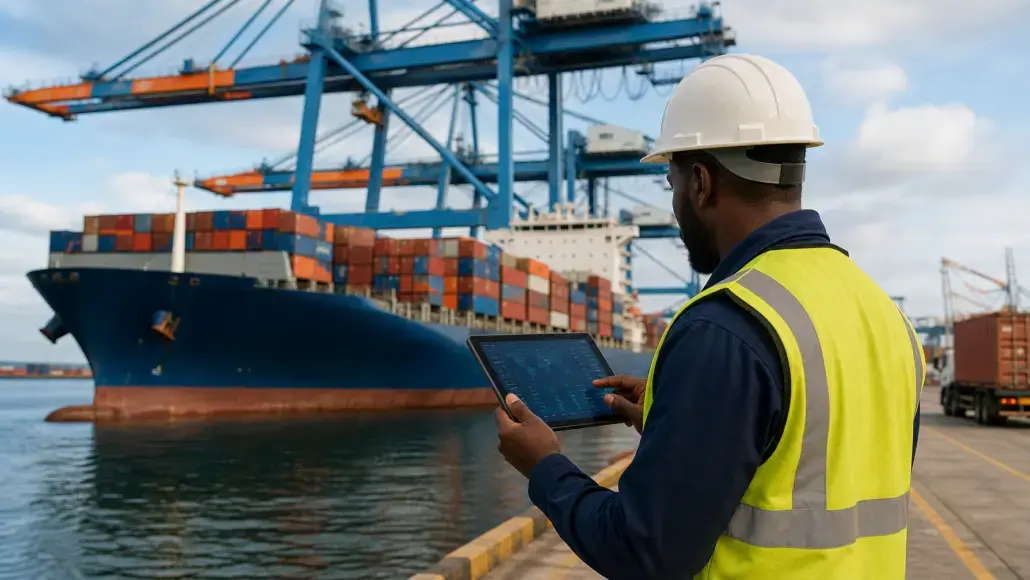
International ocean shipping has struggled for decades under the administrative weight of paper-based trade documentation and fragmented communications. A single maritime container shipment routinely involves up to thirty separate commercial and governmental entities, generating hundreds of physical paper endorsements, cargo manifests, and customs declarations. To eliminate systemic forgery risks and costly administrative delays, leading carriers, terminal operators, and trade finance institutions are adopting distributed ledger technology. The deployment of enterprise blockchain maritime logistics chains is establishing immutable digital records, accelerating cargo release times, and safeguarding high-value global freight against fraudulent diversion.
The transition toward decentralized digital architecture gained urgent momentum following high-profile maritime fraud scandals and chronic document delivery bottlenecks. Ocean vessels carrying industrial goods frequently complete ocean voyages and dock at destination ports days before physical paper bills of lading arrive via international express couriers. In the absence of original documentation, container lines must either hold cargo in expensive terminal storage or release shipments against high-risk letters of indemnity. Cryptographic ledgers resolve this structural inefficiency by establishing verifiable digital ownership that transfers across international counterparties in fractions of a second.
Digital Evolution Beyond Proprietary Silos
Early attempts at maritime digitization stumbled because proprietary platforms attempted to lock commercial participants into closed corporate architectures. The maritime industry firmly rejected single-carrier controlled ecosystems, recognizing that neutral governance and cross-platform interoperability are mandatory for global adoption. The contemporary wave of enterprise blockchain deployment relies on independent consortia and open standards established by industry governing bodies.
Central to this transformation is the Digital Container Shipping Association, which established open application programming interface standards for electronic bills of lading. Major ocean carriers representing the majority of global container capacity have committed to fully digitizing their bill of lading issuance by 2030, with electronic bill of lading adoption surging past 11 percent across major commercial lanes in 2025.
Industry consortia such as the Global Shipping Business Network have established neutral, permissioned distributed ledgers governed collectively by international carriers, terminal operators, and financial institutions. By utilizing decentralized cryptographic verification rather than centralized cloud databases, these platforms ensure that commercial data remains private to the transacting parties while providing an incorruptible shared audit trail of cargo ownership.
Authentication and Paperless Cargo Release
The release of ocean cargo from marine terminals represents one of the most vulnerable handoffs in international trade. Criminal syndicates have historically targeted terminal gate operations using forged paper delivery orders, falsified container release PIN codes, and identity theft to siphon off high-value consumer electronics, metals, and chemical shipments.
Blockchain integration redefines cargo release security through cryptographic tokens and multi-party consensus:
- Electronic bills of lading are issued as unique digital assets whose ownership transfers instantly between shippers, banks, and consignees without duplication risks.
- Smart contracts verify that all commercial preconditions, including freight payment receipts and customs clearance status, are fulfilled before issuing release permits.
- Digital cargo release tokens replace insecure static PIN codes with dynamic, time-limited cryptographic credentials sent straight to verified drayage drivers.
- Real-time automated audit logs record every document endorsement, customs inspection, and gate exit on an immutable ledger accessible to authorized regulatory authorities.
- Dispute resolution workflows reduce document verification delays from several days to under twenty minutes, eliminating wrongful delivery liabilities.
By linking cargo release authorizations directly to verified driver identities and truck license plate scans, marine terminals eliminate paper-based fraud at gate entrances entirely.
Trade Finance and Customs Fraud Mitigation
Maritime logistics documentation serves a dual purpose as legal proof of carriage and commercial collateral for international trade finance. Commercial banks extend billions of dollars in credit annually based on shipping paper presented by trading firms. However, traditional paper documentation is notoriously vulnerable to duplicate financing fraud, where bad actors present identical paper bills of lading to multiple lenders simultaneously to secure fraudulent credit lines.
Enterprise blockchain maritime logistics chains eradicate duplicate financing by creating single-source cryptographic records for each cargo consignment. When an electronic bill of lading is pledged as collateral to a financial institution, that status is recorded across the permissioned ledger network. Any subsequent attempt to present the same shipping document to another lender is immediately flagged and rejected by the smart contract protocol.
Customs agencies have integrated with distributed logistics ledgers to strengthen trade compliance and cross-border security. Regulatory officers gain real-time visibility into immutable shipping manifests, origin certificates, and container seal telemetry directly from the origin port. Customs clearance times drop dramatically because inspectors can verify that shipment details have not been altered or doctored during ocean transit, allowing legitimate cargo to clear borders without physical container holds.
Legal Harmonization and Regulatory Recognition
The global expansion of blockchain-secured logistics has been accelerated by decisive international legal reforms. Historically, common law and maritime trade statutes required physical paper documents to convey legal title to goods at sea. Without statutory recognition of digital records, commercial banks and marine insurers remained hesitant to accept electronic bills of lading for major transactions.
This legal barrier dissolved rapidly as leading maritime jurisdictions enacted legislation based on the Model Law on Electronic Transferable Records developed by the United Nations Commission on International Trade Law. The United Kingdom enacted the Electronic Trade Documents Act, giving electronic trade documents the exact same legal validity and functional status as their paper counterparts. Key international maritime hubs, including Singapore, the Abu Dhabi Global Market, and European commercial centers, enacted corresponding legal frameworks, creating a unified cross-border legal environment for blockchain-based trade.
With commercial contracts legally enforceable across key maritime jurisdictions, international banks have integrated digital trade platforms directly into their corporate banking portals. Shippers and buyers execute complex documentary letters of credit entirely through smart contracts, releasing escrow payments automatically upon cryptographic confirmation of vessel departure and customs sign-off.
Regulatory Verification and Green Corridor Tracking
Beyond financial documentation and cargo security, distributed ledgers have become indispensable tools for environmental compliance across international shipping lanes. Stricter carbon intensity regulations, corporate sustainability directives, and regional fuel mandates require shipowners to prove their energy consumption and emissions metrics with absolute mathematical integrity.
Permissioned blockchain networks record bunker fuel delivery notes, mass flow meter telemetry, and shore-power consumption receipts directly from calibrated port sensors. Shippers purchasing green maritime transport corridors can verify that carbon offset credits or biofuel allocations have not been double-counted across supply chains. While digital ledgers provide transparent verification for fuel emissions reporting, fleet managers simultaneously address physical energy losses at sea, noting how Bio Based Hull Coatings Lower Commercial Shipping Costs by minimizing hydrodynamic resistance across commercial trade routes.
The convergence of cryptographic data integrity and operational transparency is reshaping commercial maritime relationships. By eliminating paper handling overhead, accelerating terminal container turnover, and establishing absolute trust across international counterparties, enterprise blockchain maritime logistics chains provide the foundational infrastructure for modern, automated global trade.
