








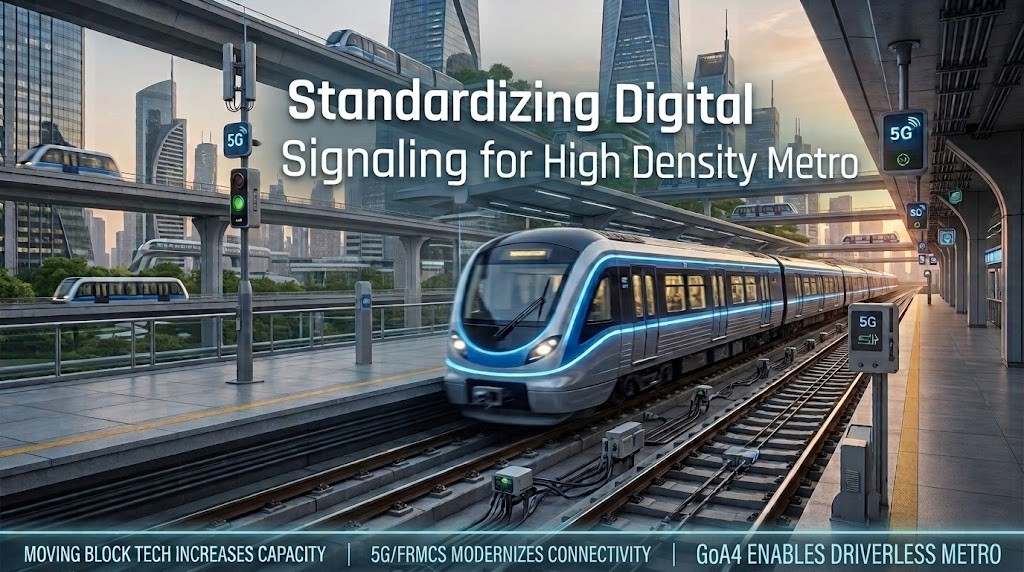
The rapid growth of global metropolitan populations has placed unprecedented strain on existing rail infrastructure, forcing transit agencies to look beyond physical expansion to meet demand. The most cost effective and technically sophisticated way to increase the capacity of a metro network is through the modernization of its control and command systems. In early 2026, the transport industry is witnessing a concerted effort toward standardizing digital signaling for high density metro lines. By transitioning from legacy fixed block signaling to advanced moving block technologies, operators can safely reduce the distance between trains, enabling higher frequencies and significantly improving the passenger experience.
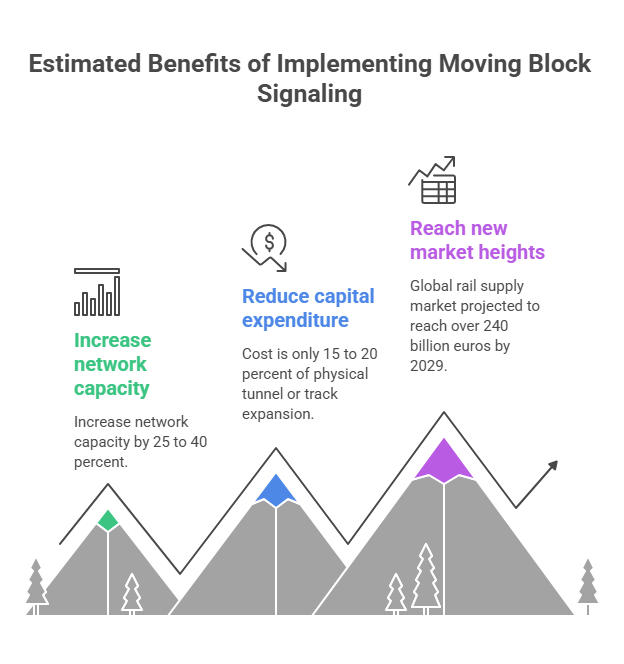
The economic and operational benefits of digital signaling are profound. According to data from the World Bank, implementing moving block signaling can increase network capacity by 25 to 40 percent at only 15 to 20 percent of the capital expenditure required for physical tunnel or track expansion. Furthermore, the global rail supply market for control and signaling systems is projected to reach over 240 billion euros by 2029, reflecting the intense focus on digitalization across the sector. As the industry moves toward full automation, the standardization of these systems has become a critical priority for ensuring interoperability and reducing long term lifecycle costs.
The Technical Evolution of CBTC and ETCS
The two primary technologies driving the digitalization of urban rail are Communications Based Train Control (CBTC) and the European Train Control System (ETCS). CBTC is the preferred solution for high density metro lines because its moving block architecture allows for extremely tight headways, often as low as 75 to 90 seconds. This technology relies on continuous two way communication between the train and the wayside equipment, providing precise real time positioning data that allows the system to maximize the number of trains on a given section of track. In contrast, ETCS was originally developed for mainline and cross border rail, focusing on interoperability across different national networks.
While CBTC offers superior throughput for high density urban cores, the industry is increasingly exploring ways to bridge the gap between these two standards. This digital infrastructure provides the foundation for more advanced operational improvements, including the strategies used for optimizing maintenance cycles for modern MRT fleets. In Paris, the RER Line E recently commissioned the NexTEO system, a hybrid architecture that combines ETCS Level 2 with Grade of Automation 2. This setup achieves 28 trains per hour, demonstrating how digital signaling can be adapted to handle both regional rail and high frequency urban services. The ability to manage these hybrid environments is essential for transit agencies that operate diverse networks with varying technical requirements.
Overcoming Vendor Lock in through Interoperability
One of the historical challenges in the metro signaling market has been the issue of proprietary vendor lock in. Traditionally, once an operator chose a signaling supplier, they were often tied to that vendor for the entire lifecycle of the asset, making it difficult to integrate new equipment or expand the network with different technology. To address this, leading transit agencies are now mandating interoperability standards that allow equipment from different manufacturers to work together seamlessly. The New York City MTA has been a pioneer in this area with its Interoperability Interface Specification, which has been successfully demonstrated on the Crosstown and Fulton lines using equipment from Siemens, Alstom, and Mitsubishi Electric.
Standardization efforts are also gaining momentum at a global level. The European rail infrastructure managers have adopted the EULYNX open standards, which decouple the interlocking logic from the trackside field assets. This allows operators to replace or upgrade individual components without needing to overhaul the entire signaling system, significantly reducing maintenance costs and increasing procurement flexibility. For B2B stakeholders, these open standards are a major strategic development, as they lower the barriers to entry for new technology providers and encourage competition and innovation across the supply chain.
The Transition to FRMCS and 5G Connectivity
The reliability of digital signaling depends on robust and secure communication networks. For decades, the rail industry has relied on the GSM R standard, but this technology is now approaching obsolescence and lacks the bandwidth required for modern automated operations. The industry is currently in the process of transitioning to the Future Railway Mobile Communication System (FRMCS), which is based on 5G technology. FRMCS provides the high speed, low latency connectivity needed for real time video surveillance, remote train control, and advanced predictive maintenance.
The rollout of FRMCS is a multi year strategic roadmap that requires significant investment in new radio infrastructure and onboard equipment. In high density urban environments, operators must also manage the risk of radio frequency interference in unlicensed bands. The transition to 5G offers the potential for dedicated network slicing, which ensures that mission critical signaling data is prioritized over other types of traffic. This level of communication resilience is a prerequisite for moving toward Grade of Automation 4, where trains operate entirely without human intervention.
Enhancing Capacity and Energy Efficiency through ATO
Standardizing digital signaling is the foundation for Automatic Train Operation (ATO), which removes the variability of human driving to deliver a more consistent and efficient service. ATO systems optimize the acceleration and braking profiles of the train, maximizing the use of regenerative braking and synchronized coasting. According to the International Energy Agency, ATO over digital signaling can cut traction energy consumption by 15 to 30 percent. In an era of high energy prices and stringent decarbonization targets, these efficiency gains represent a significant operational saving for transit agencies.
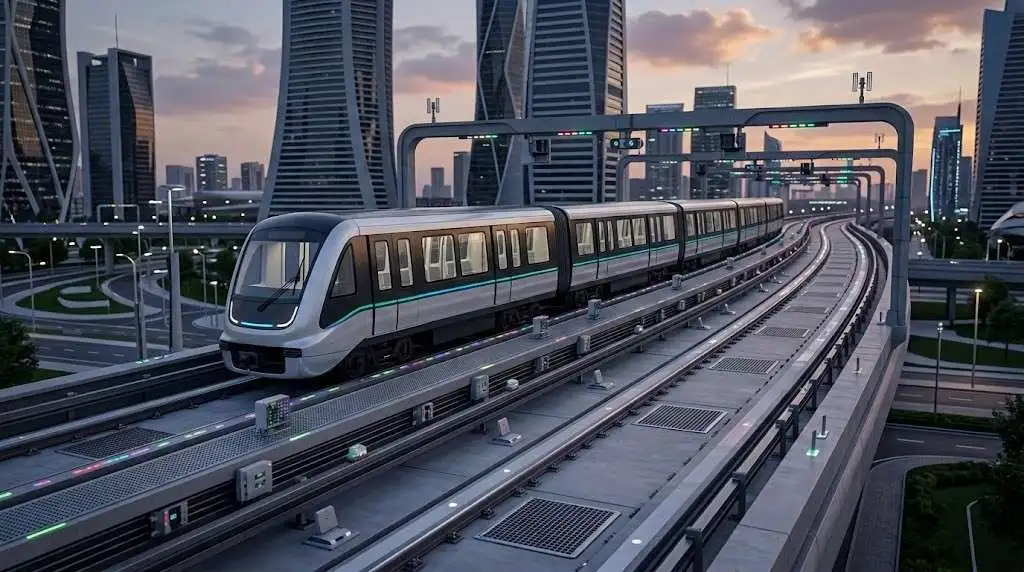
Moreover, GoA4 automation is becoming the standard for new metro line investments. By late 2023, the global total of automated metro route length reached over 2,200 kilometers, with driverless operations accounting for more than 70 percent of all new projects. These systems not only increase capacity but also improve safety by eliminating human error, which is a factor in the majority of rail accidents. The high level of precision offered by automated systems allows for faster recovery from service disruptions, as the central control system can instantly recalibrate the positions of all trains on the network.
Managing Brownfield Cutover and Operational Risk
One of the most significant B2B challenges in signaling modernization is the process of brownfield cutover, where new digital systems are installed on active lines with minimal disruption to service. This requires a complex phased approach, often involving the dual fitting of fleets with both legacy and new signaling equipment. Maintenance windows are typically restricted to three or four hours during the night, placing immense pressure on installation teams to complete their work before the morning rush hour. The financial penalties for failing to return a line to service on time are severe, making risk management a top priority for both operators and contractors.
To de risk these deployments, industry leaders are increasingly using digital twin modeling and hardware in the loop testing. These tools allow engineers to simulate the entire signaling migration in a virtual environment, identifying potential conflicts and testing recovery procedures before any work takes place on the physical track. The use of digital twins has been shown to compress physical commissioning schedules and significantly reduce the likelihood of operational disruptions. This data driven approach to project management is becoming a standard requirement for major signaling contracts.
Cybersecurity and Safety Certification
As signaling systems become more interconnected and dependent on wireless communication, the threat of cyber attacks has become a primary concern. Control command and signaling systems must comply with rigorous cybersecurity standards, such as IEC 62443 and the EU NIS2 directive. This involves the implementation of multi layered security controls to protect against unauthorized access and ensure the integrity of the signaling data. Safety certification under CENELEC standards for Safety Integrity Level 4 remains the gold standard for the industry, ensuring that the systems are designed and tested to the highest possible levels of reliability.
For B2B providers, the ability to deliver systems that are both highly automated and demonstrably secure is a key competitive differentiator. The certification process is time consuming and expensive, requiring extensive documentation and independent validation. However, once a system is certified, it provides a high level of assurance to operators and regulators that the technology is safe for public use. The ongoing dialogue between industry stakeholders and regulatory bodies is essential for evolving these standards to keep pace with rapid technological change.
Global Developments in Digital Rail Signaling & Urban Transit Modernization
The modernization and standardization of digital signaling systems—most notably Communications-Based Train Control (CBTC) moving-block systems and next-generation 5G Future Railway Mobile Communication Systems (FRMCS)—have accelerated through major initiatives across global rail and transit technology providers. Siemens Mobility secured a major contract with RATP to deploy its Trainguard MT CBTC system for Grade of Automation 4 (GoA4) driverless operation across Paris Metro Line 13, while also equipping Berlin’s U5 and U8 lines with semi-automated CBTC technology to boost capacity by up to 30%.
In Spain, Alstom signed a contract with Metro de Madrid to supply its Urbalis CBTC signaling system to convert Line 6 into Madrid’s first driverless metro line. Strengthening its global signaling footprint, Hitachi Rail finalized its €1,660 million acquisition of Thales’ Ground Transportation Systems (GTS) and introduced 5G-enabled SelTrac CBTC digital signaling architectures designed to minimize lifecycle costs and support high-density transit. Addressing critical communication backbones, Nokia launched its commercial 5G FRMCS solution operating in the 1900 MHz band and deployed it on Deutsche Bahn’s test network in Germany to replace legacy GSM-R and support automated rail operations. Meanwhile, Ericsson expanded its private mission-critical 5G rail presence by securing a contract to deliver a foundational digital communications platform for Queensland Rail’s new digital signaling and train control deployment ahead of the Brisbane 2032 Olympics.
The Strategic Future of Digital Rail
Standardizing digital signaling for high density metro is a critical step toward the future of integrated urban mobility. By moving toward open standards, 5G connectivity, and full automation, the rail industry is creating a more flexible and resilient foundation for the cities of the future. The ability to increase capacity without the need for massive new construction projects is an essential tool for managing urban growth in a sustainable and cost effective way.
As we look toward 2030, the focus will continue to be on the full realization of the benefits offered by these digital technologies. The transition to FRMCS and the widespread adoption of GoA4 will enable a new level of service frequency and reliability that will transform the way people move through our most densely populated cities. For B2B decision makers, the message is clear. The modernization of signaling systems is the most powerful lever available for enhancing the performance and value of the urban rail network.
References
- World Bank
- UNIFE
- UITP
- Alstom
- EIB
- IEA
- AIB Research
- EULYNX
- Siemens
- NYC MTA
