












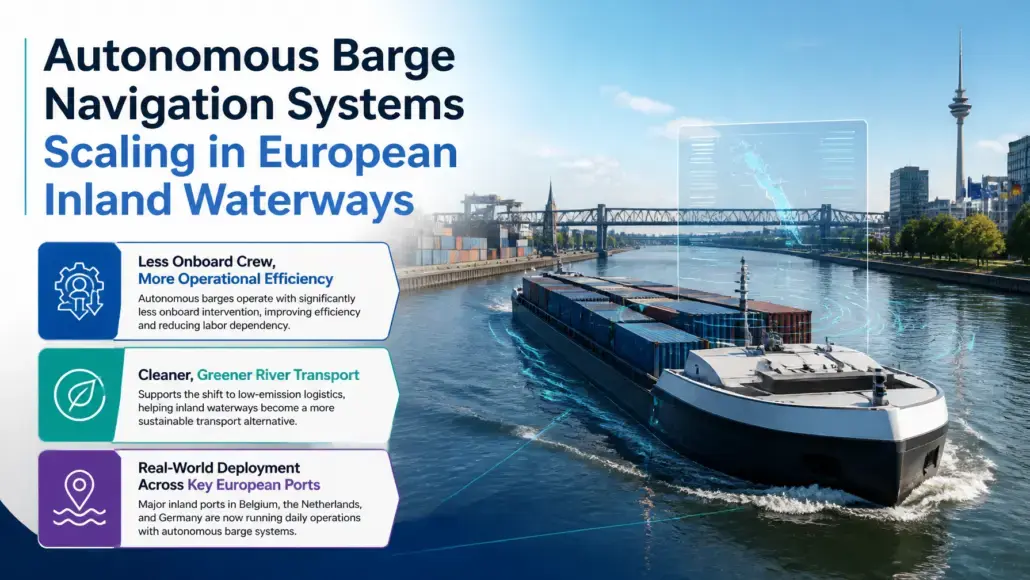
The landscape of European river logistics is undergoing a radical transition as autonomous barge navigation systems move from pilot programs to large scale commercial deployment in 2026. This shift is driven by a combination of chronic labor shortages in the maritime sector and the urgent need for more efficient, low emission transport solutions. Major inland ports in Belgium, the Netherlands, and Germany are now seeing daily operations of vessels that require significantly less onboard intervention. These autonomous systems represent the most significant advancement in waterway transport since the introduction of the diesel engine.
Recent data from the European Commission indicates that inland waterway transport currently accounts for a small but vital percentage of the total EU freight performance. However, with the goal of increasing this share to reduce road congestion, the integration of autonomous technology has become a priority. By 2025, several regulatory frameworks were updated to allow for the broader testing and operation of semi autonomous and fully autonomous vessels. This regulatory clarity has encouraged major logistics providers and technology firms to invest heavily in the infrastructure required for remote vessel management.
The Rise of Remote Operations Centers
The core of this technological evolution is the Remote Operations Center. These facilities allow highly skilled operators to monitor and control multiple vessels from a shore based location. In early 2026, the scaling of these centers has enabled a new model of river freight where a single pilot can oversee a fleet of barges. This approach addresses the shortage of qualified skippers, which has been a major bottleneck for the growth of the industry.
These centers utilize a sophisticated array of sensors, including LIDAR, radar, and high definition cameras, to provide a comprehensive view of the vessel’s surroundings. The data is transmitted via high speed 5G and satellite links, ensuring that the latency is minimal. This real time connectivity allows remote pilots to intervene only when necessary, such as during complex docking maneuvers or when navigating particularly congested sections of the river. The result is a more consistent and safer operation that can run 24 hours a day without the need for traditional crew shift changes.
Economic and Environmental Drivers for Automation
The adoption of autonomous barge navigation is not merely a technical exercise. It is a response to the economic pressures facing the logistics industry. Autonomous vessels can optimize their speed and fuel consumption based on real time hydrological data and traffic conditions. This leads to a significant reduction in operational costs. Furthermore, the ability to operate continuously improves the asset utilization of the barge fleet, making waterborne transport more competitive with road and rail.
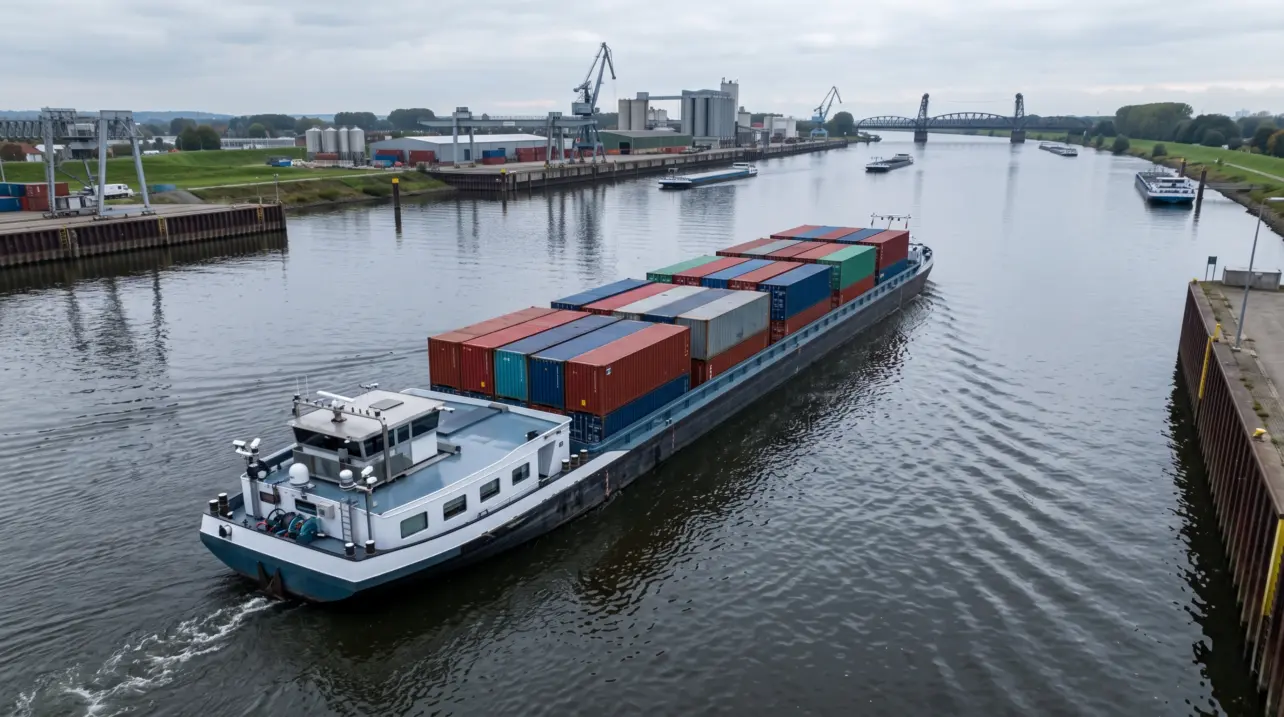
Environmental considerations also play a critical role. Many autonomous barges being deployed in 2026 are also equipped with electric or hydrogen propulsion systems. The precision of autonomous navigation allows for more efficient energy use, further lowering the carbon footprint of river freight. This synergy between automation and decarbonization is a key component of the EU Green Deal’s strategy for a more sustainable transport network.
Major Industry Developments and Company Roles
Several global companies and specialized maritime technology firms are leading the way in the scaling of autonomous navigation across Europe.
- Seafar: This Belgian company has established itself as a leader in remote vessel operations. By 2026, Seafar has expanded its network of Remote Operations Centers across the Rhine and the Danube, managing over 50 vessels simultaneously. Their technology utilizes a proprietary communication protocol that ensures less than 100 milliseconds of latency, allowing for the safe navigation of barges with a reduced crew or no crew onboard, depending on the regulatory zone. This system has been instrumental in addressing the 25 percent vacancy rate in inland shipping personnel across Northern Europe.
- Zulu Associates: The development of the X-Barge by Zulu Associates represents a major step forward in autonomous vessel design. This zero emission barge is purpose built for autonomous operation, featuring a modular layout that can be adapted for various types of cargo. In 2025, the company successfully completed a series of cross border autonomous voyages between Belgium and the Netherlands.
- Port of Antwerp-Bruges: As a major European maritime hub, the Port of Antwerp-Bruges has been a primary testing ground for autonomous systems. The port has invested in the digital infrastructure required to support these vessels, including smart sensors and enhanced connectivity. Their involvement ensures that autonomous barges are seamlessly integrated into the port’s complex logistics chain.
- Kongsberg Maritime: This Norwegian technology group provides the underlying navigation and sensor technology for many autonomous projects. Their suite of AI driven maritime solutions is used to detect obstacles and plan optimal routes in dynamic river environments. Kongsberg‘s experience in deep sea autonomous shipping is now being applied to the unique challenges of inland waterways.
- Wärtsilä Corporation: Wärtsilä has focused on the integration of autonomous systems with smart propulsion technology. Their solutions enable autonomous barges to operate with high levels of efficiency and safety. In 2026, they launched a new platform that combines remote pilotage capabilities with automated docking and collision avoidance systems.
Operational Safety and Reliability
Safety remains the paramount concern for regulators and operators alike. Autonomous systems are designed with multiple layers of redundancy to ensure that the vessel remains under control even in the event of a technical failure. The use of AI for obstacle detection has proven to be more reliable than human observation in many conditions, such as heavy fog or nighttime navigation.
The transition to autonomous navigation also involves a significant change in the role of the maritime pilot. Rather than being on the bridge of a single vessel, pilots are now becoming supervisors of automated systems. This transition is supported by specialized training programs that focus on remote management and technical troubleshooting. The implementation of remote pilotage operations centers is a direct extension of this trend, providing the necessary oversight for the most challenging parts of the waterway network.
Future Expansion and Connectivity
As the technology matures, the expectation is that autonomous barge navigation will expand beyond the initial pilot regions. The development of standardized communication protocols will allow vessels from different manufacturers to interact safely and efficiently. This connected waterway concept is essential for the full realization of the benefits of automation.
By 2027, the industry anticipates that a significant portion of new inland barges will be built with autonomous capabilities as standard. This will not only improve the efficiency of European logistics but also provide a blueprint for other regions looking to modernize their inland waterway systems. The ongoing collaboration between technology providers, port authorities, and regulators is the foundation upon which this autonomous future is being built.
Regulatory Frameworks and Standardisation
The transition to autonomous navigation is heavily dependent on the development of a unified regulatory framework across the European Union. In 2025, the Central Commission for the Navigation of the Rhine (CCNR) released its updated guidelines for the operation of automated vessels. these guidelines define five levels of automation, ranging from driver assistance to full autonomy. By 2026, several river sections have been designated as Automation Corridors where vessels can operate with reduced crew requirements under strict shore based supervision. This regulatory progress has been essential for providing the legal certainty required by insurance companies and investors.
Standardisation is another critical factor for the scaling of autonomous barges. To ensure that vessels from different manufacturers can interact safely, the industry is working toward the adoption of common communication and data exchange protocols. This includes the development of standardized handover procedures between different Remote Operations Centers as a vessel moves across national borders. The European Maritime Safety Agency (EMSA) is playing a central role in this process, facilitating the exchange of best practices and coordinating the implementation of safety standards across the member states.
Future Perspectives and Global Impact
Looking toward 2027 and beyond, the industry anticipates that a significant portion of new inland barges will be built with autonomous capabilities as standard. This will not only improve the efficiency of European logistics but also provide a blueprint for other regions looking to modernize their inland waterway systems. The ongoing collaboration between technology providers, port authorities, and regulators is the foundation upon which this autonomous future is being built. As the technology matures, the focus will likely shift toward the integration of autonomous barges with other automated logistics assets, such as robotic port cranes and driverless trucks, creating a truly end to end autonomous supply chain.
References
- “The Future of Maritime Navigation: Remote Piloting Transforms Ship Operations” – SLD Info
- “Listing of pilot and research projects in the field of automation” – CCR ZKR
- “Freight transport statistics – modal split” – European Commission
- “Kongsberg Annual Report on Maritime Automation 2025” – Kongsberg Maritime
- “Seafar: Remote Vessel Operations and Shore Navigation Report” – Seafar
- “CCNR Guidelines for Automated Navigation on the Rhine 2025” – Central Commission for the Navigation of the Rhine
- “European Maritime Safety Agency Annual Report 2026” – EMSA
