









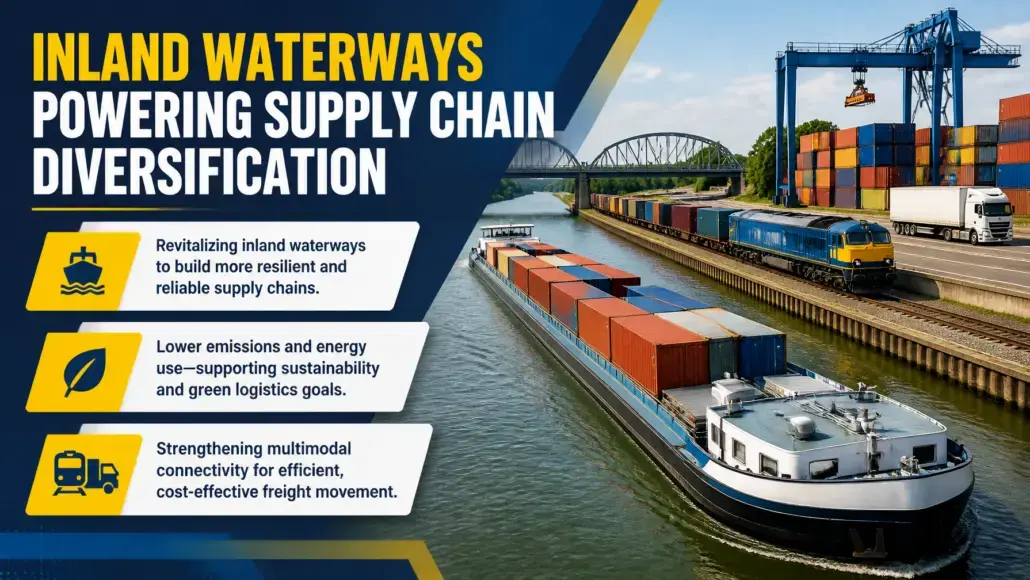
The global logistics industry is entering a period of significant structural change as companies seek to build more resilient and sustainable supply chains. For decades, the ‘truck first’ model dominated inland transport due to its flexibility and speed. However, by 2026, the increasing pressures of road congestion, driver shortages, and carbon emission targets have led to a major shift toward intermodal diversification. eTransport Advancement observes tgat central to this strategy is the revitalized use of inland waterway networks, which offer a high capacity and low emission alternative for moving goods from deep sea ports to the hinterland.
Intermodal diversification involves the strategic integration of road, rail, and water transport to optimize the movement of freight. This approach allows shippers to select the most efficient mode for each leg of the journey, balancing cost, speed, and environmental impact. Recent data from the European Commission indicates that while road transport still accounts for the majority of freight performance, the share of inland waterways is projected to grow as more companies invest in barge connectivity. In North America and Asia, similar trends are emerging as major rivers are increasingly viewed as critical logistics arteries rather than just regional waterways.
The Economic Case for Waterborne Intermodalism
The economic benefits of using inland waterway networks for intermodal freight are compelling. A single large barge can carry the same amount of cargo as dozens of trucks, significantly reducing the cost per ton mile. This is particularly advantageous for bulk commodities, construction materials, and heavy machinery, where speed is often less critical than volume. Furthermore, waterborne transport is less susceptible to the volatility of fuel prices and road tolls, providing a more stable cost structure for long term logistics contracts.
Global shippers are also finding that waterborne transport can improve the overall reliability of their supply chains. By diverting cargo away from congested highways, they can avoid the delays caused by traffic accidents and infrastructure maintenance. Major intermodal operators are now offering synchromodal services, where the mode of transport can be adjusted in real time based on current network conditions. This level of flexibility is made possible by the digital integration of river, rail, and road systems, providing a seamless flow of information and goods across the entire network.
Sustainability as a Driver for Modal Shift
Environmental sustainability has moved from a corporate social responsibility initiative to a core business requirement. The transport sector is a major contributor to global greenhouse gas emissions, and road freight is one of the primary sources. Inland waterway transport is significantly more fuel efficient than road transport, emitting substantially less CO2 per ton kilometer. For companies aiming to meet net zero targets by 2030 or 2050, shifting cargo to the water is one of the most effective ways to reduce Scope 3 emissions.
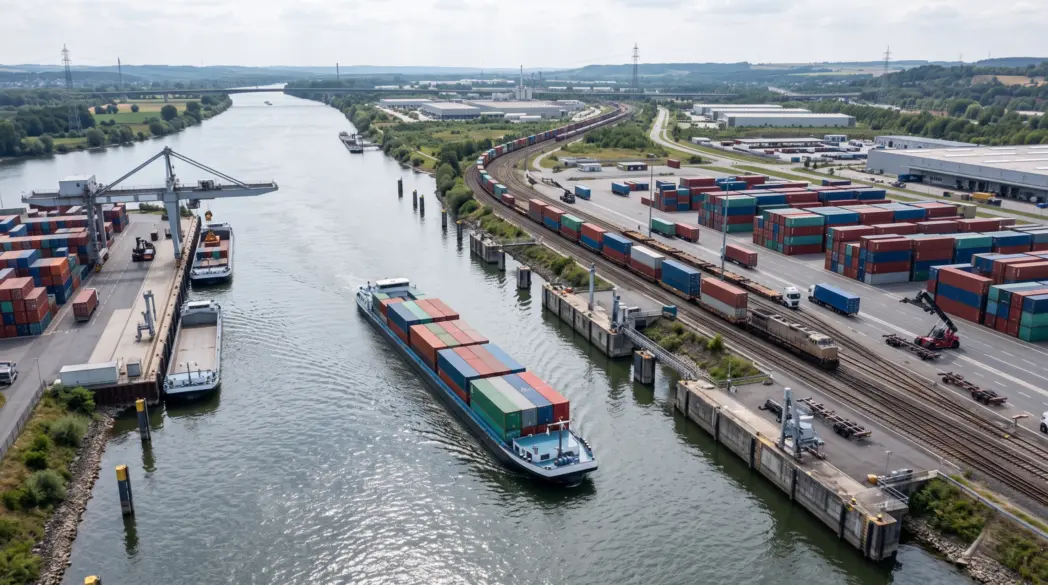
The development of green shipping corridors is further accelerating this modal shift. These initiatives provide the infrastructure and regulatory support required for low emission vessels to operate on specific routes. Many major rivers are now being designated as green corridors, where shippers can access carbon neutral barge services. This commitment to sustainability is attracting a new generation of environmentally conscious customers who are willing to prioritize green logistics in their procurement processes.
Strategic Company Involvement and Network Expansion
The expansion of intermodal services on inland waterway networks is being led by some of the world’s largest logistics and shipping companies.
- A.P. Moller – Maersk: Maersk has significantly expanded its intermodal footprint by integrating inland barging into its global logistics network. In 2025, they launched several new services connecting the Port of Rotterdam with industrial hubs in Germany and Switzerland. Their focus is on providing end to end logistics solutions that leverage the efficiency of waterborne transport.
- Mediterranean Shipping Company (MSC): Through its inland logistics arm, MEDLOG, MSC has invested heavily in river terminals and barge operations. In 2026, they announced a major expansion of their barge services in the Mississippi River basin, aiming to provide a more sustainable alternative to long haul trucking in the United States.
- DB Cargo: As one of Europe’s largest rail freight operators, DB Cargo has increasingly focused on the integration of rail and water transport. Their rail to barge services allow for the efficient transfer of containers between the two modes, providing a high capacity alternative for heavy freight corridors.
- Port of Hamburg: The Port of Hamburg has been a leader in developing the digital infrastructure required for intermodal connectivity. Their smart port initiatives include real time tracking of barges and automated terminal scheduling, which improves the efficiency of transshipment operations.
- DP World: DP World has invested in a network of inland terminals along the Rhine and other major European rivers. These facilities serve as critical nodes in the intermodal chain, providing warehousing, customs clearance, and last mile delivery services. In 2026, they introduced a new digital platform that allows shippers to book intermodal services across their entire global network.
Operational Flexibility Through Innovation
The success of intermodal diversification depends on the ability to move goods between different modes of transport quickly and efficiently. This requires specialized equipment and innovative vessel designs that can adapt to different port environments and cargo types. The industry is currently seeing a surge of interest in modular barge designs as a way to improve the flexibility of river freight. These designs allow for the rapid reconfiguration of barges to handle containers, bulk goods, or specialized equipment, making them ideal for the dynamic requirements of an intermodal supply chain.
As the network of inland terminals grows, the first mile and last mile connections are also becoming more efficient. The use of electric trucks for short haul deliveries between river terminals and customer locations ensures that the entire intermodal chain remains as sustainable as possible. This holistic approach to logistics is essential for creating a resilient and future proof transport network that can meet the demands of the 21st century global economy.
Future Perspectives on Global Trade Routes
Looking toward 2030, the integration of inland waterway networks into the global supply chain is expected to deepen. Major infrastructure projects, such as the expansion of the Rhine-Main-Danube Canal and the development of new river-sea corridors in Asia, will further increase the capacity and reach of waterborne transport. The ongoing digitalization of the logistics industry will also play a critical role, providing the visibility and control required to manage complex intermodal operations at scale.
Transport Advancement notes that the shift toward intermodal diversification is not just a temporary reaction to current market conditions. It is a fundamental realignment of the global logistics industry toward a more efficient, sustainable, and resilient future. Companies that embrace this change and invest in the necessary infrastructure and technology will be well positioned to lead the way in the next era of global trade.
References
- “Navigating Europe’s New Trade Corridors with Intermodal” – Maersk
- “Intermodal Freight Transportation Market Size, Share [2034]” – Fortune Business Insights
- “Freight transport statistics – modal split” – European Commission
- “Modal Distribution Diversification and Intermodal Transport Report 2025” – MDPI
- “DP World Annual Review of Inland Logistics and Terminal Operations” – DP World
