












The current era is a watershed moment for the global logistics industry, as artificial intelligence matures from a speculative tool into the core operating system of international trade. In an era defined by geopolitical volatility and the urgent need for decarbonization, AI in multimodal transport management has become the primary driver of operational resilience and efficiency. Transport Advancement notes that by seamlessly coordinating movement across road, rail, sea, and air, AI is breaking down the data silos that have traditionally plagued intermodal logistics. The result is a more fluid, responsive, and sustainable supply chain that can adapt to disruptions in milliseconds rather than days. As we look at the current landscape, it is clear that the integration of advanced machine learning and generative models is not just enhancing logistics—it is completely redefining the logic of transport management.
The Shift from Predictive to Agentic AI Systems
For years, the logistics sector focused on predictive analytics—using data to forecast demand or estimate arrival times. In recent times, the industry has transitioned toward “Agentic AI.” Unlike previous systems that required human intervention to act on insights, agentic AI in multimodal transport management can autonomously execute decisions. These systems act as digital dispatchers, capable of rebooking freight, negotiating spot rates, and re-routing shipments the moment a delay is detected. This shift has dramatically reduced the administrative burden on logistics managers, allowing them to focus on strategic high-level oversight rather than the minutiae of daily operations. The ability of AI agents to communicate across different transport management systems (TMS) ensures that the transition of cargo between modes—such as from a container ship to a freight train—is handled with surgical precision.
Generative AI and Natural Language in Logistics Orchestration
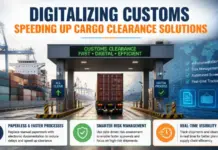
One of the most visible changes is the role of Generative AI in logistics orchestration. Gone are the days of complex dashboard navigation and manual report generation. Logistics professionals now interact with their supply chains through natural language interfaces. Whether it is asking for an update on a specific high-priority shipment or requesting a comparison of different multimodal routes based on carbon footprint and cost, Generative AI provides instantaneous, contextualized answers. Furthermore, these models are being used to automate the vast amount of documentation required for international trade. From bills of lading to customs declarations, AI in multimodal transport management ensures that paperwork is accurate and compliant across multiple jurisdictions, significantly reducing the bottlenecks at ports and border crossings.
Real-Time Disruption Management and Adaptive Routing
In a world where climate change and geopolitical shifts frequently disrupt trade lanes, the ability to adapt in real-time is a survival trait. AI-driven transport systems are now integrated with global data streams, including weather patterns, satellite imagery, and social media sentiment. This allows the AI in multimodal transport management to foresee disruptions before they impact the physical movement of goods. For instance, if a major storm is predicted to delay a port in East Asia, the AI system can automatically reroute cargo to a different port or switch the transport mode to rail to maintain the delivery schedule. This “adaptive routing” capability ensures that supply chains remain “anti-fragile”—becoming stronger and more resilient in the face of stress. The optimization algorithms consider thousands of variables, including fuel costs, port congestion, and driver availability, to find the most efficient path forward.
Enhancing Freight Visibility Across Road, Rail, Sea, and Air
True multimodal management requires end-to-end visibility—a “single source of truth” for every item in transit. AI has enabled this visibility by aggregating data from millions of IoT sensors, telematics devices, and blockchain-enabled tracking systems. AI in multimodal transport management processes this disparate data to provide a unified view of the freight journey. Shippers no longer just know where their cargo is; they know its condition, its temperature, and its estimated time of arrival (ETA) with a precision of minutes. This granular level of detail is essential for just-in-time manufacturing and high-value pharmaceutical logistics. By eliminating the “black holes” in the transport network, AI allows for a more synchronized handoff between different carriers and modes, reducing the dwell time of containers and maximizing the utilization of every vehicle in the fleet.
The Economic Impact of AI-Driven Multimodal Integration
The economic benefits of AI in multimodal transport management are profound. By optimizing routes and load factors, AI has significantly reduced the cost per ton-mile for global shippers. The reduction in fuel consumption, driven by smarter routing and better vehicle utilization, has not only lowered costs but also helped companies meet their ambitious ESG (Environmental, Social, and Governance) targets. Furthermore, the automation of logistics coordination has opened up the market for smaller players, who can now access sophisticated management tools that were previously only available to the largest multinational corporations. The increased efficiency of the transport network is a primary driver of global economic growth, lowering the price of consumer goods and ensuring the reliable flow of raw materials to industrial centers around the world.
Future Outlook: Autonomous Intermodal Hubs and Smart Contracts
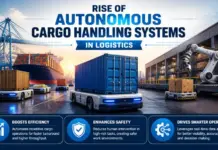
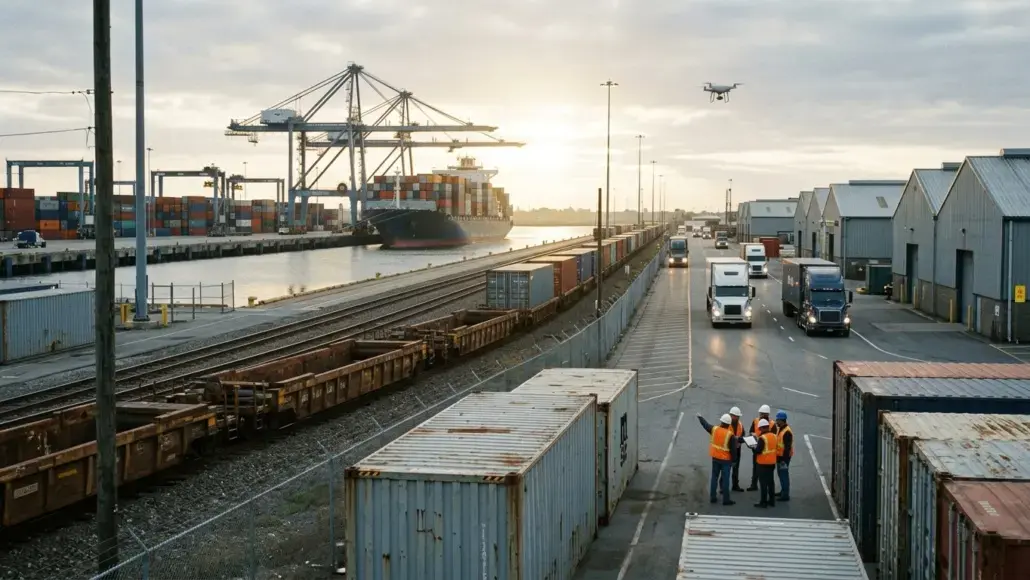
As we look toward the end of the decade, the integration of AI will move deeper into the physical infrastructure of transport. We are already seeing the emergence of “autonomous intermodal hubs,” where AI-managed robots handle the transfer of cargo between autonomous trucks and automated rail systems. In this future, the AI in multimodal transport management will be coupled with blockchain-based smart contracts, where payments are automatically released when the AI verifies that a shipment has reached its destination in the correct condition. This will eliminate the friction of payment delays and disputes, creating a truly seamless global market. The transition to an AI-first logistics model is not just a technological upgrade; it is the foundation of a new era of global connectivity, where the movement of goods is as fast and efficient as the movement of information.
AI in multimodal transport management has proven to be the defining technology of the mid-2020s. It has transformed a fragmented and often chaotic industry into a high-precision, data-driven machine. By empowering organizations to navigate complexity with ease, AI is ensuring that the global supply chain can meet the demands of a growing population while minimizing its impact on the planet. As we continue to refine these systems, the boundaries between different transport modes will continue to blur, leading to a truly integrated global network. Transport Advancement highlights that the question now is no longer whether to adopt AI, but how quickly it can be integrated into every facet of the transport journey. The future of logistics is intelligent, multimodal, and driven by the power of artificial intelligence.
