















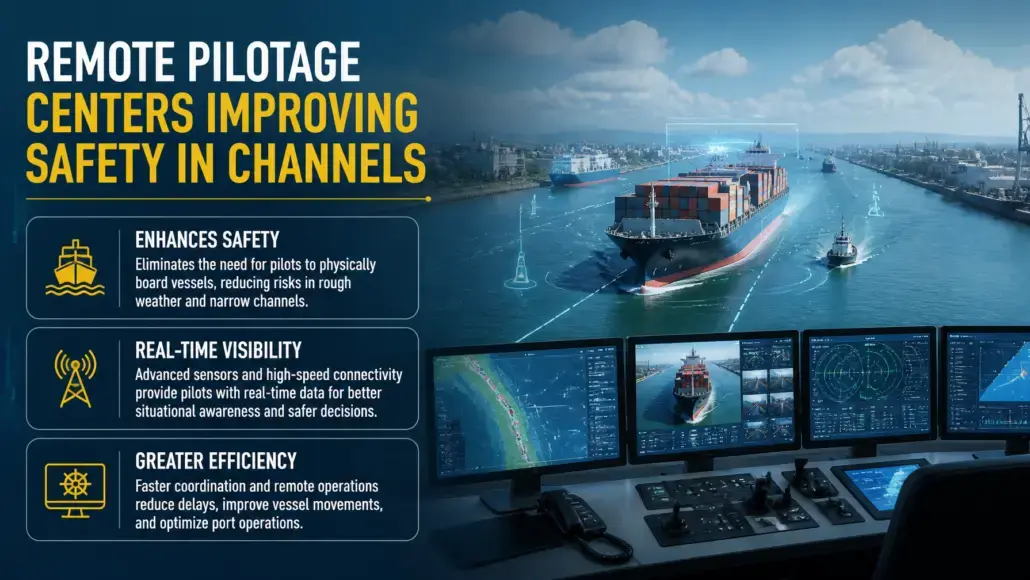
The traditional practice of maritime pilotage is undergoing a digital transformation with the widespread adoption of Shore Based Pilotage (SBP) and Remote Pilotage Operations Centers in 2026. This shift is particularly evident in the world’s most challenging narrow channels and congested port approaches. Historically, pilots were required to physically board vessels, a process that is often dangerous and subject to weather delays. Today, high speed connectivity and advanced sensor technology allow these experts to guide massive ships from sophisticated command centers on land.
This evolution is driven by the need for enhanced safety and greater operational flexibility. Narrow channels pose unique risks, including limited maneuvering room and the potential for grounding if a vessel deviates even slightly from the optimal path. By using remote vessel pilotage, port authorities can ensure that every ship has access to local expert knowledge regardless of sea conditions. This technology has become a cornerstone of modern maritime safety, reducing the frequency of boarding related accidents and improving the overall flow of traffic in vital trade arteries.
Technological Foundations of Remote Control
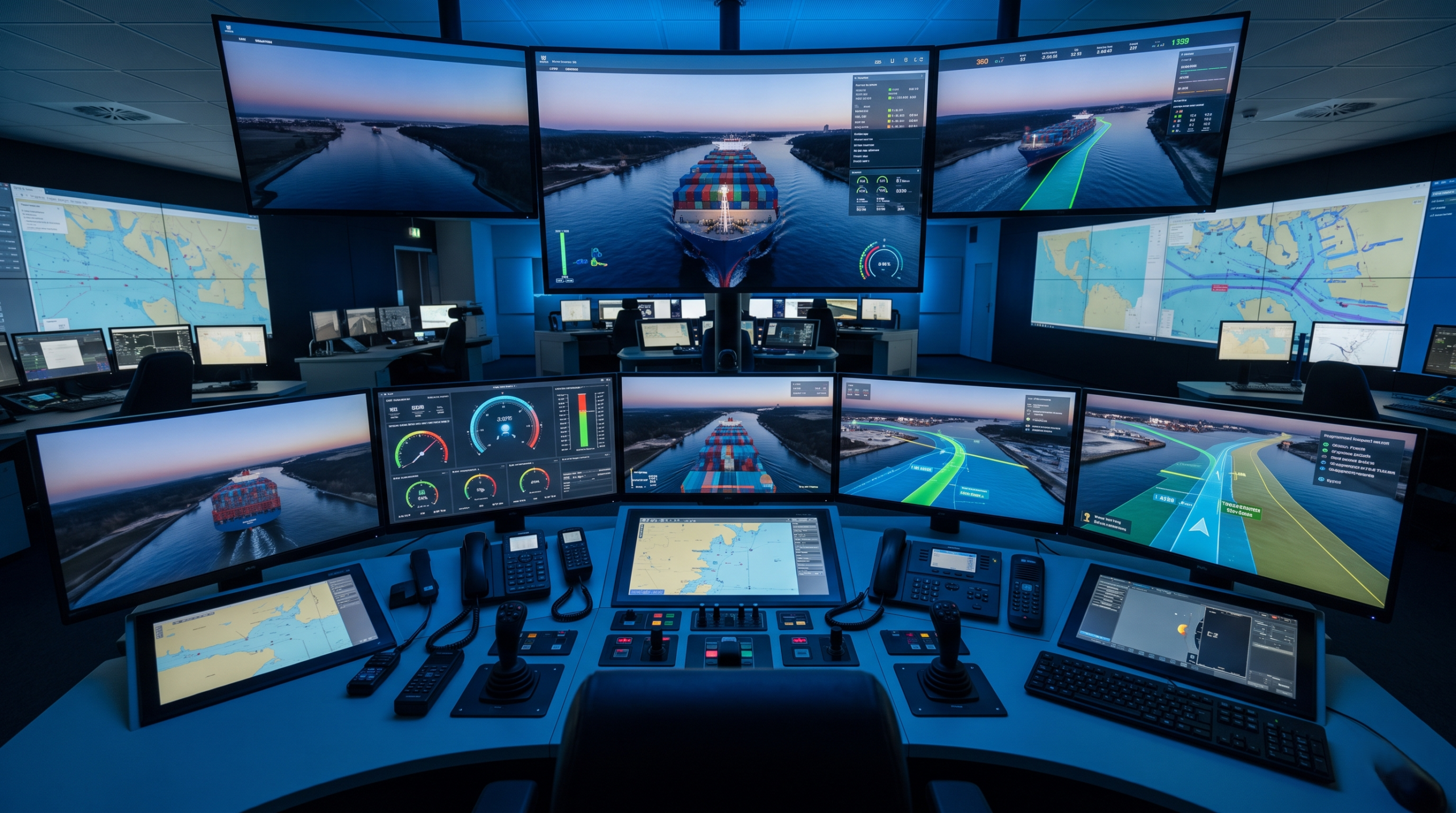
The success of remote pilotage centers relies on a robust digital infrastructure that can handle massive amounts of real time data. Low latency 5G networks and LEO satellite constellations provide the necessary bandwidth for high definition video feeds and sensor telemetry. Pilots in these centers use augmented reality (AR) interfaces that overlay critical navigation data, such as water depth and the position of other vessels, directly onto their visual field.
Wärtsilä and Kongsberg have been at the forefront of developing these immersive control environments. Their systems provide a 360 degree view of the vessel’s surroundings, recreating the experience of being on the bridge with remarkable accuracy. These centers utilize 4K low latency video feeds and 3D spatial audio to give the pilot a complete sense of presence. Integrated collision avoidance algorithms provide an additional layer of safety, alerting the remote pilot to potential hazards before they become critical. In 2026, the use of haptic feedback systems has been introduced, allowing pilots to “feel” the resistance of the water and the movement of the vessel, further improving their ability to make precise adjustments in tight spaces. This combination of human expertise and machine intelligence is essential for navigating the complex dynamics of narrow riverbeds and harbor entrances.
Improving Pilot Safety and Operational Efficiency
One of the most immediate benefits of remote operations is the improvement in pilot safety. Boarding a vessel at sea, often via a pilot ladder in rough weather, is one of the most hazardous tasks in the maritime industry. Remote pilotage eliminates this risk entirely, allowing pilots to work from a secure and controlled environment. This shift also addresses the challenges of pilot fatigue, as operators can more easily manage their shifts and reduce the time spent traveling to and from vessels.
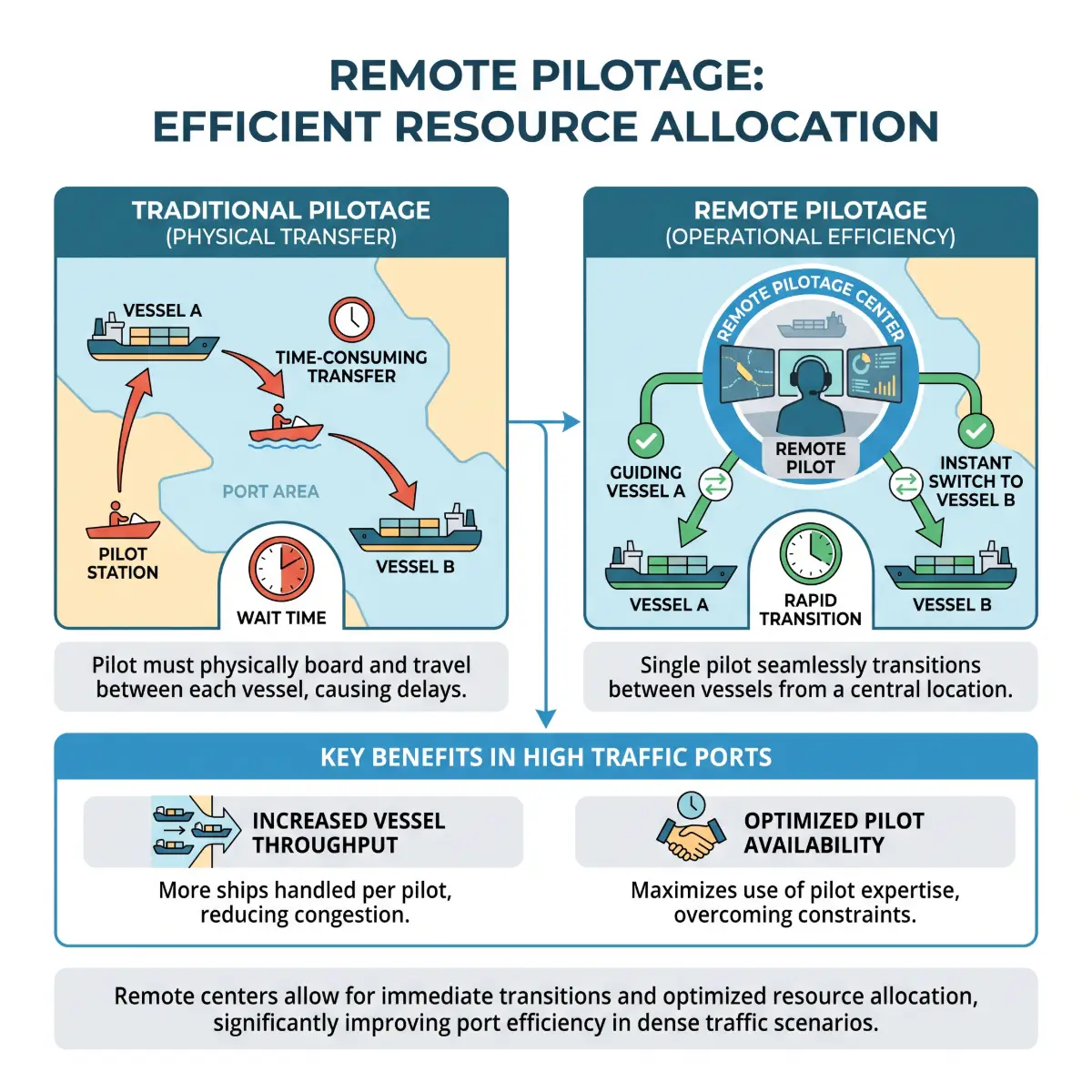
From an operational perspective, remote centers allow for a more efficient allocation of resources. A single pilot can guide a vessel through a difficult passage and then immediately transition to another ship, without the need for a physical transfer. This capability is particularly valuable in ports with high traffic density, where the availability of pilots can be a major constraint on vessel throughput.
Strategic Company Initiatives and Deployments
The growth of remote pilotage is supported by significant investments from global maritime technology leaders and port operators.
- Wärtsilä Corporation: Wärtsilä has successfully deployed its remote pilotage solution in several European and Asian ports. Their system integrates real time data from the vessel’s bridge with shore based control tools, allowing for seamless transition between onboard and remote guidance.
- Kongsberg Maritime: Kongsberg‘s Hugin and K-Mate platforms provide the autonomous and remote control capabilities used in many modern pilotage centers. In 2025, they completed a landmark project in Scandinavia that demonstrated the feasibility of fully remote pilotage for large container ships in narrow fjords.
- ABB Marine & Ports: ABB has focused on the connectivity and electrical integration aspects of remote pilotage. Their Ability Marine Pilot Vision and Control systems provide the situational awareness required for remote operators to make informed decisions in real time.
- Ocean Infinity: Known for its fleet of robotic vessels, Ocean Infinity has expanded into the remote pilotage sector. In 2026, they launched a series of “Armada” operations centers that provide remote navigation services for a variety of vessel types in international waters.
- PSA International: As a global port operator, PSA has integrated remote pilotage into its terminal management systems. This allows for better coordination between vessel arrivals and berth availability, further optimizing the logistics chain.
Addressing the Challenges of Dynamic Waterways
Narrow channels are rarely static environments. Siltation, shifting currents, and changing water levels can alter the safe passage routes on a daily basis. Remote pilotage centers must therefore have access to the most up to date information about the waterway. This requirement has led to a closer integration between pilotage systems and environmental monitoring networks.
The reliability of remote guidance is heavily dependent on the quality of the data received from the channel itself. To maintain a clear picture of the ever changing riverbed, operators increasingly rely on smart buoy networks to provide real time digital charts and hydrological updates. This synergy ensures that the remote pilot is always working with accurate information, even in conditions where traditional markers might be unreliable.
Regulatory and Human Factors
The transition to remote pilotage also involves significant regulatory and training considerations. International maritime organizations are currently working to standardize the requirements for SBP, ensuring that remote pilots have the same level of certification and authority as their onboard counterparts. Training programs are being redesigned to focus on the technical skills required to operate remote systems, as well as the unique psychological challenges of guiding a vessel from a distance.
In 2026, the industry is seeing the emergence of a new generation of maritime professionals who are as comfortable with digital interfaces as they are with traditional navigation tools. This cultural shift is essential for the long term success of remote operations. As the technology continues to evolve, the distinction between onboard and remote pilotage will likely become increasingly blurred, with the focus remaining on the core objective of ensuring safe and efficient vessel movement.
Cyber Security and Data Integrity in Remote Operations
The reliance on digital connectivity for vessel control introduces new risks that must be managed with the highest level of rigor. Cyber security is a top priority for remote pilotage operations centers. In 2026, the industry has adopted zero trust architectures and end to end encryption for all communication between the shore and the vessel. Multiple redundant data paths, using both terrestrial 5G and various satellite constellations, ensure that a connection is never lost, even in the event of a significant network disruption.
Data integrity is equally important. Remote pilots must be certain that the information they are seeing on their screens is accurate and has not been tampered with. The use of blockchain technology to verify the source and integrity of navigation data has become increasingly common. Furthermore, the integration of real time diagnostic tools allows the center to monitor the health of the vessel’s onboard sensors and communication hardware. If a sensor failure is detected, the system can automatically switch to a backup or alert the pilot to adjust their approach.
The Role of Artificial Intelligence in Pilot Assistance
While the human pilot remains the ultimate decision maker, the role of AI in providing decision support is growing. In 2026, many remote pilotage centers utilize AI driven predictive modeling to forecast the behavior of other vessels and the impact of environmental factors like wind and current. These models can suggest the optimal course and speed for a vessel, helping the pilot to minimize fuel consumption and maintain the safest possible passage.
AI is also used to manage the vast amount of information presented to the pilot. Rather than overwhelming the operator with raw data, the system uses “intelligent filtering” to highlight only the most relevant information based on the current situation. For example, during a docking maneuver, the system might focus on the distance to the quay and the tension in the mooring lines, while during a transit through a narrow channel, it would prioritize the depth of the water and the proximity to other traffic. This tailored approach to information management is essential for maintaining the high levels of concentration required for remote operations.
References
- “The Future of Maritime Navigation: Remote Piloting Transforms Ship Operations” – SLD Info
- “Understanding Cognitive Challenges in Remote Pilotage Operations” – Chalmers University of Technology
- “Wartsila Insights: Pilotage Digitalisation Report” – Wärtsilä Corporation
- “Maritime Big Data Market View 2026” – Spherical Insights
- “Remote Pilotage Safety Standards 2025” – International Maritime Organization
- “Cyber Security Guidelines for Shore-Based Vessel Control 2026” – Global Maritime Cyber Security Alliance
- “AI in Maritime Navigation: A Professional Guide” – Kongsberg Maritime
