













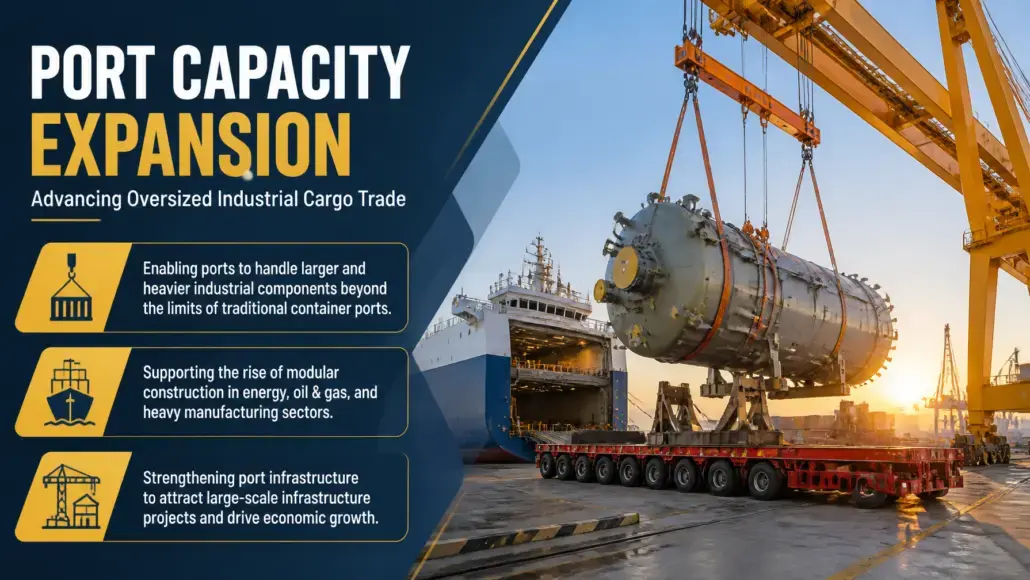
Global maritime hubs are currently undergoing a fundamental transformation to accommodate the increasing size and weight of industrial components. The shift toward modular construction in energy, oil and gas, and heavy manufacturing sectors has resulted in cargo that often exceeds the handling limits of traditional container ports. Transport Advancement observes that port capacity expansion for oversized industrial cargo has become a critical strategic priority for nations seeking to attract large scale infrastructure investments and maintain their status as global trade gateways.
In late 2025, data from industry analysts indicated that breakbulk volumes in major global ports grew at their fastest rate in over a decade. This growth is largely fueled by the global transition to green energy, which requires the movement of massive wind turbine blades, nacelles, and substation components.
Modernizing these facilities involves more than just deepening berths to accommodate larger vessels. It requires a comprehensive redesign of port layout, including reinforced quaysides, expanded storage areas, and specialized heavy lift equipment capable of managing loads exceeding several thousand tonnes.
Strategic Investments in Breakbulk Infrastructure
The financial scale of these port projects reflects their critical importance to the global economy. DP World announced record financial results in early 2026, reporting revenue of 24.4 billion dollars for the previous year. A significant portion of this capital has been directed toward enhancing specialized cargo capabilities across its global network. In late 2025, Jebel Ali Port in the United Arab Emirates set a new record by handling over 630,000 tonnes of breakbulk cargo in a single month. This milestone highlights the surging demand for facilities that can manage non containerized, oversized assets that are the building blocks of modern infrastructure.
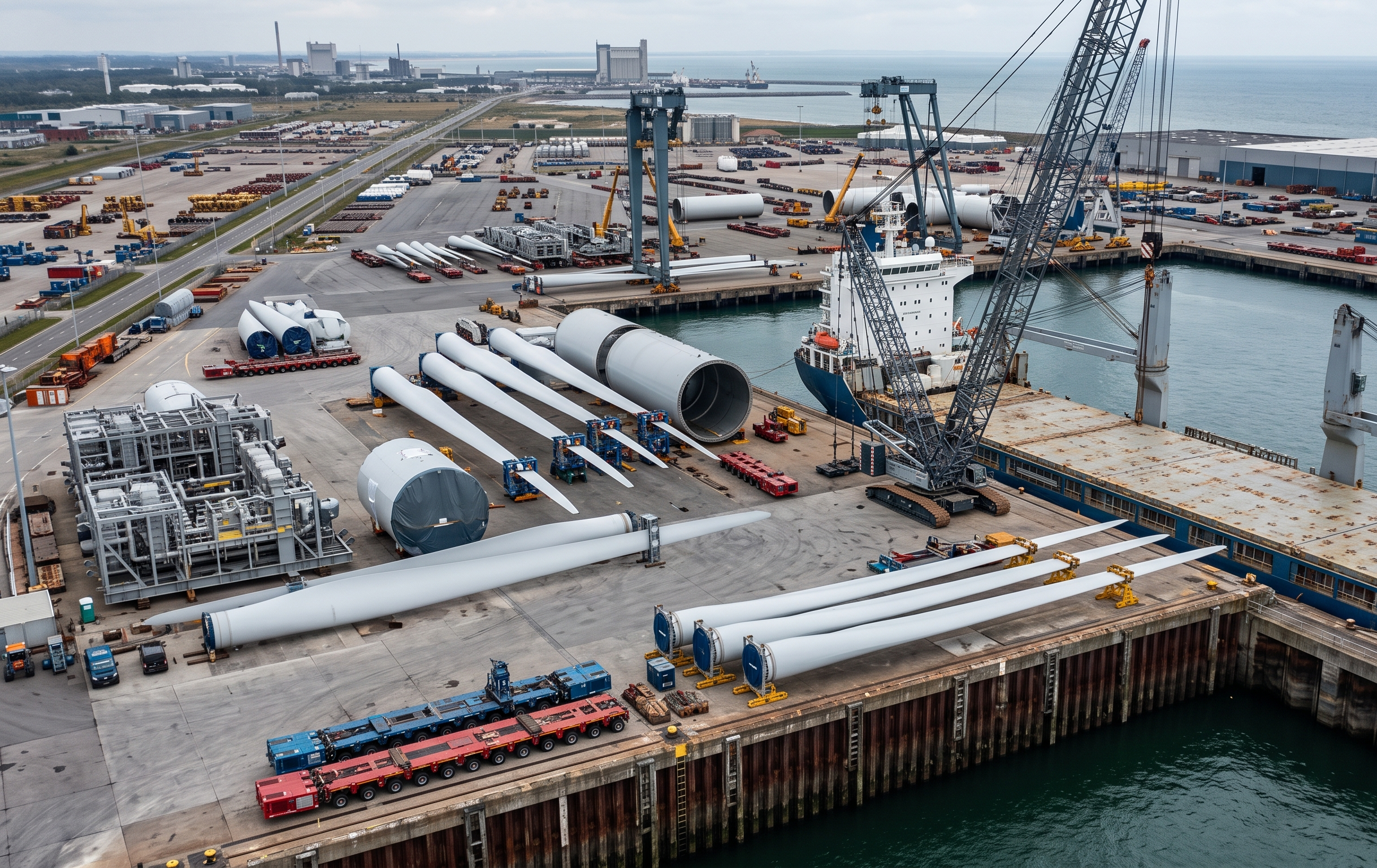
Other global operators are also racing to upgrade their facilities to capture this lucrative market. AD Ports Group demonstrated its commitment to expansion by acquiring a majority stake in several specialized logistics firms and investing in new terminal capacity throughout 2025 and early 2026. Their focus has been on creating integrated eco systems where port facilities are directly linked to industrial zones, allowing for the seamless movement of oversized components from the factory floor to the quayside. This integrated approach reduces the risks and costs associated with multiple handling steps.
In Europe, the Port of Rotterdam has continued to invest heavily in its offshore center to support the North Sea wind energy expansion. The expansion of the Prinses Amaliahaven is a prime example of this trend, adding hundreds of meters of new quay wall designed specifically for heavy lift operations. These upgrades include increasing the load bearing capacity of quays to support super heavy lift cranes and specialized transport systems. Without such investments, ports risk losing multi billion dollar project cargo contracts to more modern competitors.
Technical Requirements for Heavy Lift Terminals
Designing a port for oversized cargo presents unique and complex engineering challenges. The ground pressure exerted by a 2,000 tonne module on a specialized self propelled modular transporter is immense, often exceeding the limits of standard terminal paving. PSA International addressed this challenge at its major hubs in mid 2026 by rolling out reinforced heavy lift pads designed to support the next generation of modular industrial components. These pads use advanced concrete compositions to provide the necessary stability for extended storage periods, ensuring that sensitive cargo does not settle or shift during the pre assembly phase.
Quayside bearing capacities are being pushed to new limits, with some modern terminals offering capacities of 20 to 50 tonnes per square meter. These technical upgrades ensure that the terminal can safely support the latest generation of heavy lift cranes and modular transporters. Furthermore, the design of these berths must account for the unique mooring requirements of heavy lift vessels, which often have different hull shapes and ballast requirements than standard container ships.
Recent developments in crane technology are also playing a vital role in these expansions. APM Terminals invested in a new fleet of high capacity cranes for its specialized breakbulk terminals in early 2026. these cranes are equipped with automated stabilization systems that allow for safer operation in higher wind speeds, increasing the operational window for heavy lift activities. The integration of such technology into port infrastructure projects allows for more efficient and sustainable loading and unloading cycles. This efficiency is crucial when managing tight project schedules where every hour of berth time is highly valued.
The Emergence of Dedicated Energy Hubs
A significant trend in port expansion is the development of dedicated energy hubs. These are specialized ports or terminal areas designed exclusively to serve the renewable energy sector. Ports like Esbjerg in Denmark and Cuxhaven in Germany have transformed themselves into specialized centers for offshore wind logistics. These hubs provide not just the physical space for cargo but also a cluster of specialized services, including engineering, assembly, and maintenance.
Hutchison Ports accelerated its investment in energy related infrastructure in late 2025 by expanding its heavy lift capacity at key European and Asian gateways. The company’s focus has been on providing plug and play solutions for offshore wind developers, where the port provides the complete infrastructure needed for the assembly and deployment of massive turbines. This specialized capacity is a key driver of port capacity expansion for oversized industrial cargo, as it allows developers to consolidate their supply chains and reduce the need for multiple transshipment points.
In the United States, the expansion of port facilities along the Gulf Coast and the Northeast is being driven by the nascent offshore wind industry. Port capacity expansion for oversized industrial cargo in these regions is often supported by government grants aimed at building a domestic supply chain for green energy. These facilities must also comply with domestic regulations like the Jones Act, which dictates the types of vessels that can move cargo between U.S. ports. This regulatory environment adds another layer of complexity to port planning and investment strategies.
Operational Efficiency and Digital Integration
Expanding physical capacity is only one part of the equation for a modern port. Hubs must also focus on operational efficiency to manage the incredible complexities of project cargo. The movement of a single oversized component can involve dozens of stakeholders, from customs officials and port authorities to specialized transport contractors and marine insurers. Digital management systems are now being used to coordinate these movements in real time, providing a single source of truth for all parties involved.
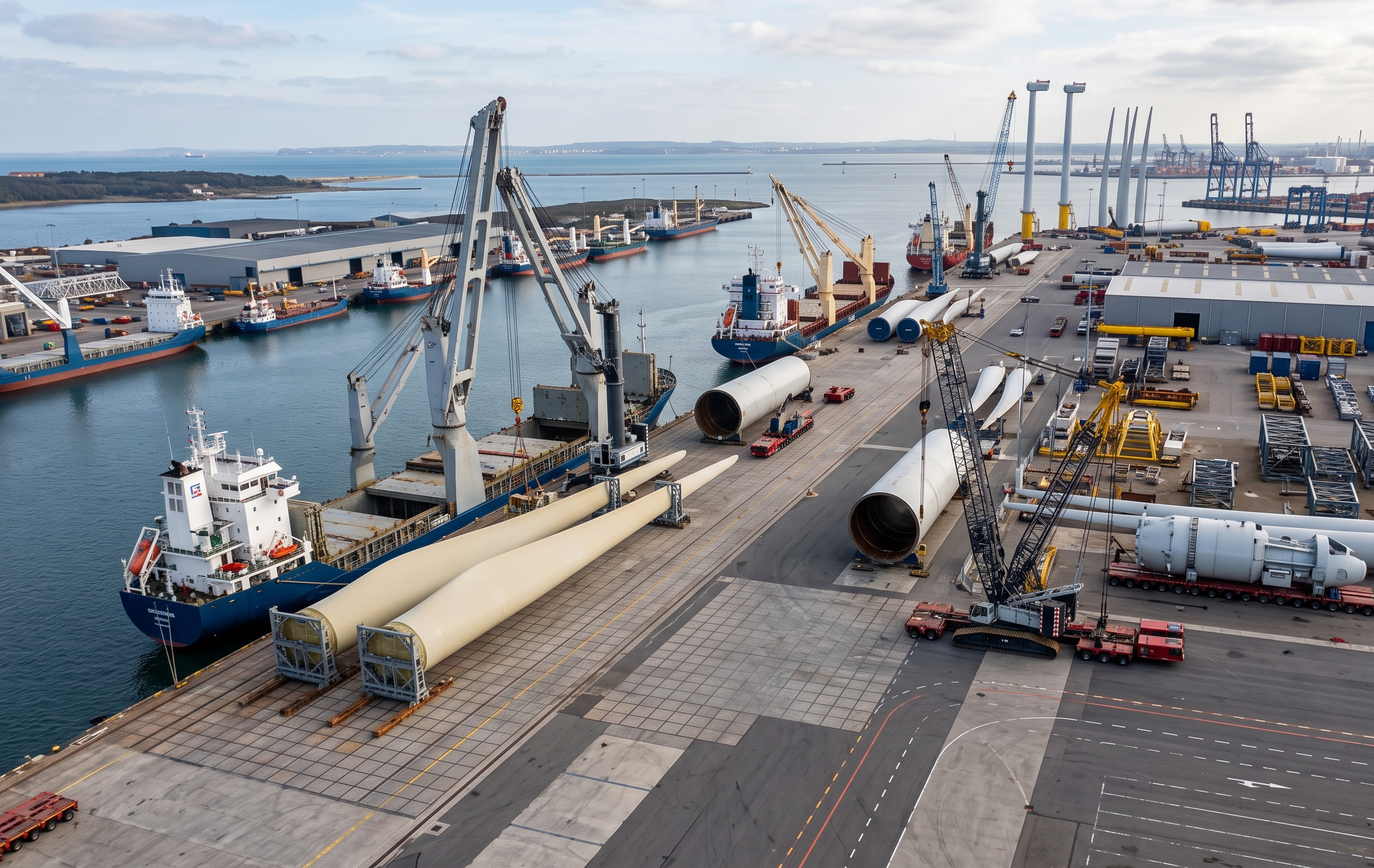
The effectiveness of these expanded hubs is further enhanced by implementing real time tracking for project cargo. AD Ports Group further expanded its digital capabilities by acquiring MBS Logistics in May 2026, integrating port operations with end to end project logistics services. By controlling both the port terminal and the forwarding process, operators can ensure that oversized cargo moves through the facility with minimal delay. This integrated approach reduces the risk of congestion and ensures that the expanded capacity is used effectively.
Digital twins are also being used to optimize terminal layout and traffic flow:
- Predictive Movement Simulation: Modeling heavy transporter traffic allows port operators to detect bottlenecks and physical clash points in advance.
- Concurrent Project Management: Virtual planning is essential for coordinating multiple oversized cargo operations safely within constrained yard footprints.
- Dual Physical-Digital Expansion: Scaling port capacity relies equally on upgrading physical infrastructure and implementing intelligent digital traffic management.
Economic Drivers and Future Outlook
The drive for port expansion is not showing signs of slowing down. Fortune Business Insights reported in January 2026 that the project logistics market is expected to reach over 744 billion dollars by 2034. Much of this growth will be concentrated in emerging markets in Southeast Asia and Africa, which are currently investing heavily in their first dedicated heavy lift terminals. These facilities act as powerful magnets for industrial development, as manufacturers prefer to locate factories near ports that can handle their largest and most complex products.
The expansion of a port often triggers a wider regional economic boom, creating a virtuous cycle of investment. New industrial zones are created adjacent to the port, attracting companies in the energy, mining, and construction sectors. As we look toward the end of the decade, the focus of port expansion will likely shift toward making these facilities more sustainable. The use of shore power for heavy lift vessels and the electrification of terminal equipment are already becoming standard requirements in new port tenders.
Transport Advancement believes that port capacity expansion for oversized industrial cargo is therefore no longer just about size. It is about creating a smarter, cleaner, and more resilient gateway for the world’s most challenging cargo. The ports that succeed in the future will be those that can offer a combination of massive physical capacity, digital excellence, and industry leading sustainability practices.
References
- “DP WORLD REPORTS RECORD $24.4 BN REVENUE AND $6.4BN EBITDA FOR 2025” – DP World
- “AD Ports Group Acquires Major Stake in Specialized Logistics Firm” – AD Ports Group News
- “PSA International Invests in Heavy Lift Pad Infrastructure” – PSA International Press Release
- “APM Terminals Expands Breakbulk Fleet with Automated Cranes” – APM Terminals Newsroom
- “Hutchison Ports Accelerates Offshore Wind Logistics Investment” – Hutchison Ports
- “Project Logistics Market Size, Share | Growth Report [2034]” – Fortune Business Insights
- “MBS Logistics to be acquired by AD Ports Group” – Air Cargo News
- “XCMG Delivers Hybrid Mobile Crane XCA60_EV to Mammoet” – PA Media
