













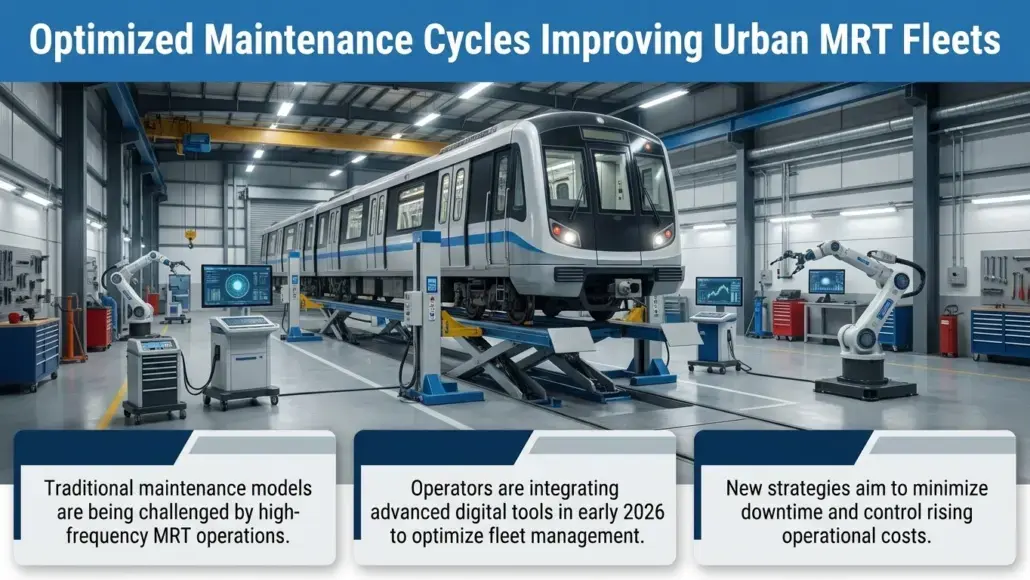
The reliability of mass rapid transit systems (MRT) is the backbone of urban productivity, yet the traditional models of rolling stock maintenance are being fundamentally challenged by the demands of high frequency operations. As metro networks expand and passenger volumes rise, the pressure to minimize downtime while controlling operational costs has never been greater. In early 2026, the global rail industry is undergoing a decisive shift toward the integration of advanced digital tools to manage fleet health. Transport Advancement notes that by optimizing maintenance cycles for modern MRT fleets, operators are moving away from rigid, time based schedules toward dynamic, condition based strategies that leverage real time data and artificial intelligence.
The business case for this transition is supported by significant improvements in operational efficiency. Recent industry data indicates that fleets implementing AI driven predictive maintenance can achieve a 45 percent reduction in unplanned downtime and a 30 percent decrease in total maintenance costs. Furthermore, approximately 52 percent of fleet managers have confirmed that early detection of component wear has directly reduced vehicle outages in their operations. These improvements are critical for transit agencies that must maintain high service levels while navigating tighter municipal budgets and increasing public expectations for reliability.
The Shift from Preventive to Predictive Maintenance
For decades, rail maintenance followed a preventive model, where components were replaced or serviced at fixed intervals regardless of their actual condition. While this approach provided a baseline level of safety, it often resulted in the premature replacement of expensive parts and unnecessary vehicle downtime. The current trend is toward a predictive model, where sensors embedded in the rolling stock provide a continuous stream of data on the health of critical systems such as bogies, traction motors, and wheelsets. This allows maintenance teams to intervene only when a component shows clear signs of impending failure, maximizing the useful life of every asset.
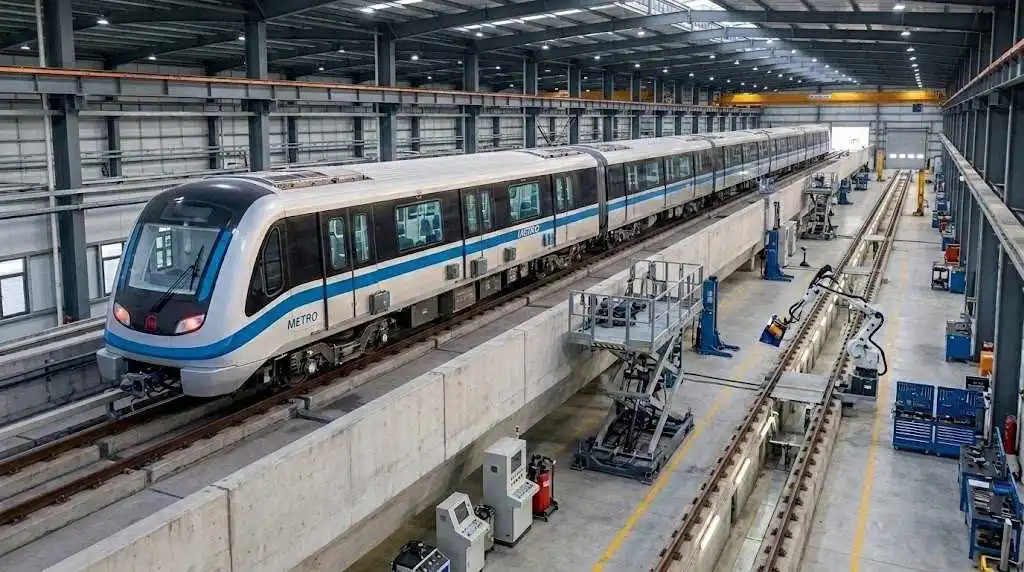 The implementation of Internet of Things technology is the primary driver of this shift. Modern MRT cars are equipped with hundreds of sensors that monitor vibration, temperature, acoustics, and electrical performance. This data is transmitted in real time to centralized fleet management platforms, where machine learning algorithms analyze it to identify patterns that correlate with wear or malfunction. By detecting these anomalies weeks or even months before they lead to a service disruption, operators can plan maintenance cycles during scheduled night windows, avoiding the need for emergency repairs that block active tracks during peak hours.
Leveraging Digital Twins for Fleet Management
Digital twin technology is transforming how operators visualize and manage their assets. A digital twin is a virtual replica of a physical train or an entire rail network, updated in real time with data from the field. This allows maintenance engineers to run simulations and predict how different components will perform under various operational stresses, such as high temperatures or increased passenger loads. In 2025, Alstom successfully deployed a digital twin for the West Coast Main Line fleet, which allowed the operator to identify bottlenecks and optimize the scheduling of heavy maintenance cycles.
Beyond individual trains, digital twins are being used to model the interaction between the rolling stock and the track infrastructure. By analyzing wheel rail interface data, operators can optimize the grinding of rails and the turning of wheels, extending the life of both assets and reducing the energy consumption associated with friction. The ability to simulate the entire lifecycle of a fleet in a virtual environment provides B2B decision makers with a powerful tool for long term capital planning, allowing them to accurately forecast the ROI of various maintenance strategies before they are implemented on the physical network.
Automated Inspection and Robotics
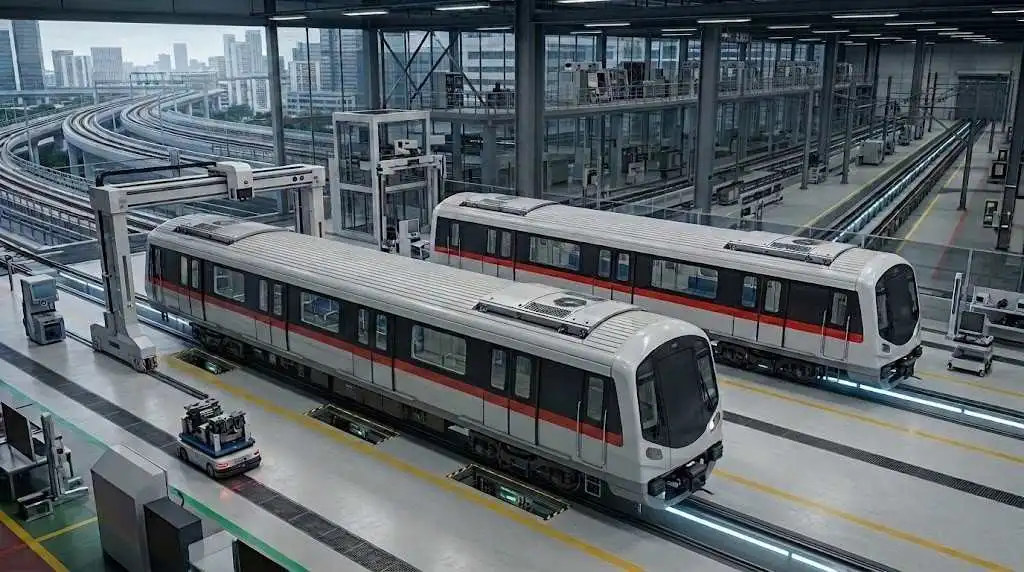
The physical inspection of rail vehicles is traditionally a labor intensive process that requires trains to be taken out of service and moved to specialized depots. To accelerate these cycles, operators are increasingly deploying automated inspection systems that use high resolution cameras and laser scanners to check the condition of the undercarriage and roof components as the train passes through a portal at low speed. These systems can detect cracks, loose bolts, and worn brake pads with a level of precision and speed that is impossible for human inspectors to match.
Robotics is also playing a larger role in the maintenance depot. Automated guided vehicles and robotic arms are being used to perform repetitive tasks such as wheelset exchanges and the cleaning of HVAC systems. These technologies not only improve the safety of the maintenance environment by reducing the need for humans to work in tight or hazardous spaces but also ensure a higher degree of consistency in the quality of repairs. As the rail supply market continues to grow, with the global predictive maintenance segment valued at 12.4 billion dollars in 2025, the adoption of these automated tools is becoming a key indicator of an operator’s competitive edge.
Data Analytics and Strategic Decision Making
The true value of predictive maintenance lies in the ability to turn raw sensor data into actionable business intelligence. Advanced data analytics platforms aggregate information from across the entire fleet, providing a holistic view of operational health. This allows fleet managers to identify systemic issues that may be related to a specific manufacturing batch or a particular section of the track. For example, if multiple trains show unusual vibration on a specific curve, the operator can direct track maintenance teams to inspect the rails in that area, preventing further damage to the rolling stock. The precision of these maintenance insights is further supported by the high fidelity data streams provided by modern control systems, a topic covered in the overview of standardizing digital signaling for high density metro.
The ROI of these investments is often realized very quickly. Approximately 95 percent of companies that have implemented predictive maintenance report positive returns, with 27 percent achieving full payback within the first 12 months. These financial benefits extend beyond reduced maintenance costs to include lower energy bills, as well maintained trains operate more efficiently. Furthermore, the increased reliability of the service can lead to higher passenger satisfaction and increased farebox revenue, strengthening the overall financial health of the transit agency.
Cybersecurity and Mission Critical Reliability
As MRT fleets become more connected, the security of the data and the resilience of the digital systems are paramount. Predictive maintenance platforms must comply with stringent cybersecurity standards to prevent unauthorized access to vehicle control systems. The integration of operational technology and information technology requires a robust defense in depth strategy, involving encrypted communications, multi factor authentication, and continuous monitoring for suspicious activity. Failure to protect these systems could lead to significant operational disruptions and safety risks.
Moreover, the safety critical nature of rail operations means that all digital maintenance tools must meet high levels of safety integrity, such as SIL 4 standards. This ensures that the data provided by sensors and AI algorithms is accurate and reliable enough to support critical safety decisions. The challenge for B2B providers is to deliver sophisticated analytical capabilities without compromising the fundamental safety principles of the rail industry. This requirement is driving a focus on explainable AI, where the reasoning behind a maintenance recommendation is transparent and verifiable by human engineers.
Integrating Maintenance with Operations
The optimization of maintenance cycles requires close coordination between maintenance teams and operational dispatchers. By integrating fleet health data into the daily train scheduling process, operators can ensure that vehicles with higher wear are assigned to less demanding routes or scheduled for inspection sooner. This dynamic approach to fleet management allows for a more flexible and resilient service, capable of adapting to unexpected changes in passenger demand or infrastructure availability.
Furthermore, the transition to electric and hydrogen powered trains is introducing new maintenance requirements that differ significantly from traditional diesel or electric fleets. Battery health monitoring and hydrogen fuel cell diagnostics are becoming core competencies for modern MRT maintenance teams. The ability to manage these new power systems effectively is essential for transit agencies as they work toward their decarbonization goals. Training and upskilling the workforce to handle these digital and high voltage technologies is a critical part of the strategic roadmap for any modern rail operator.
Digital Transformation & Predictive Maintenance in Modern Rail Fleets
The global mass rapid transit and rail manufacturing sector has increasingly transitioned toward condition-based maintenance, digital twin deployment, and AI-enabled asset management to curtail vehicle downtime and optimize operating costs. Siemens Mobility expanded its full-service digital portfolio by securing a 30-year lifecycle maintenance contract for 61 Mireo Plus B battery-powered trainsets in North Westphalia, deploying its Railigent X asset management suite to combine real-time sensor analytics and condition-based monitoring before vehicles arrive at workshops. Simultaneously, Alstom SA broadened its rolling stock service footprint under long-term agreements—such as its contract to supply and maintain 47 Adessia Stream commuter trains in Mexico equipped with its proprietary HealthHub predictive maintenance system, designed to analyze hundreds of real-time operational parameters to detect component wear in advance.
In parallel, Hitachi Rail accelerated digital fleet management by unveiling its NVIDIA-accelerated HMAX (Hitachi Rail Asset Management X) suite and committing to integrate the edge-AI predictive maintenance architecture into all new rolling stock from 2027. Stadler Rail strengthened its long-term fleet servicing portfolio by securing a 30-year lifecycle maintenance and parts supply agreement for 27 CITYLINK vehicles on Frankfurt’s Regionaltangente West, ensuring sustained vehicle availability and lifecycle optimization through continuous fleet health surveillance.
The Future of MRT Maintenance
Looking ahead to the end of the decade, the integration of autonomous inspection drones and self healing materials could further revolutionize the maintainenace cycles of modern metro systems. For now, the focus remains on the full realization of the benefits offered by IoT, digital twins, and AI driven analytics. The successful optimization of maintenance cycles for modern MRT fleets is not just a technical achievement but a strategic necessity for the sustainable growth of urban transport.
Transport Advancement believes that by embracing these technologies, transit agencies can ensure that their networks remain reliable, efficient, and cost effective for the millions of people who depend on them every day. The shift toward a more intelligent and data driven approach to maintenance is a clear indication that the rail industry is ready for the challenges of the 21st century city. The path forward is one of continuous improvement, where every data point is a step toward a more resilient and reliable urban future.
References
- Siemens
- Alstom SA
- Hitachi Rail
- Stadler Rail AG
