





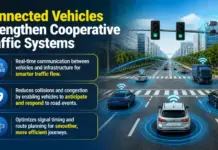



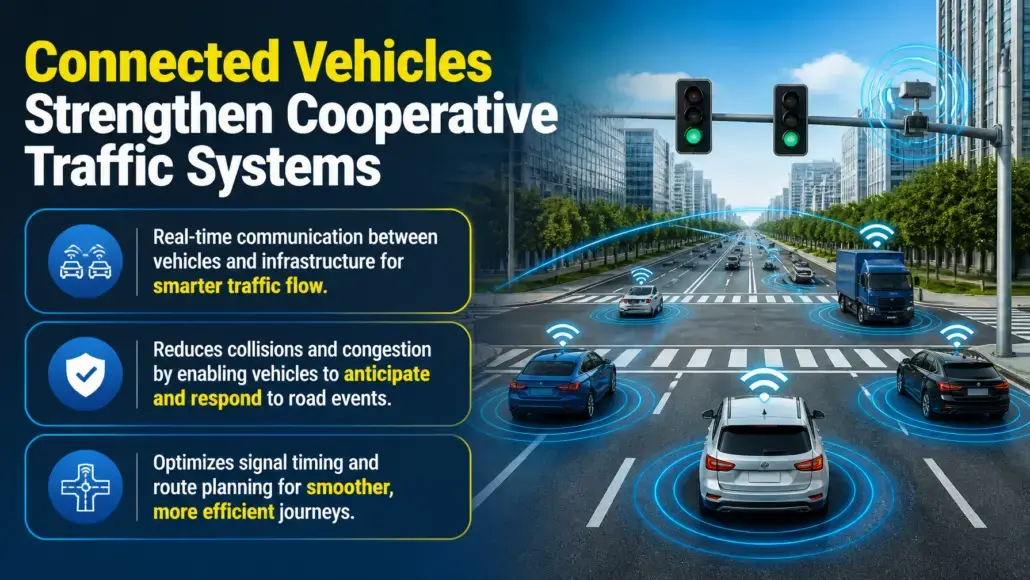
The traditional approach to traffic management has relied on centralized control and reactive infrastructure, where vehicles are largely passive participants in the system. However, the rise of V2X (Vehicle-to-Everything) technology is ushering in a new era of cooperative traffic systems, where vehicles and infrastructure communicate in real-time to optimize movement across the city. Transport Advancement notes that the integration of connected vehicle traffic coordination is the cornerstone of this evolution. By enabling vehicles to talk to each other (V2V), to infrastructure (V2I), and even to pedestrians (V2P), cities can move beyond the limitations of static signal timings and individual driver awareness. This cooperative model is essential for creating a safer, more efficient, and more responsive urban transport network that can adapt to the dynamic realities of modern metropolitan life.
The Technological Foundations of V2X Communication
At the heart of connected vehicle traffic coordination is the exchange of high-frequency messages between entities in the transport ecosystem. These messages—such as Basic Safety Messages (BSMs) or Cooperative Awareness Messages (CAMs)—provide real-time data on a vehicle’s position, speed, heading, and even the activation of safety systems like emergency braking. The technology utilized for this exchange typically involves Dedicated Short-Range Communications (DSRC) or the more recent Cellular-V2X (C-V2X) standard, which leverages 5G networks to provide low-latency, high-bandwidth connectivity.
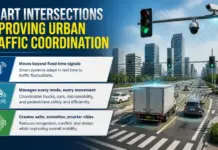
This constant stream of data creates a comprehensive digital map of the traffic environment, allowing the system to see around corners and through obstructions. Unlike traditional sensors like cameras or radar, which are limited by line-of-sight, connected vehicle traffic coordination provides a level of non-line-of-sight awareness that is critical for safety in complex urban intersections. This shared situational awareness is the foundation upon which all cooperative traffic applications are built, enabling the system to anticipate and mitigate risks before they manifest. Smart intersections are another modern integration of using data to manage traffic in urban environment.
Enhancing Safety Through Cooperative Awareness
The most immediate benefit of connected vehicle traffic coordination is the dramatic improvement in road safety. By sharing information about sudden braking events, road hazards, or the presence of vulnerable road users, connected vehicles can provide drivers with early warnings that go far beyond their own visual perception. For example, a vehicle ahead that detects a patch of black ice can instantly alert all following connected vehicles, allowing them to adjust their speed well in advance. Similarly, an emergency vehicle approaching an intersection can communicate its presence to the surrounding traffic and the signal controller, ensuring it receives a green light and that other vehicles are cleared from its path.
These cooperative safety applications are particularly effective at intersections, where the majority of urban accidents occur. Connected vehicle traffic coordination allows for the implementation of intersection movement assist (IMA) and left-turn assist (LTA) functions, which warn drivers of potential collisions that are not yet visible to them. As the penetration rate of connected vehicles increases, the cumulative safety effect grows exponentially. In a fully cooperative environment, the system can virtually eliminate the human errors—such as distraction or poor judgment—that are responsible for the vast majority of traffic fatalities.
Optimizing Throughput and Reducing Congestion
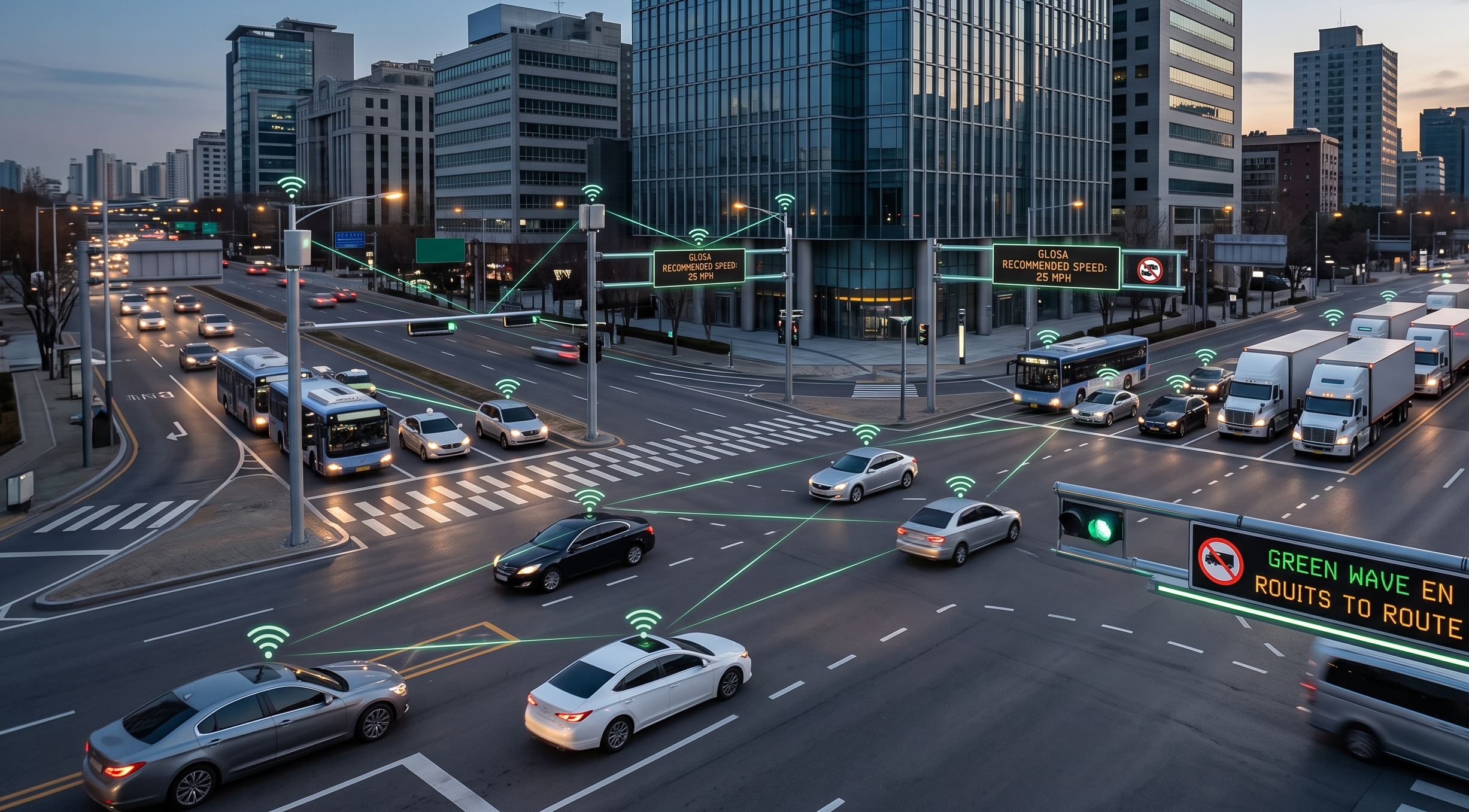
Beyond safety, connected vehicle traffic coordination is a powerful tool for improving the efficiency of the urban road network. Traditional traffic signals operate on fixed cycles or use basic induction loops to detect presence, often leading to unnecessary wait times and stop-and-go traffic. In contrast, a cooperative system can optimize signal timings based on the real-time position and speed of every connected vehicle in the vicinity. This allows for the creation of dynamic green waves that move platoons of vehicles through the city with minimal interruption.
This optimization extends to the vehicles themselves through applications like Green Light Optimized Speed Advisory (GLOSA). GLOSA systems provide drivers with a recommended speed to approach an intersection so they can arrive exactly when the light turns green. This not only reduces fuel consumption and emissions by minimizing idling and acceleration but also improves the overall flow of traffic. By smoothing the movement of vehicles and reducing the variability in traffic speed, connected vehicle traffic coordination maximizes the capacity of the existing road infrastructure, delaying or even eliminating the need for costly physical expansions.
Cooperative Platooning and Traffic Flow Dynamics
One of the most advanced applications of connected vehicle traffic coordination is cooperative platooning. In this scenario, groups of connected vehicles—particularly commercial trucks or transit buses—can travel in a tight formation, linked by digital tethers. V2V communication allows the following vehicles to mirror the braking and acceleration of the lead vehicle with millisecond precision, significantly reducing the following distance. This not only improves aerodynamics and fuel efficiency but also greatly increases the throughput of highway and arterial corridors.
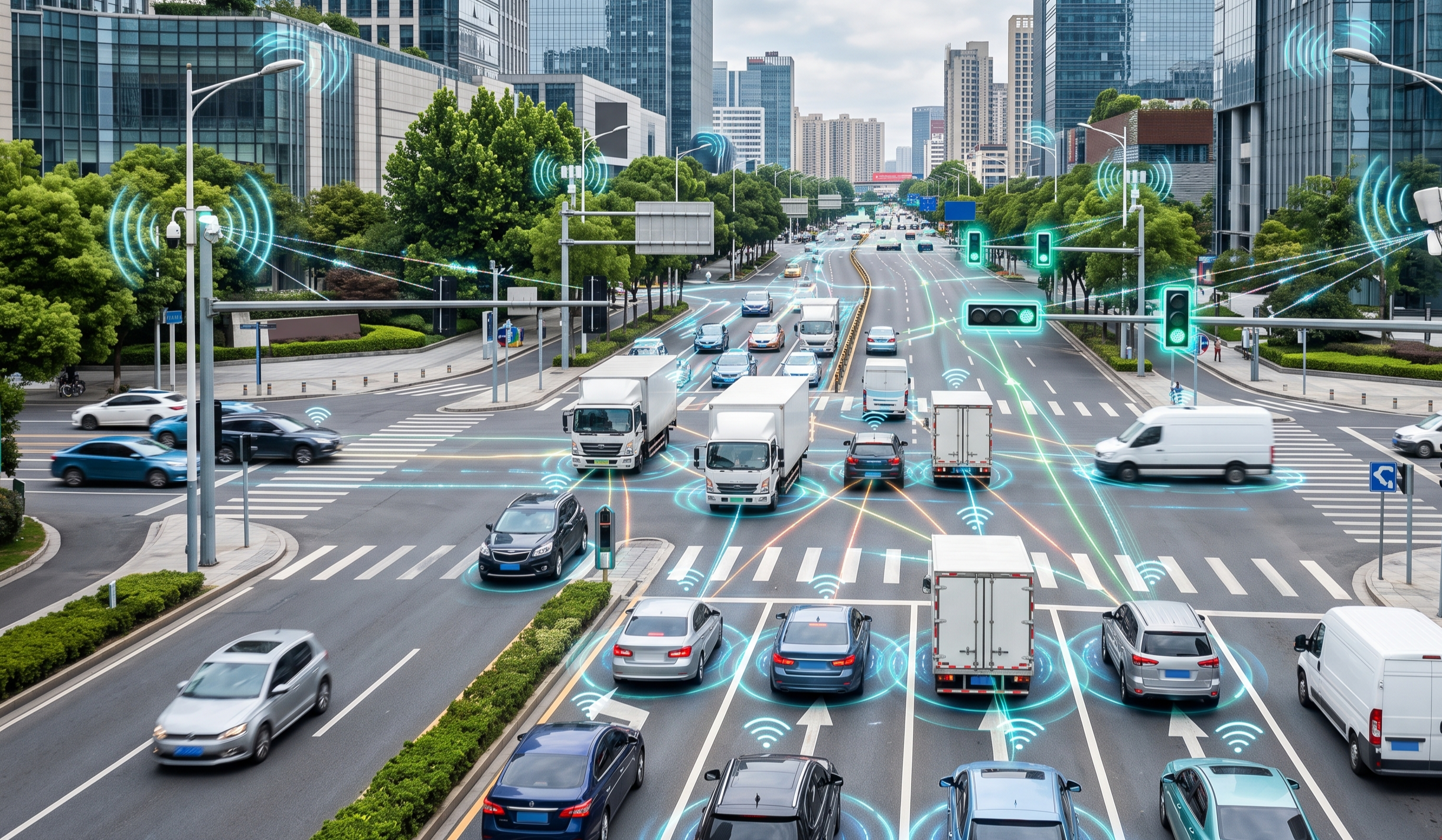
Platooning also has a stabilizing effect on traffic flow, helping to prevent the phantom traffic jams that are caused by the shockwaves of individual braking events. When vehicles act as a coordinated unit rather than isolated agents, the entire system becomes more resilient and predictable. The integration of connected vehicle traffic coordination into the management of heavy-duty and transit fleets is therefore a key strategy for reducing the economic and environmental costs of urban congestion. It represents a transition from individualistic driving to a collective, optimized mode of transport.
Data Governance and the Path to Deployment
The successful implementation of connected vehicle traffic coordination requires more than just technology. It requires a robust framework for data governance, security, and inter-agency cooperation. The exchange of real-time location data raises significant privacy concerns that must be addressed through sophisticated anonymization and encryption techniques. Furthermore, the interoperability of systems across different vehicle manufacturers and infrastructure providers is essential. Without common standards and a secure, trusted communication environment, the potential of V2X will remain fragmented.
Public-private partnerships play a vital role in the rollout of connected vehicle traffic coordination. Municipalities must invest in the roadside units (RSUs) that facilitate communication between vehicles and the grid, while automotive manufacturers must commit to equipping their vehicles with the necessary onboard units (OBUs). The transition period—where connected and non-connected vehicles share the road—will be the most challenging. During this time, the system must be robust enough to handle the uncertainty of un-connected participants while still delivering value to those who have invested in the technology.
The Synergetic Future of V2X and Autonomous Mobility
As we look toward the future, connected vehicle traffic coordination is the essential partner for the development of autonomous vehicles (AVs). While AVs use onboard sensors to navigate, they are still limited by their local perception. V2X provides the global perspective that allows an autonomous system to understand the intentions of other vehicles and the state of the broader environment. A connected AV can receive information about a road closure five miles ahead or a pedestrian about to step into the street from behind a parked car, allowing it to make smoother and safer decisions.
The ultimate goal of connected vehicle traffic coordination is the creation of a seamless, cooperative ecosystem where mobility is managed as a single, optimized system. In this future, traffic jams and accidents are relics of the past, and the urban environment is reclaimed for people rather than cars. The path to this future is paved with the data and connectivity that V2X provides. By investing in connected vehicle traffic coordination today, cities are building the digital foundation for a smarter, safer, and more sustainable tomorrow.
The Role of Edge Computing in Real-Time Coordination
As the volume of data generated by connected vehicle traffic coordination continues to grow, the role of edge computing becomes increasingly vital. Processing every bit of V2X data in the central cloud would introduce delays that are unacceptable for safety-critical applications, such as collision avoidance. Edge computing—where data is processed at the roadside unit (RSU) or within the vehicle itself—allows for near-instantaneous decision-making. For example, if two vehicles are on a collision course at an intersection, the RSU can process their trajectories and issue a warning in less than 20 milliseconds, providing the critical time needed to prevent the crash.
This decentralized architecture also improves the overall resilience of the connected vehicle traffic coordination system. If the central network goes down, individual intersections can still operate cooperatively, using their local edge processing to manage traffic flow and maintain safety. This distributed intelligence is a key feature of modern smart cities, ensuring that critical infrastructure remains functional even in the face of network disruptions. By moving the intelligence to the edge of the network, we are creating a traffic management system that is not only faster but also more robust and reliable.
The conversation between our vehicles and our infrastructure has only just begun, but its impact will be felt for generations. As we bridge the gap between individual vehicles and a collective, coordinated system, we are moving toward a world where traffic is no longer a problem to be managed, but a resource to be optimized. The transition to a cooperative model is the defining challenge of our generation of urban planners and engineers. Transport Advancement believes that by investing in connected vehicle traffic coordination today, we are ensuring that the cities of the future are safer, cleaner, and more efficient for everyone. The digital tether that links our vehicles to each other and to our streets is the foundation of a new era in human mobility, one where cooperation is the engine of progress.
