


















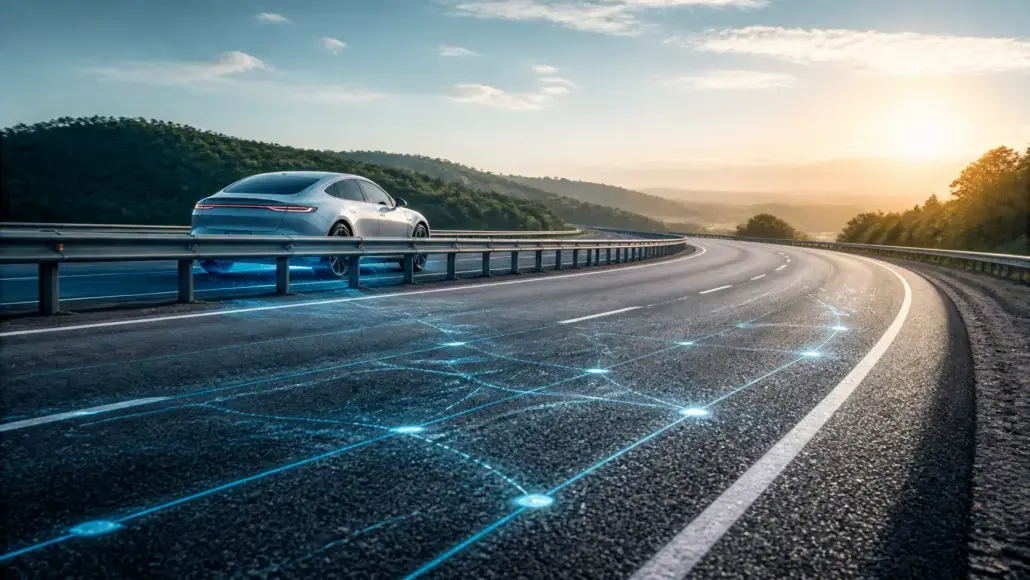
The infrastructure that supports our global transportation network has remained largely unchanged for decades, consisting primarily of passive materials like concrete and bitumen. However, as the world moves toward the era of smart cities and autonomous vehicles, the ground beneath our wheels is undergoing a high-tech revolution. The emergence of smart asphalt Vehicle-to-Infrastructure (V2I) connectivity represents a transformative leap in civil engineering, where the pavement itself becomes an intelligent, data-generating asset. Transport Advancement notes that by embedding sensors, conductive materials, and communication nodes directly into the road surface, we are creating connected roadways that can talk to vehicles and centralized traffic control hubs. This technological shift is not just an upgrade. It is the fundamental foundation for the future of safe, efficient, and sustainable urban mobility.
For centuries, roads were merely silent conduits for movement. Today, they are becoming active participants in the management of that movement. Smart asphalt V2I connectivity allows the road to detect the weight of a truck, the temperature of the surface, and the speed of passing cars, transmitting this information in real-time to the cloud. This bidirectional flow of data between the infrastructure and the vehicle (V2I) is the key to unlocking new levels of safety and efficiency. It allows for the implementation of autonomous traffic control strategies that can prevent accidents, optimize flow, and even charge electric vehicles as they drive. This is the promise of the intelligent road: a future where the asphalt is as smart as the cars that drive upon it.
The Engineering of Intelligent Pavement
The creation of smart asphalt involves the integration of various technologies into the traditional paving process. This includes the use of piezoelectric materials that generate electricity from the pressure of passing vehicles, and magneto-rheological materials that can change their properties in response to a magnetic field. However, the most critical component of connected roadways is the embedded sensor network. These miniaturized, low-power sensors are designed to withstand the extreme heat and pressure of the paving process and the constant stress of heavy traffic. They provide a continuous stream of data on road health, structural integrity, and environmental conditions, transforming the road into a living digital system.
V2X Communication Nodes and Edge Computing
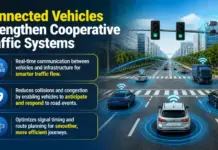
To facilitate V2I connectivity, smart asphalt is integrated with a network of communication nodes located every few hundred meters along the roadway. These nodes act as a bridge between the pavement sensors and the broader digital world. By utilizing 5G and dedicated short-range communication (DSRC) technologies, the road can transmit information directly to the onboard computers of passing vehicles. Furthermore, the use of edge computing—where the data is processed locally at the roadside rather than in a distant data center—ensures that the communication is fast enough to support real-time safety applications, such as alerting a driver to a patch of ice or a vehicle stopped around a blind corner.
Energy Harvesting and Self-Healing Asphalt
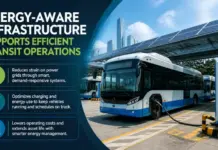
One of the most exciting aspects of smart asphalt V2I connectivity is the potential for energy harvesting. Piezoelectric sensors and solar-collecting layers can capture the kinetic and thermal energy that is currently wasted on our roads and convert it into electricity. This energy can be used to power the sensors and communication nodes, or even fed back into the local grid to light the street and power nearby buildings. Furthermore, researchers are developing self-healing asphalt that contains tiny capsules of bitumen or other materials that break open to fill cracks as they form. When combined with the monitoring capabilities of the sensor network, this leads to a road that is not only smart but also incredibly resilient and low-maintenance.
Enhancing Safety Through Real-Time Road Intelligence
Safety is the primary driver for the adoption of connected roadways. By providing a continuous, high-resolution view of the road surface, smart asphalt can detect hazards that are invisible to both human drivers and vehicle sensors. For example, the pavement sensors can identify the specific vibration signature of a vehicle that is losing traction, allowing the system to instantly warn following drivers and adjust the local traffic control settings to prevent a pile-up. Furthermore, the road can provide precise information about the load on a bridge or the stability of an embankment, allowing for the timely closure of unsafe sections before a catastrophe occurs. This proactive approach to safety is a hallmark of the intelligent transport network.
Dynamic Traffic Management and Weight-in-Motion
Traditional traffic management relies on cameras and loops to count cars, but smart asphalt provides a much deeper level of insight. By measuring the weight and speed of every vehicle, the system can perform real-time Weight-in-Motion (WIM) analysis. This is essential for protecting infrastructure from the damage caused by overloaded trucks and for enforcing road use fees. Furthermore, the data from the connected roadways can be used to optimize traffic flow by dynamically adjusting the timing of signals and the configuration of lanes. For instance, the system could automatically open a shoulder lane for traffic during peak hours if the sensors detect that the main lanes have reached capacity.
Supporting the Growth of Autonomous Vehicle Platooning
The move toward smart asphalt V2I connectivity is a critical enabler for the adoption of autonomous vehicle platooning—where a group of trucks or cars drives in a tightly coordinated manner to save fuel and improve safety. In a connected roadway environment, the road can provide the lead vehicle with a Look-ahead view of the conditions for miles in advance, while also communicating with the following vehicles to ensure they maintain the perfect distance and speed. The road acts as the digital guide for the platoon, ensuring that the maneuver is performed safely and efficiently. This level of coordination is essential for the future of long-haul freight transport and the reduction of highway congestion.
The Environmental and Economic Benefits of Smart Roads
The implementation of smart asphalt offers significant environmental and economic benefits. By improving the efficiency of traffic flow and supporting vehicle platooning, these systems lead to lower fuel consumption and a significant reduction in greenhouse gas emissions. The energy harvesting capabilities of the road further contribute to a more sustainable energy system. Economically, the move toward preventive maintenance enabled by pavement sensors can save billions of dollars in infrastructure repair costs. A road that can signal when it needs a minor repair is much cheaper to maintain than one that must be completely rebuilt after a major failure. Furthermore, the data generated by the road is a valuable commodity that can be monetized to support further infrastructure development.
Data Privacy and the Digital Sovereignty of the Road
As our roads become data-generating machines, the importance of data privacy and cybersecurity cannot be overstated. Ensuring that the information collected by the connected roadways is used only for the benefit of safety and efficiency is essential for maintaining public trust. Transport authorities must establish clear rules for who owns the data and how it is shared with third parties, such as insurance companies or autonomous vehicle manufacturers. Furthermore, protecting the road network from cyberattacks—which could potentially manipulate traffic signals or cause accidents—is a top priority for national security. The digital sovereignty of the road must be a central consideration in the design and operation of any smart infrastructure project.
Challenges in Cost, Durability, and Standardization
Despite the clear advantages, the move toward smart asphalt V2I connectivity is a massive undertaking. The initial cost of installing sensors and communication nodes is significantly higher than traditional paving. Furthermore, the durability of the electronics in the harsh environment of the road surface is a major technical challenge. The industry is also working toward global standards for V2I communication to ensure that a smart car from one manufacturer can talk to a smart road in any city. Overcoming these hurdles requires a long-term commitment from both the public and private sectors and a new generation of engineers who are as comfortable with software and electronics as they are with asphalt and concrete.
Conclusion: The Intelligent Foundation of Mobility
In conclusion, the rise of smart asphalt V2I connectivity represents a fundamental reimagining of the most basic element of our transport network. Transport Advancement believes that by transforming the road from a passive surface into an intelligent partner, we are building the foundation for a safer, more efficient, and more sustainable future. This technological evolution is not just about moving vehicles. It is about the intelligent orchestration of our movement and the protection of our lives. As we look toward the 2030s and beyond, the connected roadway will be the invisible heart of the smart city, ensuring that the journey is as intelligent as the cars that drive upon it. This is the promise of smart infrastructure: a future where the path we travel is a testament to the power of human innovation and a commitment to a better world. Through the lens of smart asphalt, we see a world where the road is no longer a silent witness to history but an active participant in the creation of a smarter and more prosperous future for all. The asphalt is waking up, and the world of mobility will never be the same.
