









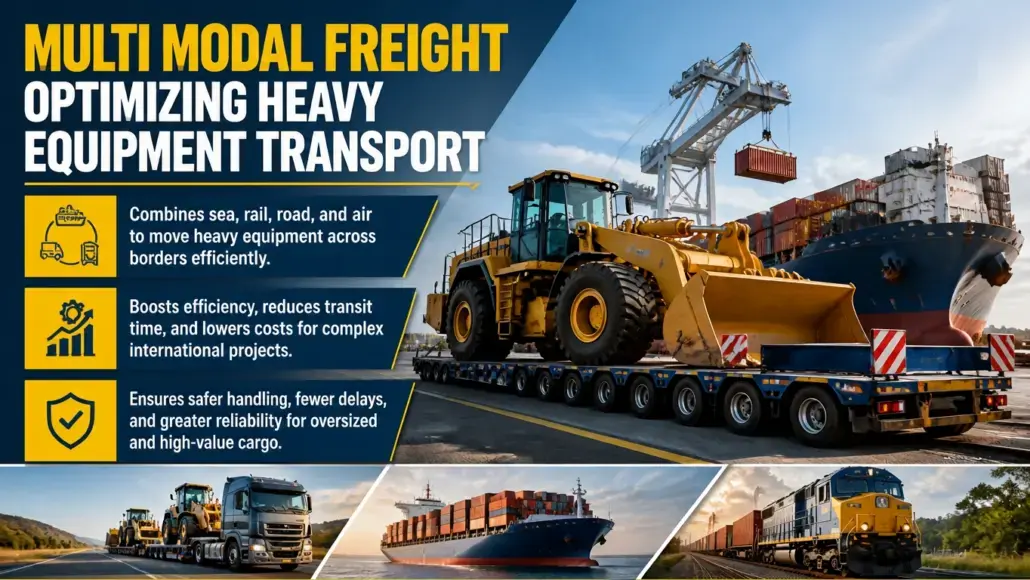
Global industrial sectors are currently navigating a significant shift in how they relocate massive machinery across international borders. The demand for renewable energy components, mining machinery, and construction assets has surged, pushing traditional logistics models to their limits.
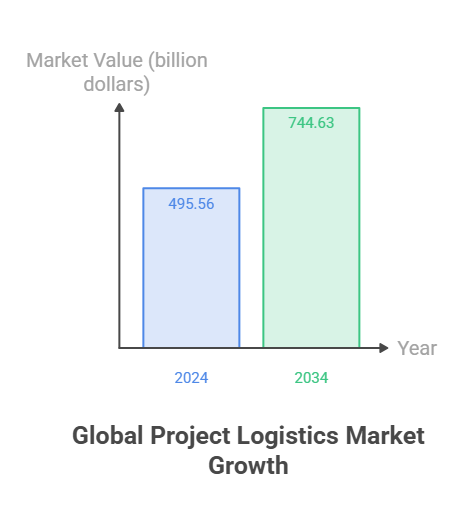
A recent report valued the global project logistics market at 495.56 billion dollars. This figure is projected to reach 744.63 billion dollars by 2034, representing a steady compound annual growth rate of 5.2 percent. This expansion is not merely a reflection of increased volume but indicates a deepening complexity in the way oversized cargo is managed.
Meeting this rising demand requires more than just larger ships or stronger trucks. It demands a sophisticated approach to combining different modes of transport into a single, cohesive movement strategy. The process of optimizing multi modal freight for heavy equipment has become a central pillar for companies looking to maintain margins in an increasingly expensive operating environment. Transport Advancement notes that by integrating road, rail, sea, and inland waterways, logistics providers can navigate physical bottlenecks that would otherwise halt progress.
In February 2026, DSV announced an acceleration of its integration with DB Schenker. This move is designed to create a more robust multimodal network across Europe and Asia, leveraging DB Schenker’s extensive rail freight heritage. By combining their extensive rail assets with established road and sea routes, the company aims to offer more seamless transitions for project cargo. This integration is vital for large scale energy projects where delays in component delivery can cost millions of dollars per day in lost production.
Shifting Dynamics in Multimodal Infrastructure
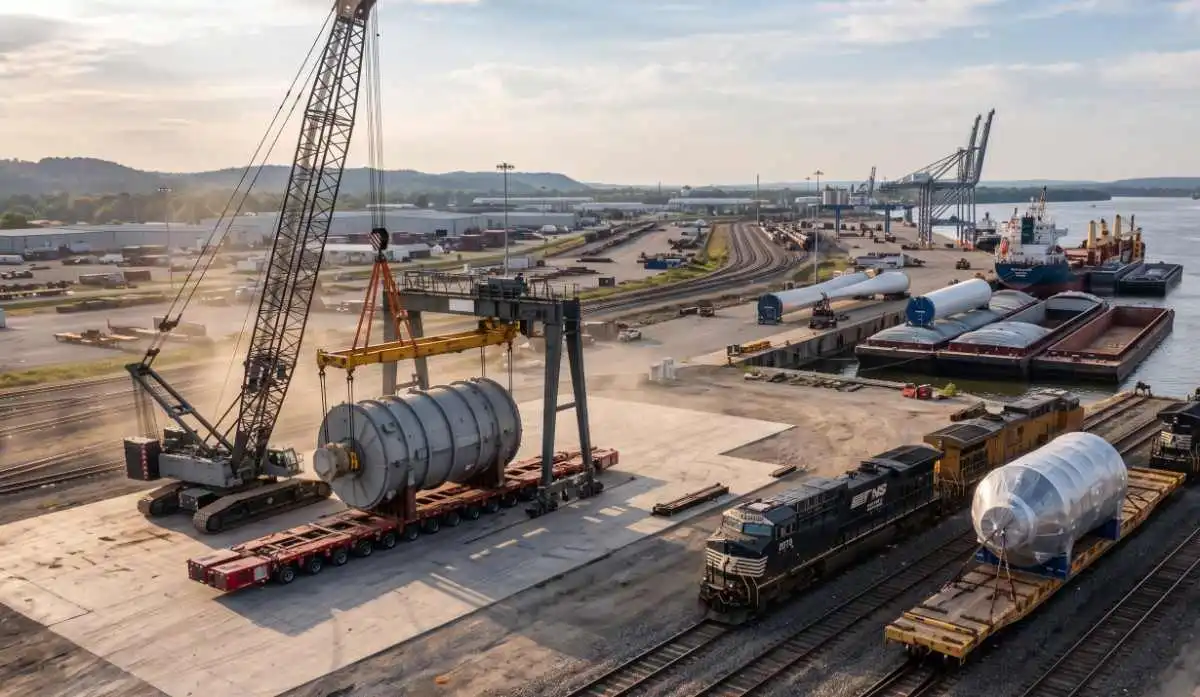
The traditional reliance on a single mode of transport for oversized cargo is rapidly fading into obsolescence. Logistics managers now face complex regulatory environments and aging infrastructure that limit the movement of super heavy loads across long distances. Optimizing multi modal freight for heavy equipment allows these professionals to circumvent low bridges, weak road surfaces, and narrow tunnels. Rail transport has seen a major resurgence in this context. Modern schnabel cars and high capacity flatbeds are capable of moving hundreds of tonnes over long distances with significantly lower emissions than road haulage.
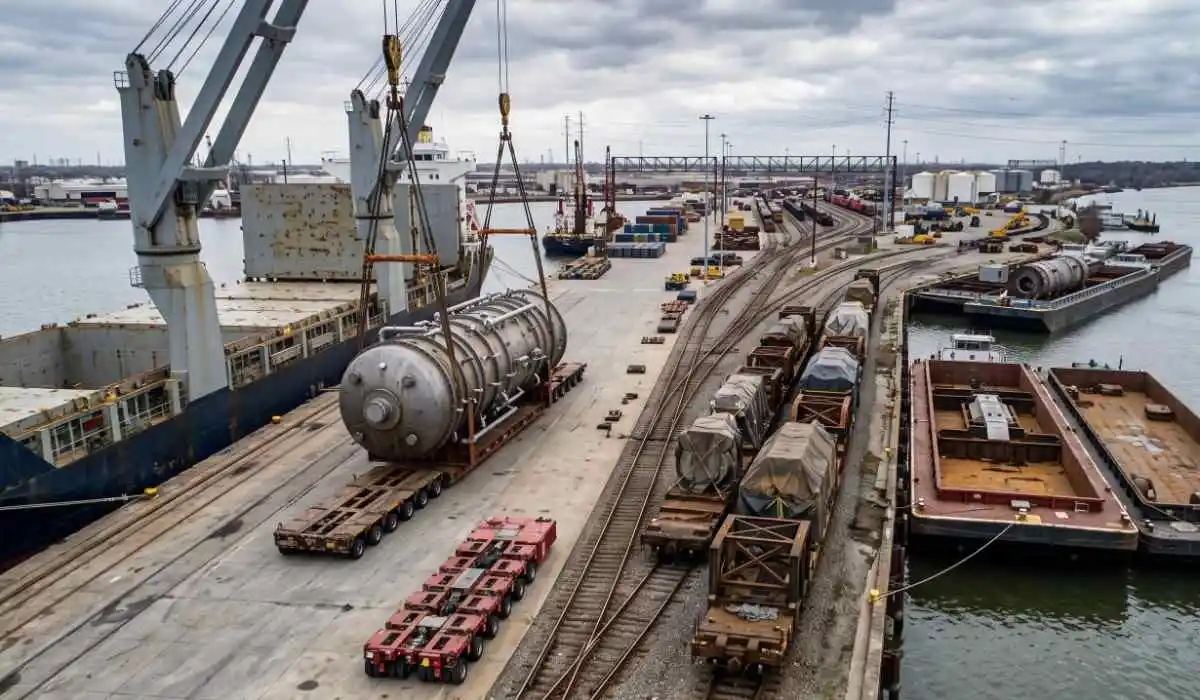
Strategic modal shifts are further supported by investments from major freight forwarders. C.H. Robinson expanded its project logistics capabilities in early 2026 by integrating specialized heavy haul planning into its global technology platform. This development allows for the automated identification of the most efficient multimodal routes for oversized equipment, reducing the time spent on manual permit checks and route planning. By providing a unified view of road and rail constraints, the company enables shippers to make faster decisions about equipment relocation.
These rail assets are particularly effective for inland transport where road permits are difficult to obtain. In many regions, the use of rail for the middle leg of a journey can bypass hundreds of miles of restrictive road networks. This strategic shift reduces the reliance on escort vehicles and police support, which are often in short supply in major industrial corridors. The transition between these modes represents the most critical point in the supply chain where efficiency is either won or lost.
The Critical Role of Inland Waterways
While sea and rail often dominate the discussion, inland waterways provide a unique and often underutilized avenue for optimizing multi modal freight for heavy equipment. Barges can carry weights that would require dozens of trucks, and they can reach deep into the industrial heartlands of Europe, North America, and China. The Rhine and Yangtze rivers, for example, serve as critical arteries for the movement of massive chemical reactors and power generators.
DHL Global Forwarding demonstrated the power of water based logistics in May 2026 when it completed the transport of massive wind turbine components to a remote site in Southeast Asia. The company utilized a combination of deep sea vessels and specialized river barges to bypass congested road networks and infrastructure limitations. This project highlighted how a well coordinated multimodal strategy can overcome the most challenging geographical barriers while maintaining strict project timelines. The stability provided by water transport is often superior to road or rail, reducing the stresses placed on sensitive industrial components during transit.
Inland ports are also investing heavily to support this modal shift:
- Facility Upgrades: Sites are being fitted with heavy-lift pads and high-capacity roll-on/roll-off (RoRo) ramps.
- Rapid Cargo Transfer: Improved infrastructure enables fast transitions between water, road, and rail transport.
- Multimodal Optimization: Seamless transfers serve as a critical performance metric for moving heavy equipment.
- Timeline Compression: Minimizing downtime during handoffs—such as moving cargo from deep-sea vessels to barges, then to specialized trailers—shortens overall project schedules.
Data Integration and Strategic Planning
Effective logistics for oversized machinery relies heavily on predictive data and real time visibility. It is no longer sufficient to plan a route based on static maps and historical records. Digital twins and advanced simulation software now allow engineers to virtually test a transport route before a single asset leaves the factory floor. This preparation is a critical part of optimizing multi modal freight for heavy equipment. It ensures that every transition point between road, rail, and sea is accounted for with millimetre precision.
Kuehne and Nagel demonstrated the value of this data driven approach in mid 2026. The company lifted its financial outlook for the year following strong performance in its specialized logistics divisions. Much of this success was attributed to the use of advanced tracking and planning tools that reduced idle time at modal hubs. When a piece of heavy equipment arrives at a port, the transition to rail or barge must be instantaneous to avoid costly storage fees and vessel demurrage.
The integration of telematics into the planning phase allows for dynamic routing. DB Schenker, even as it integrated with DSV, continued to roll out its specialized project cargo tracking system across its European rail network in 2025. This system provides real time updates on the location and condition of heavy loads, allowing for immediate intervention if a delay occurs. This level of visibility is essential in a global market characterized by unpredictable infrastructure closures and weather events.
Economic and Environmental Impact of Modal Optimization
The financial benefits of a well optimized multimodal strategy are clear and measurable:
- Financial Cost Reduction: Fewer transit days directly lower both transit insurance premiums and capital lockup for equipment owners.
- Non-Revenue Generating Assets: The equipment often represents a multi-million-dollar investment that produces zero return while in transit.
- Improved Project ROI: Shorter lead times accelerate deployment, directly boosting the overall project’s Internal Rate of Return (IRR).
Furthermore, the environmental pressure on the logistics industry is mounting from both regulators and investors. DP World reported record revenues of 24.4 billion dollars in March 2026, with a substantial portion of this growth driven by investments in intermodal terminals that facilitate the movement of breakbulk cargo. This infrastructure shift is particularly evident in the recent port capacity expansion for oversized industrial cargo in regions like the Middle East. Shifting heavy loads from road to rail or inland waterways can reduce carbon emissions by as much as 60 percent for certain long distance routes.
Sustainability is now a core requirement for major energy and mining firms. Many of these companies have committed to net zero targets and are looking to their logistics partners to provide verified emissions data for every shipment. The transition toward greener modes of transport is no longer just an environmental goal but a commercial necessity. By optimizing the multimodal mix, logistics providers can offer solutions that meet both the financial and environmental objectives of their clients.
The Role of Specialized Equipment and Engineering
Optimizing multi modal freight for heavy equipment also depends on the availability of specialized handling technology. Self propelled modular transporters and heavy lift cranes are essential for moving cargo between different modes. In late 2025, Mammoet expanded its fleet by taking delivery of new hybrid and electric cranes. These assets allow for quieter and cleaner operations in sensitive urban or industrial environments during the loading and unloading process.
Specialized engineering teams are now involved in the manufacturing phase of industrial components. By designing equipment with multimodal transport in mind, manufacturers can include specialized lifting points and dimensions that fit standard rail or barge constraints. This design for logistics approach is the ultimate form of optimizing multi modal freight for heavy equipment. It minimizes the need for custom rigging and reduces the risk of damage during the numerous handling steps involved in a multimodal journey.
As we look toward the future, the integration of autonomous technology in both road and water transport will likely offer new opportunities for optimization. Autonomous barges could operate 24 hours a day without the need for crew changes, while platooning technology could make road transport more efficient. However, the core principles of multimodal logistics will remain the same. The goal will always be to find the most efficient, safe, and sustainable path for the world’s most massive machines, supporting the global development of critical infrastructure.
References
- “Project Logistics Market Size, Share | Growth Report [2034]” – Fortune Business Insights
- “DSV moves to transform its business as Schenker integration accelerates” – Journal of Commerce
- “C.H. Robinson Expands Project Logistics with Advanced Tech Integration” – C.H. Robinson Newsroom
- “DHL Global Forwarding Completes Complex Multimodal Project in Southeast Asia” – DHL Press Release
- “Earnings call transcript: Kuehne + Nagel lifts 2026 outlook after strong Q2” – Investing.com
- “DP WORLD REPORTS RECORD $24.4 BN REVENUE AND $6.4BN EBITDA FOR 2025” – DP World
- “DB Schenker Rolls Out Real-Time Heavy Load Tracking” – DB Schenker News
- “XCMG Delivers Hybrid Mobile Crane XCA60_EV to Mammoet” – PA Media
