


















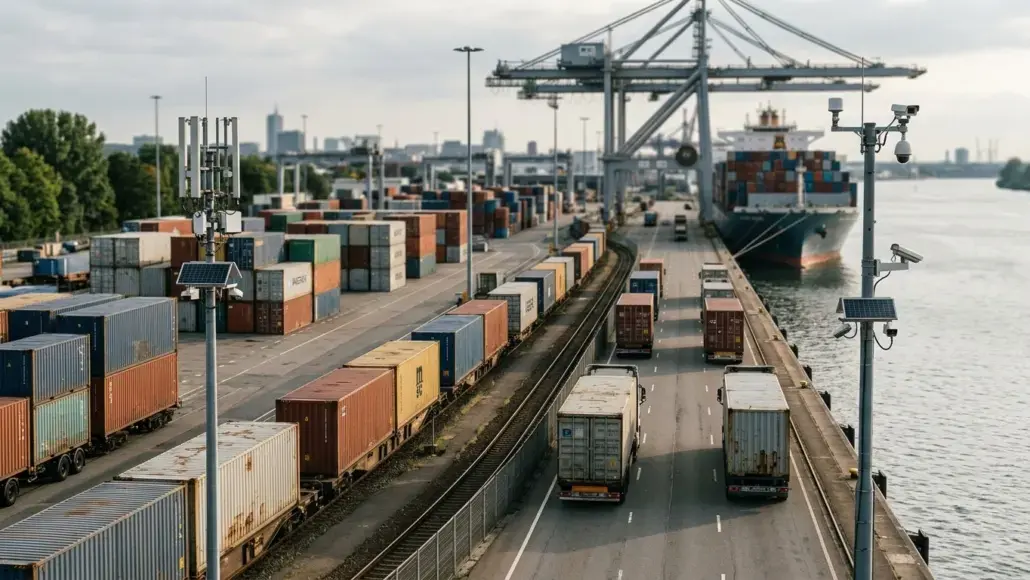
The global transportation network is no longer just a physical web of roads, rails, and shipping lanes. It has become a vast digital ecosystem powered by the Internet of Things (IoT). In the world of multimodal logistics, where cargo must move seamlessly across different carriers and modes, the ability to collect and transmit data in real-time is the key to operational excellence. IoT in multimodal transport systems is transforming how we track assets, manage fleets, and ensure the integrity of global trade. Transport Advancement notes that by embedding sensors and communication devices into every container, vehicle, and pallet, the industry is building a ‘living’ supply chain that can see, hear, and feel its surroundings. This shift from passive tracking to active intelligence is not just improving visibility. It is also creating a more responsive, efficient, and resilient global market.
From Passive Tracking to Active Intelligence
Historically, asset tracking in logistics was limited to discrete check-ins at major hubs. A shipper might know that their container had left the port, but its status during the multi-week ocean voyage or the subsequent rail journey was largely a mystery. IoT in multimodal transport systems has eliminated these ‘black holes’ by providing continuous, end-to-end connectivity. Modern IoT devices utilize a combination of GPS, cellular, and satellite networks to transmit location data regardless of where the asset is in the world. This active intelligence allows logistics managers to monitor the progress of their shipments in real-time, identifying delays the moment they occur. By moving away from reactive management toward proactive oversight, companies can optimize their inventory levels, reduce lead times, and provide their customers with accurate arrival estimates.
The Power of LPWAN and NB-IoT in Global Connectivity
One of the most significant technical drivers of the IoT revolution in transport is the development of Low-Power Wide-Area Networks (LPWAN), particularly Narrowband IoT (NB-IoT) and LoRaWAN. These technologies are specifically designed for IoT applications where devices need to transmit small amounts of data over long distances while consuming minimal power. In a multimodal context, an NB-IoT sensor can remain active on a container for years without a battery change, tracking its movement across road, rail, and sea. This low-cost, long-life connectivity is making it economically feasible to track even low-value assets at scale. As telecom operators around the world roll out NB-IoT and LTE-M networks, the ‘internet of everything’ in logistics is becoming a reality, providing the ubiquitous coverage needed for truly global multimodal management.
Real-Time Environmental Monitoring and Cargo Integrity
For many industries, such as pharmaceuticals, food and beverage, and high-tech electronics, knowing the location of a shipment is not enough; the condition of the cargo is equally critical. IoT in multimodal transport systems enables real-time environmental monitoring by integrating sensors that measure temperature, humidity, shock, and light. If a refrigerated container (reefer) experiences a power failure on a freight train, the IoT system can immediately alert the operator, allowing for a swift intervention before the perishable goods are spoiled. Shock sensors can detect if a pallet has been dropped or mishandled during an intermodal transfer, providing the data needed for insurance claims and quality control. This level of granular visibility ensures that the integrity of the cargo is maintained throughout its entire journey, reducing waste and protecting brand reputation.
Predictive Maintenance and Fleet Optimization
IoT technology is also revolutionizing the management of the vehicles and infrastructure that power multimodal transport. By installing sensors on trucks, locomotives, and ships, operators can monitor the health of critical components in real-time. This data is used for predictive maintenance—identifying signs of wear or impending failure before a breakdown occurs. For instance, a sensor on a truck’s engine can detect unusual vibrations or temperature spikes, prompting the system to schedule maintenance at the next convenient stop. In the rail industry, IoT sensors on track switches and wheelsets are improving safety and reducing downtime. By keeping the fleet in peak condition, IoT in multimodal transport systems maximizes asset utilization and lowers the total cost of ownership for transport providers, ensuring that the wheels of global trade keep turning smoothly.
Integrating IoT Data into AI-Driven Supply Chain Analytics
The true value of IoT lies not just in the data collection, but in the insights generated when that data is analyzed. At present, IoT in multimodal transport systems is the primary fuel for advanced AI-driven supply chain analytics. By feeding real-time sensor data into machine learning models, companies can identify systemic inefficiencies and optimize their entire logistics network. For example, AI can analyze historical IoT data to find the most reliable multimodal routes or to predict port congestion patterns. The combination of IoT and AI allows for prescriptive logistics, where the system not only identifies a problem but also recommends the best course of action. This data-rich environment is essential for the transition to synchromodality, where freight is dynamically rerouted across different modes based on real-time conditions, maximizing both speed and sustainability.
The Future of Connected Assets and Smart Infrastructure
As we look toward the future, the integration of IoT will move beyond the cargo and the vehicle to include the very infrastructure of transport. We are seeing the rise of smart ports and connected corridors, where every crane, berth, and traffic light is part of a unified IoT network. In these environments, IoT in multimodal transport systems will coordinate the movement of autonomous vehicles and drones, creating a frictionless flow of goods through the global supply chain. The development of 5G and future satellite constellations will provide the high-bandwidth, low-latency connectivity needed for these advanced applications. In this fully connected future, the supply chain will operate as a self-optimizing organism, capable of adapting to the needs of the global economy with unprecedented agility and precision.
IoT in multimodal transport systems is the foundational technology of the modern logistics era. It has transformed the movement of goods from a series of disconnected steps into a continuous, data-driven process. By providing the visibility, control, and insights needed to manage complexity, IoT is empowering the industry to meet the challenges of the 21st century. Transport Advancement believes that as the technology continues to evolve and the cost of connectivity falls, the intelligent supply chain will become the standard for all global trade. For the organizations that embrace this digital transformation, the benefits in terms of efficiency, safety, and customer satisfaction will be immense. The future of transport is connected, and IoT is the bridge that is taking us there.
