


















The aviation industry is currently experiencing a profound and transformative phase, heavily driven by rapid advancements in technology and a consistently increasing demand for highly efficient air travel solutions. Transport Advancement notes that at the core of this transformation is the global IATS market, a crucial sector dedicated to the development and implementation of advanced systems designed to significantly enhance the safety, efficiency, and sustainability of global air transportation. As industry stakeholders prioritize the seamless integration of smart technologies, the strategic focus has shifted heavily toward developing robust systems capable of optimizing flight operations, vastly improving the passenger experience, and decisively reducing environmental impacts.
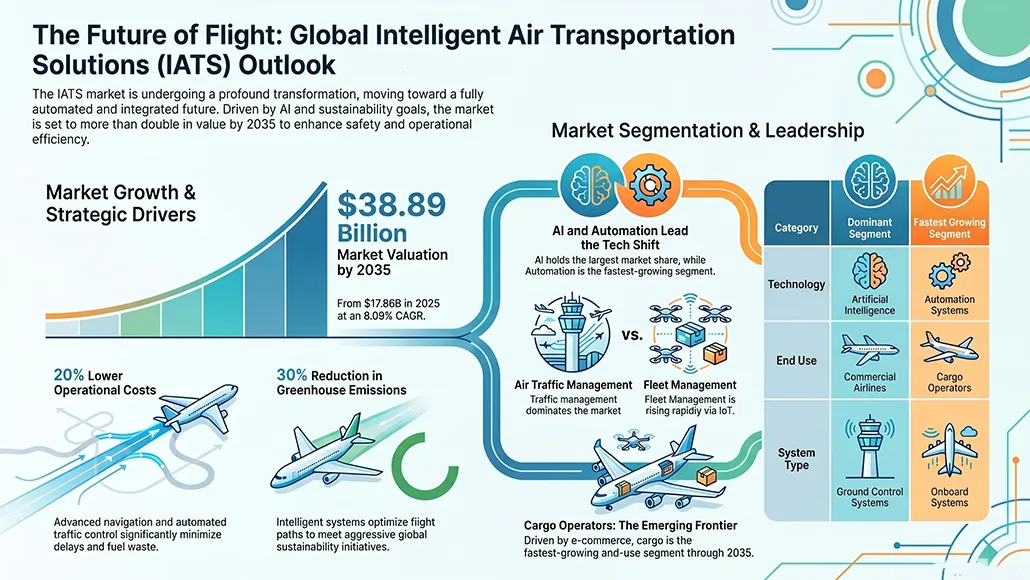
According to extensive market analysis, the overall market valuation was estimated at USD 16.53 Billion in 2024, and it is projected to grow from USD 17.86 Billion in 2025 to a staggering USD 38.89 Billion by the year 2035. This represents a steady and robust compound annual growth rate (CAGR) of 8.09% during the 2025 to 2035 forecast period. This remarkable growth trajectory underscores a promising future where air travel becomes increasingly streamlined, accessible, and technologically advanced. The ongoing evolution of sophisticated air traffic management systems, coupled directly with the anticipated rise of autonomous aircraft, points clearly toward this automated future.
Primary Growth Drivers
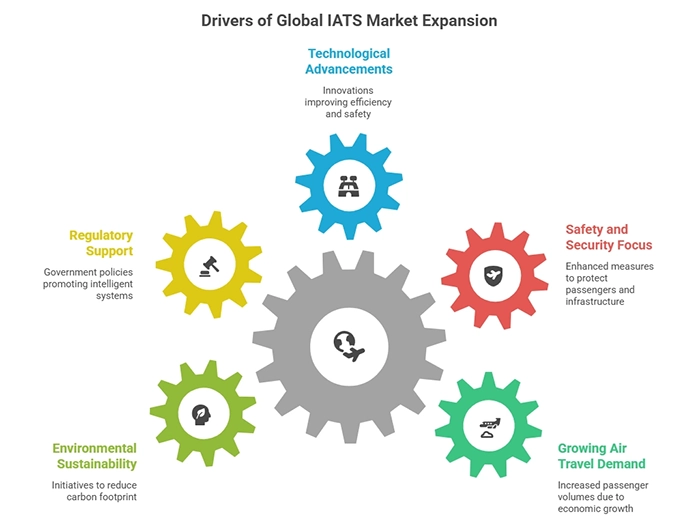
Transport Advancement believes several critical factors are accelerating the rapid expansion of the global IATS market. The foremost driver is the growing, universal demand for air travel. As global economies expand and disposable incomes rise proportionately, an increasing number of individuals and businesses are opting for air travel, leading to a substantial surge in passenger volumes. Industry data forcefully indicates that air travel demand is expected to increase by approximately 4.5% annually over the next decade. This escalating trend necessitates the urgent, widespread implementation of intelligent systems to manage the significantly growing volume of air traffic efficiently. Consequently, airlines and airport authorities are heavily investing in these vital solutions to enhance capacity and thoroughly improve service quality.
Equally important is the relentless, uncompromising focus on safety and security. These foundational elements remain paramount in the aviation sector and significantly influence the market landscape. Recent global incidents have heightened public and institutional awareness regarding the absolute necessity for advanced safety measures and stringent security protocols. As a result, there is a pronounced emphasis on integrating intelligent systems that can proactively monitor and dynamically respond to potential threats in real-time. The industry is witnessing massive, sustained increased investments in cutting-edge technologies, such as biometric identification and automated surveillance systems, which not only bolster passenger confidence but also drive demand for innovative solutions.
Technological advancements in aviation also play a pivotal role in this market’s expansion. The sector is experiencing a massive surge in innovations that dramatically enhance operational efficiency and aviation safety. The integration of highly advanced navigation systems, completely automated air traffic control, and real-time data analytics is becoming increasingly standard. These sophisticated technologies streamline daily operations, minimize compounding delays, and significantly improve aircraft fuel efficiency. Recent empirical data suggests that the implementation of these technologies could potentially reduce massive operational costs by up to 20%.
Furthermore, the market benefits immensely from a highly robust framework of regulatory support and strict compliance requirements aimed at enhancing safety and efficiency. Governments and aviation authorities globally are proactively establishing modern regulations that actively promote the rapid adoption of intelligent systems. Governments and aviation authorities are also highly likely to collaborate intimately with private sector players to establish rigorous standards that promote interoperability and safety across the board. This cooperative, collaborative approach may lead directly to the emergence of entirely new business models and strategic partnerships, fostering a highly dynamic ecosystem that powerfully supports the growth of intelligent air transportation solutions.
Lastly, environmental sustainability initiatives exert a massive, undeniable influence on market trajectories. With intensifying concerns about climate change, the aviation sector is under immense, sustained pressure to aggressively reduce its carbon footprint. Intelligent systems that meticulously optimize flight paths, improve general fuel efficiency, and aggressively reduce emissions are now considered absolutely essential. Data clearly suggests that implementing these intelligent systems could directly lead to a staggering reduction in greenhouse gas emissions by up to 30%, which fundamentally aligns with modern eco-friendly practices.
Key Market Trends
The global IATS market is poised for substantial, enduring growth driven by these specific technological advancements and sweeping sustainability initiatives. One of the most prominent, undeniable trends is the profound integration of artificial intelligence, which is rapidly transforming operational efficiencies, particularly in regions like North America. AI technologies are being thoroughly utilized to enhance complex decision-making processes, dynamically optimize intricate flight routes, and flawlessly improve predictive maintenance schedules. This trend indicates a definitive, irreversible shift toward more automated systems capable of analyzing vast amounts of data in real-time, subsequently leading to vastly increased operational efficiency and drastically reduced costs.
Sustainability initiatives are rapidly gaining powerful traction, reflecting a comprehensive global shift toward environmentally responsible aviation practices, especially noted within the Asia-Pacific region. Industry stakeholders are increasingly zeroing in on heavily reducing carbon emissions and greatly enhancing overall fuel efficiency. This reflects a broader, industry-wide commitment to long-term environmental stewardship, as companies seek to tightly align their operations with rigid global sustainability goals.
Another extremely notable trend is the relentless emphasis on dramatically enhancing the passenger experience. Breakthrough innovations such as highly personalized services, vastly improved in-flight connectivity, and seamlessly streamlined boarding processes are being strongly prioritized across the sector. This intense, unwavering focus on customer satisfaction suggests that industry stakeholders fully recognize the critical importance of creating a completely seamless travel experience to drive long-term loyalty and robust repeat business.
Market Segmentation and Detailed Industry Insights
The market exhibits a highly diversified, complex landscape comprehensively categorized by technology, application, end use, and system type.
By Technology: The market is characterized heavily by diverse technological advancements, with Artificial Intelligence holding the absolute largest, dominant market share. AI heavily leverages machine learning and advanced algorithmic models to significantly enhance predictive analytics and perfectly streamline operations. Conversely, Automation Systems represent the fastest-growing and rapidly emerging technology segment. These highly innovative systems focus intensely on decisively reducing human intervention and vastly increasing operational efficiency. The market is currently witnessing a significant, industry-wide shift as major airlines seek to deeply integrate these advanced systems to systematically optimize flight operations and fundamentally improve safety protocols. Additionally, Data Analytics represents a vitally crucial segment.
By Application: Air Traffic Management clearly and decisively dominates the market, holding the absolute largest share. This pivotal segment is absolutely essential for universally ensuring safe and highly efficient air travel, utilizing advanced automation and deep data analytics to flawlessly enhance decision-making processes for air navigation services. On the other hand, Fleet Management is rapidly emerging as the fastest-growing segment. This exponential growth is aggressively driven by the increasing global demand for optimized operations and the rapid integration of new technologies, such as the Internet of Things, to track aircraft performance meticulously and smoothly facilitate real-time data sharing among critical stakeholders.
By End Use: Airlines constitute the largest and most dominant segment by a wide margin, heavily and consistently investing in advanced technologies to ensure peak operational efficiency and vastly enhanced passenger experiences. Forecasts robustly show the Airlines segment expanding strongly. Cargo Operators currently represent the absolute fastest-growing, highly emerging segment. Powerfully driven by the explosive, unabated growth of e-commerce and surging global trade demands, cargo operators are increasingly adopting brilliant intelligent transportation solutions to guarantee timely, flawless deliveries. This explosive growth is further accelerated by dramatic advancements in complete automation and real-time tracking systems, which enable a far more efficient global supply chain. By 2035, the Cargo Operators segment is projected to reach an impressive size. Furthermore, Government Agencies and Private Aviation are also projected to have strong growth by 2035.
By System Type: Ground Control Systems unequivocally stand as the dominant segment, playing a highly critical, foundational role in dynamically managing and comprehensively facilitating complex air traffic control, ground surveillance, and total operational oversight. Meanwhile, Onboard Systems, which brilliantly integrate highly advanced navigation, precise flight management, and real-time continuous performance monitoring, are currently witnessing the absolute fastest growth. The increasing, unparalleled complexity of modern flight operations and the massive industry-wide push for smarter aircraft technologies overwhelmingly contribute to the accelerated growth of this critical segment.
Regional Forecast and Landscape
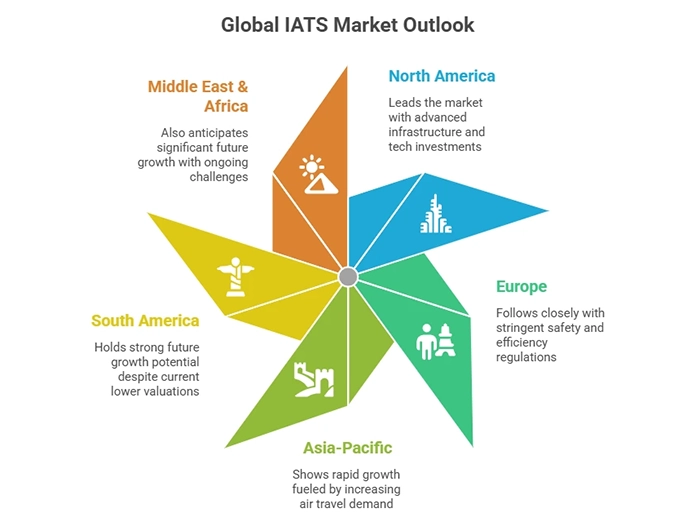
The regional dynamics of the global IATS market reveal incredibly robust growth trajectories across various diverse geographical segments. North America currently, and decisively, leads the global market, primarily due to its highly advanced foundational infrastructure and massive, sustained investments in cutting-edge aviation technology.
Europe follows very closely behind, heavily driven by incredibly stringent regulatory frameworks focused squarely on ensuring peak safety and maximum efficiency.
The Asia-Pacific (APAC) region is exceptionally and remarkably significant, dynamically demonstrating a rapidly expanding aviation market that is highly fueled by aggressively increasing air travel demand.
South America and the Middle East & Africa (MEA) currently show much lower baseline valuations. However, they both hold extremely strong future growth anticipations. While undeniably vital to the global ecosystem, these emerging regions continually face ongoing, complex challenges in seamless execution due directly to highly varying levels of core infrastructural development and disparate investments in modern technology.
Future Outlook
The future of the global IATS market looks incredibly, undeniably promising as it steadily navigates toward a highly integrated, flawlessly automated global future. As the vital market continues to evolve rapidly, it remains absolutely essential for diverse stakeholders to remain incredibly agile and highly responsive to rapidly emerging trends and deeply shifting consumer preferences. Moving forward, entirely new, highly lucrative opportunities are fully expected to profoundly materialize in the continued development of hyper-advanced AI-driven air traffic management systems, the highly strategic global integration of blockchain technology for perfectly secure logistics tracking, and the widespread, revolutionary expansion of urban air mobility services across massive metropolitan areas globally. Transport Advancement notes that the market is perfectly poised to permanently solidify its absolutely indispensable, undeniably critical role in defining the ultimate future of advanced global air transportation.
