










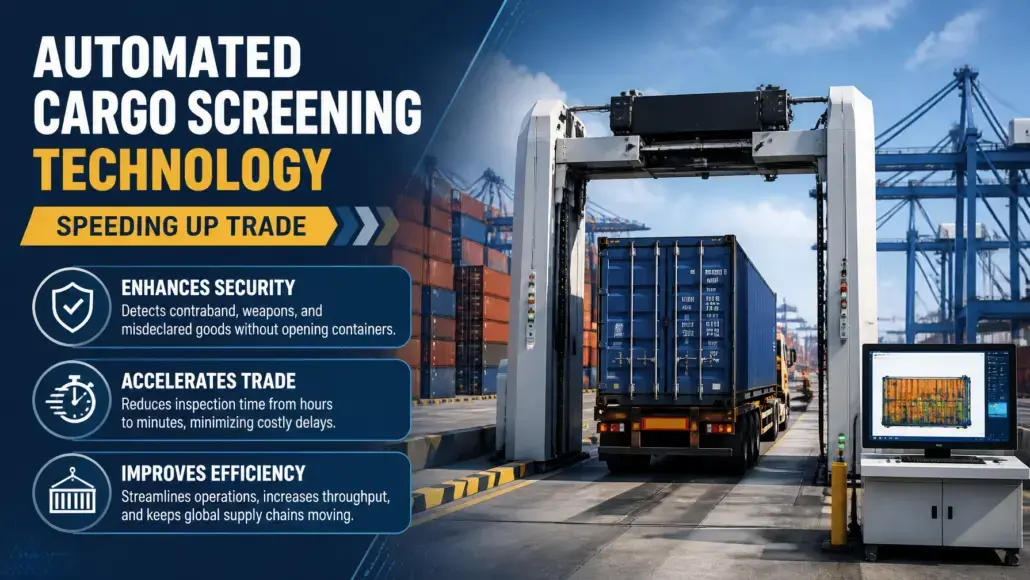
International trade hubs are the lifeblood of the global economy, yet they are also some of the most complex security environments in the world. Customs agencies and terminal operators must strike a delicate balance between facilitating the fast movement of goods and ensuring that every container is properly screened for contraband, weapons, and misdeclared cargo. Traditionally, a thorough inspection meant physically opening a container, a process that could take hours and cause massive delays. Transport Advancement observes that the introduction of automated cargo screening technology is now revolutionizing this process by allowing for high-speed, non-intrusive inspections that keep freight moving.
The global market for cargo inspection and non-intrusive inspection (NII) systems is growing steadily. DataIntelo valued the NII market at 5.8 billion dollars in 2025, with projections indicating it will reach 9.2 billion dollars by 2034. This represents a compound annual growth rate of approximately 5.3 percent. This investment is driven by national security priorities and the ongoing push for trade facilitation. Governments are realizing that slow borders are a direct tax on their economies, and automated screening is the primary tool to reduce those hidden costs.
Utilizing Non-Intrusive Inspection for Speed
The core of automated cargo screening technology is the use of high-energy X-ray and gamma-ray scanners. These systems can penetrate thick steel to provide a detailed image of a container’s contents without the need for manual unpacking. Modern drive-through portal scanners allow trucks to pass through the inspection zone at speeds of up to 15 kilometers per hour. This allows customs agencies to screen hundreds of containers per hour, a vast improvement over the handful that could be manually inspected in the same timeframe.
Major global companies are leading the development of these advanced scanning portals. Rapiscan Systems, a subsidiary of OSI Systems, is a world leader in Z-Backscatter and portal cargo scanners. Their systems are widely deployed at international ports and land borders to detect organic materials, such as explosives or narcotics, that traditional X-rays might miss. Similarly, Nuctech has become one of the world’s largest suppliers of vehicle inspection systems, providing mobile and stationary scanners to customs agencies globally.
The Role of Artificial Intelligence in Image Recognition
While the scanning hardware provides the image, the real breakthrough in automated cargo screening technology is the software used to analyze it. In the past, every scan had to be manually reviewed by a customs officer, a task that is mentally exhausting and prone to error. Today, AI-powered image recognition algorithms are being deployed to assist in this process. These systems can automatically flag anomalies, such as hidden compartments or items that do not match the manifest, allowing officers to focus their attention on high-risk shipments.
Recent developments in the corporate sector highlight this trend toward AI integration:
- In December 2025, Leidos announced a partnership with the AI firm CargoSeer to enhance its non-intrusive inspection line with automated threat detection capabilities.
- Smiths Detection, a division of Smiths Group, received TSA qualification in December 2025 for its SDX 100100 DV HC X-ray scanner, which is specifically designed for air cargo screening.
- DP World invested over 90 million dollars in port security and scanning technology at its Caucedo terminal in the Dominican Republic in late 2025 to improve throughput and security.
- Nigeria Customs recently deployed high-speed container scanners at the Apapa port to reduce congestion and improve the efficiency of border clearance.
These initiatives demonstrate a global commitment to secured ports where technology does the heavy lifting of security. By automating the screening process, terminals can provide a detect-to-clear workflow that significantly reduces the time a container spends at the terminal gate.
Facilitating Global Trade Through Modernization
The benefits of automated cargo screening technology are particularly evident in developing economies where border delays have traditionally been a major barrier to trade. The World Bank’s Trade Facilitation Support Program continues to fund customs digitization and scanning modernization projects in over 50 countries. These projects aim to implement single window customs systems where screening data is integrated directly into a digital trade platform.
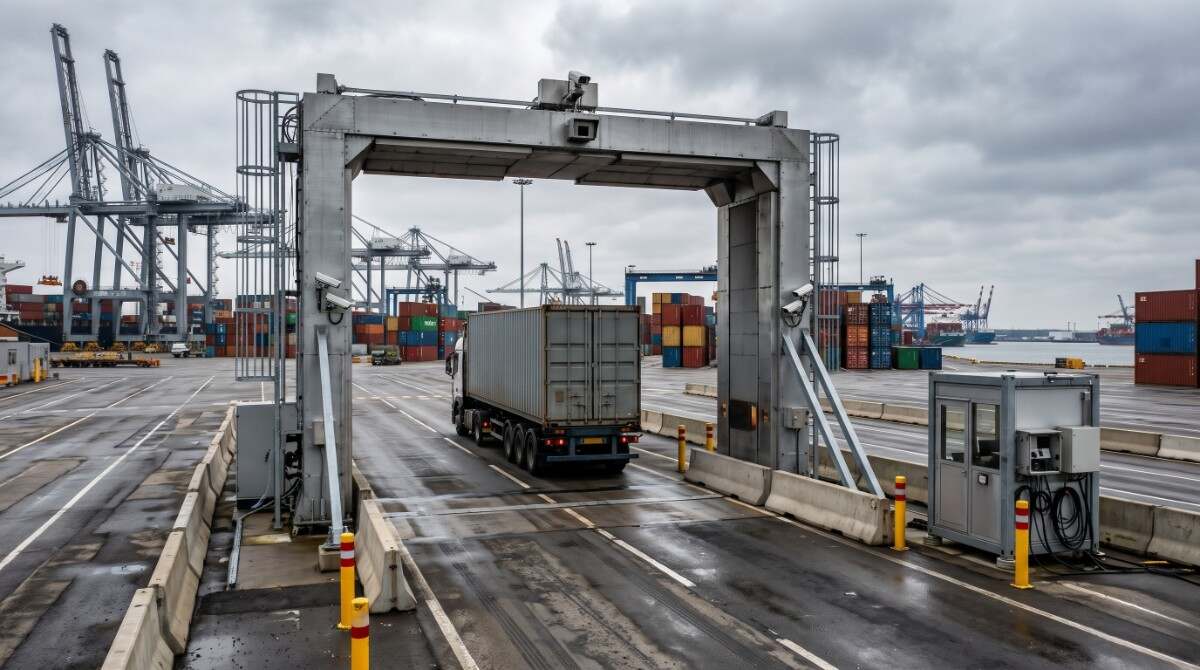
For example, in December 2025, the Japan International Cooperation Agency (JICA) signed a grant agreement with Tajikistan to provide freight-scanning equipment for the Spitamen Customs facility. Such investments are critical for landlocked countries that rely on efficient transit corridors for their economic survival. By reducing the time it takes to clear a border from days to minutes, these technologies are opening up new markets for exporters and lowering the cost of imported goods for consumers.
- Drive-through portals allow for a 100 percent screening rate without causing traffic backups.
- Mobile scanning vans provide flexibility to secure temporary or high-risk checkpoints.
- Automated risk management systems prioritize shipments based on shipper history and manifest data.
Enhancing Security for Specialized Cargo
Air cargo requires an even higher level of security than ocean freight, given the unique risks associated with aviation. The air cargo security screening systems market is projected to reach 1.87 billion dollars by 2033. High-value shipments, such as those monitored by ULD sensor telemetry security for high value air cargo, require specialized scanners that can handle the dense packaging and sensitive electronics often found in these containers.
Automated systems at airports are increasingly using dual-view X-ray technology to provide multiple perspectives on a shipment, making it harder for contraband to be hidden. The integration of these scanners with automated material handling systems means that cargo can move from the delivery truck to the screening zone and into the aircraft with minimal human contact. This reduces the risk of tampering and improves the overall speed of the air freight operation.
The Future of Smart Border Technology
As we look toward 2026 and 2027, the focus is on creating invisible borders where technology facilitates trade so smoothly that carriers barely notice the security checks. This vision relies on the continued advancement of automated cargo screening technology and the global standardization of customs data. Future systems will likely incorporate even more advanced sensors, such as radiation portal monitors and chemical sniffers, to detect a wider range of threats.
Transport Advancement notes that the ongoing digital transformation of customs and border protection agencies suggests that the era of the manual inspection is quickly coming to an end. By embracing automation and AI, the international trade community is building a more secure and efficient global supply chain. This investment in security infrastructure is not just a cost of doing business. it is the foundation for the continued growth and prosperity of the global economy.
References
- “Global Cargo Non-Intrusive Inspection Market Report 2025” – Dataintelo
- “Air Cargo Security Screening Systems Market Outlook 2033” – Persistence Market Research
- “Leidos and CargoSeer AI Partnership Announcement” – Leidos
- “Smiths Detection TSA Air Cargo Qualification” – Smiths Detection
- “Nigeria Customs High-Speed Scanner Deployment Report” – Nigeria Customs Service
- “JICA Tajikistan Grant Agreement for Customs Equipment” – Japan International Cooperation Agency
