










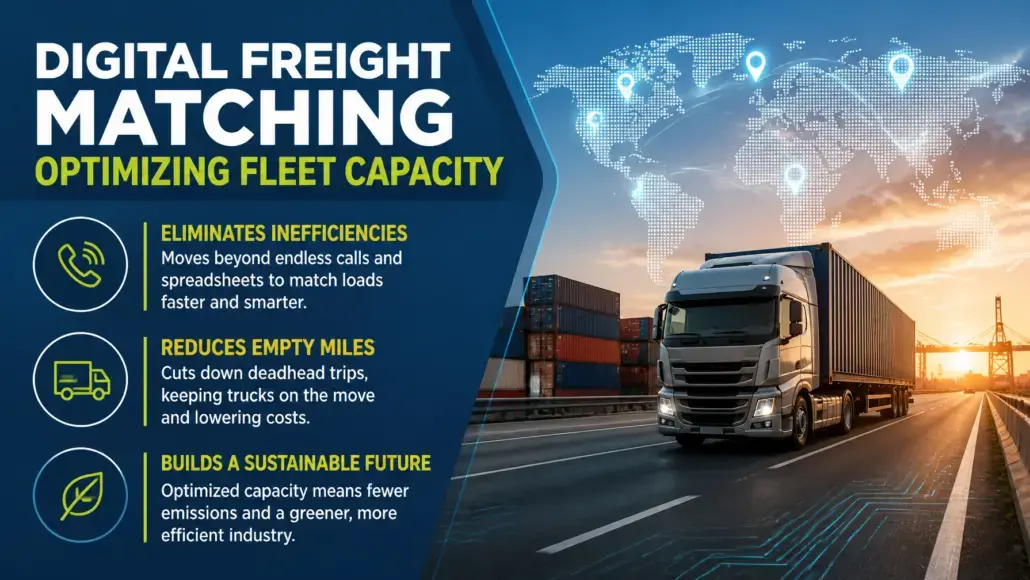
The trucking industry has traditionally operated on a model of fragmentation and informational asymmetry. For decades, the process of matching a shipper’s load with a carrier’s available capacity involved countless phone calls, manual spreadsheets, and a reliance on personal relationships between brokers and drivers. This inefficient system often resulted in trucks running empty for hundreds of miles, a phenomenon known as deadheading, which inflated costs and increased carbon emissions. Today, the sector is being fundamentally reshaped by digital freight matching optimization, a technology-driven approach that uses artificial intelligence to balance fleet capacity in real time.
The economic scale of this shift is immense. The global digital freight matching market was valued at approximately 66 billion dollars in 2025. According to research from Grand View Research, this market is projected to reach over 80 billion dollars in 2026, with long-term forecasts suggesting a surge to 613.8 billion dollars by 2033. This massive growth reflects a shift from a ‘wait-and-see’ approach to a widespread adoption of algorithmic load-matching platforms. In a market where fuel prices and driver wages are constantly fluctuating, the ability to maximize the utility of every mile is the primary driver of profitability.
Eliminating Information Gaps with AI Algorithms
Transport Advancement notes that the power of digital freight matching optimization lies in its ability to process millions of data points simultaneously. A modern platform can analyze historical lane data, real-time weather conditions, traffic patterns, and carrier preferences to find the perfect match for a specific shipment. This level of optimization is impossible for human brokers to achieve manually. Leading logistics players have demonstrated that these technologies can deliver performance improvements of 20 to 40 percent within just a few years of implementation, according to McKinsey research.
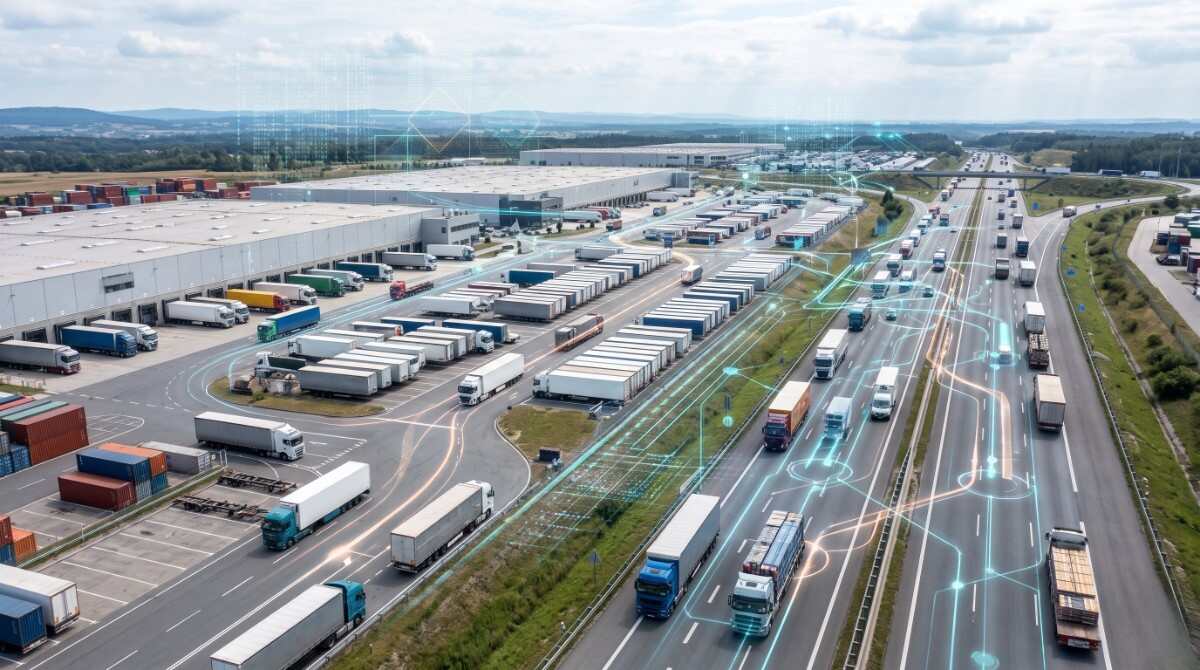
Global 3PL leaders like C.H. Robinson are at the forefront of this transformation. The company has deployed sophisticated AI agents across its Navisphere platform to automate the quoting and booking process. In late 2025, C.H. Robinson reported that these autonomous quoting tools have significantly improved carrier match rates and reduced the time required to secure capacity. By using generative AI to handle routine inquiries, human dispatchers can focus on solving complex logistical problems, while the software handles the high-frequency matching of standard freight.
Consolidating the Digital Freight Marketplace
The industry is also seeing a period of rapid consolidation as established players seek to acquire the best technology. In July 2025, DAT Freight & Analytics, the operator of the world’s largest load board, agreed to acquire the Convoy automated freight-matching platform from Flexport. This acquisition, valued at approximately 250 million dollars, integrates Convoy’s sophisticated matching algorithms into a massive ecosystem of carriers and brokers. This move is significant because it brings high-level optimization tools to smaller carriers who may not have the resources to build their own proprietary software.
Other major global companies active in this space include:
- Uber Freight continues to expand its digital marketplace, focusing on AI-powered pricing and its Premier carrier capacity program.
- J.B. Hunt is scaling its 360 Marketplace, which uses cloud technology to connect shippers directly with thousands of carriers for both truckload and intermodal moves.
- Flexport, while selling the Convoy platform, remains a major force in digital forwarding, utilizing AI to manage complex global shipments for over 13,000 businesses.
- Schneider and Penske have also expanded their digital capacity platforms, integrating real-time visibility with automated procurement tools.
These developments highlight a trend toward platformization in the logistics sector. Shippers no longer want to manage dozens of individual carrier relationships. Instead, they want access to a single digital portal where they can find reliable capacity at a competitive price.
Operational Efficiency and Sustainability
The benefits of digital freight matching optimization extend beyond simple cost savings. There is a strong environmental component to reducing empty miles. If a truck can find a backhaul load through an automated platform instead of returning empty, the carbon footprint of that journey is essentially cut in half. As large corporations face increasing pressure to report and reduce their Scope 3 emissions, the adoption of efficient load-matching technology is becoming a corporate social responsibility requirement.
In August 2025, C.H. Robinson noted in a market update that soft spot-market capacity was increasing the demand for algorithmic matching. When capacity is loose, shippers have more leverage, but carriers need these tools to find the most profitable loads to keep their trucks moving. Conversely, when capacity is tight, shippers rely on these platforms to find any available space in the market. This cyclical nature of the industry ensures that digital matching remains a critical tool regardless of the broader economic environment.
- Real-time pricing data helps shippers set realistic budgets and avoid spot-market shocks.
- Automated document management speeds up the payment cycle for carriers, improving their cash flow.
- Performance tracking within platforms helps shippers identify and reward preferred carriers.
The Evolution of Load Consolidation
The next logical step in this optimization journey is the combination of multiple smaller shipments into full truckloads. Advanced load consolidation algorithm efficiency allows platforms to identify two or more shippers who have freight moving in the same direction and bundle them together. This shared truckload model is gaining traction as a way to further reduce deadhead miles and lower costs for small and medium-sized enterprises.
Strategic partnerships between technology providers and asset-heavy carriers are facilitating this shift. For example, Uber Freight’s Powerloop program focuses on drop-trailer pooling, which allows drivers to quickly swap trailers and move on to their next load without waiting for unloading. This level of physical and digital coordination is only possible when a central algorithm has complete visibility over the entire fleet’s movements and requirements.
Future Outlook for Algorithmic Brokerage
As we move into 2026, Transport Advancement observes that the industry is looking toward even more autonomous forms of freight brokerage. The goal is a zero-touch shipment, where the entire process from order entry to delivery confirmation and payment is handled by AI. This requires high levels of data integrity and trust between all parties in the supply chain.
The continued investment in digital freight-tech suggests that the era of the manual freight broker is coming to an end. In its place, we are seeing the rise of the digital logistics orchestrator, a company that provides the platform, the data, and the algorithms to ensure that global trade moves as efficiently as possible. By focusing on digital freight matching optimization, the industry is not just cutting costs. it is building a more resilient and sustainable foundation for the future of commerce.
References
- “Digital Freight Matching Market Report 2025-2033” – Grand View Research
- “Digital Logistics: Technology Race Gathers Momentum” – McKinsey
- “Convoy Platform Acquisition Announcement” – DAT Freight & Analytics
- “North America Truckload Market Update Aug 2025” – C.H. Robinson
- “Digital Freight Platforms Market Analysis” – Mordor Intelligence
- “J.B. Hunt 360 Cloud Marketplace Growth Report” – J.B. Hunt
