








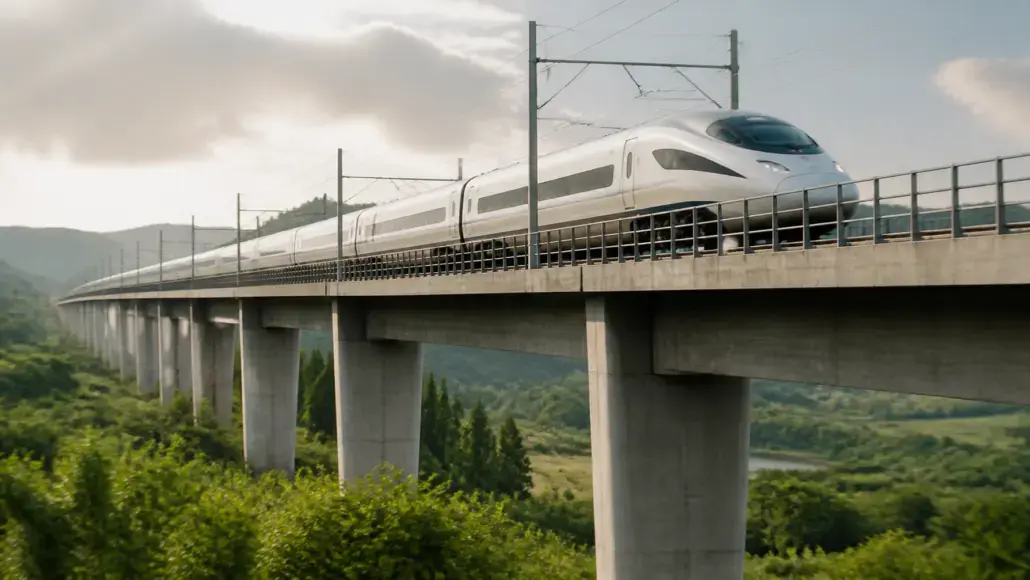
High-speed rail is often hailed as a green alternative to aviation and road transport, but the environmental impact of its construction is substantial. Building thousands of miles of track, bridges, and tunnels requires vast quantities of energy-intensive materials like concrete and steel. In 2026, the industry is addressing this challenge by pivoting toward sustainable high-speed rail construction. Transport Advancement notes that by prioritizing the use of low-carbon materials and circular economy principles, rail engineers are significantly reducing the embodied carbon of new projects, ensuring that the rail network is truly sustainable from the ground up.
The Challenge of Embodied Carbon in Rail Infrastructure
Embodied carbon refers to the greenhouse gas emissions associated with the entire lifecycle of a construction material, from extraction and manufacturing to transportation and installation. For a typical high-speed rail project, the embodied carbon can represent a significant portion of the total lifetime emissions, often taking decades of operation to offset through avoided car or plane trips. Sustainable high-speed rail construction aims to shorten this carbon payback period by making smarter choices at the design and procurement stages.
The primary culprits are cement and steel, which are responsible for a large share of global industrial emissions. Cement production involves high-temperature kilns and chemical reactions that release vast amounts of CO2, while traditional steel manufacturing relies heavily on coking coal. In 2026, the industry is moving away from these traditional materials in favor of innovative, low-carbon alternatives that maintain the necessary strength and durability for high-speed operations. This shift is essential for the rail sector to meet its net-zero commitments and maintain its reputation as a leader in sustainable transportation.
Innovative Low-Carbon Concrete and Cement Alternatives
Concrete is the most widely used material in rail infrastructure, found in everything from track slabs to tunnel linings. To achieve sustainable high-speed rail construction, engineers are increasingly utilizing green concrete that incorporates industrial byproducts like ground granulated blast-furnace slag (GGBS) or pulverized fuel ash (PFA) as a partial replacement for traditional Portland cement. These additives not only reduce the carbon footprint of the concrete but often improve its long-term durability and resistance to chemical attack.
Furthermore, the emergence of carbon-sequestering concrete is providing a revolutionary new tool. These materials actually absorb CO2 from the atmosphere as they cure, effectively turning the rail infrastructure into a giant carbon sink. In 2026, several high-speed rail projects in Europe and Asia are piloting the use of these carbon-negative materials for non-structural elements like sound barriers and station platforms. The continuous innovation in cement chemistry is a key pillar of the circular construction movement, transforming a major source of emissions into a tool for climate mitigation.
Green Steel and the Role of Circularity
Steel is another critical material for high-speed rail, used for the tracks themselves, the reinforcement in concrete, and the structural frames of stations. The transition to sustainable high-speed rail construction is being supported by the rise of green steel, produced using hydrogen-based reduction or electric arc furnaces powered by renewable energy. While green steel is currently more expensive than traditional steel, its carbon footprint is up to 90% lower, making it an essential investment for sustainability-focused projects.
Circularity is also a key component of the steel strategy. Engineers are increasingly designing rail infrastructure for deconstruction and reuse. This involves using modular components that can be easily disassembled and repurposed at the end of their life, rather than being scrapped. The recycling of existing rail tracks into new products is also becoming more common, closing the material loop and reducing the need for virgin iron ore. In 2026, the cradle-to-cradle approach to steel management is a standard feature of the most advanced sustainable high-speed rail construction projects.
Sustainable Geotechnics and Nature-Based Solutions
Construction activities also involve significant land disturbance and the movement of vast quantities of earth. Sustainable high-speed rail construction incorporates sustainable geotechnics, which focuses on minimizing the environmental impact of earthworks. This includes the use of recycled aggregates and soil stabilization techniques that reduce the need for imported materials. By optimizing the cut-and-fill balance of a project, engineers can significantly reduce the fuel consumption and emissions associated with transport.
Nature-based solutions (NbS) are also being integrated into the construction process. This includes the use of bio-engineering to stabilize slopes and embankments, using living vegetation rather than just concrete walls. These solutions not only improve the resilience of the infrastructure to climate change but also enhance local biodiversity and carbon sequestration. In 2026, the green corridor approach is becoming the new norm, where the rail line is designed as a continuous ecological strip that supports both high-speed travel and local wildlife.
The Role of Digitalization and Life Cycle Assessment (LCA)
Digitalization is playing a crucial role in enabling sustainable high-speed rail construction. Building Information Modeling (BIM) allows engineers to accurately calculate the embodied carbon of a project during the design phase, enabling them to compare different material and design options. In 2026, AI-driven optimization tools are being used to find the most carbon-efficient route and construction method, balancing engineering requirements with environmental goals.
Life Cycle Assessment (LCA) has become a mandatory part of the planning process for all major rail projects. By conducting a detailed LCA, developers can provide a transparent and verifiable record of the project’s carbon footprint, which is essential for securing green financing and public support. The use of digital product passports for construction materials ensures that their sustainability credentials can be tracked and verified throughout the supply chain. This data-driven approach is ensuring that circularity and sustainability are not just slogans but are measurable and accountable.
Policy, Procurement, and the Green Premium
The transition to sustainable high-speed rail construction is being driven by a supportive policy environment. Many governments have introduced green procurement rules that require infrastructure projects to meet specific carbon reduction targets. This creates a powerful incentive for contractors and suppliers to innovate and invest in low-carbon technologies. Furthermore, the availability of green bonds and other sustainable financing mechanisms is helping to offset the green premium associated with some of these new materials.
Collaboration across the supply chain is essential for success. Rail operators, contractors, and material suppliers must work together to develop and scale the solutions needed for a sustainable future. In 2026, we are seeing the emergence of sustainability partnerships where risks and rewards are shared, encouraging the adoption of innovative but unproven technologies. The journey toward sustainable construction is a collective effort that requires a long-term vision and a commitment to excellence.
Future Outlook: A Carbon-Neutral Rail Infrastructure
As we look toward 2030, the goal for sustainable high-speed rail construction is to achieve true carbon neutrality. This will involve the widespread adoption of carbon-negative materials, the complete electrification of construction equipment, and the use of offsets for any remaining emissions. The rail industry is well-positioned to lead the way in the transition to a circular, low-carbon construction sector, providing a model for other infrastructure projects to follow.
The transformation of rail construction is a testament to the industry’s ability to adapt and innovate in response to the climate crisis. Transport Advancement believes that by building our future transportation networks with low-carbon materials, we are ensuring that the benefits of high-speed rail are not undermined by the environmental cost of its creation. The era of sustainable construction has arrived, and it is the foundation upon which a more resilient and connected world will be built.
