











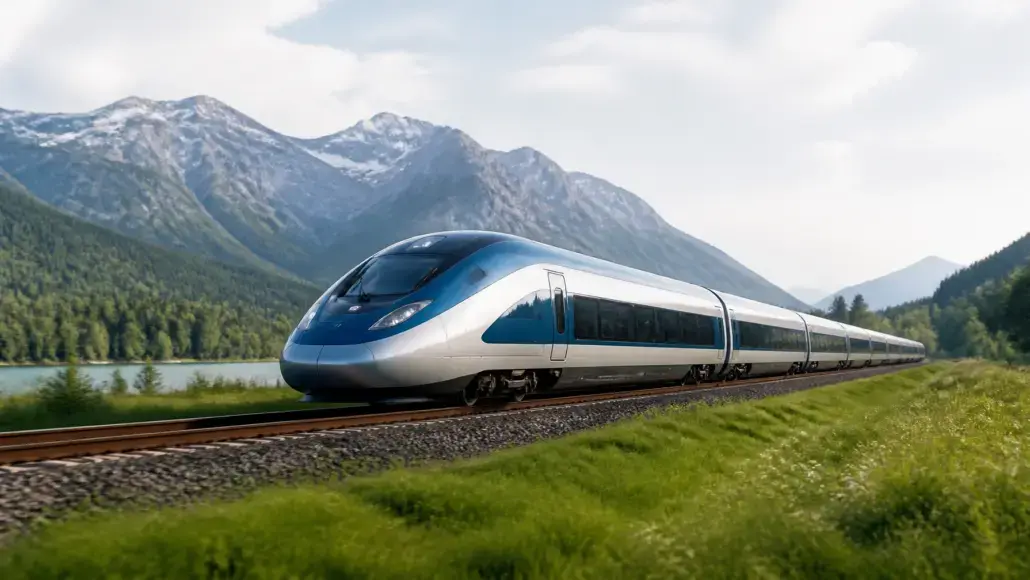
While the electrification of rail networks has been the primary strategy for decarbonizing transport, the high cost and complexity of installing overhead catenary systems on long-distance or rural routes remain significant hurdles. In 2026, a revolutionary alternative has entered the mainstream: hydrogen-powered high-speed trains. These zero-emission marvels offer the performance of a traditional bullet train without the need for an expensive, wired infrastructure. Transport Advancement notes that by leveraging advanced fuel cell technology and the growing availability of green hydrogen, the industry is unlocking a new era of flexible, sustainable, and truly clean transportation that can reach the farthest corners of the globe.
The Technological Breakthrough: Hydrogen Fuel Cells in Rail
The core of hydrogen-powered high-speed trains is the hydrogen fuel cell, a device that converts the chemical energy of hydrogen directly into electricity through a reaction with oxygen. The only byproduct of this process is pure water vapor, making it a perfectly clean power source at the point of use. Unlike slower regional hydrogen trains that have been in operation for several years, the next generation of high-speed hydrogen trains utilizes high-power fuel cell stacks and advanced battery buffers to achieve the rapid acceleration and high sustained speeds required for intercity travel.
The storage of hydrogen on a high-speed train presents unique engineering challenges. Hydrogen must be stored at high pressures or in cryogenic liquid form to achieve the necessary energy density. In 2026, innovations in lightweight composite tanks and advanced insulation are allowing trains to carry enough fuel for long-distance journeys of up to 1,000 kilometers on a single fill. This range makes hydrogen-powered high-speed trains a viable alternative to both diesel and traditional electric trains on many important corridors, providing a flexible and scalable path to a net-zero rail network.
Advantages of Hydrogen over Traditional Electrification
The primary advantage of hydrogen-powered high-speed trains is the elimination of the need for overhead lines and substations. Electrifying a rail line is a massive capital project that can cost millions of dollars per kilometer and involve significant disruption to the environment and local communities. Hydrogen trains, by contrast, operate on existing non-electrified tracks, requiring only the installation of hydrogen refueling stations at key hubs. This makes hydrogen an ideal solution for extending high-speed service to less populated regions or across challenging terrain where electrification is not economically or technically feasible.
Furthermore, hydrogen trains offer greater operational resilience. A failure in the overhead power grid can bring an entire electrified line to a halt, whereas hydrogen trains are self-powered and independent of the external grid. In the event of a power outage or a natural disaster, a fleet of hydrogen-powered high-speed trains can continue to provide essential transport services, ensuring the continued movement of people and goods. This resilience is a key consideration for national transport strategies in an increasingly volatile world.
The Role of Green Hydrogen and the Energy Ecosystem
The environmental credentials of hydrogen-powered high-speed trains are inextricably linked to how the hydrogen is produced. To be truly sustainable, the industry is focusing on green hydrogen, produced via electrolysis using renewable energy sources like wind and solar. In 2026, the cost of green hydrogen is falling rapidly as global production capacity scales up. Rail operators are increasingly partnering with energy companies to build hydrogen hubs near rail depots, where renewable energy is used to produce and store hydrogen onsite for the train fleet.
This integration creates a powerful synergy between the transport and energy sectors. High-speed rail can act as a major anchor tenant for the burgeoning hydrogen economy, providing the consistent demand needed to justify large-scale investments in green hydrogen infrastructure. The excess hydrogen produced for the rail network can also be sold to other sectors, such as heavy trucking and shipping, further accelerating the broader transition to clean energy. Hydrogen-powered high-speed trains are thus a critical component of a more integrated and resilient zero-emission energy ecosystem.
Overcoming Technical and Logistical Hurdles
Despite its immense potential, the move to hydrogen-powered rail faces significant challenges. The efficiency of the well-to-wheel cycle for hydrogen—from production and compression to transport and conversion—is currently lower than that of direct electrification via overhead lines. This means that hydrogen trains require more primary energy to travel the same distance. However, in 2026, advancements in fuel cell efficiency and energy recovery systems are narrowing this gap, making hydrogen more competitive for high-speed applications.
Logistics also pose a challenge. Building a global network of hydrogen refueling stations requires careful planning and significant investment. Ensuring a reliable and secure supply of high-purity hydrogen to every depot is a major undertaking. The industry is responding by developing specialized hydrogen transport tankers and pipelines, as well as automated refueling systems that can fill a high-speed train in a matter of minutes, similar to the refueling time of a traditional diesel train. Overcoming these logistical hurdles is essential for the widespread adoption of hydrogen-powered high-speed trains.
Safety, Regulation, and Public Perception
Safety is a paramount concern for any new transport technology, particularly when it involves a pressurized and flammable fuel like hydrogen. Hydrogen-powered high-speed trains are designed with multiple layers of safety, including specialized leak detection sensors, automatic shut-off valves, and crash-resistant fuel tanks. Because hydrogen is much lighter than air, any leak will quickly dissipate upwards, reducing the risk of fire compared to liquid fuels like diesel. In 2026, the industry is working closely with regulators to establish rigorous international safety standards for hydrogen rail, building on the experience gained in the automotive and industrial sectors.
Public perception is also key. While there is broad support for zero-emission transport, some remains skeptical of hydrogen due to historical misconceptions. Clear communication about the technology’s benefits and safety features is essential for building public trust. Successful pilot projects and commercial deployments are demonstrating that hydrogen-powered high-speed trains are a safe, quiet, and comfortable way to travel. By positioning hydrogen as a clean and modern alternative to fossil fuels, the industry is paving the way for a more sustainable and publicly accepted rail future.
Future Outlook: A Multi-Fuel High-Speed Network
As we look toward 2030, the high-speed rail network of the future will likely be a multi-fuel system. Traditional electrification will remain the primary solution for high-density, high-frequency corridors, while hydrogen-powered high-speed trains will provide clean connectivity for longer-distance and lower-density routes. We may even see hybrid trains that can operate on both overhead power and hydrogen, providing the ultimate in flexibility and efficiency.
The journey of hydrogen from a niche energy carrier to a mainstream transport fuel is a testament to the power of innovation in the face of the climate crisis. Transport Advancement believes that by providing a clean, flexible, and scalable solution for high-speed rail, hydrogen is helping to ensure that the transport of the future is both fast and sustainable. The era of the hydrogen-powered bullet train has arrived, and it is set to redefine the future of global mobility.
