







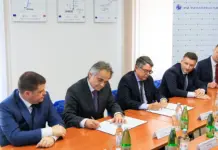










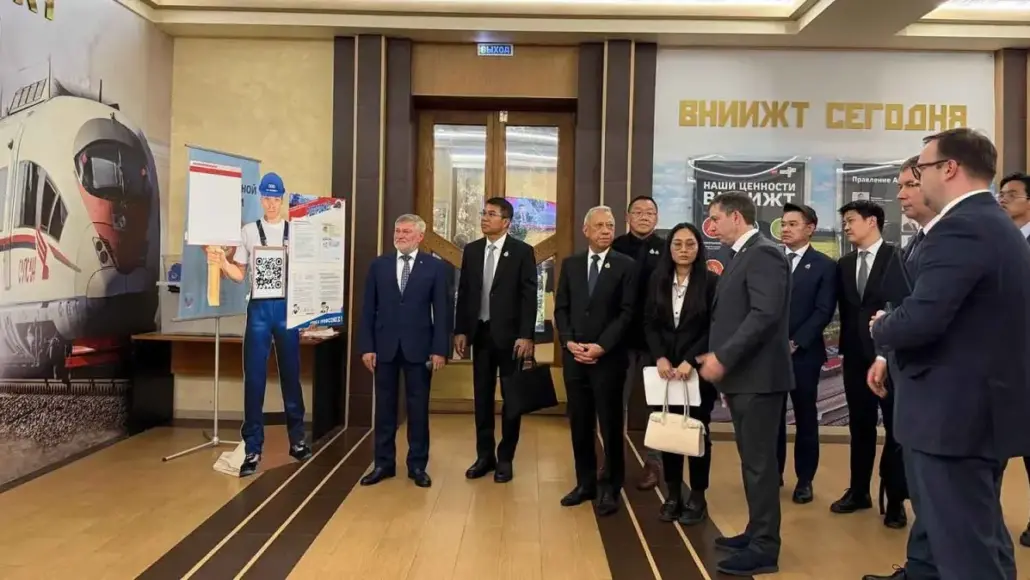
Transport officials from Thailand and Russia met in Moscow on 5th August 2026 to discuss strengthening bilateral ties across technological development, skills enhancement, and scientific research. The high-level meeting focused on establishing a Thai-Russia railway system cooperation initiative through a Memorandum of Understanding (MoU) focused on communication and transportation technology.
The delegation, led by Thailand’s Transport Minister Phiphat Ratchakitprakarn, Thailand Ministry of Transport Permanent Secretary Chayathan Promsorn, and ministry executives, held discussions with Mikhail Mekhedov, deputy director of the All-Russian Scientific Research Institute of Railway Transport (VNIIZHT). Founded in 1918, VNIIZHT plays an operational role in transport, covering infrastructure advancement, rolling stock technology, and digital innovation.
Strategic Initiatives for Domestic Industry Growth
Minister Phiphat stated that the government prioritizes modernizing transportation to reduce logistics costs and promote regional connectivity. While Thailand plans to utilize Russian technical standards, the focus centers on long-term human resource development rather than technology importation alone.
The railway system cooperation includes expert exchanges, joint research initiatives, maintenance technology transfer, system trials, and local supply chain creation. A key component of the plan involves establishing domestic rolling stock wheel production to support the overall Thai industry. Transport officials will select development approaches suited to the national context. Building a resilient Thai-Russia railway system framework remains key to cultivating local technical capabilities for future domestic needs.
Educational Exchanges and Advanced Analytic Systems
Outlining short-term goals under the railway system cooperation MoU, Permanent Secretary Chayathan Promsorn noted that the plan includes exchange programs across 19 transportation colleges in Russia. This includes the Russian University of Transport, which features a curriculum covering railway engineering and digital network implementation.
During the visit, the delegation also reviewed a specialized forecasting and analytic system. This digital tool measures the operational impact of external environmental factors, including weather conditions, humidity levels, and flood records, to support overall network efficiency.
