








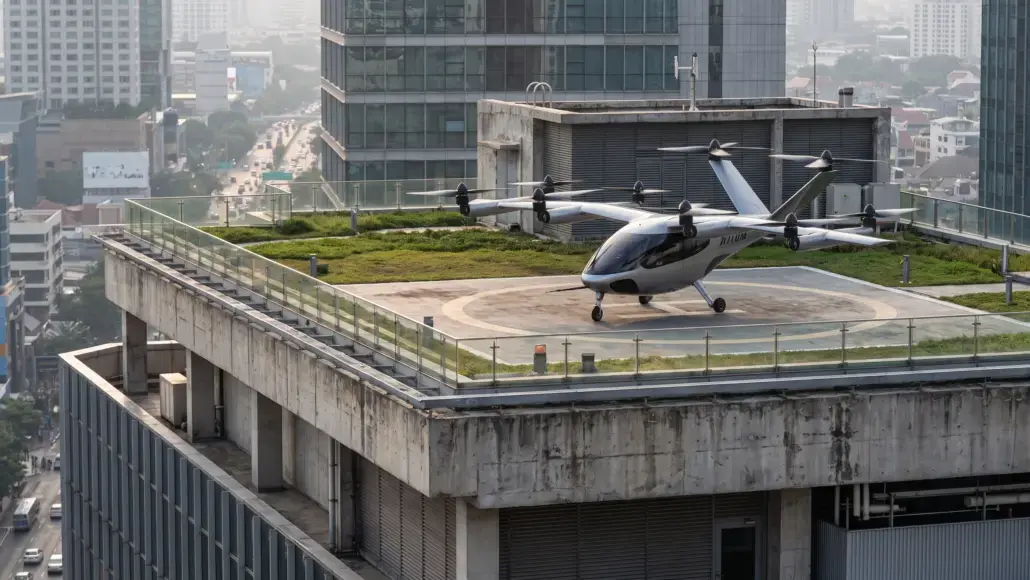
The image of a sleek electric aircraft lifting off from a skyscraper rooftop has long been a staple of science fiction, yet the reality of this transition hinges on a grounded necessity that is often overlooked in the excitement of flight. While the development of electric Vertical Take-off and Landing (eVTOL) aircraft captures the headlines, the success of this third dimension of transportation rests entirely on the physical and digital nodes from which they operate. These nodes, known as air taxi vertiports, represent a sophisticated evolution of aviation infrastructure designed specifically to meet the unique demands of high-frequency, short-haul urban flight. Without a robust and interconnected web of vertiport infrastructure, even the most advanced aircraft would remain grounded, unable to fulfill the promise of a more efficient urban landscape.
To understand the significance of these facilities, one must look beyond the simple concrete pads used by traditional helicopters. Air taxi vertiports are complex ecosystems that integrate advanced energy management, autonomous air traffic control, and seamless passenger logistics into the existing fabric of a city. As we move closer to the commercialization of advanced air mobility, Transport Advancement notes that the focus is shifting from the sky to the ground. Engineers, urban planners, and aviation experts are now grappling with the challenge of building a network that can handle hundreds of flights an hour while maintaining the highest levels of safety and community acceptance.
The Fundamental Shift from Heliports to Vertiports
It is tempting to view air taxi vertiports as merely modern versions of heliports, but the comparison is limited. Traditional heliports were designed for low-frequency operations, often serving emergency services, the ultra-wealthy, or specific corporate needs. They were rarely integrated into a wider public transport system. In contrast, the vision for urban air mobility requires a high-throughput environment that can support hundreds of passengers per hour. This volume necessitates a fundamental redesign of the touchdown and lift-off (TLOF) areas and the final approach and take-off (FATO) zones. Vertiports must accommodate the unique flight envelopes of eVTOL aircraft, which utilize distributed electric propulsion and often have larger wingspans or rotor diameters than traditional light helicopters.
Furthermore, the operational cadence of air taxi networks demands a level of automation and precision that traditional infrastructure cannot provide. Vertiport infrastructure must include sophisticated sensors and automated docking systems to ensure that aircraft can land, recharge, and depart within minutes. This rapid turnaround is essential for the economic viability of the air taxi model. Unlike a traditional airport where a plane might sit at a gate for an hour, a vertiport functions more like a high-speed rail platform or a busy bus terminal, where the flow of vehicles and people is continuous and highly optimized.
Powering the Fleet: The Energy Challenge
Perhaps the most daunting aspect of developing air taxi vertiports is the sheer amount of electrical power required. Because eVTOL aircraft rely on battery technology, they require rapid charging to maintain operational efficiency. This creates a massive demand on the local electrical grid. A single vertiport with multiple landing pads could require several megawatts of power, equivalent to the demand of a large office building or a small industrial plant. Providing this power in a dense urban environment, where the grid may already be strained, requires innovative engineering solutions.
Smart mobility integration means that these facilities cannot act in isolation. Many proposed designs for vertiport infrastructure include onsite energy storage systems, such as large-scale battery arrays, to buffer the grid from the spikes in demand caused by rapid chargers. Some developers are even exploring the use of renewable energy sources, such as solar panels integrated into the roof of the passenger terminals, to offset some of the consumption. The ability to manage this energy flow intelligently—balancing aircraft charging needs with grid stability and cost—will be a defining characteristic of successful air taxi networks. This is not just about plugging in a vehicle; it is about creating a high-capacity energy hub that can sustain the rhythm of modern urban life.
Digital Foundations and Air Traffic Management
Beyond the concrete and the cables, the success of air taxi vertiports depends on a digital layer that is largely invisible to the passenger. Advanced air mobility requires a new kind of air traffic management system that can coordinate high-density traffic in low-altitude airspace. Traditional human-centric air traffic control is not scalable to the volumes predicted for future air taxi networks. Therefore, vertiports must be equipped with digital communication systems that interface directly with the aircraft’s onboard computers and a centralized Unmanned Aircraft System Traffic Management (UTM) provider.
This digital infrastructure handles everything from landing slot reservations to real-time weather monitoring. Because eVTOLs are sensitive to wind shear and urban microclimates, vertiports must be equipped with localized meteorological sensors that provide instant updates to approaching pilots or autonomous flight systems. This ensures that every landing is executed with a high margin of safety, even in the complex wind patterns found among skyscrapers. The integration of smart mobility data also allows the vertiport to communicate with other transport modes, notifying a ride-share service or a subway system when a passenger is three minutes from landing, thereby creating a truly frictionless multi-modal journey.
Passenger Terminals and the User Experience
The physical design of passenger terminals within a vertiport must balance safety, security, and speed. Unlike the sprawling terminals of major international airports, vertiport terminals are designed for brevity. The goal is to move a passenger from the street to the seat of an aircraft in as little as five minutes. This requires a complete rethink of the security and boarding process. Biometric identification, automated baggage handling, and digital check-in systems are not just luxuries in this context; they are operational requirements to prevent bottlenecks.
The aesthetic and functional design of these spaces also plays a crucial role in public perception. To be accepted by the community, air taxi vertiports must feel like a natural extension of the city rather than an intrusive industrial facility. Architects are focusing on vertical integration, often placing vertiports on top of existing parking structures, transit hubs, or office buildings. By utilizing underused urban space, these facilities can minimize their footprint while maximizing their utility. The interiors of these terminals are being designed to be calming and intuitive, utilizing natural light and open spaces to reduce the stress often associated with air travel.
Urban Integration and the Last Mile
A vertiport that is difficult to reach is a vertiport that will fail. The concept of advanced air mobility is built on the promise of saving time, and that time-saving must include the journey to and from the landing pad. This is why the strategic placement of vertiport infrastructure is so critical. These sites must be located near major employment centers, residential hubs, and existing transit lines.
Equally important is seamless integration with other transportation modes, ensuring that passengers can transition effortlessly between air taxis, metro networks, buses, rail services, ride-hailing platforms, and micromobility options such as e-bikes and electric scooters. Digital mobility platforms will play a central role by enabling unified ticketing, real-time scheduling, and synchronized connections that minimize waiting times and maximize convenience. By embedding vertiports into the broader urban mobility ecosystem rather than treating them as standalone aviation facilities, cities can create an efficient door-to-door travel experience. This holistic approach not only improves passenger accessibility but also strengthens the commercial viability of advanced air mobility while reducing congestion and supporting more sustainable urban transportation networks.
Conclusion
The future of urban air mobility will be determined as much by the strength of air taxi vertiports as by the capabilities of the aircraft themselves. These advanced facilities are evolving into intelligent mobility hubs that combine high-capacity energy systems, digital air traffic management, seamless passenger services, and multimodal transport connectivity. As cities prepare for the arrival of eVTOL operations, investing in resilient, scalable, and sustainable vertiport infrastructure will be essential to ensuring safe, efficient, and commercially viable air taxi networks. Ultimately, Transport Advancement believes that well-planned vertiports will provide the foundation that transforms advanced air mobility from an ambitious vision into an everyday mode of urban transportation.
