























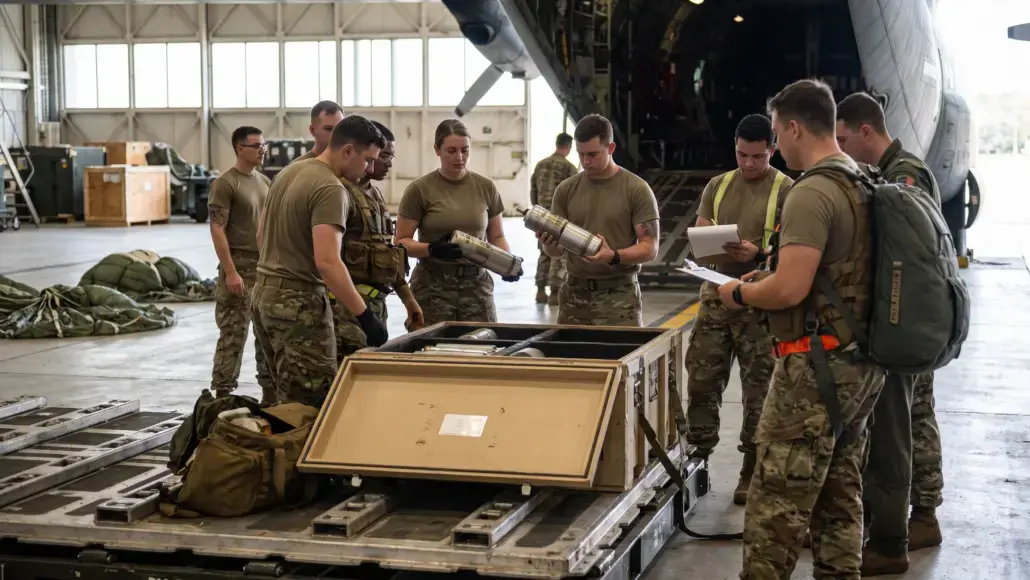
In aerial delivery and aviation logistics, mission success often hinges on the smallest components. Extraction parachute cartridges deploy cargo parachutes during flight, and a single malfunction can jeopardize critical operations, delay deliveries and compromise safety.
For procurement managers sourcing these components, selecting a reliable supplier means ensuring compliance with aviation standards, minimizing the risk of component failure, and maintaining predictable lead times.
The Critical Role of Cartridges in Parachute Extraction Systems
Extraction parachute cartridges are precision pyrotechnic devices that initiate the deployment sequence for cargo parachutes in aviation transportation systems. When activated, they generate a controlled burst of energy that extracts the drogue parachute, which in turn pulls cargo from the aircraft while maintaining split-second timing essential for safe, accurate delivery.
These components support everything from routine cargo drops to emergency deployments where failure is not an option. Their reliability directly impacts mission outcomes, so procurement teams should confirm which design, performance and qualification requirements apply to each parachute extraction assembly or cartridge.
Deviations from these specifications can lead to deployment failures, damaged cargo or compromised safety protocols.
Key Factors and the Benefits of Evaluating Supplier Reliability
Procurement specialists face several challenges when sourcing extraction parachute cartridges for aviation transportation. Knowing which factors separate reliable suppliers from inadequate ones helps you reduce risk and maintain operational continuity.
Compliance with applicable aviation, defense or customer-specific requirements is nonnegotiable, as parachute extraction components must meet the standards and documentation required for their intended use. Suppliers who lack proper certifications or fail to document compliance introduce unacceptable liability into your supply chain.
Manufacturer reputation provides priceless insight into long-term reliability. Companies with decades of experience in pyrotechnic manufacturing and established relationships with military or government entities demonstrate a proven track record, while quality assurance processes, including rigorous testing protocols and documented performance data, further distinguish trustworthy suppliers from those offering unverified claims.
Lead time predictability matters as much as product quality. Delayed shipments can derail project timelines and ground operations, so suppliers who maintain consistent delivery schedules and transparent communication help procurement teams plan effectively and avoid costly delays.
Methodology
The companies on this list demonstrate relevant product specialization, established industry reputations and documented work with military, government or commercial aviation customers. They also show clear strengths in areas that matter to procurement teams, including compliance awareness, quality assurance, manufacturing capability, delivery reliability and application-specific expertise.
These factors help purchasing managers identify suppliers that can support safety-critical aviation transportation needs while reducing sourcing, lead time and component performance risks.
Leading Suppliers of Reliable Extraction Parachute Cartridges
The following companies are reliable sources for extraction parachute cartridges and related components in aviation transportation. Each brings distinct strengths to the market, from decades of industry experience to specialized manufacturing capabilities.
1. AETC
AETC is a premier designer and manufacturer of life-support pyrotechnic and explosive components for the aviation industry. Established in 1978, the company makes mission-critical components, like parachute delay cutters and impulse cartridges.
With over 100 years of combined industry experience, its management team provides the technical expertise to deliver reliable extraction parachute cartridges. The company specializes in design, development, qualification and manufacturing processes that ensure consistent quality and compliance with aviation standards.
Key features:
- Quality assurance: Rigorous testing and qualification processes ensure components meet or exceed industry specifications.
- Economical pricing: Competitive rates help procurement teams maximize budgets without sacrificing safety or performance.
- On-time deliveries: Consistent lead times prevent project delays and keep operations on schedule.
2. FXC Guardian
FXC Guardian manufactures the Extraction Parachute Jettison System (EPJS), a system approved for use in U.S. Air Force aircraft and by various international military services. Its parachute systems include the MC-4, known for its quality gliding and control. Its focus centers on engineering solutions that enhance aircraft safety and operational efficiency.
Key features:
- Military approval: EPJS carries U.S. Air Force certification for operational use.
- International adoption: Multiple military services worldwide deploy FXC Guardian systems.
- Specialized engineering: It focuses on parachute jettison technology and aerial delivery systems.
3. Mills Manufacturing
Mills Manufacturing brings over 75 years of experience to the aerial delivery sector, supplying military parachute systems to all five branches of the U.S. Department of Defense (DoD) and demonstrating sustained reliability across multiple generations of aviation technology. It offers low-altitude parachute extraction systems and assembly parts.
Key features:
- Long-standing reputation: The company has served defense and aviation customers for over seven decades.
- Department of Defense supplier: Mills Manufacturing is a trusted partner across all military branches.
- Comprehensive product line: It provides a full range of parachute systems and components.
4. Paradigm Parachute
Paradigm Parachute operates as a disabled-veteran-owned small business, providing high-quality cargo, personnel and deceleration parachute products. It positions itself as a leading manufacturer of cargo parachute products with particular expertise in extraction systems, ranging from 15 to 28 feet.
Key features:
- Veteran-owned business: Disabled veteran ownership brings a unique perspective and commitment.
- Cargo parachute focus: It specializes in cargo delivery systems.
- Diverse product range: The company offers cargo, personnel and deceleration parachutes.
5. Capewell
Capewell provides custom-engineered aerial delivery solutions backed by nearly 150 years of innovation. Its longevity reflects sustained adaptability and technical expertise across changing aviation technologies and requirements. It has many aerial solutions and release mechanisms, in addition to platforms. Explore its catalog to find aircraft enablers, quick-release devices and more.
Key features:
- Nearly 150 years of innovation: It is one of the longest-operating companies in the sector.
- Custom engineering: Capewell provides tailored solutions for specific operational requirements.
- Global expertise: It has an international presence in aerial delivery markets.
At-a-Glance Comparative Summary
View each organization side by side to better understand their unique selling propositions.
| Company | Primary Focus | Key Differentiator |
| AETC | Life-support pyrotechnic components | 100+ years combined management experience, economical pricing and on-time delivery |
| FXC Guardian | Parachute jettison systems | U.S. Air Force approval and international military adoption |
| Mills Manufacturing | Military parachute systems | 75+ years in business and has served all DoD branches |
| Paradigm Parachute | Cargo parachute products | Disabled veteran-owned small business |
| Capewell | Custom aerial delivery solutions | Nearly 150 years of innovation |
Frequently Asked Questions
Aviation transportation professionals may have these additional questions that could influence their decision-making.
What certifications should extraction parachute cartridge suppliers have?
Suppliers should provide documentation showing that their components meet the applicable aviation, defense, quality or customer-specific requirements for the intended system. Look for documented certifications, quality management system accreditation and evidence of regulatory approval for aviation use, as military contractors typically hold additional clearances and certifications specific to defense applications.
How do lead times vary among suppliers?
Lead times depend on order complexity, quantity and whether components require custom specifications. Established manufacturers with robust inventory management typically offer shorter lead times for standard components, though custom orders or large quantities may extend timelines. Always request specific lead time estimates during procurement discussions and build buffer time into project schedules.
What testing procedures validate cartridge reliability?
Reliable suppliers conduct qualification testing that includes environmental stress testing, functional performance validation and batch consistency verification. Components undergo temperature cycling, vibration testing and simulated deployment conditions, so requesting documentation of testing protocols and performance data helps verify that suppliers maintain rigorous quality assurance standards.
Securing Your Supply Chain for Mission Success
Selecting the right supplier for extraction parachute cartridges requires careful evaluation of multiple factors, including compliance with aviation standards, manufacturer reputation, quality assurance processes and delivery reliability, all of which contribute to long-term success.
The top suppliers represent proven options for procurement teams managing aviation transportation needs. Contact suppliers directly to discuss your specific requirements and verify that their capabilities align with your organization’s standards.
