


















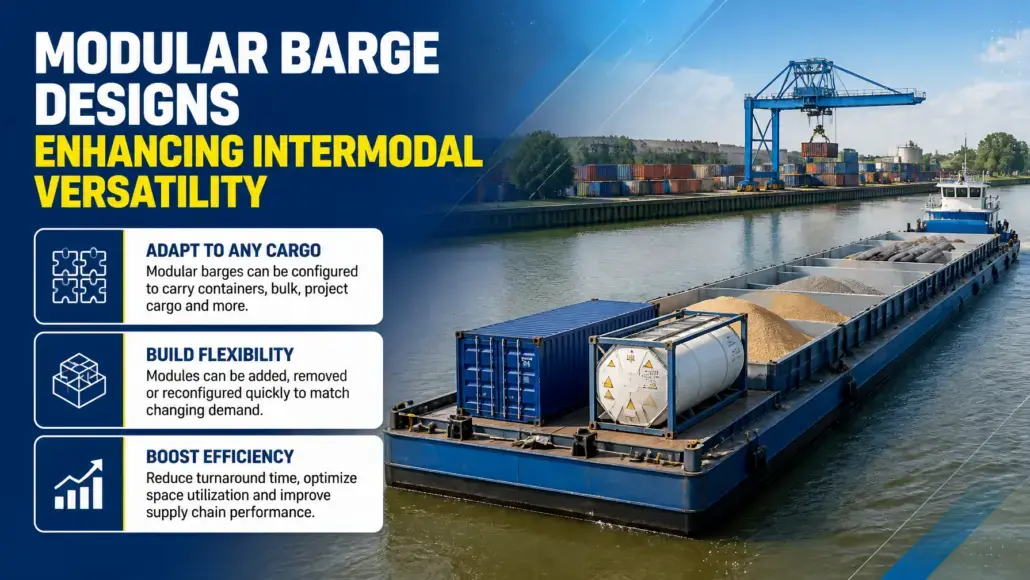
The modernization of inland waterway transport is being significantly advanced by the introduction of modular barge designs in 2026. For a long time, the efficiency of river freight was limited by the rigid nature of traditional vessel construction. Barges were often designed for a single type of cargo, such as bulk materials or containers, making them less adaptable to the changing needs of the global supply chain. The emergence of modularity addresses this challenge by providing a versatile platform that can be rapidly reconfigured to handle a wide range of goods and navigate diverse river environments.
Modular barge designs are based on the principle of standardized, interchangeable units that can be combined to form a complete vessel. This approach is similar to the modularity found in the construction and electronics industries, where individual components can be swapped or upgraded without the need for a total redesign. In the maritime context, this means that a barge can be transformed from a dry bulk carrier to a container feeder or a tanker in a matter of hours. Transport Advancement believes that this level of versatility is essential for the growth of intermodal transport, where the ability to adapt to shifting market demands is a key competitive advantage.
Adaptability to Varying River Conditions
One of the most critical advantages of modular barges is their ability to navigate rivers with varying water depths and channel widths. Many major rivers, particularly in Europe and North America, have been increasingly affected by low water levels due to changing weather patterns. Traditional large barges often find themselves unable to operate during these periods, leading to significant disruptions in the supply chain. Modular designs allow for the adjustment of the vessel’s draught by adding or removing buoyancy units or by using a larger number of smaller modules to distribute the weight.
The modular nature of these vessels also makes them easier to maintain and repair. If a single module is damaged, it can be replaced with a spare unit, allowing the rest of the barge to remain in service. This reduces the downtime associated with shipyard visits and ensures a more consistent availability of freight capacity. Furthermore, the standardization of modules allows for more efficient manufacturing processes, lowering the initial capital cost of the vessel and making waterborne transport a more accessible option for smaller logistics providers.
Enhancing Intermodal Connectivity and Efficiency
Modular barges are designed to integrate seamlessly with other modes of transport, particularly rail and road. The modules themselves are often built to standard container dimensions, allowing them to be loaded directly onto trucks or trains for last mile delivery. This eliminates the need for time consuming transshipment at river terminals and reduces the risk of cargo damage. The ability to move goods from the river to the road without unpacking the container is a major step forward for the efficiency of the intermodal supply chain. In 2026, the introduction of 45-foot modular units has further expanded the capacity for palletized goods, making the river-to-road transition even more efficient for the retail and consumer electronics sectors.
The use of modular designs also supports the trend toward mixed cargo transport. In many river corridors, there is a need to move small volumes of high value goods alongside traditional bulk commodities. Modular barges can be configured with specialized units for temperature controlled goods, hazardous materials, or oversized machinery, all on the same vessel. This flexibility allows for the optimization of the cargo mix, improving the overall profitability of each voyage. Many of these innovative vessels are now serving as a platform for green corridor initiatives, as their modular layout is ideal for the integration of new battery and fuel cell technologies.
Leading Global Companies and Design Innovations
The development of modular barge technology is being driven by a group of established shipbuilders and innovative maritime startups.
- Damen Shipyards Group: Damen has been a pioneer in the field of modular vessel construction. Their Modular Barge series consists of standardized pontoons that can be coupled together to form a variety of floating structures. In 2026, they launched an updated version of this system that includes integrated power and control modules for autonomous operation.
- Zulu Associates: Zulu Associates has focused on the development of modular, zero emission barges for the European market. Their X-Barge design features a swappable propulsion module that can be easily upgraded as battery or hydrogen technology improves. This modular approach ensures that the vessel remains at the cutting edge of green technology throughout its operational life.
- Blue Line Logistics: This company has successfully deployed a fleet of “Pallet Shuttle Barges” that utilize a modular cargo handling system. Their vessels are designed to navigate small canals and urban waterways that are inaccessible to traditional large barges. In 2025, they expanded their operations to include modular units for urban waste management and construction logistics.
- Swissterminal AG: Swissterminal has integrated modular barging into its intermodal logistics network in the Upper Rhine region. They utilize coupled barges that can be reconfigured based on the current water levels and cargo volumes. This flexibility has allowed them to maintain a reliable service even during periods of extreme low water on the Rhine.
- 4MODU: As a specialized modular engineering firm, 4MODU provides the coupling and stabilization systems that are essential for the safe operation of modular barges. Their technology allows for the rapid assembly of barge configurations in a variety of water conditions. In 2026, they introduced a new smart coupling system that provides real time data on the structural integrity of the barge assembly.
Future Perspectives on Modular Vessel Design
Looking ahead to 2027 and beyond, the industry expects to see a wider adoption of modular designs across a variety of vessel types. The benefits of flexibility, efficiency, and sustainability are simply too significant to ignore. The development of new materials, such as lightweight composites and advanced alloys, will further improve the performance of modular units, allowing for even greater cargo capacities and better fuel efficiency.
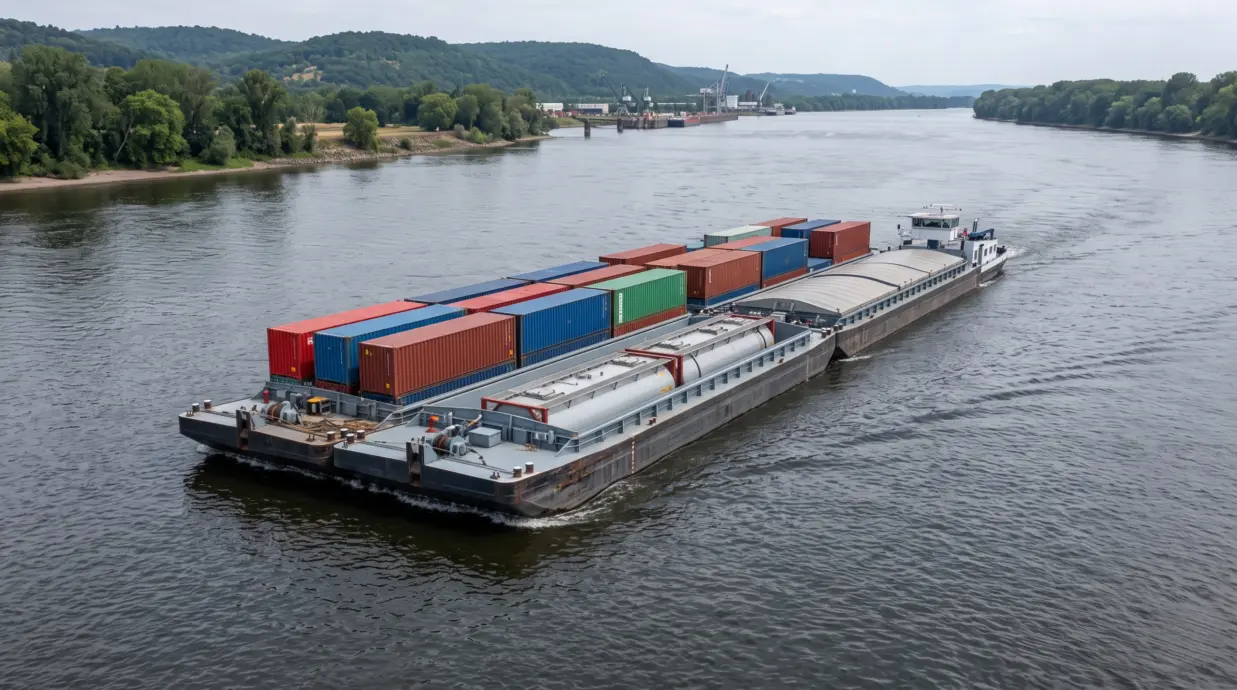
The success of modular barging also depends on the development of a standardized regulatory framework. Currently, the classification of modular vessels can vary between different jurisdictions, which can create challenges for cross border operations. By working together to establish common standards for module construction and coupling, the industry can ensure that modular barges can operate safely and efficiently across the entire global waterway network. This commitment to standardization will be the foundation upon which the next generation of intermodal transport is built.
Engineering Innovations in Coupling and Stability
The safe operation of modular barges relies on highly advanced coupling systems that can withstand the dynamic forces of river currents and vessel movements. Traditional mechanical couplings have been replaced by hydraulic and electromagnetic systems that provide a more secure and flexible connection. These systems are equipped with sensors that monitor the structural integrity of the barge assembly in real time. If a potential failure is detected, the system can automatically adjust the tension in the couplings or alert the operator to take corrective action. This level of safety is essential for the transport of high value or hazardous cargo in narrow channels.
Stability management is another critical engineering challenge for modular designs. As modules are added or removed, the vessel’s center of gravity and buoyancy profile change. In 2026, many modular barges are equipped with automated ballast systems that use AI to optimize the vessel’s trim and stability based on the current cargo configuration. This technology allows for the safe transport of asymmetrical loads, such as large industrial components or wind turbine blades, which would be difficult to manage with a traditional fixed hull vessel. The ability to rapidly simulate different cargo layouts before the barge is even assembled has become a standard feature of modern maritime logistics software.
Market Adoption and Regional Developments
While Europe has been a primary market for modular barge designs, the technology is also gaining traction in other regions. In North America, modular barges are being used to revitalize transport on the Missouri and Ohio rivers, where shallow water conditions often limit the use of traditional tug and barge fleets. In Asia, the development of modular river sea vessels is facilitating the growth of trade along the Mekong and Yangtze rivers, allowing for direct connectivity between inland industrial zones and coastal ports.
The ongoing standardization of modular units is also creating a new market for barge as a service models. Shippers can rent individual modules based on their current needs, rather than investing in an entire vessel. This reduces the capital requirements for entering the river logistics market and encourages a more flexible and efficient use of existing assets. By 2027, Transport Advancement is of the opinion that the industry expects to see the emergence of global module pools, where standardized units can be exchanged between different operators and river systems, further improving the resilience of the global supply chain.
References
- “Damen Modular Barges: Technical Specifications and Applications” – Damen Shipyards Group
- “Zulu Associates X-Barge Development Report 2025” – Zulu Associates
- “Intermodal – Swissterminal AG Operations Review” – Swissterminal
- “The Future of Modular Vessel Design in Inland Waterways” – Blue Line Logistics
- “Modular Engineering for the Maritime Sector” – 4MODU
- “Barge-as-a-Service Market Trends 2026” – Maritime Market Research
- “Advances in Hydraulic Coupling Systems for Modular Vessels” – International Maritime Engineering Review
