








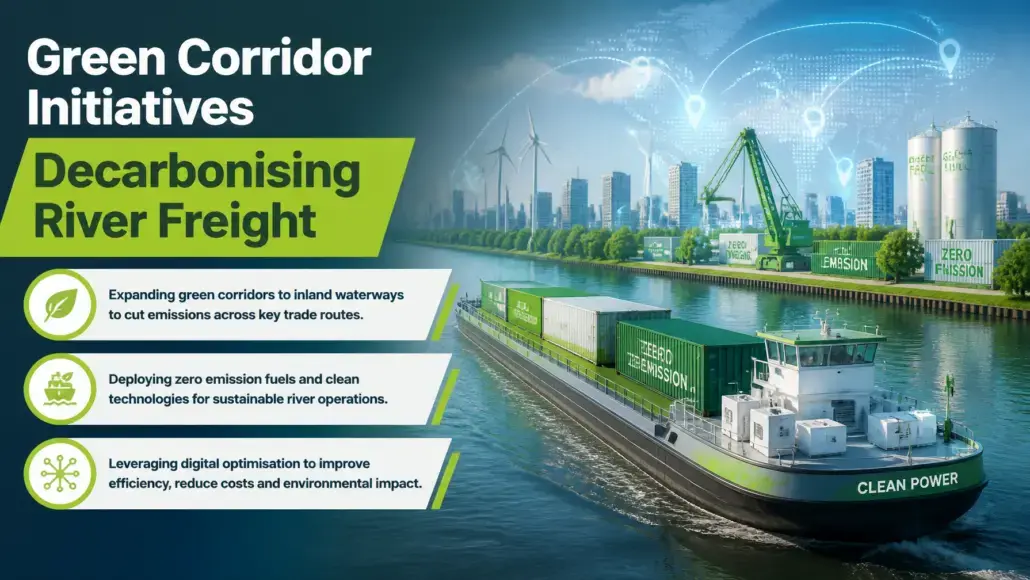
The decarbonisation of the global maritime industry has gained significant momentum in 2026 through the rapid expansion of green corridor initiatives. These corridors are defined as specific trade routes between major port hubs where zero emission fuels and digital optimization technologies are deployed at scale. While much of the initial focus was on deep sea shipping, the application of this concept to inland waterway networks is now a major priority for governments and logistics providers. By creating a concentrated ecosystem of green infrastructure, these initiatives are overcoming the chicken and egg dilemma of fuel supply and vessel demand.
Recent data from the Global Maritime Forum indicates that the number of active green corridor initiatives has grown to over 60 globally by late 2025. This represents a 40 percent year on year increase, with six frontrunner corridors now moving into the full implementation phase. These frontrunners are expected to require more than 2.0 million tonnes of hydrogen based fuels annually by 2030. In the context of river freight, corridors such as the Rhine in Europe and the Yangtze in China are leading the way, demonstrating that zero emission waterborne transport is both technically feasible and commercially viable.
The Role of Public Private Partnerships
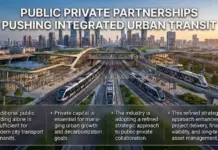
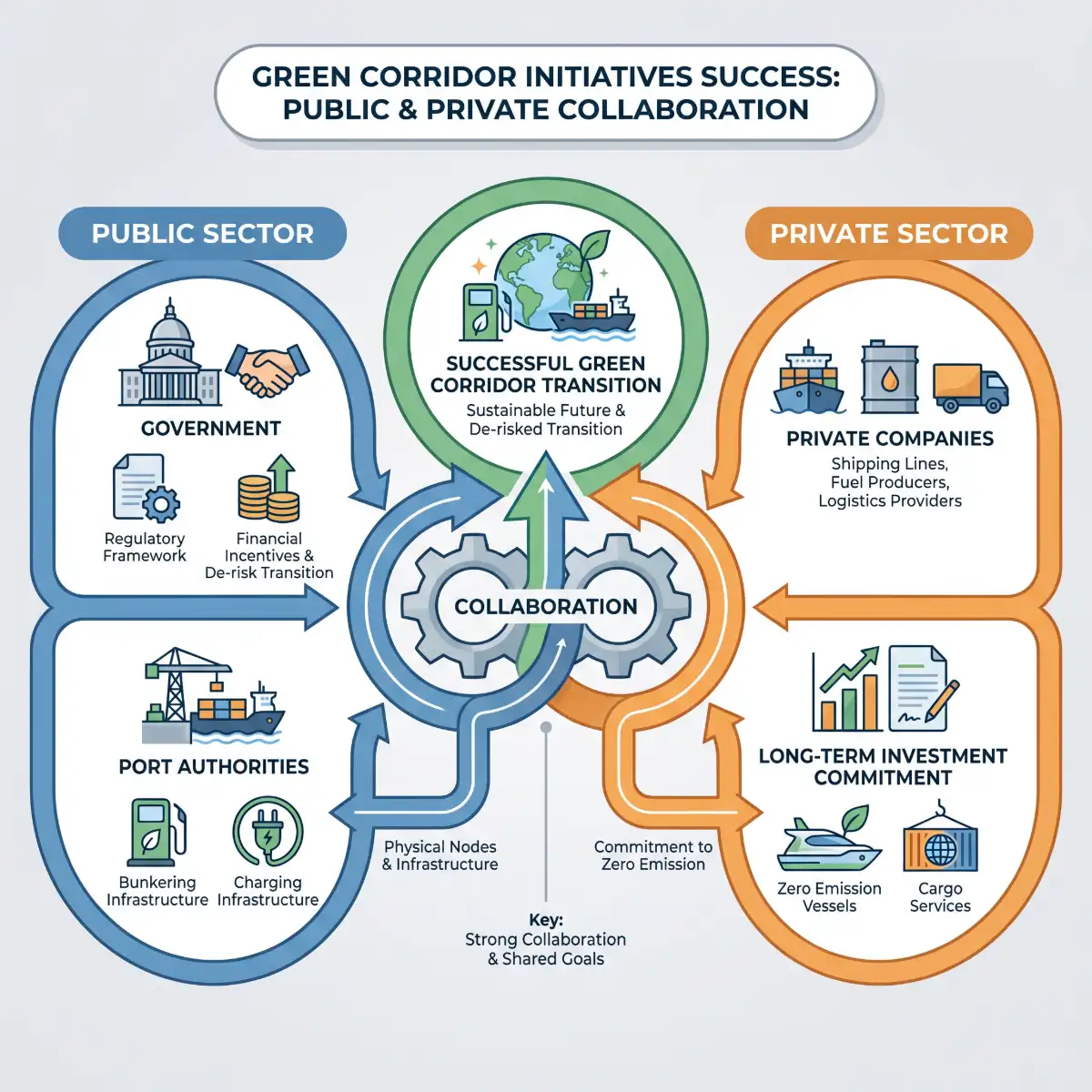
Transport Advancement observes that the success of green corridor initiatives is heavily dependent on the collaboration between the public and private sectors. Governments provide the regulatory framework and financial incentives required to de risk the transition to new fuels. Port authorities act as the physical nodes where the necessary bunkering and charging infrastructure is located. Meanwhile, private companies, including shipping lines, fuel producers, and logistics providers, commit to the long term investment in zero emission vessels and cargo services.
In 2026, many of these partnerships have moved beyond theoretical studies to the construction of physical assets. For example, the Port of Rotterdam and the Maritime and Port Authority of Singapore have established a comprehensive Green and Digital Shipping Corridor. This initiative includes the development of unified safety standards for the handling of green methanol and ammonia, as well as the implementation of digital just in time arrival systems to reduce fuel consumption. This coordinated approach ensures that the entire value chain is aligned toward the goal of net zero emissions.
Technological Pathways for River Freight
Decarbonising river freight requires a variety of technological solutions, as no single fuel is suitable for all types of vessels and voyages. For short haul inland transport, pure electric propulsion is becoming the dominant choice. Battery swapping technology, pioneered on the Yangtze River, allows for the rapid turnaround of barges without the need for long charging periods. The deployment of 700 TEU pure electric container ships on these routes has demonstrated the ability of electric power to handle high volume freight while cutting thousands of tonnes of CO2 emissions annually.
For longer voyages and larger vessels, hydrogen and ammonia are emerging as the most promising alternatives. Hydrogen fuel cells provide a clean and efficient source of power for inland barges, while ammonia is being developed as a high energy density fuel for regional and coastal shipping. Yara International is currently preparing for the 2026 delivery of the world’s first ammonia powered regional containership, which will operate on a green corridor in Northern Europe. These developments are supported by the scaling of shoreside power and modular fuel cell systems, which allow for the gradual retrofitting of the existing barge fleet.
Strategic Company Involvement and Corridor Development
Major global companies are playing a central role in the design and execution of green corridor projects across the world’s waterways.
- A.P. Moller – Maersk: Maersk has been a primary driver of the green methanol pathway, deploying a fleet of large dual fuel container vessels. They have integrated these deep sea services with green inland barging connections in the Rotterdam-Singapore corridor, providing a truly zero emission end to end logistics solution.
- CMA CGM Group: Through its collaboration with major port authorities, CMA CGM has conducted extensive commercial trials of bio LNG and bio methane bunkering. Their commitment to a dual fuel strategy has allowed them to scale their green cargo offerings while supporting the development of the necessary fuel supply infrastructure.
- Yara International: Via its subsidiary Yara Clean Ammonia, the company is developing the storage and bunkering infrastructure required for ammonia powered shipping. Their work on the Yara Eyde project is a benchmark for the industry, demonstrating the technical and safety requirements for using ammonia as a marine fuel.
- COSCO SHIPPING Group: COSCO has led the way in large scale electric shipping, commercially deploying the Greenwater 01 and 02 electric boxships on the Yangtze River. These vessels utilize swappable battery modules, a technology that COSCO is now looking to export to other major river systems.
- Wärtsilä Corporation: Wärtsilä provides the engine and propulsion technology that enables vessels to run on a variety of green fuels. Their recently launched ammonia and methanol capable engine platforms are critical for the fleet renewal programs being implemented within green corridors.
Integration with Global Infrastructure Projects
The development of green shipping corridors is also influencing the design of new large scale infrastructure projects. Regional planners are increasingly looking at how new waterways can be optimized for zero emission transport from the outset. A prime example of this trend is the Pinglu canal, which is being developed with a strong focus on green logistics and resource efficiency. The canal’s water saving navigation hubs and intelligent dispatch systems are designed to support a future fleet of low emission river sea vessels.
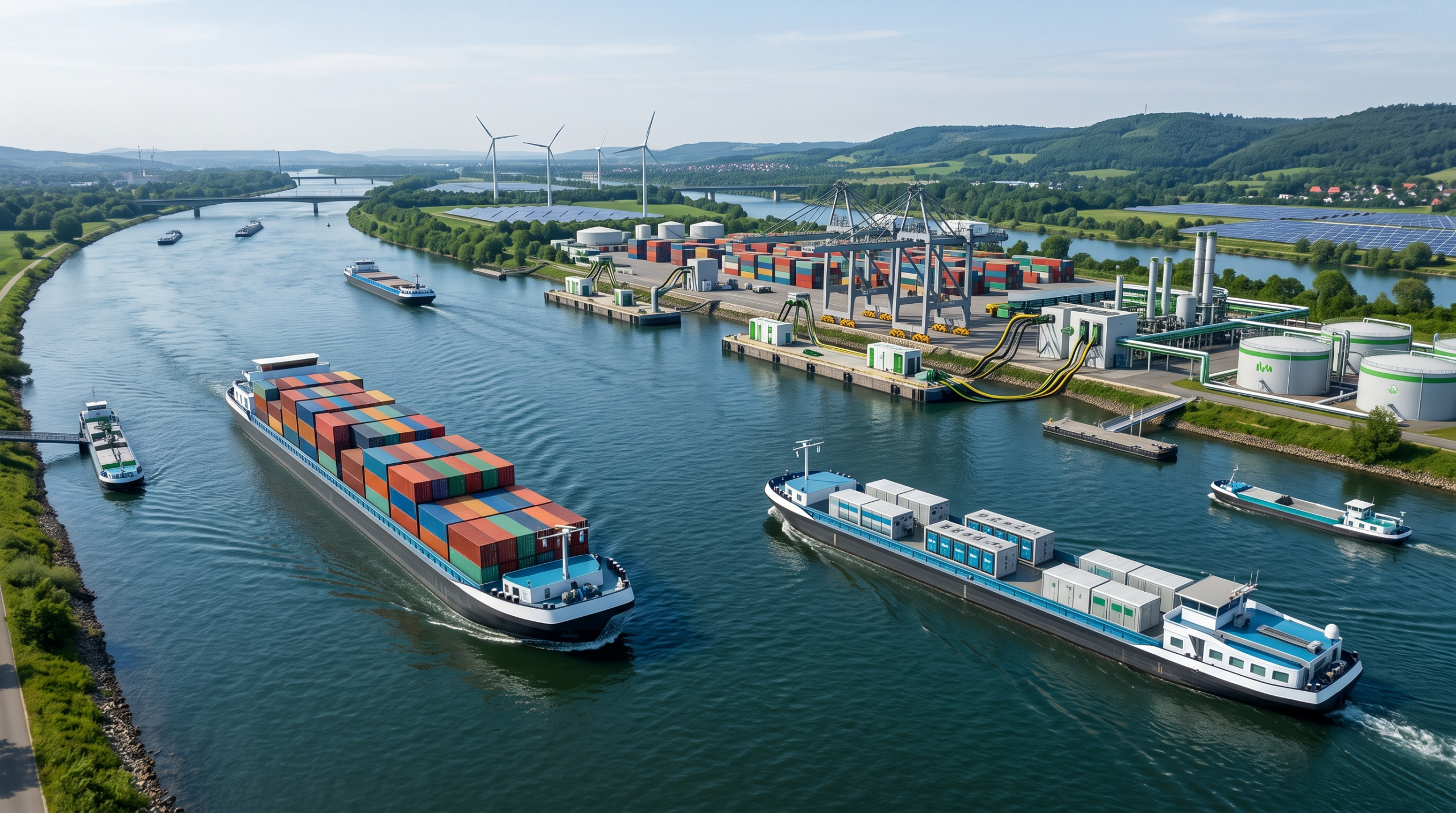
As the network of green corridors expands, the industry is also seeing the emergence of green hubs where multiple corridors intersect. these hubs will serve as centers for innovation and fuel production, providing a boost to the local economy while accelerating the global transition to sustainable shipping. The ongoing monitoring and reporting of emission reductions within these corridors will provide the data required to refine the strategy and ensure that the maritime industry remains on track to meet its climate targets.
Future Expansion and Harmonization
Looking toward 2027, the focus of green corridor initiatives will shift toward the harmonization of standards and the scaling of fuel production. International cooperation is essential to ensure that a green vessel departing from one port can bunkering or charge at another. This requires common protocols for fuel quality, safety procedures, and digital communication. The ongoing work of the Clydebank Declaration signatories and other international groups is the foundation upon which this global network is being built.
The decarbonisation of river freight through green corridors is a complex and multifaceted challenge, but the progress made in 2026 demonstrates that the industry is up to the task. Transport Advancement believes that by combining technological innovation with strategic partnerships and supportive policy, the maritime sector is creating a new model for sustainable logistics that will serve as a blueprint for other industries. The transition to zero emission waterways is no longer a distant goal but a tangible reality that is reshaping the future of global trade.
References
- “Annual Progress Report on Green Shipping Corridors” – Global Maritime Forum
- “Port of Rotterdam Alternative Marine Bunker Volumes 2025” – Port of Rotterdam
- “MPA Singapore Harbor Craft Net-Zero Roadmap 2030” – Maritime and Port Authority of Singapore
- “Yara Clean Ammonia Infrastructure Development Report” – Yara International
- “COSCO Shipping Greenwater Electric Vessel Performance Review” – COSCO SHIPPING Group
