









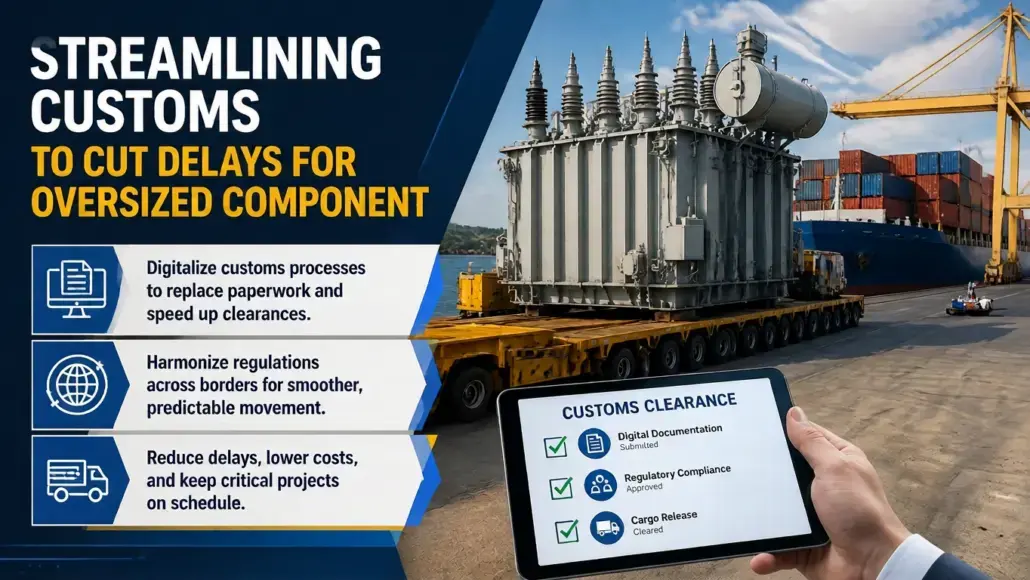
The international movement of oversized industrial assets is frequently hindered by complex and often outdated administrative requirements. For project managers and logistics engineers, the physical challenges of moving a 500 tonne power transformer are often matched by the daunting bureaucratic hurdles of cross border trade. However, a global push toward digital trade facilitation is now fundamentally changing this dynamic. Consequently, Transport Advancement observes that streamlining customs for oversized components has become a primary objective for both government agencies and private logistics providers looking to accelerate industrial development.
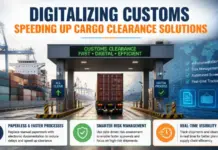
As of early 2026, the adoption of digital single window systems has reached a critical mass in major trading hubs. These platforms allow for the unified, paperless submission of all required documentation, ranging from technical specifications to environmental permits.
According to recent data from the OECD and the World Customs Organization, the automation of these processes can reduce average clearance times by up to 60 percent.
The Rise of Digital Single Windows and Integrated Trade Platforms
The implementation of unified digital platforms represents the most significant development in trade facilitation in recent years. Transport Advancement notes that by eliminating the need for physical paperwork and dozens of office visits, these systems significantly reduce the risk of human error.
Maersk expanded its digital customs offering in early 2026, launching an integrated platform that connects its project logistics services directly with national customs systems in several key markets. This development allows for the real time sharing of technical documentation, significantly reducing the administrative burden on shippers.
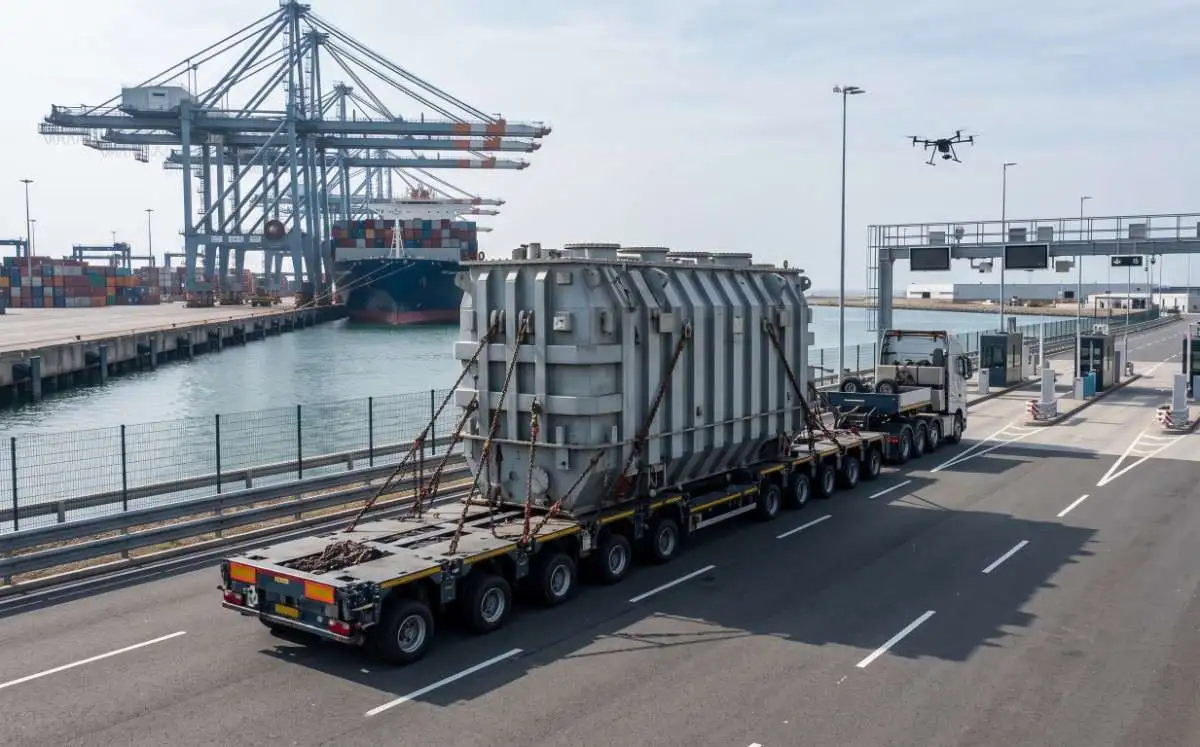
Streamlining customs for oversized components also allows for much more effective pre arrival processing. Customs officials can now review technical drawings and transport permits weeks before the cargo actually arrives at the border. This proactive approach ensures that any potential issues are identified and resolved in advance, preventing costly delays at the quayside.
DSV is already leveraging these digital connections to offer faster transit times to their global clients, especially as they integrate the vast assets of DB Schenker into their unified network during early 2026. The ability to provide verified data ahead of time is a critical differentiator in a market where every hour of delay is costly.
These platforms are also being designed to integrate directly with the enterprise resource planning systems of major manufacturers:
- Automated Customs Filing: System-to-system integration automatically populates customs declarations using data already captured during manufacturing.
- Accelerated Processing: Eliminating manual data entry drastically speeds up customs clearance workflows.
- Higher Data Accuracy: Direct digital data transfer minimizes human error, ensuring precision across documentation.
- Regulatory Compliance: Reliable, accurate records support strict compliance standards required in heavily regulated sectors.
Automation, Risk Based Inspections, and the AEO Advantage
Modern customs agencies are increasingly moving away from time consuming manual inspections toward data driven risk management. By using artificial intelligence to analyze shipping data, authorities can quickly identify high risk shipments while allowing low risk project cargo to move through the border with minimal interference.
FedEx Trade Networks announced in mid 2025 that it had integrated new AI driven classification tools into its project cargo services, allowing for more precise tariff identification for complex industrial components. This shift is vital for oversized cargo, which is difficult and often dangerous to inspect physically once it is secured to a specialized vessel.
The financial impact of these automated systems is substantial and directly measurable. Kuehne and Nagel noted in their July 2026 earnings report that its specialized logistics division benefited significantly from improved customs processing times in several key emerging markets. By reducing the time cargo spends in bonded storage, companies can significantly lower their working capital requirements and insurance premiums. Furthermore, automation reduces the potential for administrative friction, creating a more transparent and predictable operating environment for international industrial investors.
Another key pillar of streamlining customs for oversized components is the Authorized Economic Operator (AEO) program. Companies that achieve AEO status are recognized as secure and compliant partners by customs authorities, granting them access to simplified procedures. Expeditors expanded its global AEO certifications in early 2026, focusing specifically on its project cargo hubs. For heavy lift operators, this status is a powerful tool for ensuring that their cargo moves through the supply chain with as little delay as possible. AEO certified companies often benefit from reduced data requirements for declarations and a lower frequency of physical checks.
Harmonization of Technical Documentation and International Cooperation
One of the greatest challenges in moving oversized cargo is the lack of standardized technical requirements between different countries. A transport permit that is valid in one nation may be rejected by the authorities in a neighboring country, leading to lengthy delays and expensive rerouting. Streamlining customs for oversized components therefore requires a much greater degree of international cooperation. Organizations like the World Customs Organization are working to harmonize the technical standards for project cargo, making it easier for companies to plan multi national transport routes.
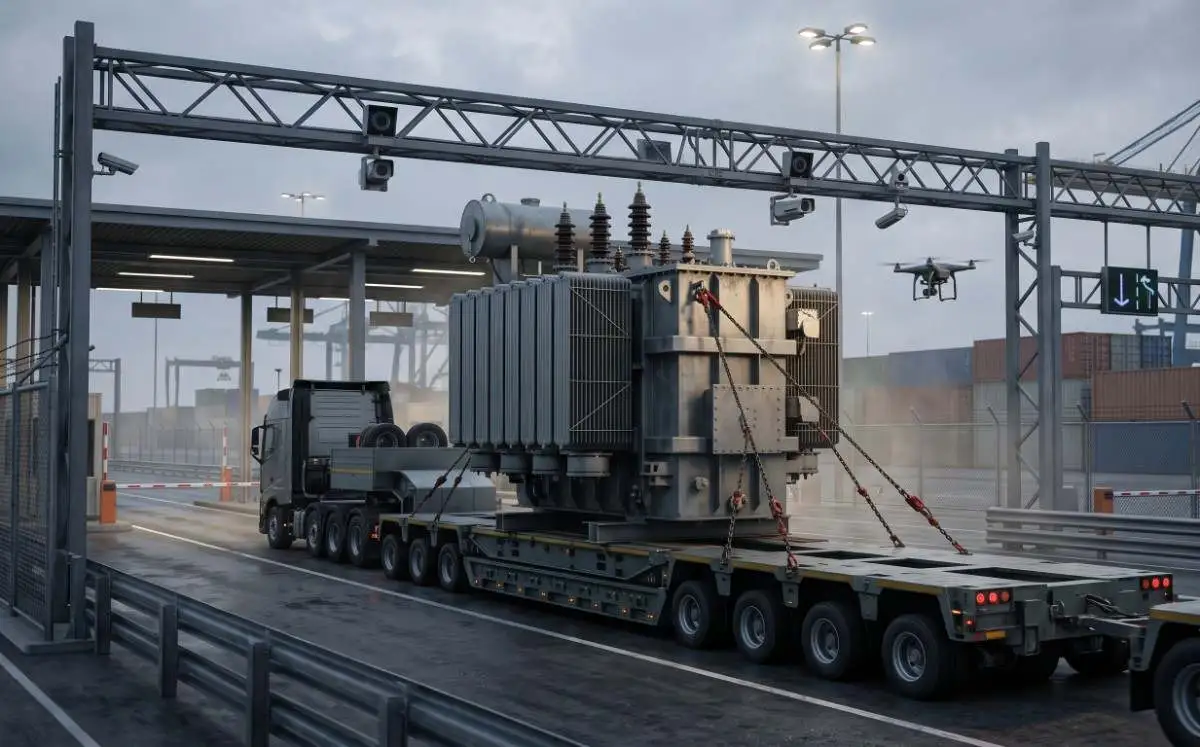
Reduced clearance times at international borders allow for more complex project schedules, supporting the continued growth of global energy and infrastructure projects. DP World highlighted this in March 2026, reporting that its integrated logistics and digital trade services helped drive record breaking revenues across its global portfolio. In Southeast Asia, the ASEAN Single Window has become a model for regional cooperation, facilitating the movement of industrial assets across ten member states through a unified digital exchange. This regional integration significantly reduces the complexity of moving oversized cargo through dynamic industrial corridors.
The use of the Carnet ATA system is also critical for the heavy lift industry, allowing for the temporary duty free import of specialized equipment. Streamlining the administration of these carnets through digital systems ensures that essential lifting tools can move quickly between projects in different countries. This flexibility is essential for maximizing the utilization of high value specialized assets and reducing the overall cost of global industrial construction.
The Role of Blockchain and Drone Technology in Future Customs
Looking ahead, the integration of blockchain technology is expected to further enhance the transparency and security of customs processes:
- End-to-End Immutable Audit Trail: Creates a permanent, tamper-proof record tracking cargo from manufacturing to final site installation.
- Streamlined Insurance & Compliance: Provides absolute traceability essential for managing liability, settling claims, and meeting strict regulatory standards on high-value, oversized assets.
- Simplified Origin Verification: Enables fast, verifiable proof of origin required for trade agreements amid shifting global trade policies.
The ongoing expansion of the drone market, which is projected by Fortune Business Insights to exceed 100 billion dollars by 2026, will also play a role in future customs operations. Drones equipped with high resolution cameras can be used by customs officials to perform remote inspections of massive components, reducing the need for personnel to climb onto structures. This not only improves safety but also significantly speeds up the verification process. As these technologies continue to converge, the process of streamlining customs for oversized components will become increasingly seamless.
As more nations join these digital networks, the barriers to global infrastructure development will continue to fall, enabling the construction of the massive projects that will define the next century. The transition toward these digital systems is not just a technical upgrade but a fundamental rethinking of how global trade should function. Transport Advancement believes that by optimizing the administrative side of the logistics chain, the industry can ensure that the world’s most vital cargo reaches its destination safely and on time, supporting the growth of a more resilient global economy.
References
- “Customs Digitization: How to Reduce Tariff Volatility” – IT Convergence
- “Project Logistics Market Size, Share | Growth Report [2034]” – Fortune Business Insights
- “Maersk Launches Integrated Digital Customs Platform” – Maersk Newsroom
- “DSV moves to transform its business as Schenker integration accelerates” – Journal of Commerce
- “FedEx Trade Networks Integrates AI for Project Cargo” – FedEx News
- “Expeditors Expands Global AEO Certifications” – Expeditors Press Release
- “DP WORLD REPORTS RECORD $24.4 BN REVENUE AND $6.4BN EBITDA FOR 2025” – DP World
- “Earnings call transcript: Kuehne + Nagel lifts 2026 outlook after strong Q2” – Investing.com
