











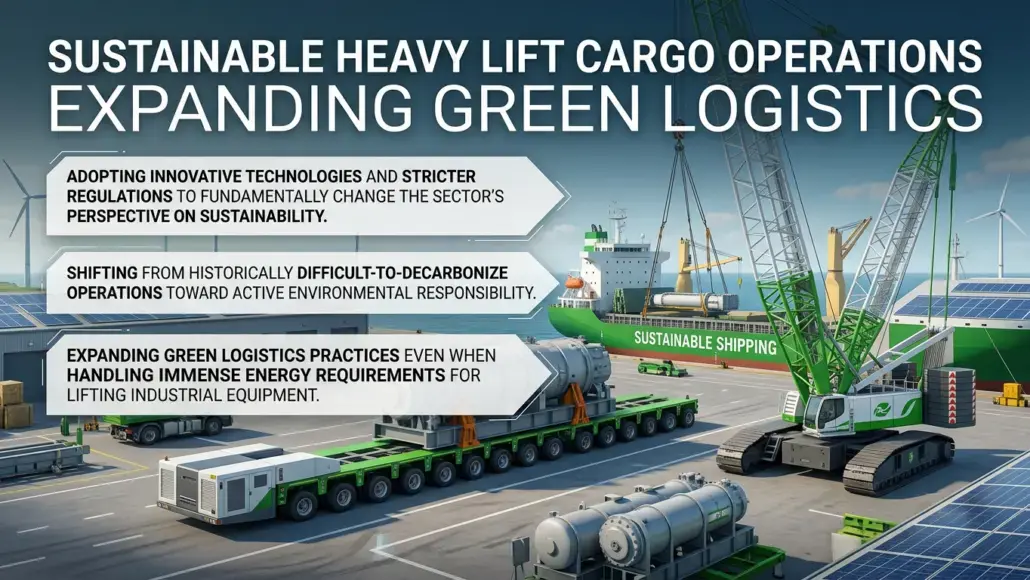
The heavy lift and project cargo industry is currently undergoing a profound and necessary shift toward environmental responsibility. Historically, the sector was viewed as one of the most difficult to decarbonize due to the immense energy requirements of moving and lifting thousands of tonnes of industrial equipment. However, the emergence of innovative technologies and stricter global regulatory frameworks has forced a fundamental change in perspective. Today, Transport Advancement observes that sustainable heavy lift cargo operations are no longer considered a niche concern but are essential for maintaining long term commercial viability.
Major corporations are now leading the charge by integrating green technologies into their core operations and supply chains. In March 2026, DP World reported that its record revenue of 24.4 billion dollars was supported by significant and ongoing investments in decarbonization across its global port network. This transition is being driven by both internal corporate goals and the escalating demands of large scale energy and mining clients who require low carbon logistics solutions.
Electrification and Hybrid Lifting Technology
One of the most visible and impactful developments in the sector is the rapid electrification of heavy lifting equipment. Mobile and crawler cranes, which once relied exclusively on diesel engines, are being systematically replaced by electric and hybrid models. In late 2025, Mammoet significantly expanded its sustainable fleet by taking delivery of the first Liebherr LTM 1150-5.4E electric crane and an XCMG hybrid mobile crane. These machines offer the same lifting capacity and precision as their diesel counterparts but with significantly lower carbon footprints and greatly reduced noise pollution.
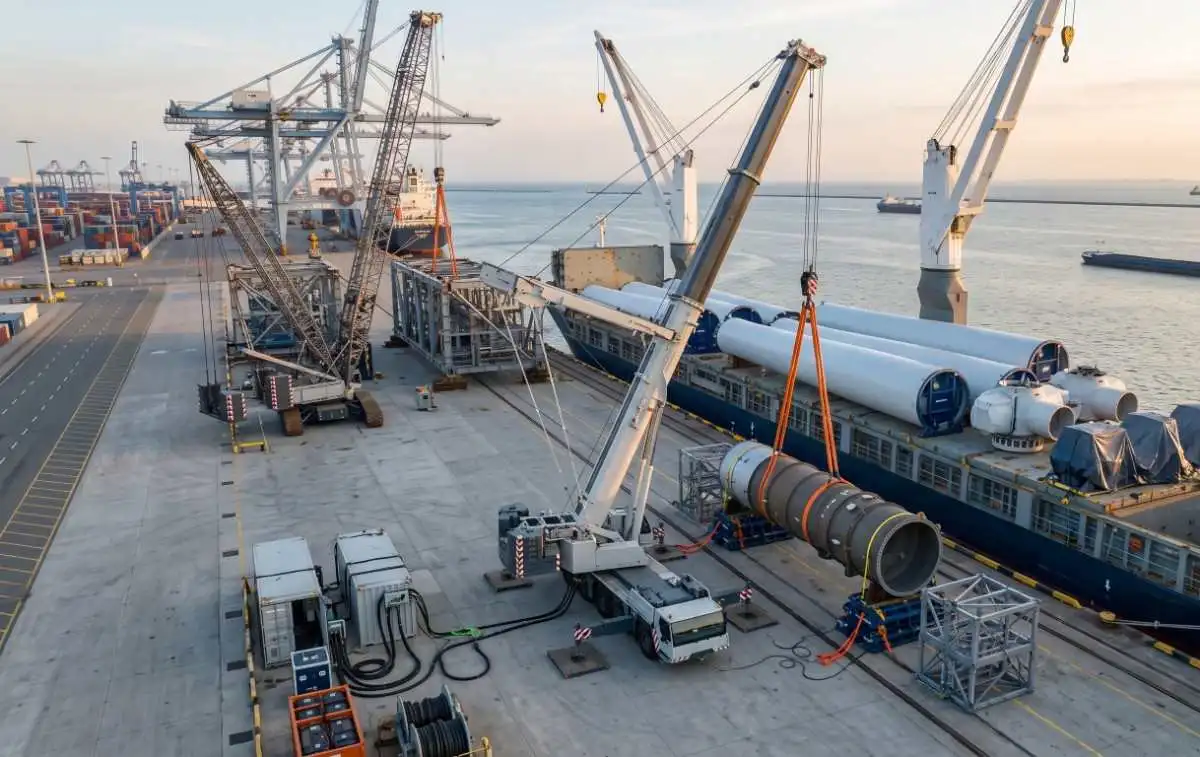
The adoption of electric equipment is further supported by innovations from other global engineering firms. Sarens expanded its fleet of giant electric cranes in early 2026, deploying them for major offshore wind assembly projects in Europe. These cranes allow for high precision lifting without the environmental impact of traditional fossil fuel powered equipment. By employing sustainable heavy lift cargo operations, companies can ensure that their projects remain compliant with local regulations while maintaining high levels of productivity in sensitive ecological environments.
The heavy lifting machinery are now coming with new technological developments to advance sustainable lifting practices:
- Regenerative Energy Recovery: Modern electric cranes capture kinetic energy generated during load lowering.
- Flexible Power Utilization: Harvested energy can be stored in onboard battery packs or routed back into the local power grid, boosting operational efficiency.
- Heavy Machinery Electrification: Advances in battery technology are accelerating the shift toward full electrification for larger heavy-duty equipment like crawler cranes.
- Emissions & Climate Compliance: Transitioning to electric lifting assets is critical for meeting strict global carbon reduction mandates and regulatory targets.
Alternative Fuels and the Decarbonization of Marine Transport
The maritime segment of the heavy lift industry is facing intense pressure to reduce its significant environmental impact. Heavy lift ships are major consumers of heavy fuel oil, but operators are increasingly turning to alternative fuels such as biofuels and methanol. Boskalis reported strong H1 2026 results, citing its marine services division as a key performer. Part of this success is attributed to their ongoing efforts to integrate cleaner fuels into their fleet, allowing them to meet the strict carbon reduction targets of their offshore energy clients.
Biofuels, particularly Hydrotreated Vegetable Oil, are particularly attractive because they can often be used in existing marine engines with minimal modifications. This allows logistics providers to achieve immediate and significant carbon reductions without the need for massive capital investment in new vessels. Fagioli demonstrated the viability of these fuels in mid 2026 by completing a series of transoceanic heavy lift movements using a combination of biofuels and specialized fuel additives. This project provided valuable data on the performance and reliability of cleaner fuels in the most demanding maritime environments.
The long term future of the industry lies in the development of next generation ships designed from the ground up to run on zero carbon fuels like green hydrogen or ammonia. The shift toward these sustainable heavy lift cargo operations is being accelerated by international maritime regulations, such as the IMO’s revised greenhouse gas strategy. These regulations impose increasingly strict limits on sulfur and carbon emissions, creating a powerful financial incentive for the adoption of greener technologies across the global shipping fleet.
Optimizing Logistics for Carbon Efficiency and Insetting
Beyond equipment and fuels, the way logistics projects are planned is also changing to prioritize sustainability. Digital twins and advanced simulation software are now used to calculate the most carbon efficient routes and transport modes for heavy cargo. Bollore Logistics expanded its green logistics offering in early 2026 by launching a new carbon modeling tool specifically for project cargo. This tool allows clients to compare the carbon footprint of different transport scenarios in real time, enabling more informed decisions about route selection and modal shifts.
Strategic modal shifts are another critical component of green logistics. Moving a super heavy load by barge or rail instead of by road can reduce emissions by more than 50 percent in many cases. These operational improvements are increasingly paired with digital trade facilitation, such as streamlining customs for oversized components, which reduces the time cargo spends waiting with engines idling. This integrated approach ensures that every step of the logistics chain is optimized for both speed and sustainability, creating a ” for project cargo.
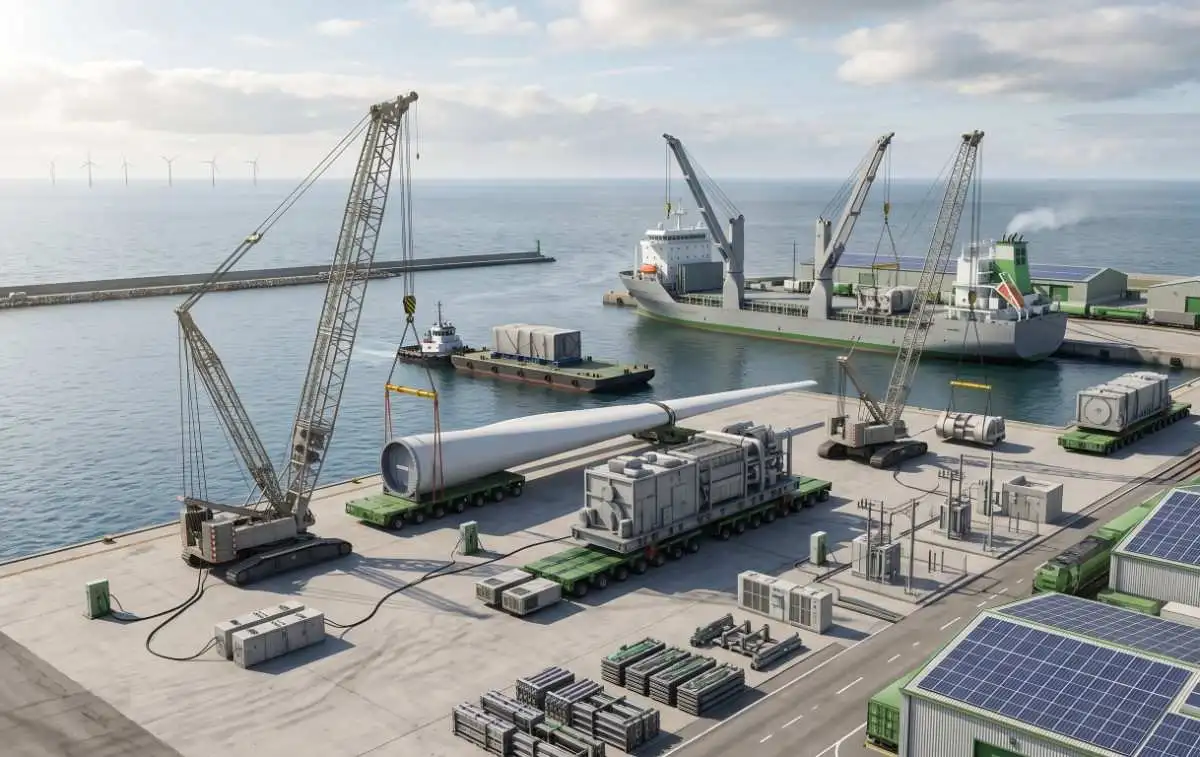
The concept of carbon insetting is also gaining traction, where companies invest in carbon reduction projects within their own value chain. For a heavy lift company, this might involve funding the production of biofuels or investing in the electrification of a partner’s port terminal. This approach ensures that the environmental benefits are directly linked to the company’s own operations and provides a more transparent and credible path to net zero. By focusing on insetting, logistics providers can offer their clients verified carbon reductions that go beyond traditional offsetting schemes.
The Role of Circularity and Reusable Assets
The concept of the circular economy is beginning to exert a powerful influence on the heavy lift sector. Companies are looking for ways to extend the life of their massive assets through refurbishment and modernization. Rather than scrapping old cranes, they are being retrofitted with newer, more efficient engines and advanced sensor systems. This not only reduces the environmental impact associated with manufacturing new heavy equipment but also provides a more cost effective way for companies to modernize their global fleets.
Sustainable heavy lift cargo operations also extend to the materials used in the transport and securing process. The industry is rapidly moving away from single use timber for seafastening and towards reusable, modular securing systems. These systems can be reconfigured for different projects, significantly reducing the amount of waste generated. The use of high strength synthetic slings instead of steel wire rope also contributes to sustainability, as they are lighter to transport and have a lower manufacturing footprint.
Furthermore, the data generated by advanced tracking systems is being used to perform predictive maintenance on heavy lift assets:
- Predictive Failure Prevention: Anticipating equipment breakdowns proactively eliminates the need for reactive emergency repairs.
- Carbon & Waste Reduction: Avoiding rush replacement parts shipments and emergency callouts cuts unnecessary resource waste and emissions.
- Smart Asset Management: Predictive maintenance acts as a foundational pillar for building resilient, sustainable logistics workflows.
- Minimized Environmental Footprint: Streamlined equipment upkeep ensures complex industrial projects proceed with minimal ecological impact.
The Future of Green Heavy Lift Operations
As we look toward the future, the heavy lift industry will likely see the introduction of even more radical technologies. Hydrogen powered transporters and nuclear powered heavy lift vessels are already being discussed as long term solutions for the most demanding routes. While these technologies are still years away from widespread deployment, the direction of the industry is clear. Sustainable heavy lift cargo operations will continue to evolve, driven by a combination of technological innovation, regulatory pressure, and economic necessity.
The heavy lift industry will prove that it is possible to move the world’s largest objects without leaving a lasting mark on the planet. For the leaders in this field, sustainability is no longer a challenge to be overcome but an opportunity to innovate and lead the next era of global industrial development. As more companies adopt these practices, Transport Advancement believes that the industry will play a vital role in building the low carbon infrastructure of the future, supporting the global transition to a more sustainable and resilient economy.
References
- “DP WORLD REPORTS RECORD $24.4 BN REVENUE AND $6.4BN EBITDA FOR 2025” – DP World
- “Project Logistics Market Size, Share | Growth Report [2034]” – Fortune Business Insights
- “First LTM 1150-5.4E for Mammoet” – Vertikal.net
- “Sarens Deploys Giant Electric Cranes for Offshore Wind” – Sarens News
- “Boskalis hails offshore transport contracts amid geopolitical tensions” – Heavy Lift & Project Forwarding International
- “Fagioli Completes Biofuel-Powered Heavy Lift Project” – Fagioli Press Release
- “Bollore Logistics Launches Carbon Modeling for Project Cargo” – Bollore Logistics
- “Earnings call transcript: Kuehne + Nagel lifts 2026 outlook after strong Q2” – Investing.com
