




















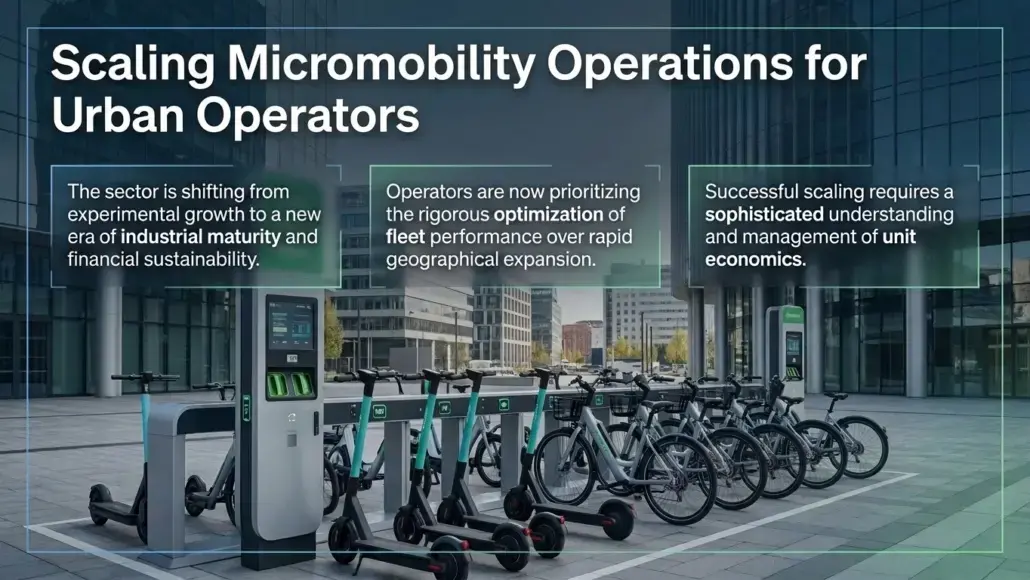
The landscape of light electric transport has undergone a profound transformation, moving from a period of experimental growth to a new era of industrial maturity and financial sustainability. In early 2026, the focus of the industry is no longer on rapid geographical expansion at any cost but on the rigorous optimization of fleet performance and the securing of long term profitability. For urban operators, scaling micromobility operations requires a sophisticated understanding of unit economics, hardware durability, and the evolving regulatory environment. As cities implement more stringent concession models, Transport Advancement observes that the ability to demonstrate operational excellence and seamless integration with public transit has become the primary differentiator for success in a competitive B2B market.
One of the most significant indicators of this shift is the recent financial performance of leading global operators. In 2024 and 2025, companies like Lime and Voi Technology demonstrated that mature micromobility operations can achieve sustained positive adjusted EBITDA and free cash flow. Lime reported record gross bookings of over 810 million dollars in 2024, a 31 percent increase year over year, with adjusted EBITDA growing by 49 percent to exceed 140 million dollars. These figures reflect a critical inflection point where the benefits of asset longevity and optimized logistics are beginning to outweigh the high capital and operating expenses that characterized the early years of the industry.
Optimizing Unit Economics through Operational Efficiency
Achieving profitability in micromobility operations depends on a narrow set of variables that define the lifecycle value of each vehicle. Operators are increasingly focusing on rides per vehicle per day as a core metric, while simultaneously working to reduce the number of field touchpoints required for maintenance and battery management. The transition to modular swappable battery systems has been the single most important factor in improving these unit economics. By allowing field technicians to replace depleted batteries without transporting the entire vehicle back to a central warehouse, operators have significantly reduced their logistics costs and increased the uptime of their fleets.

Furthermore, the longevity of the hardware itself is a major driver of ROI. Early generations of e-scooters had operational lifespans measured in months, but current commercial grade vehicles are designed to last four to five years in high intensity urban environments. This resilience is achieved through the use of heavy duty components such as cast magnesium frames, puncture proof pneumatic tires, and integrated electronic braking systems. While these features increase the upfront acquisition cost, the longer payback horizon and reduced maintenance needs make them a superior investment for operators planning for long term growth. The ability to standardize spare parts across different vehicle types, such as e-bikes and e-scooters, further enhances supply chain efficiency.
The Role of Edge AI and Advanced Telematics
As cities tighten their oversight of micromobility operations, the deployment of advanced telematics has become essential for regulatory compliance and public safety. In 2024 and 2025, major operators began integrating onboard computer vision cameras and dual band RTK GNSS sensors into their fleets. These edge AI systems allow for sub meter parking localization and real time detection of sidewalk riding, which are often mandatory requirements in city tenders across Europe and North America. By processing data directly on the vehicle, operators can provide immediate feedback to riders and even adjust vehicle speeds in restricted zones, reducing friction with municipal authorities and the general public.
The data generated by these telematics modules is also invaluable for operational planning. AI driven predictive maintenance algorithms can now identify potential hardware failures before they occur, allowing operators to schedule repairs during off peak hours and avoid service disruptions. Moreover, dispatch optimization engines use real time demand data to ensure that vehicles are positioned in the most high value locations throughout the day. This level of technical sophistication is a prerequisite for winning multi year city concessions, where operators must prove their ability to manage complex fleets with minimal urban footprint and maximum reliability.
Navigating the Regulatory Shift to Concession Models
The regulatory environment for micromobility has stabilized significantly as many cities move away from open entry pilot programs toward capped concession tenders. These tenders typically grant exclusive or semi exclusive operating rights to a small number of companies for two to three years. Winning these bids requires substantial upfront investment in customized compliance features and a commitment to paying recurring municipal fees, which can range from 50 to 250 dollars per vehicle annually. While these costs are significant, the protection from reckless price competition and the certainty of route density provide a more stable foundation for scaling operations.
Compliance with open data standards such as MDS 2.0 and GBFS 3.0 is another critical requirement for modern urban operators. These APIs allow city transport agencies to monitor fleet distribution, trip volumes, and parking compliance in real time. This level of transparency is essential for building trust with municipal partners and for ensuring that micromobility is managed as an integrated component of the broader transit network. For B2B decision makers, the ability to seamlessly share data with city platforms is as important as the physical performance of the vehicles themselves.
Battery Technology and Charging Infrastructure
The management of lithium ion batteries remains one of the most complex operational challenges for micromobility operators. Stringent fire safety regulations, such as UL 2271 in the US and the new EU Battery Regulation, require comprehensive lifecycle tracking and secure, fire isolated storage facilities. To mitigate these risks, operators are investing in sophisticated battery management systems that provide continuous cellular telemetry, monitoring cell health and temperature in real time. This data is vital for preventing thermal runaway events and for optimizing the charging cycles that extend battery life.
In addition to centralized depots, the deployment of localized micro hubs and swappable battery kiosks is gaining traction. Advanced charging strategies for light vehicles are now being integrated into vertical infrastructure projects, as detailed in the discussion on integrated multi level depots optimizing city land use. By partnering with local retailers, parking facilities, and transit stations, operators can create a distributed network of charging points that reduces the need for long distance logistics. These kiosks can also serve as public charging stations for private light electric vehicles, creating an additional revenue stream and strengthening the role of micromobility in the local energy ecosystem. As fleets continue to scale, the integration of these hubs with the local power grid will require smart load management to avoid peak demand penalties.
Integrating Micromobility with Public Transit Networks
The ultimate goal for many urban operators is the full integration of micromobility into municipal Mobility as a Service frameworks. By linking light electric vehicles directly to high capacity rail and metro interchanges, operators can position their services as a viable alternative to private car ownership for the first and last mile of a journey. In 2025, several major cities began incorporating micromobility bookings and payments into their official public transit apps and fare cards. This level of integration not only increases trip volumes but also provides a more seamless and convenient experience for passengers.

Strategic partnerships with transit agencies can also unlock new funding and infrastructure opportunities in micromobility operations. In some jurisdictions, micromobility operators are eligible for public subsidies or co funding for infrastructure projects such as protected bike lanes and dedicated parking corrals. These investments benefit the operator by improving rider safety and reducing the risk of municipal fines for poorly parked vehicles. As micromobility becomes more deeply embedded in the urban fabric, the line between private operators and public service providers is becoming increasingly blurred.
Addressing Hardware Resilience and Lifecycle Management
The physical demands of urban micromobility operations require a relentless focus on hardware resilience. Beyond the frame and tires, components such as integrated IoT modules, electronic locks, and drum brakes must be able to withstand extreme weather and heavy daily use. The transition to digital manufacturing ecosystems is allowing operators to aggregate hardware procurement and standardize components, lowering capital expenditure while maintaining high quality standards. This approach also facilitates the development of second life pathways for batteries and other components, improving the overall sustainability of the business model.
However, the trade off between high performance hardware and upfront CAPEX remains a constant tension for business leaders. While expensive components can reduce maintenance costs over four years, they also lengthen the capital payback period in a volatile macroeconomic environment. Successful operators are those that can find the right balance, using data from thousands of trips to identify which components are worth the premium and which can be simplified without sacrificing reliability. This iterative approach to hardware design is a hallmark of the most successful companies in the sector.
The Strategic Outlook for Urban Operators
As we look toward 2027 and beyond, the scaling of micromobility operations will be defined by a focus on operational excellence, regulatory collaboration, and technical innovation. The era of hyper growth has been replaced by a more disciplined approach to business management, where every trip must contribute to the long term health of the company. Operators that can master the complexities of swappable battery logistics, edge AI compliance, and MaaS integration will be well positioned to lead the market in the coming years.
For investors and business decision makers, the micromobility sector now offers a more predictable and sustainable opportunity than it did just a few years ago. The clear evidence of profitability from leading operators, combined with the increasing support from municipal governments, suggests that light electric transport is now a permanent and vital part of the urban mobility mix. Transport Advancement believes that by continuing to innovate and optimize, urban operators can ensure that micromobility continues to scale, providing a cleaner, more efficient, and more connected way to move around the world’s growing cities.
References
- Lime Micromobility
- Voi Technology
- McKinsey Center for Future Mobility
- IEA
- NACTO
