





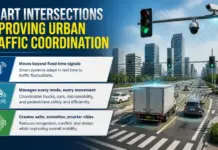



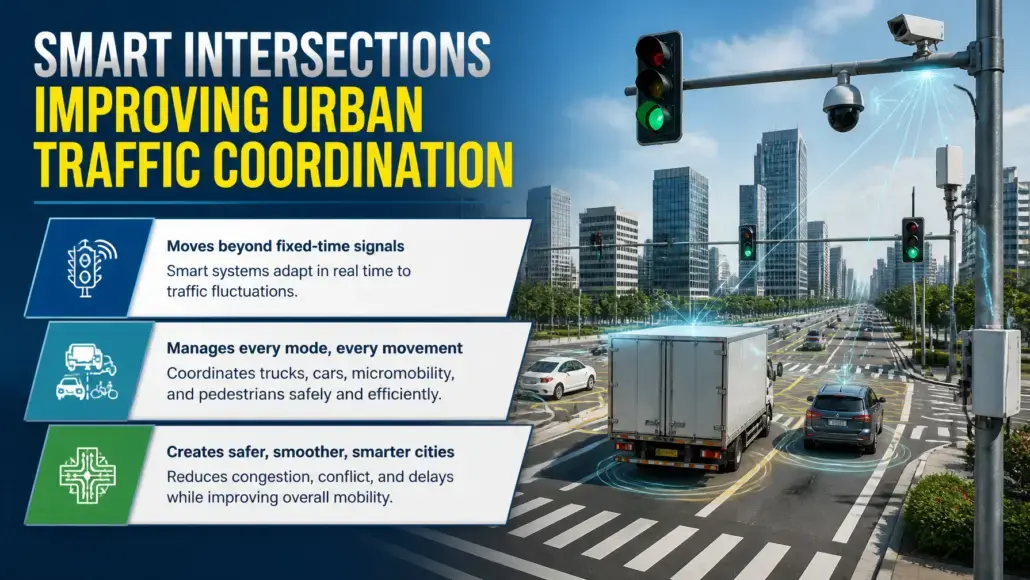
The urban intersection is the most complex and high-risk node in the transportation network, serving as the point where diverse modes of travel—from heavy trucks to pedestrians and micromobility users—all converge. For decades, these nodes have been managed by static, time-based signal controllers that are ill-equipped to handle the fluctuating demands of modern city life. However, the emergence of smart intersection traffic management is fundamentally changing this dynamic. Transport Advancement notes that by deploying an array of advanced sensors, high-speed edge computing, and artificial intelligence, cities are transforming these critical points into intelligent, proactive hubs. This evolution is not just about moving cars faster. It is about creating a safer, more equitable, and more efficient urban environment for every road user.
The Sensory Nervous System of the Modern Intersection
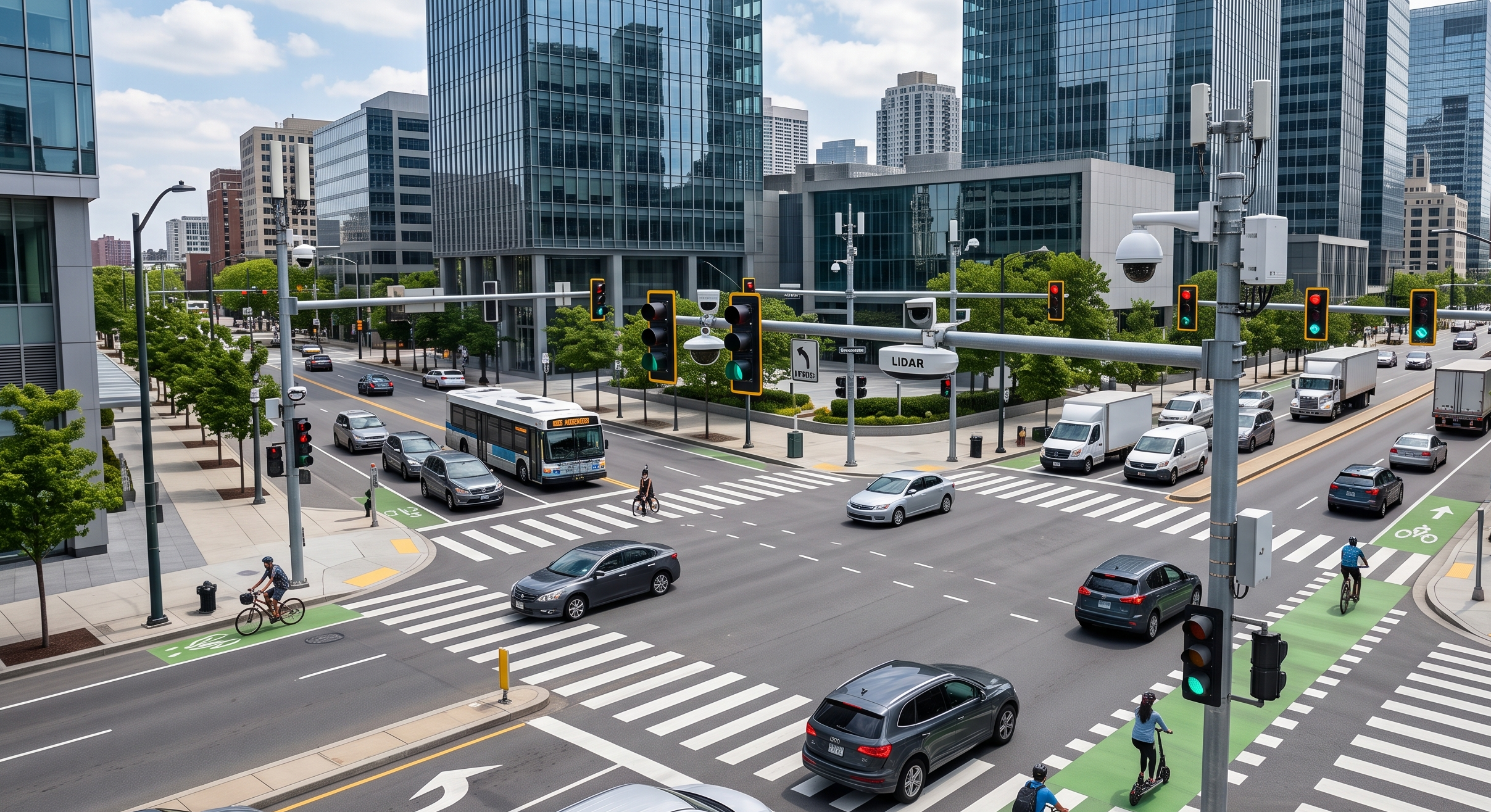
A smart intersection is defined by its ability to perceive its environment with high precision and in real-time. This is achieved through a multi-modal sensor suite that typically includes high-definition cameras, radar, and LiDAR (Light Detection and Ranging). Unlike traditional induction loops, which only detect the presence of a metal object over a specific point, the sensors in a smart intersection traffic management system can identify and track individual entities, classifying them as cars, buses, cyclists, or pedestrians. This granular data allows the system to understand the true complexity of the intersection’s behavior.
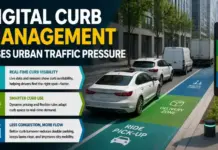
The power of these sensors is multiplied by edge computing—the processing of data directly at the intersection rather than in a distant cloud server. This localized processing enables millisecond-level reaction times, which is critical for safety-critical applications. For example, if a smart intersection traffic management system detects a pedestrian who has stepped into the crosswalk against the light, it can instantly extend the red signal for approaching traffic or trigger a warning on a connected vehicle’s dashboard. This sensory nervous system provides the situational awareness that is the prerequisite for all intelligent traffic coordination. Furthermore, digital curb management systems are adding another layer to the data integration into mobility powered by smart intersections.
AI-Driven Signal Optimization and Demand Management
The core intelligence of smart intersection traffic management lies in its ability to optimize signal timings dynamically based on real-time demand. AI algorithms can process the stream of data from the sensor suite to identify patterns and predict short-term traffic flow. Instead of adhering to a rigid cycle, the signal controller can adjust the duration of green lights to clear a sudden platoon of vehicles or provide priority to a transit bus that is running behind schedule. This active management of the intersection significantly reduces idling times, which in turn lowers fuel consumption and emissions.
Furthermore, smart intersection traffic management can implement multi-objective optimization, where the system balances the needs of different road users simultaneously. During school hours, the system might prioritize pedestrian safety and crossing times near a school zone, while during the evening rush hour, it might focus on maximizing vehicle throughput on a major arterial. This flexibility allows city planners to implement their strategic goals—whether it is promoting transit, improving air quality, or enhancing safety—directly through the infrastructure. The intersection becomes a tool for active urban policy rather than just a passive piece of hardware.
Protecting Vulnerable Road Users with Digital Precision
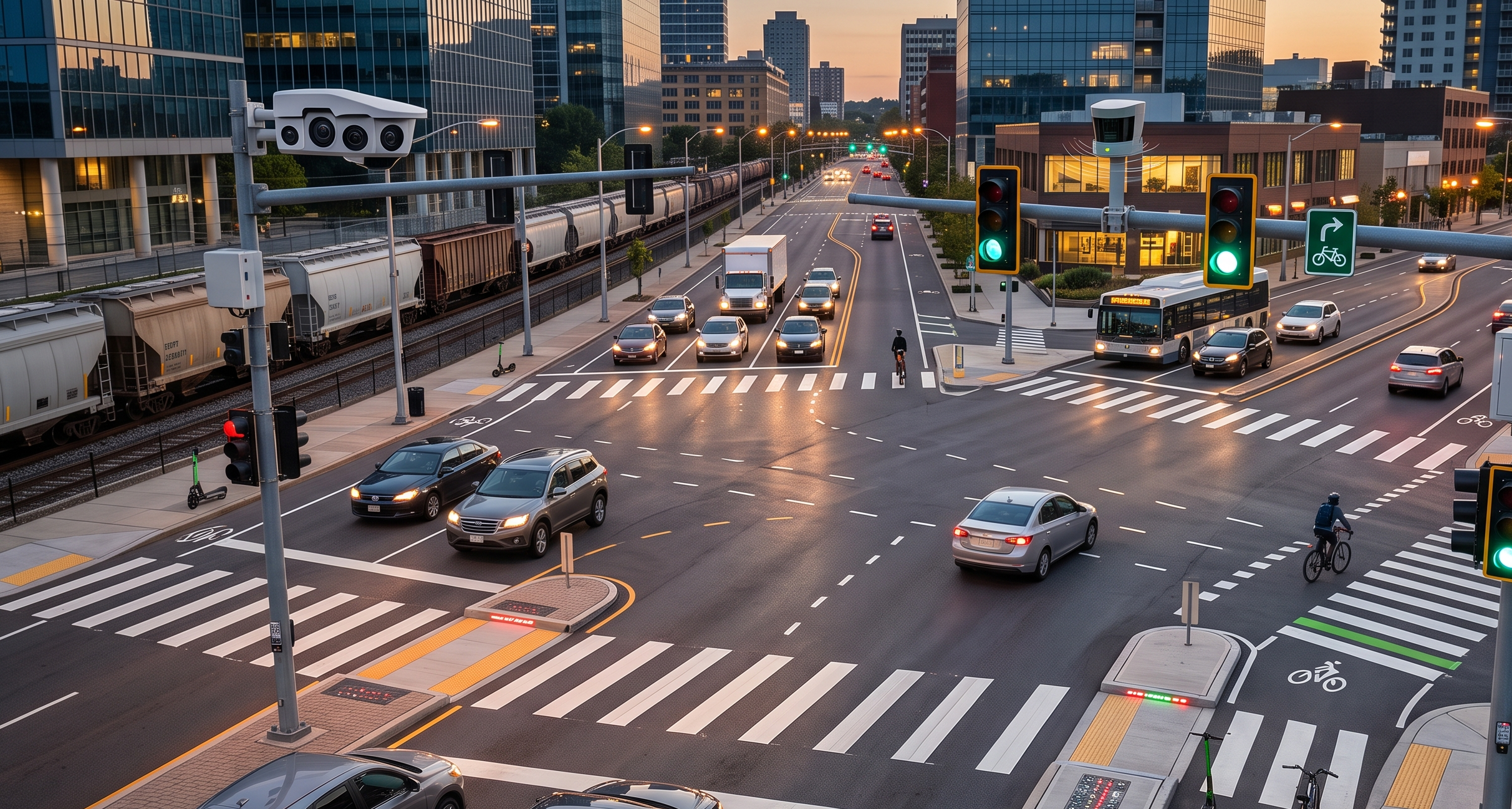
Safety for pedestrians and cyclists is the most critical metric for the success of any urban transport strategy. Traditional intersections are often hostile environments for these vulnerable road users (VRUs), who are frequently invisible to drivers in large vehicles. Smart intersection traffic management addresses this by creating a digital safety zone around the intersection. By tracking the trajectory of every VRU, the system can predict potential conflicts with turning vehicles and intervene before an accident occurs.
This intervention can take many forms, from the aforementioned signal extensions to the use of dynamic signage and talking infrastructure. For example, a smart intersection traffic management system could trigger an LED warning sign to alert a right-turning driver that a cyclist is in their blind spot. For visually impaired pedestrians, the system could communicate directly with their smartphones to provide audio guidance on when it is safe to cross. This focus on inclusivity and precision safety is what distinguishes the smart intersection from its traditional counterpart. It represents a move toward a Vision Zero future where no road fatality is acceptable.
Integrating Micromobility into the Traffic Tapestry
The rapid growth of e-scooters and bike-sharing has introduced a new layer of complexity to the urban intersection. These micromobility users move faster than pedestrians but are more vulnerable than motorists, often falling into a gray area of traffic management. Smart intersection traffic management provides the visibility needed to integrate these users safely into the traffic flow. By recognizing the specific movement patterns of micromobility, the system can provide dedicated signal phases or adjusted timings that account for their acceleration and braking characteristics.
This visibility also helps city planners understand where micromobility infrastructure is most needed. By analyzing the data generated by smart intersections, planners can identify high-volume bike routes and pinpoint where conflicts with motorized traffic are most frequent. This data-driven approach to infrastructure design ensures that cycle lanes and pedestrian pathways are built where they will have the greatest impact on safety and modal shift. The smart intersection is thus not just a tool for daily management, but a source of intelligence for the long-term evolution of the city.
The Economic and Environmental ROI of Smart Hubs
The transition to smart intersection traffic management offers a compelling return on investment for municipalities. The reduction in traffic congestion translates directly into economic gains by decreasing travel times and improving the reliability of logistics and transit. Furthermore, the environmental benefits are substantial; by reducing the number of stop-and-go events, cities can significantly lower the levels of localized air pollution—such as nitrogen oxides and particulate matter—which are major contributors to respiratory health issues in urban populations.
From a maintenance perspective, the sensors in a smart intersection traffic management system can also monitor the condition of the road surface and the performance of the signals themselves. This allows for predictive maintenance, where repairs are made before a failure occurs, reducing the downtime and costs associated with emergency repairs. When viewed as a multi-functional platform for safety, efficiency, and intelligence, the smart intersection is one of the most cost-effective investments a city can make in its future. It is the critical infrastructure for a data-led, sustainable urbanism.
Future of the Intersection as a Service Hub
As we look toward the next decade, the role of the smart intersection will continue to expand. These hubs will become the primary interface for autonomous vehicles, providing them with the master view of the intersection that is needed for safe navigation in dense urban areas. Furthermore, smart intersections could serve as localized weather stations, air quality monitors, or even communication hubs for 5G and future 6G networks. The integration of smart intersection traffic management into the broader Smart City framework will create a synergetic ecosystem where data flows seamlessly between all aspects of urban life.
The ultimate goal of this technology is the creation of a seamless, stress-free urban experience where moving through the city is a delight rather than a chore. By transforming the most difficult nodes of our transport network into the most intelligent ones, we are laying the foundation for a truly cooperative and sustainable city.
Addressing the Privacy and Ethics of AI in Traffic
As smart intersection traffic management becomes more pervasive, it is essential to address the ethical and privacy implications of using AI and pervasive sensing in public spaces. The use of high-resolution cameras and facial recognition technology has raised concerns about the potential for mass surveillance and the erosion of anonymity. To address these concerns, many cities are implementing privacy by design principles, where images are automatically blurred or converted into anonymous metadata at the edge, before they are ever transmitted or stored.
Furthermore, the algorithms used for smart intersection traffic management must be transparent and accountable. If an AI system decides to prioritize one mode of travel over another, the rationale for that decision must be clear and aligned with the city’s stated policy goals. Ensuring that these systems do not inadvertently introduce bias—for example, by consistently prioritizing vehicles from affluent neighborhoods over transit users in lower-income areas—is a critical requirement for maintaining public trust. The transition to an AI-driven traffic system must be accompanied by a robust framework for ethical governance and oversight.
The smart intersection is the brain of the modern street, and its development is the key to unlocking the full potential of urban mobility. Transport Advancement believes taht by turning our most complex traffic nodes into the most intelligent ones, we are creating a city that is not only more efficient but also more responsive to the needs and values of its citizens. The journey toward a smarter, safer intersection is a journey toward a better urban future for all. As we continue to refine these tools, the intersection will evolve from a place of conflict and congestion into a symbol of urban harmony and digital intelligence. The foundation of a new era in mobility is being built, one smart intersection at a time.
