











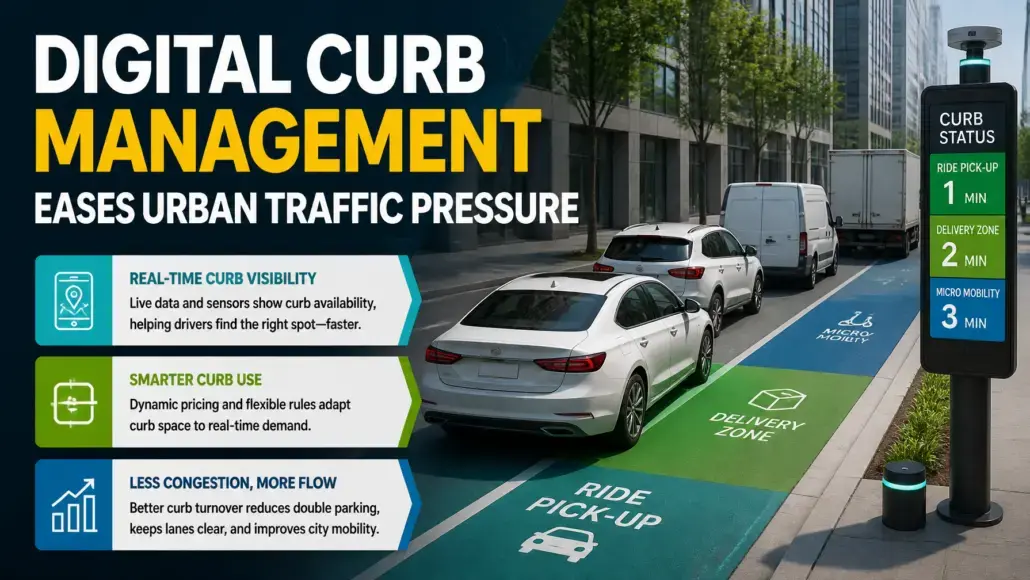
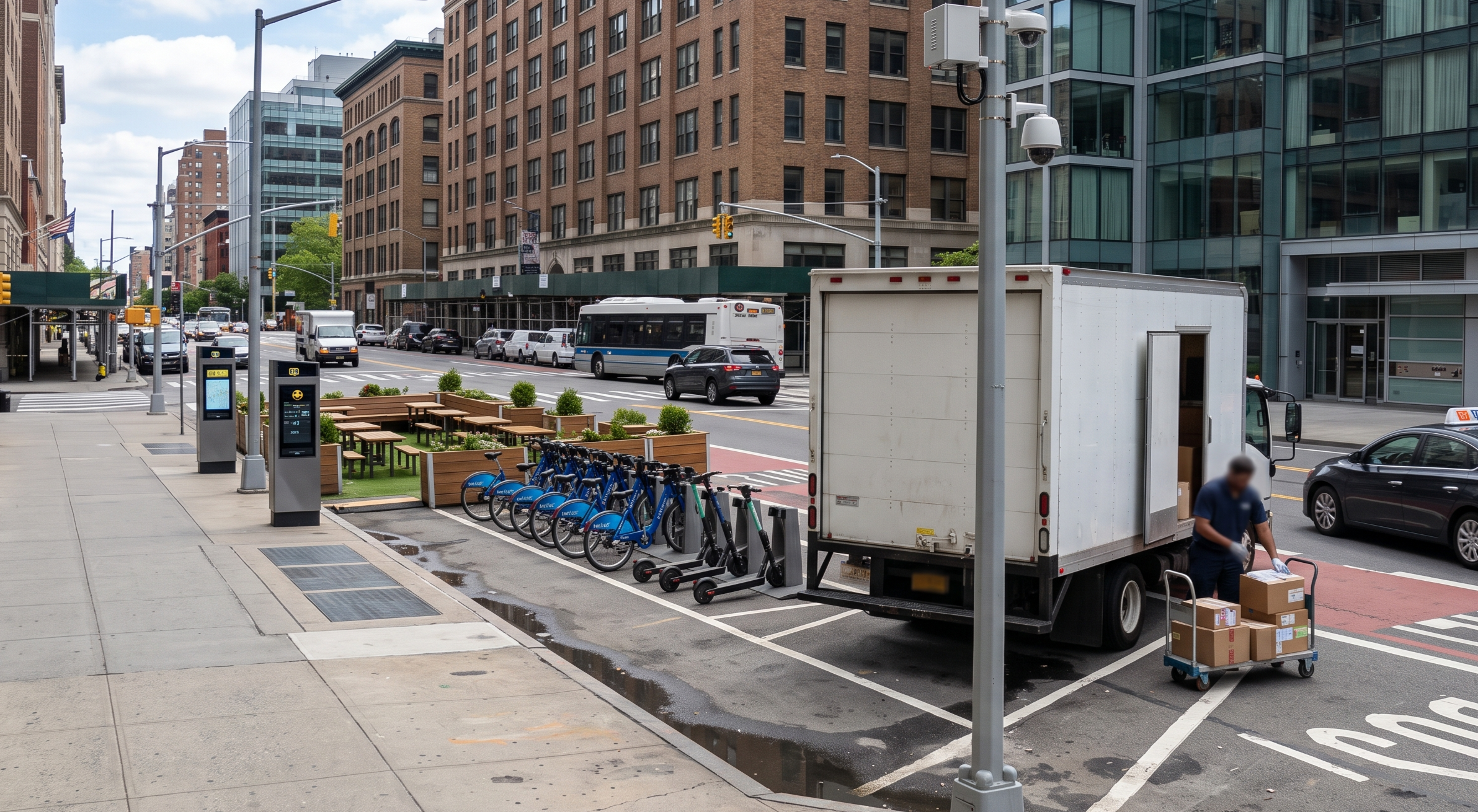
In the dense, competitive environment of the modern city, the curb has become some of the most valuable—and most contested—real estate in the urban landscape. Once used primarily for long-term vehicle parking, the curb now must accommodate a dizzying array of competing demands: from ride-hailing pick-ups and food delivery drops to micromobility docks, outdoor dining, and high-volume commercial logistics. The traditional method of managing this space—using static signs and painted lines—is no longer capable of handling this dynamic pressure. The emergence of digital curb management systems represents a fundamental shift in how cities view and utilize their roadside assets. Transport Advancement notes that by transforming the curb from a static resource into a flexible, data-driven utility, municipalities can significantly reduce congestion, improve safety, and enhance the overall efficiency of the urban economy.
The Paradigm Shift From Parking to Access Management
The core philosophy behind digital curb management systems is a transition from parking management to access management. In the past, the goal was simply to store vehicles at the curb for as long as possible. Today, the goal is to maximize the turnover and utility of each linear foot of curb space. This requires a digital inventory of every curb asset—a digital twin of the city’s edges—that tracks its physical characteristics, its current regulations, and its real-time usage. This digital foundation allows cities to move away from one-size-fits-all regulations and toward a more nuanced, dynamic approach.
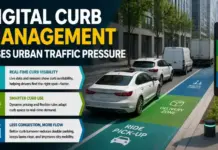
By implementing digital curb management systems, cities can create flex zones that change their function throughout the day. A single stretch of curb might serve as a commercial loading zone during the early morning, a public parklet during the afternoon, and a ride-hailing pick-up point during the evening rush. This flexibility is managed through a central digital platform that communicates regulations directly to users via mobile apps and connected vehicle systems. The curb becomes a programmable asset that can be tuned to meet the specific needs of the neighborhood at any given moment.
Solving the Last-Mile Logistics Challenge
One of the most significant drivers of urban congestion is the rise of e-commerce and the resulting explosion in delivery vehicle activity. Without adequate loading space, delivery drivers are often forced to double-park, blocking traffic lanes and creating safety hazards for cyclists and pedestrians. Digital curb management systems address this by allowing for the reservation and dynamic pricing of loading zones. Commercial operators can book a specific curb slot in advance, ensuring they have a safe and legal place to park when they arrive at their destination.
This loading-as-a-service model provides a massive boost to logistical efficiency. By reducing the time spent circling the block in search of a space—a process that accounts for a significant portion of urban vehicle miles traveled—digital curb management systems lower fuel costs and emissions for delivery fleets. Furthermore, the data generated by these reservations allows cities to better understand the needs of the logistics sector, helping them to design more effective delivery networks and consolidate freight movements. This data-driven collaboration between cities and private operators is a hallmark of the modern curb management approach.
Enhancing Micromobility and Shared Transit Integration
The successful integration of shared mobility services—such as bike-sharing, e-scooters, and ride-hailing—is entirely dependent on how the curb is managed. Without dedicated space, these services often clutter sidewalks or obstruct traffic, leading to public friction and regulatory challenges. Digital curb management systems provide the framework for allocating specific zones for these services, ensuring they have a home in the urban fabric. By digitizing the curb, cities can monitor the occupancy of these zones in real-time and adjust their size or location based on actual demand.
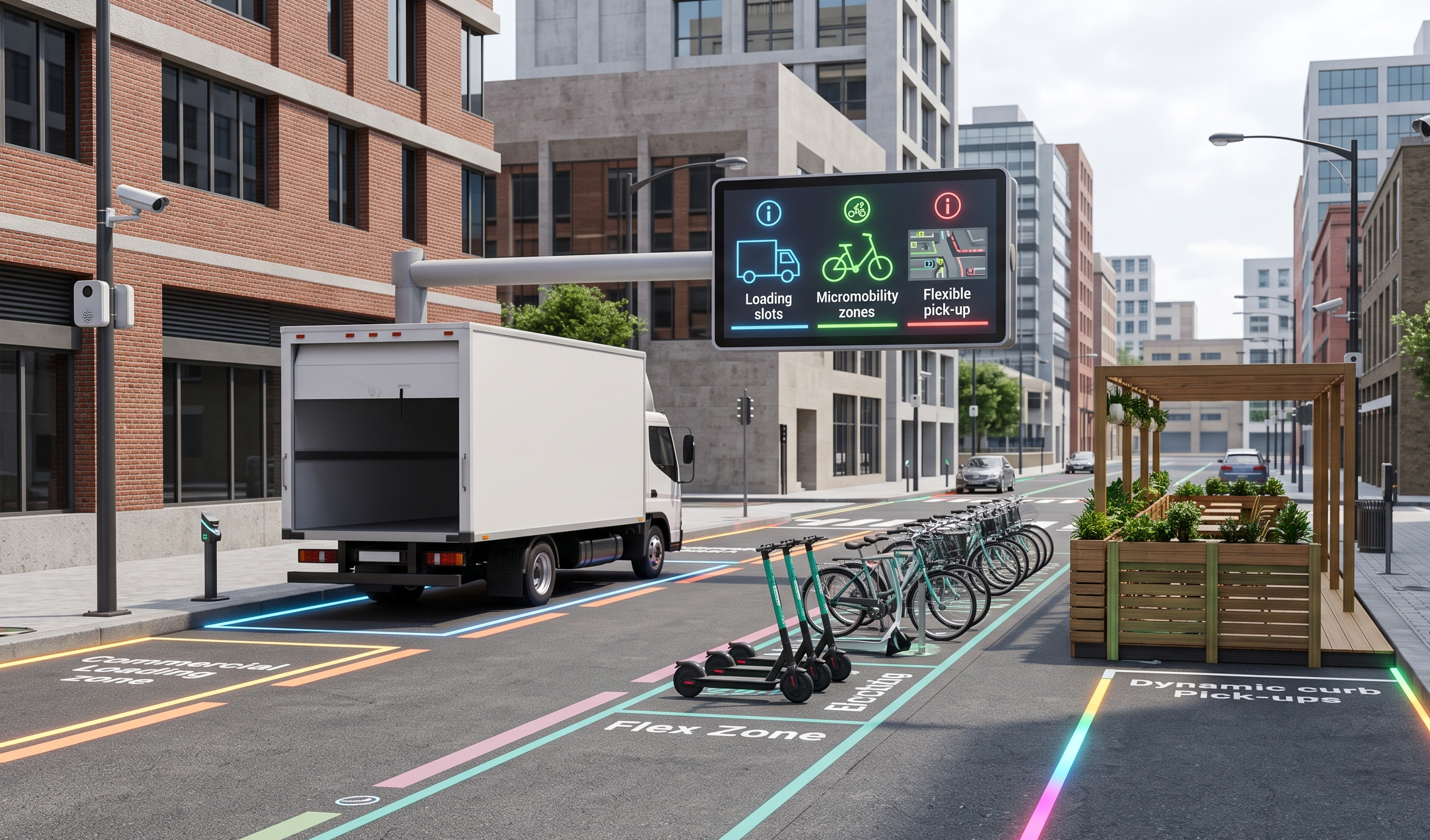
For ride-hailing services, digital curb management systems allow for the creation of dedicated pick-up and drop-off (PUDO) zones that minimize the impact on general traffic flow. By directing drivers and passengers to these specific locations through their apps, cities can prevent the chaotic and dangerous mid-block stops that are a major cause of urban accidents. This level of coordination is essential for creating a multi-modal transit ecosystem where different services complement rather than compete with each other. The curb becomes the glue that binds the various modes of urban mobility together. The curb is thus now part of a broader data-driven urban mobility planning ecosystem.
The Role of Computer Vision and IoT Sensors
The intelligence of digital curb management systems is powered by a variety of sensing technologies that monitor the occupancy and behavior of the curb. Computer vision cameras—often mounted on streetlights or buildings—can identify and track vehicles as they arrive and depart, automatically detecting parking violations or tracking the duration of commercial stays. Other technologies, such as ground-based sensors or mobile telematics from connected vehicles, provide additional layers of data that help to fill in the gaps.
This constant stream of information allows for a level of enforcement that is both more effective and more equitable. Instead of relying on manual patrols, digital curb management systems can issue digital citations or send real-time warnings to drivers who have overstayed their welcome. More importantly, this data allows for the implementation of dynamic pricing models, where the cost of using the curb reflects its current demand. This market-based approach encourages turnover and ensures that those who truly need the space—such as a delivery truck with 50 packages—are able to access it. The integration of IoT and AI into the curb management workflow is the final step in the digitalization of the urban street.
Economic Resilience and the Future of Urban Design
The implementation of digital curb management systems offers a clear path toward greater economic resilience for urban areas. By streamlining logistics and improving the efficiency of shared mobility, cities can lower the cost of doing business and make their downtown cores more attractive to residents and visitors. Furthermore, the revenue generated from dynamic curb pricing can be reinvested into public transit and active mobility infrastructure, creating a virtuous cycle of sustainable investment. The curb is no longer a drain on municipal resources; it is a productive asset that funds the city’s future.
Looking ahead, the role of digital curb management systems will only grow in importance as autonomous vehicles (AVs) enter the urban environment. An AV has no need for long-term parking, but it has an immense need for precise, reliable access to the curb for passenger exchange. The digital map of the curb will be the primary navigation tool for these vehicles, telling them exactly where they are permitted to stop and for how long. The transition to autonomous mobility is, at its heart, a transition to a fully digital curb.
A Sustainable Vision for the City’s Edge
Ultimately, the move toward digital curb management systems is about reclaiming the street for people. By reducing double-parking, minimizing the search for space, and providing dedicated room for active and shared travel, we can create an urban environment that is quieter, cleaner, and safer. The curb is the interface between our buildings and our transport, and how we manage it defines the character of our cities. Through the power of digital intelligence, we can ensure that this critical resource is used to its highest and best potential, creating a more vibrant and sustainable future for all.
The Role of Data Sharing in Curb Optimization
For digital curb management systems to be truly effective, there must be a seamless exchange of data between the public and private sectors. Cities need access to the telematics and route data from delivery fleets and ride-hailing companies to understand the true demand for the curb, while private operators need real-time information on curb availability and regulations to optimize their operations. This curb-data ecosystem is often facilitated through open standards such as the Curb Data Specification (CDS), which provides a common language for describing curb usage and regulations.
By sharing data through these open standards, cities can create a competitive and innovative market for curb-related services. For example, a third-party developer could build an app that helps delivery drivers find and book the most efficient loading zones for their daily route, reducing fuel consumption and traffic congestion. This level of collaboration is a radical departure from the traditional, top-down model of urban management and is a key driver of the industry’s move toward more agile and data-driven solutions. The success of digital curb management systems depends on the ability of all stakeholders to work together in a transparent and trusted environment.
Navigating the Political and Social Challenges of Curb Reform
While the technological solutions for digital curb management systems are maturing rapidly, the political and social challenges of curb reform remain significant. The curb is a highly visible and personal space, and any changes to how it is managed—particularly the introduction of dynamic pricing or the removal of free parking—can be met with fierce public opposition. Successfully navigating this transition requires a commitment to community engagement and a clear communication of the benefits. Planners must demonstrate that the revenue generated from the curb is being used to improve local transit and safety, and that the changes are resulting in a cleaner and less congested neighborhood.
Furthermore, digital curb management systems must be designed to be inclusive and accessible for all residents. This includes ensuring that parking for people with disabilities is protected and that the digital interfaces used to access the curb are easy to use for everyone, regardless of their technological proficiency. A human-centered approach to curb management—where the needs of the community are put first—is essential for building the broad-based support needed for long-term reform. The curb is a shared public resource, and its management must reflect the values and aspirations of the city it serves.
The journey to a better city starts at the curb. Transport Advancement believes that by transforming our roadside edges into a dynamic, digital utility, we are creating a more efficient and sustainable urban environment that is fit for the challenges of the 21st century. The era of static signs and painted lines is coming to an end, and the era of digital curb management systems is just beginning. As we move forward, the curb will become a visible symbol of a city that is smarter, safer, and more responsive to the needs of its people. The foundation of a new urbanism is being built, one linear foot at a time, starting at the edge of the street.
