






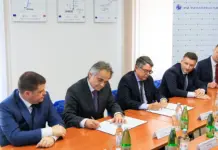






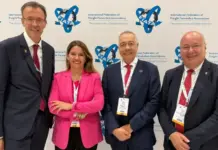




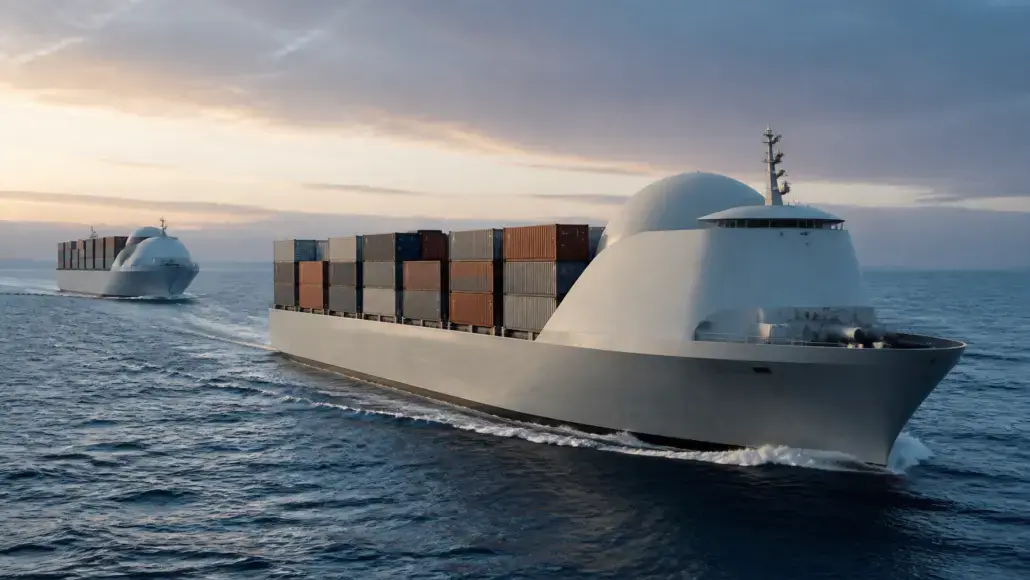
A collaborative group, including Lloyd’s Register, Maersk, South Carolina Ports, and the Port of Felixstowe, has launched an initiative titled the Pink Corridor. This project aims to examine the operational and regulatory framework required to establish a theoretical nuclear-powered container shipping route between the United States and the United Kingdom.
Project Scope and Objectives
The Pink Corridor initiative is not intended to deploy a vessel in the immediate future. Instead, the focus remains on the foundational research necessary to determine the viability of such a service. Using a conceptual nuclear-powered vessel as a model, the project will evaluate complex challenges, including port access, vessel security, and cyber resilience.
Furthermore, the study aims to study the following:
- Emergency response protocols and insurance requirements
- Challenges in aligning international maritime regulations with nuclear regulatory standards
- Nuclear safeguards, pot access, vessel security and cyber resilience
“The Pink Corridor joint development programme is an important step for the application of nuclear technology in merchant shipping,” said Nick Gross, Lloyd’s Register’s Global Containerships Segment Director.
“The partnership brings together industry-leading players across shipping, ports and classification, reflecting the growing interest in nuclear technology as a route to more sustainable maritime operations,” he added.
U.S.-UK Nuclear Shipping Corridor Initiative Targets Commercial Maritime Applications
The proposed Pink Corridor project linking the Port of Charleston in the U.S. with the Port of Felixstowe in the UK is part of a wider effort by Washington and London to assess civilian maritime applications of nuclear technology.
Lloyd’s Register said the initiative is expected to contribute to maritime development efforts under the U.S.-UK Technology Prosperity Deal. The agreement includes commitments to examine civil maritime nuclear applications and assess the potential for creating a dedicated shipping corridor between the two countries.
Charleston-Felixstowe Route Could Enable Nuclear-Powered Shipping
“As a major U.S. East Coast port, Charleston is always looking for innovative, cost effective and sustainable ways to move freight,” said Tom Boyle, SC Ports’ Director of Vessel Operations and Carrier Sales.
“The conceptual Pink Corridor project allows for the study of the possibility of a nuclear-powered maritime corridor.”
The initiative comes amid growing commercial interest in nuclear propulsion, a technology that has historically been associated primarily with naval vessels and icebreakers. The potential application of nuclear technology to merchant shipping is now receiving increased attention as the industry explores options for reducing emissions while maintaining long-range operational capabilities.
U.S. Government Expands Focus on Maritime Nuclear Technology
The Trump administration has identified maritime nuclear technology as part of its broader strategy to strengthen US maritime capabilities. In a related development, the U.S. Maritime Administration recently signed an agreement with nuclear technology developer CORE POWER to examine a pathway for the deployment of U.S.-flagged nuclear-powered commercial ships.
The MARAD-CORE POWER agreement addresses several challenges that would also be relevant to the Pink Corridor concept. These include regulatory approvals, port operations, crew credentialing, nuclear fuel availability, lifecycle services, insurance and financing.
The agreement follows earlier initiatives involving the ports of Long Beach and Corpus Christi, which have been exploring small modular reactors and other potential maritime nuclear applications.
Regulatory and Operational Barriers Remain
For commercial shipping operators, nuclear propulsion could provide vessels with significantly greater endurance while eliminating carbon emissions associated with onboard fuel combustion. However, deployment would require the shipping industry to overcome substantial regulatory, operational and financial challenges.
Key unresolved issues include reactor licensing, nuclear liability, insurance requirements, crew qualifications, maritime security, nuclear waste management and port acceptance of nuclear-powered merchant vessels.
Another major challenge is the absence of a comprehensive international regulatory framework specifically governing nuclear-powered commercial vessels. Establishing common standards will be important for enabling such ships to operate across international trade routes.
First Phase to Assess Corridor Requirements
Despite growing industry interest, the proposed Charleston-Felixstowe route remains conceptual at this stage.
The initial phase of the Pink Corridor project is expected to focus on identifying the requirements that would need to be met to establish such a maritime corridor. This includes assessing the infrastructure, regulatory and operational conditions necessary for nuclear-powered vessels to operate between the two ports.
Depending on the findings, a second phase could undertake a more detailed examination of engineering requirements, regulatory and legislative considerations, security arrangements and nuclear safeguards.
Commercial Shipping Moves Closer to Nuclear Propulsion Debate
The participation of Maersk, two major container ports and Lloyd’s Register represents a significant development in the commercial shipping industry’s consideration of nuclear propulsion.
While substantial technical, regulatory and commercial challenges remain, the Pink Corridor initiative indicates that nuclear-powered shipping is increasingly being assessed through practical industry frameworks rather than remaining solely a theoretical concept.
