










As the impacts of global climate change become more pronounced, the vulnerability of critical transportation systems to extreme weather events has become a primary concern for policymakers and engineers. High-speed rail, while a key part of the solution for decarbonizing transport, is itself sensitive to rising temperatures, intense rainfall, and increased storm frequency. In 2026, Transport Advancement notes that the focus of the high-speed rail industry has shifted toward climate-resilient infrastructure. This involves not just repairing damage after an event, but proactively designing and retrofitting rail networks to withstand the environmental challenges of the coming decades.
Understanding the Climate Risks to High-Speed Rail
High-speed rail operates within very narrow physical tolerances. The high speeds at which bullet trains travel mean that even minor disruptions to the track or the overhead power lines can have significant safety and operational consequences. One of the most critical risks is extreme heat, which can cause steel rails to expand and buckle—a phenomenon known as ‘sun kinks’. In 2026, with record-breaking summer temperatures becoming the norm, the prevention of rail buckling is a major engineering priority.
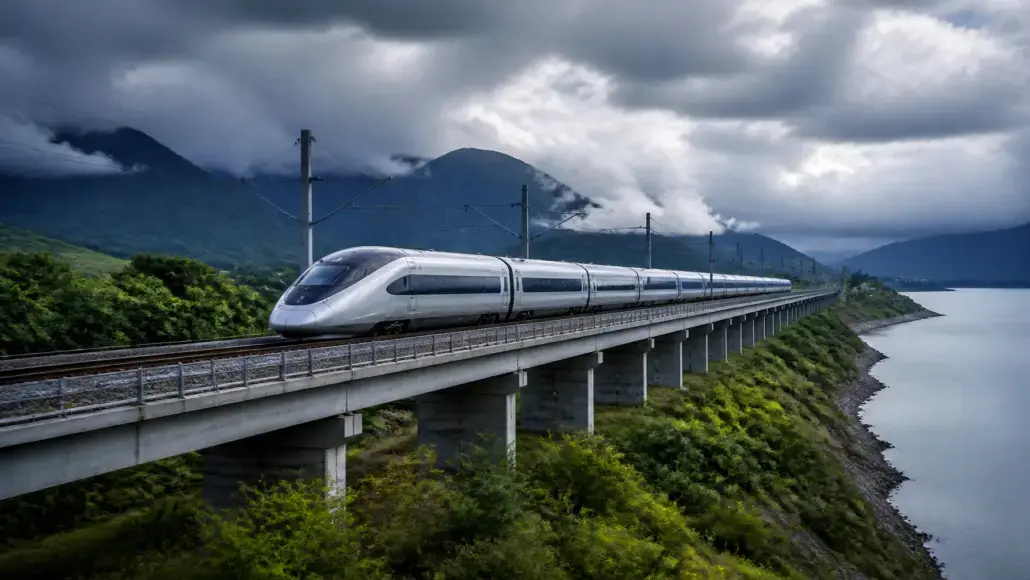
Similarly, intense rainfall and flooding pose a threat to the stability of rail embankments and the integrity of bridges and tunnels. Increased moisture levels can lead to landslides or the erosion of the ballast that supports the track. Furthermore, coastal rail lines are increasingly at risk from sea-level rise and storm surges. Building climate-resilient infrastructure requires a comprehensive understanding of these localized risks and the implementation of targeted engineering solutions to mitigate them. The goal is to ensure that the rail network remains operational even under the most challenging environmental conditions.
Innovative Materials and Engineering Solutions
The foundation of climate resilience lies in the materials and design principles used in construction. In 2026, the industry is increasingly utilizing advanced materials, such as self-healing concrete and temperature-resistant steel alloys, to build more durable infrastructure. New ballast designs that allow for better drainage and stability under heavy rainfall are also being implemented. For coastal lines, engineers are designing elevated tracks and more robust sea defenses to protect against flooding.
Another key strategy is the implementation of passive cooling and protection systems. For example, painting rails white or using specialized reflective coatings can reduce their temperature by several degrees during heatwaves, significantly lowering the risk of buckling. In areas prone to high winds, the design of overhead catenary systems is being reinforced to prevent power outages caused by swaying or falling lines. These engineering innovations are essential for ensuring that climate-resilient infrastructure can provide a reliable service in a changing climate.
The Role of Digitalization and Predictive Analytics
Digital tools are proving to be instrumental in climate-resilient infrastructure. By integrating weather data with structural health monitoring systems, rail operators can predict how specific segments of the network will respond to an upcoming weather event. Digital twins of the rail infrastructure allow engineers to simulate various climate scenarios and identify the most vulnerable points in the system.
In 2026, AI-driven predictive analytics are being used to optimize maintenance and emergency response strategies. If a heatwave is forecast, the system can automatically adjust train speeds in high-risk areas or trigger proactive track inspections. Similarly, during heavy rainfall, real-time sensors in embankments can detect early signs of instability, allowing for intervention before a landslide occurs. This data-driven approach moves the industry from a reactive mode of disaster recovery to a proactive mode of risk management, which is much more cost-effective and safer in the long run.
Nature-Based Solutions and Sustainable Design
Climate resilience is not just about concrete and steel; it also involves working with the natural environment. Nature-based solutions (NbS) are becoming an integral part of climate-resilient infrastructure. This includes the use of vegetation to stabilize slopes, the creation of wetlands to manage stormwater runoff, and the planting of tree belts to protect against high winds and snowdrifts. These solutions not only improve resilience but also enhance local biodiversity and provide aesthetic benefits for passengers.
Sustainable design principles also play a role in resilience. For example, by designing stations and depots to be energy-efficient and capable of operating off-grid during power outages, the overall resiliency of the rail network is improved. The use of low-carbon materials in construction, such as recycled aggregates and green steel, also contributes to the broader goal of climate mitigation, ensuring that the industry is not contributing to the problem it is trying to solve. The convergence of resilience and sustainability is a hallmark of the modern rail sector.
Policy, Funding, and Global Cooperation
Climate-resilient infrastructure requires significant financial investment and a supportive policy environment. Governments are increasingly incorporating climate resilience into their national infrastructure plans and providing funding for resilience-focused projects. In 2026, the use of resilience bonds and other innovative financing mechanisms is helping to bridge the funding gap for these long-term investments.
Global cooperation is also essential, as many high-speed rail networks cross national borders and face similar climate challenges. Rail authorities are sharing best practices, data, and engineering standards to accelerate the transition to resilient infrastructure. International organizations are working to develop harmonized resilience metrics that can be used to assess and compare the performance of rail networks worldwide. This collective effort is critical for building a global transportation system that is fit for the future.
Future Outlook: A New Standard for Rail Infrastructure
As we look toward 2030, climate resilience will become a standard requirement for all new rail projects and major retrofits. The lessons learned from the current wave of resilience projects will inform the design of the next generation of high-speed rail infrastructure. We can expect to see even more advanced technologies, such as autonomous repair robots and real-time climate adaptation systems, becoming common features of the rail network.
Building climate-resilient infrastructure for high-speed rail is a continuous process of learning and adaptation. As the climate continues to change, the industry must remain vigilant and innovative. Transport Advancement believes that by investing in resilience today, the high-speed rail sector is ensuring that it can continue to provide a safe, reliable, and sustainable mode of transport for generations to come. The era of the resilient rail is here, and it is the foundation upon which a more sustainable future will be built.
