








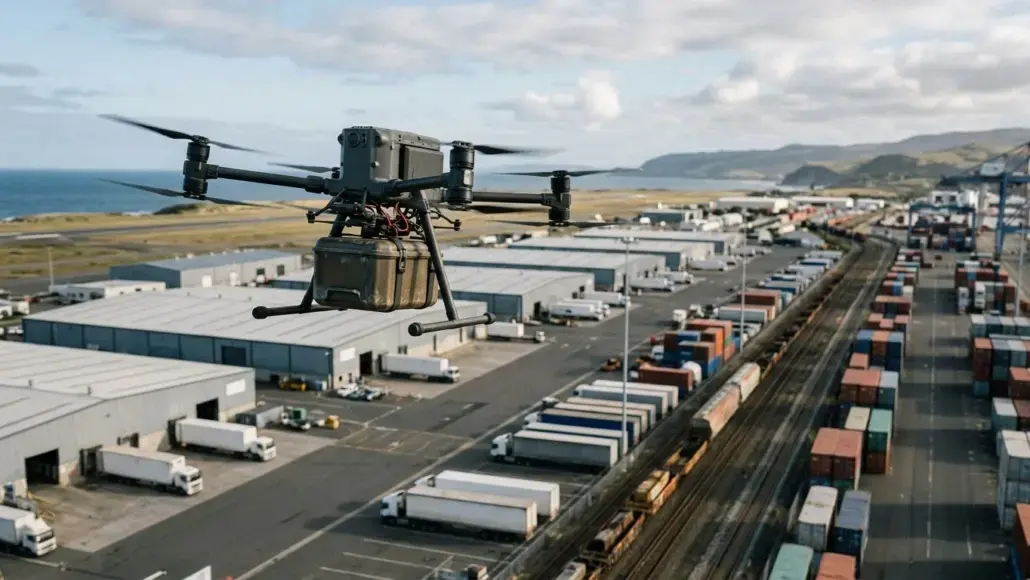
The aerial frontier of logistics is no longer a distant vision but a tangible reality, with drone cargo networks emerging as a transformative force in how goods are transported, delivered, and managed across the globe. This represents a seismic shift from traditional ground-based logistics, introducing an era where speed, efficiency, and unprecedented accessibility define the movement of parcels and critical supplies. The commercial expansion trends observed in this sector are not merely incremental. They signify a fundamental reimagining of supply chain paradigms, driven by technological innovation and a burgeoning demand for expedited services. These drone cargo networks are poised to disrupt industries ranging from retail and healthcare to manufacturing and emergency services, promising a future where delivery is faster, more reliable, and often, more sustainable.
Transport Advancement notes that the evolution of commercial drone delivery has been swift and impactful. Initially perceived as a futuristic novelty, drone delivery systems have rapidly matured, moving from experimental prototypes to viable, scalable solutions. Early applications often focused on niche markets or emergency medical supplies, proving the concept’s efficacy in situations where speed was paramount. However, as the technology advanced and regulatory bodies began to catch up, the scope broadened considerably. Today, we witness drone logistics becoming an increasingly integral part of the global supply chain, offering an agile alternative to conventional methods. The core appeal lies in their ability to bypass terrestrial congestion, navigate challenging terrains, and operate with a degree of autonomy that promises significant operational cost savings over time. The development of robust autonomous cargo drones, capable of navigating complex airspace, managing payloads, and executing precise deliveries, is at the heart of this revolution. These sophisticated machines are not just flying robots. They are intelligent systems equipped with advanced sensors, AI-driven navigation, and secure communication protocols, ensuring safe and efficient operations.
The Dawn of a New Era in Last-Mile Delivery
Perhaps the most immediately impactful area of this expansion is in last-mile delivery. The final leg of any delivery journey, often the most expensive and time-consuming, has long been a bottleneck for retailers and logistics providers. Traditional methods contend with urban traffic, fuel costs, labor shortages, and environmental concerns. Drone cargo networks offer a compelling solution to these challenges. By taking to the skies, drones can bypass congested roads, reducing delivery times from hours to minutes, particularly in dense urban environments or geographically challenging rural areas. This has profound implications for e-commerce, enabling same-day or even instant delivery, thereby enhancing customer satisfaction and competitive advantage. The ability to deliver small, high-value, or time-sensitive items directly to a customer’s doorstep or designated drop-off point transforms the last-mile delivery landscape, making it more agile and responsive to consumer demands.
Overcoming the Hurdles of Urban and Rural Logistics
The efficiency gains are particularly pronounced in scenarios where geographical constraints or infrastructural limitations make traditional delivery difficult. For instance, delivering medical supplies to remote communities or construction parts to inaccessible sites can be streamlined dramatically with UAV cargo transport. In urban settings, micro-fulfillment centers can act as drone hubs, dispatching a fleet of drones to blanket a localized area, dramatically reducing reliance on vans and their associated carbon emissions. This not only speeds up delivery but also contributes significantly to refinery sustainability efforts by reducing the carbon footprint of logistics operations.
Fueling the Drone Freight Market: Technology, Investment, and Regulations
Transport Advancement highlights that the growth of the drone freight market is a complex interplay of technological advancements, substantial investment, and the crucial development of supportive drone delivery regulations. From a technological standpoint, ongoing improvements in battery life, payload capacity, navigation systems, and overall drone durability are continually pushing the boundaries of what is possible. Longer flight times and heavier lift capabilities mean drones can carry more diverse cargo over greater distances, making them suitable for a wider array of applications beyond small parcels. Furthermore, the integration of artificial intelligence and machine learning is enabling drones to operate with increasing autonomy, making real-time decisions, adapting to changing weather conditions, and performing complex maneuvers with minimal human intervention.
The Role of Investment and Strategic Partnerships
Investment in the drone cargo networks sector has been robust, with venture capital firms, established logistics companies, and even governmental bodies recognizing the immense potential. This influx of capital is fueling research and development, enabling companies to scale their operations, and accelerating the deployment of advanced drone technologies. Strategic partnerships are also playing a critical role, with drone manufacturers collaborating with e-commerce giants, healthcare providers, and logistics firms to pilot and refine commercial drone delivery solutions. These collaborations are vital for integrating drone technology seamlessly into existing supply chains and developing bespoke solutions for specific industry needs.
Navigating the Regulatory Landscape
However, the path to widespread adoption is heavily influenced by drone delivery regulations. Governments worldwide are grappling with the challenge of creating regulatory frameworks that ensure safety, security, and privacy while fostering innovation. Key considerations include airspace management, drone identification, licensing requirements, operational ceilings, and rules for flying over populated areas. While progress has been made in many regions, a unified and globally recognized set of standards is still evolving. The successful logistics fleet scaling of drone cargo networks will largely depend on the ability of regulators to establish clear, consistent, and forward-thinking guidelines that enable safe and efficient operations without stifling growth. Dialogue between industry stakeholders and regulatory bodies is essential to strike this delicate balance, ensuring that commercial expansion trends continue unhindered by legal ambiguities.
Applications Beyond the Horizon: Diverse Industries Embrace Drone Logistics
While last-mile delivery captures much of the public imagination, the utility of drone logistics extends far beyond simply dropping packages at homes. Various industries are beginning to explore and implement UAV cargo transport for specialized tasks, recognizing its unique advantages.
Healthcare and Humanitarian Aid
In healthcare, drones are revolutionizing the delivery of critical medical supplies, vaccines, and even organs, particularly in emergencies or to remote areas with limited infrastructure. The speed and directness of drone delivery can literally be a matter of life and death, bypassing traditional transportation challenges that could delay vital aid. Similarly, in humanitarian efforts, autonomous cargo drones can deliver food, water, and shelter materials to disaster-stricken regions, reaching populations cut off by damaged roads or dangerous conditions.
Industrial and Agricultural Logistics
Industries such as mining, construction, and agriculture are also finding innovative uses. Drones can transport spare parts to remote equipment, conduct rapid surveys, or deliver specialized tools to workers on large, spread-out sites. In agriculture, precision application of pesticides or fertilizers via drones is already enhancing efficiency and reducing waste. The capability of drone cargo networks to handle diverse payloads, from small tools to specialized sensors, makes them invaluable assets in improving operational efficiency across these sectors.
Enhancing Security and Surveillance Logistics
Beyond traditional cargo, drones are also being explored for secure transport of sensitive documents or high-value items, offering an additional layer of security through constant aerial monitoring. Their ability to deliver without human contact can reduce risks associated with ground transport of valuable goods, contributing to safer commercial expansion trends in logistics.
The Future Trajectory: Scaling and Integration
The future of drone cargo networks is characterized by continued logistics fleet scaling and deeper integration into existing supply chain ecosystems. This involves not just increasing the number of drones, but also developing sophisticated air traffic management systems specifically designed for autonomous aerial vehicles. These systems will ensure safe coexistence with manned aircraft and coordinate the movements of thousands, if not millions, of drones simultaneously.
Further advancements in artificial intelligence will make autonomous cargo drones even more intelligent, capable of dynamic route optimization, predictive maintenance, and advanced collision avoidance. We can anticipate the development of hybrid drone systems, capable of both flight and ground movement, offering unparalleled flexibility in varied delivery scenarios. Moreover, the environmental benefits are likely to be a significant driver of adoption, as businesses strive to meet sustainability goals. Electric drones, powered by increasingly efficient batteries or alternative energy sources, offer a cleaner, quieter alternative to fossil fuel-dependent vehicles.
The drone freight market is on an undeniable upward trajectory. While challenges remain, technological, regulatory and societal, the momentum behind drone cargo networks is powerful. From transforming the immediacy of last-mile delivery to enabling new efficiencies in drone logistics for diverse industries, these aerial conduits are not just a supplement to existing transport methods. They are forging an entirely new paradigm. As commercial expansion trends continue to unfold, Transport Advancement believes drones have the potential become an increasingly ubiquitous and indispensable part of the global movement of goods, redefining what is possible in the realm of modern logistics.
