



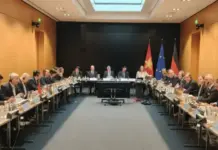
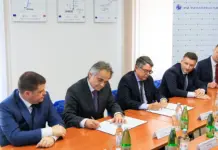




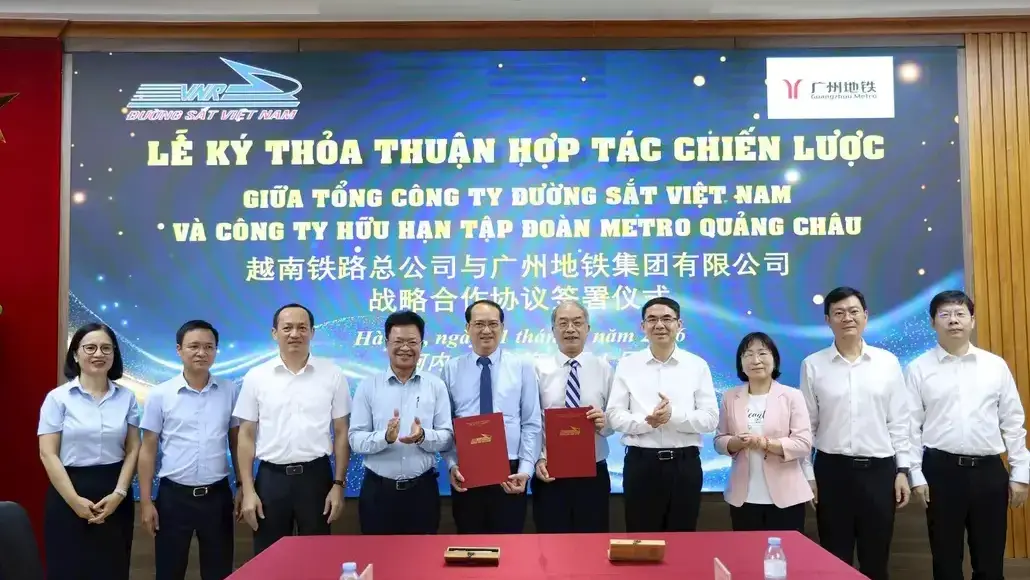
The Vietnam Railways Corporation (VNR) and China’s Guangzhou Metro Group Co., Ltd. have formalized a significant strategic cooperation agreement. This pact, signed in Hanoi on 1st June 2026, aims to bolster expertise and operations across electrified railways, metro lines, and crucially, human resources training.
This initiative is a direct outcome of high-level discussions and strategic alignments between Vietnam and China, particularly following a state visit earlier this year. A joint statement issued after that visit underscored the commitment to deepening a comprehensive strategic cooperative partnership and advancing a shared future community of strategic significance. A key pillar identified within this framework is the acceleration of cross-border infrastructure connectivity, with a pronounced emphasis on railways and road transport. The shared vision includes expanding transport links toward Central Asia and Europe, fostering improved trade and logistics.
Dang Sy Manh, Chairman of the VNR Members’ Council, highlighted VNR’s dual focus: ensuring the safe and efficient operation of the existing national railway network while simultaneously preparing for new railway projects. These future endeavors include urban railways and high-speed rail lines, as designated by the Government. He noted the ambitious urban rail plans for major Vietnamese cities, with Hanoi projecting seven new metro lines totaling nearly 398 kilometers by 2035, aiming to fulfill 35-40% of public transport needs. Similarly, Ho Chi Minh City anticipates operating six metro lines, approximately 183 kilometers in length, within the same timeframe, accounting for 30-40% of its passenger transport demand. The Vietnam-China rail cooperation is expected to be vital in achieving these targets.
Currently, VNR and Guangzhou Metro are collaborating on a bid for the entrusted operation services of a light railway project on Phu Quoc Island. Exploratory discussions are also underway for other urban railway projects, including the Bau Bang – Cai Mep line in Ho Chi Minh City, alongside dedicated personnel training initiatives. Mr. Manh expressed keen interest in strengthening exchanges and cooperation with Guangzhou enterprises, specifically requesting Guangzhou Metro to share its technical expertise and operational experience in crucial areas such as intercity railway management, high-speed electrified standard-gauge railways (up to 200 km/h), transit-oriented development (TOD) strategies, and the implementation of smart railway systems. The Vietnam-China rail cooperation offers significant opportunities for knowledge transfer.
Lai Zhihong, Vice Mayor of the Guangzhou municipal People’s Government, responded positively to these proposals, suggesting the formation of a joint consortium to propel future projects forward. This collaborative effort is intended to contribute directly to Vietnam’s national objective of developing a 7,000-kilometer national railway network, in accordance with its approved master plan. This strategic partnership underscores the importance of Vietnam-China rail cooperation for future growth.
