




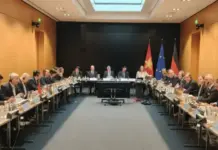












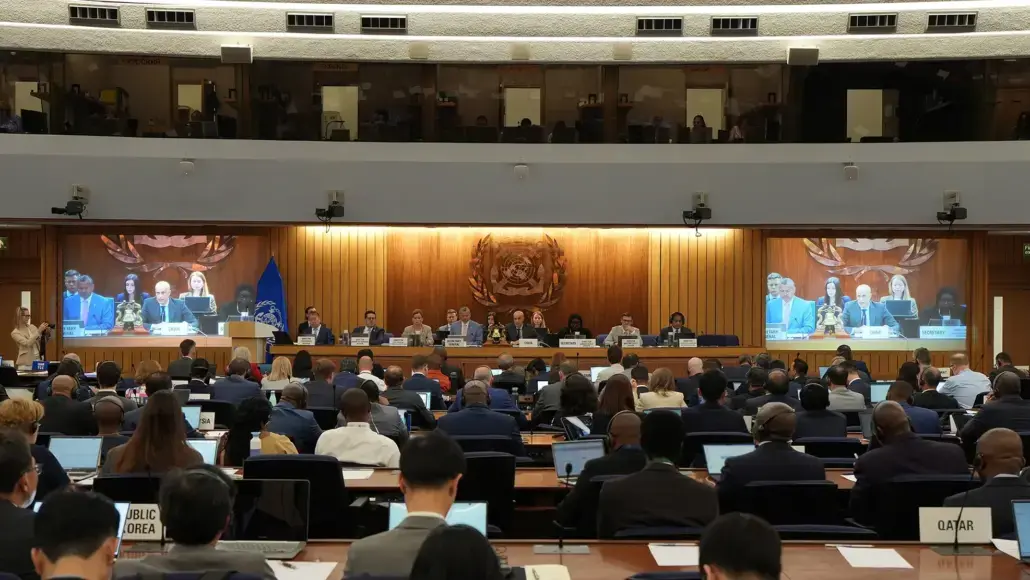
The Council of the International Maritime Organization (IMO) has wrapped up its 137th session by approving a resolution that reinforces the rights and freedoms of navigation recognized under international law while emphasizing the safety of merchant vessels and seafarers operating along key maritime routes.
The decision reflects the Organization’s commitment to protecting navigation through strategically important waterways amid increasing concerns over maritime transport security and the wider implications that geopolitical tensions may have for international trade, shipping operations, crews, and global supply chains. The resolution further states that the right of passage in transit through straits used for international navigation must not be threatened, obstructed, denied, hindered, undermined, or suspended.
In addition, the Council reaffirmed that any traffic regulation measures introduced by coastal States on these key maritime routes must remain fully aligned with the IMO’s regulations as well as the provisions of the International Convention for the Safety of Life at Sea (SOLAS). This legal framework governs vessel safety, navigation systems, accident prevention, and the protection of individuals on board ships.
Focus on Strait of Hormuz and International Cooperation
A significant portion of the 137th session was devoted to maritime transport conditions in the Strait of Hormuz and the surrounding area. During the discussions, the Council condemned attacks against registered civilian merchant vessels in the region and called for a reduction of tensions in the Middle East because of the risks such incidents present to commercial navigation and the safety of vessel crews.
The IMO also stressed that any agreements reached between coastal States must preserve the right of passage in transit for every vessel, without discrimination or obstruction, through the internationally recognized traffic separation system. Adopted by the Organization in 1968, the system establishes circulation routes for vessels crossing the strait to regulate maritime traffic and reduce collision risks.
The Council additionally recalled that passage through the Strait of Hormuz must continue to remain free of tolls and fees under international law and applicable treaties. It requested the Secretary-General of the IMO to examine options for strengthening maritime traffic safety while maintaining engagement with coastal States, other member States, and industry representatives.
According to the Council, this collaborative approach should support a coordinated and sustainable return to unobstructed navigation through one of the world’s principal energy and commercial corridors, while ensuring both vessel safety and the protection and working conditions of seafarers.
Shared Management of Strategic Straits and 2025 Annual Report Approved
During the session, Indonesia, Malaysia and Singapore outlined their experience in jointly administering the Straits of Malacca and Singapore through a cooperative mechanism involving the governments of the coastal States, user countries, and representatives from the maritime industry.
The arrangement enables participating stakeholders to share responsibilities and resources for maintaining navigational aids, improving maritime safety, and responding to operational requirements created by the heavy traffic moving through both straits. The Council encouraged member States and other stakeholders to provide either financial or in-kind contributions to the Navigation Aids Fund and to the IMO Trust Fund for the Straits of Malacca and Singapore to support these straits.
Among the additional outcomes of the 137th session was the approval of the Organization’s annual report for 2025, which outlines the IMO’s principal activities during the year and reviews the implementation of programs covering maritime safety, environmental protection, technical cooperation, and compliance with international treaties.
