















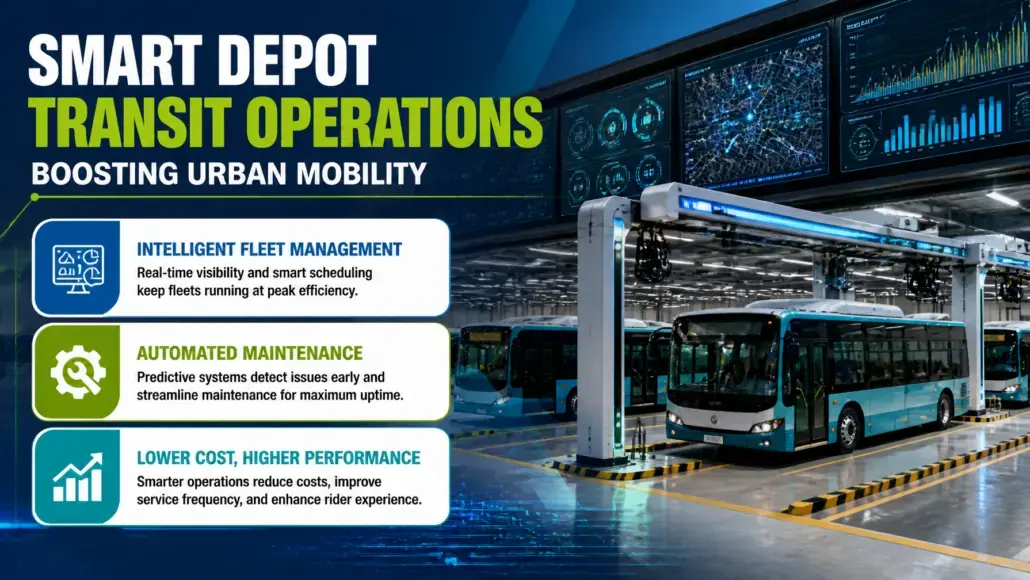
The modern bus depot is no longer just a parking lot with a garage. It has become a sophisticated nerve center for urban mobility. As transit agencies face increasing pressure to improve service frequency while reducing operational costs, the traditional manual processes that once governed depot life are being replaced by high-tech, automated solutions. The transition toward smart depot transit operations represents a fundamental shift in how public transport fleets are managed, maintained, and deployed. Transport Advancement notes that by integrating advanced sensors, robotics, and artificial intelligence into the physical infrastructure of the depot, agencies can achieve a level of operational precision that was previously impossible. This evolution is essential for supporting the next generation of high-frequency, reliable, and sustainable transit services.
The Architectural Blueprint of the Intelligent Depot
A smart depot is defined by its ability to collect and act upon data in real-time. This begins the moment a vehicle enters the facility. Automated gate systems equipped with license plate recognition and RFID technology log the vehicle’s arrival and immediately communicate with the depot management system (DMS). This system, the brain of smart depot transit operations, knows the vehicle’s maintenance history, its current fuel or charge level, and its next scheduled departure. By automating this initial check-in process, agencies can eliminate the bottlenecks that often occur during the morning and evening roll-outs and pull-ins.
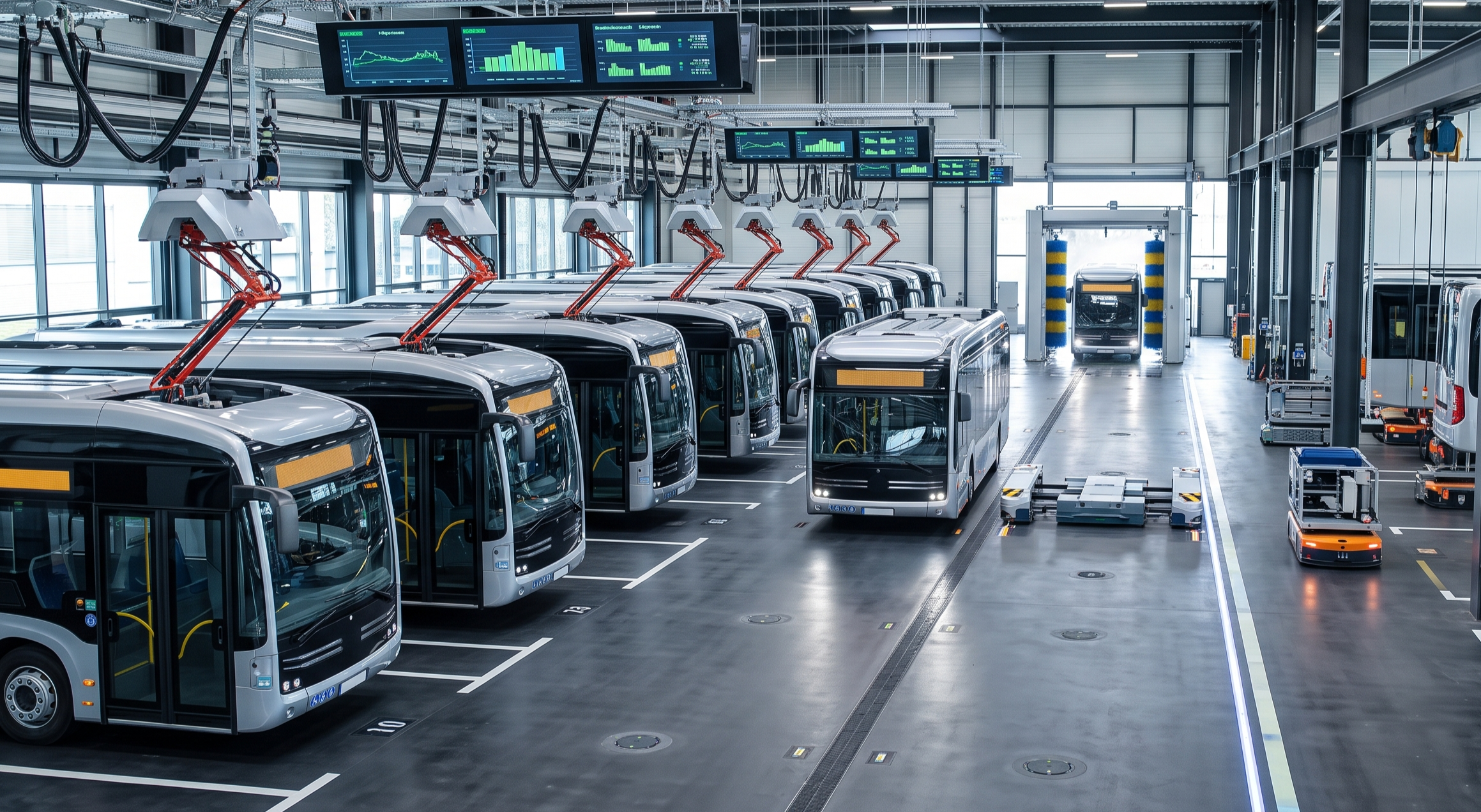
Within the depot, the spatial organization is optimized through the use of automated parking and maneuvering systems. For electric fleets, this includes the precise alignment of vehicles with overhead charging infrastructure or robotic arms. The goal of smart depot transit operations is to maximize the utilization of every square meter of the facility, allowing for larger fleets to be housed in existing urban footprints. This is particularly important in dense metropolitan areas where land is scarce and expensive. The architectural design of the smart depot is therefore as much about digital connectivity as it is about physical space.
Revolutionizing Maintenance Through Predictive Analytics
One of the most significant impacts of smart depot transit operations is the transformation of maintenance from a reactive to a proactive discipline. Modern transit vehicles are equipped with thousands of sensors that monitor everything from engine performance and brake wear to the health of the air conditioning system. As a vehicle enters the smart depot, this data is wirelessly uploaded and analyzed by predictive maintenance algorithms. These tools can identify potential failures before they occur, allowing technicians to perform targeted repairs during scheduled downtime.
This shift away from fixed-interval maintenance—which often results in either unnecessary work or unexpected breakdowns—leads to a dramatic improvement in vehicle uptime. When maintenance is managed through smart depot transit operations, the shop becomes a high-efficiency assembly line where parts and labor are allocated precisely when and where they are needed. This not only reduces costs but also ensures that the fleet is always in peak condition, improving passenger safety and comfort. Furthermore, the use of augmented reality (AR) headsets can guide technicians through complex repairs, further increasing the speed and accuracy of the maintenance process.
Automation and Robotics in Daily Depot Workflows
The daily tasks of cleaning, refueling, and inspecting vehicles are labor-intensive and repetitive, making them ideal candidates for automation. Smart depot transit operations leverage robotics to perform these tasks with a consistency and speed that manual labor cannot match. Automated bus washes and interior cleaning robots can sanitize a vehicle in a fraction of the time, ensuring that the fleet is always ready for service. Similarly, automated fluid-top-up systems and robotic charging arms eliminate the risk of human error, such as failing to properly secure a charging cable.
Beyond the physical tasks, the scheduling and dispatching of drivers and vehicles are also being automated. AI-driven dispatch systems can dynamically adjust assignments based on real-time factors such as traffic conditions, driver availability, and vehicle readiness. This level of coordination is a hallmark of smart depot transit operations. It ensures that the right vehicle is always at the right place at the right time, minimizing deadhead miles and maximizing the efficiency of the entire network. The reduction in manual administrative work allows depot managers to focus on higher-level strategic planning and problem-solving.
The Integration of Energy Management and Depot Operations
As transit fleets transition to electricity, the depot becomes a major energy consumer, necessitating a deep integration between operational schedules and energy management. Smart depot transit operations incorporate sophisticated charging management systems that balance the power needs of the fleet with the capacity of the local grid. These systems can prioritize vehicles based on their departure time, ensuring that the entire fleet is ready for the morning peak while avoiding expensive demand charges.
This integration extends to the management of onsite renewable energy sources and battery storage systems. A smart depot might use a large solar array on its roof to charge vehicles during the day or store energy in second-life batteries for use during the night. By treating the depot as a localized energy hub, smart depot transit operations contribute to the overall sustainability and resilience of the urban infrastructure. The ability to manage energy and mobility in a single, unified framework is the ultimate expression of the smart depot concept. It represents a move toward a circular, self-sustaining model of public transport.
Data Security and the Human Element in Smart Operations
While the focus of smart depot transit operations is often on technology, the human element remains crucial. The transition to an automated environment requires a significant shift in the skills and roles of the depot workforce. Technicians need to be as comfortable with software and data as they are with wrenches and lubricants. Training and upskilling are therefore essential components of a successful smart depot strategy. By empowering workers with digital tools and data, agencies can create a more engaged and efficient workforce that is better equipped to handle the complexities of modern transit.
However, the increased reliance on digital systems also introduces new risks, particularly in the realm of cybersecurity. A smart depot is a potential target for cyberattacks that could disrupt transit services at scale. Robust data security protocols and a security by design approach are vital for protecting the integrity of smart depot transit operations. This includes everything from secure communication channels between vehicles and the depot to the rigorous monitoring of the DMS for any signs of unauthorized access. Protecting the data is just as important as protecting the physical fleet.
The Path Towards Scalability and Urban Integration
The future of smart depot transit operations lies in the ability to scale these solutions across entire metropolitan regions and integrate them into the broader smart city ecosystem. A network of smart depots can communicate with each other to balance fleet loads and maintenance tasks across the city, providing a level of systemic resilience that a single depot cannot achieve. Furthermore, the data generated by smart depots can be shared with urban planners to help them better understand the impact of transit operations on traffic patterns, air quality, and energy consumption.
Ultimately, the move toward smart depot transit operations is about creating a more responsive, efficient, and sustainable public transport system. By embracing the power of automation, data, and robotics, transit agencies can transform their depots from static storage facilities into dynamic engines of urban mobility. The investment in these technologies today will pay dividends for decades to come, ensuring that public transport remains the backbone of the thriving, sustainable cities of the future.
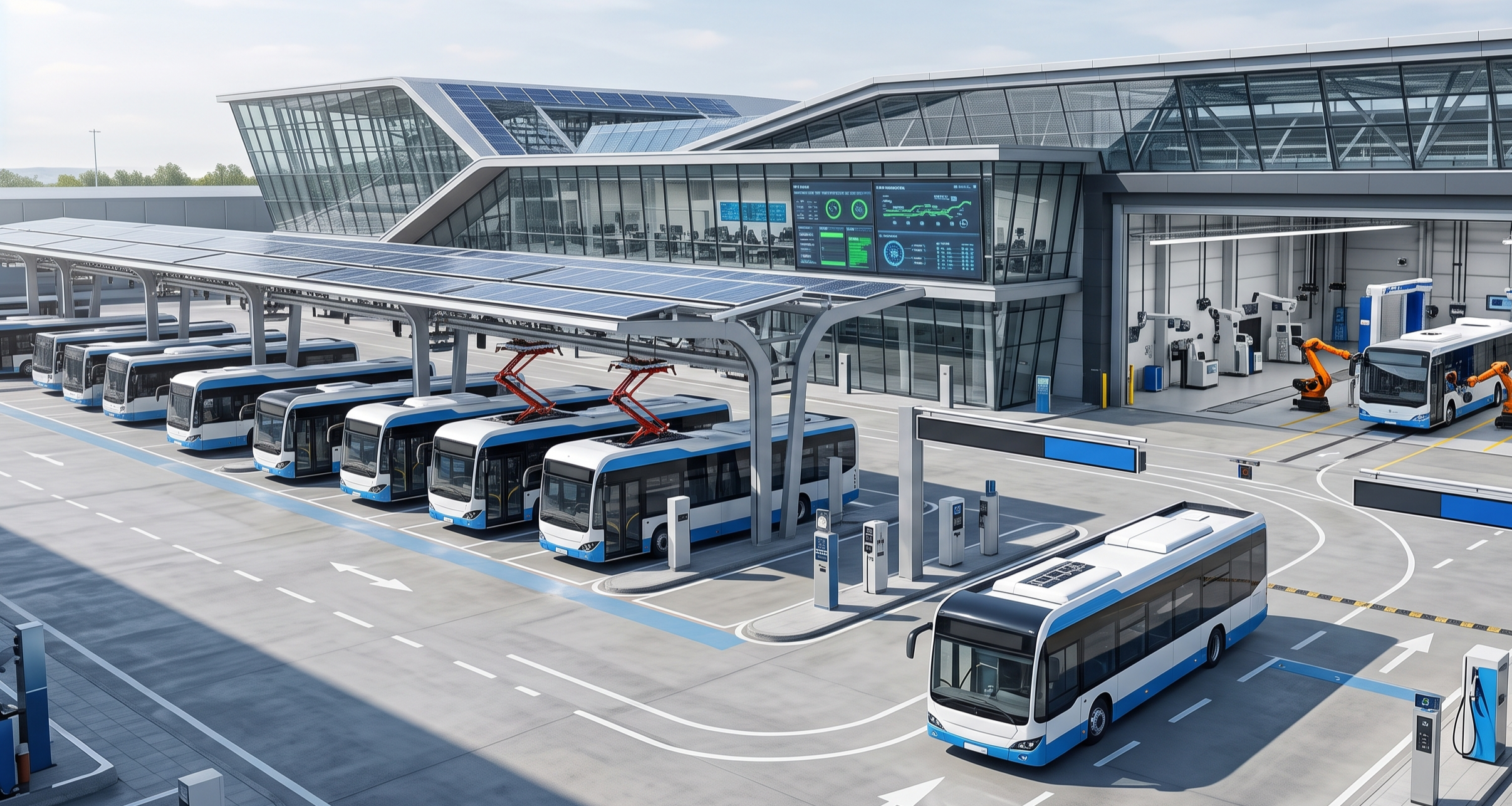
A prime example of smart depot transit operations in action is the pilot of autonomous shunting systems in European bus depots. Traditionally, moving buses from the wash station to the parking bay or the maintenance pit required a team of human drivers, often during the late-night hours when visibility is low and fatigue is high. By implementing autonomous shunting—where vehicles move themselves through the depot without a driver—agencies have been able to reduce the time spent on these routine maneuvers by up to 25%. This not only improves efficiency but also significantly reduces the risk of minor collisions and scrapes that commonly occur in cramped depot environments.
The data generated by these autonomous maneuvers is fed back into the smart depot transit operations platform, allowing for a constant optimization of the depot’s layout and workflow. If the system identifies a recurring bottleneck at the charging station, it can automatically adjust the parking sequence to improve flow. This level of self-optimization is the hallmark of a truly intelligent facility. As the technology matures, we can expect to see lights-out depots where the majority of routine servicing and movement is performed autonomously, allowing human workers to focus on high-value technical and strategic tasks.
Navigating the Transition to Smarter Operations
While building a smart depot from the ground up is the ideal scenario, most transit agencies must find ways to integrate these technologies into existing legacy facilities. Retrofitting a 50-year-old depot with the sensors and connectivity required for smart depot transit operations is a significant engineering challenge. It requires a modular approach, where technologies are implemented in phases to minimize service disruption. For example, an agency might start by installing an automated gate system and a DMS, before moving on to smart charging and predictive maintenance tools.
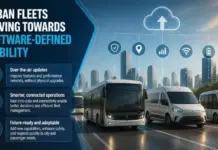
Key to a successful retrofit is the establishment of a robust wireless network within the depot. Without high-speed, low-latency connectivity, the real-time data exchange that powers smart depot transit operations is impossible. Many agencies are choosing to deploy private 5G networks or high-density Wi-Fi 6 arrays to ensure that every vehicle and sensor is always connected. Furthermore, the use of cloud-based software platforms allows agencies to manage multiple depots from a single centralized hub, providing a holistic view of the entire fleet’s health and operational status. The move towards smart depot transit operations is an exapmple of software-defined urban mobility gaining traction in the transport sector. The transition may be challenging, but the efficiency gains provided by smart depot transit operations make it an essential evolution for any modern transit agency.
The smart depot is not just a destination for vehicles. It is the starting point for a better way of moving people. Transport Advancement notesy turning the back-end of transit operations into a high-tech engine of efficiency, we ensure that the front-end—the service provided to the public—is as reliable, clean, and frequent as possible. The investment in smart depot transit operations is an investment in the long-term future of our cities, providing the backbone for a mobility system that is truly fit for the 21st century. As we continue to innovate in this space, the depot will evolve from a hidden operational necessity into a visible symbol of urban progress and digital intelligence.
