


















The global transportation sector is currently undergoing a massive digital overhaul, with the railway industry at the forefront of this evolution. As urban populations swell and the demand for sustainable, low-carbon travel increases, the traditional methods of managing railway traffic are reaching their physical limits. The modernization of high-speed rail networks is no longer just about faster locomotives or sleeker tracks. It is about the brain of the railway—the signaling and control systems. Transport Advancement highlights that ETCS Technology, or the European Train Control System, has emerged as the global standard for this digital transformation, providing the foundation for safer, more efficient, and highly interoperable rail networks that are fit for the 21st century.
The Evolution from Analog to Digital Rail Signaling
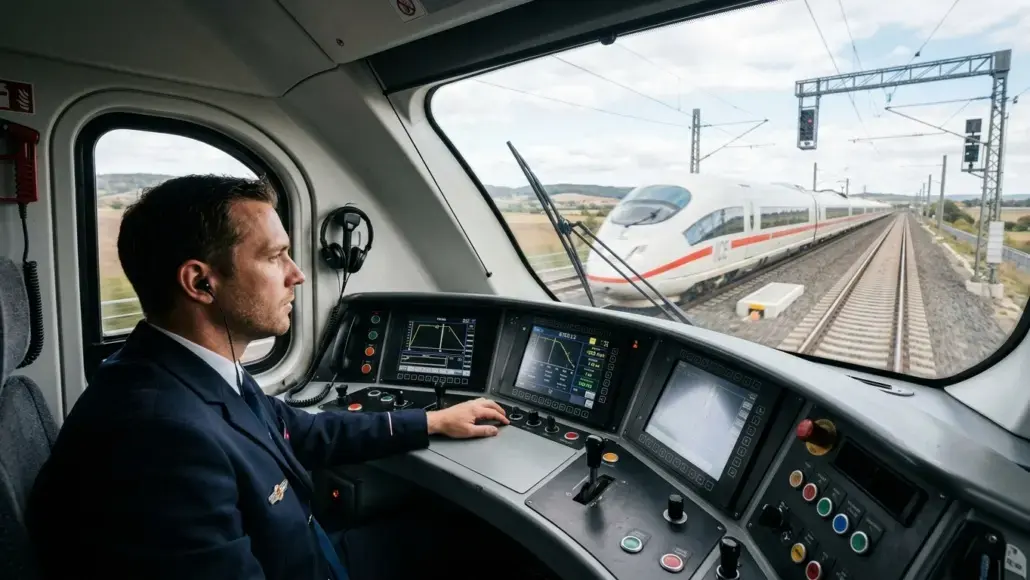
For over a century, railway safety was managed through physical blocks and trackside signals. Drivers relied on visual cues from colored lights along the track, and safety was maintained by ensuring only one train was present in a specific section of track at any time. This legacy system, while robust, is inherently limited. It restricts the number of trains that can run on a line and is susceptible to human error and environmental interference. ETCS Technology replaces these antiquated visual signals with a continuous, digital data link between the train and the control center. By moving the signaling into the driver’s cab via a computer display, the system allows for more precise control and significantly higher speeds without compromising safety.
The Hierarchical Architecture: ETCS Levels 1, 2 and 3
The implementation of ETCS Technology is categorized into different levels, each representing a step toward total digitalization. ETCS Level 1 uses balises—electronic beacons placed between the rails—to transmit data to the train as it passes over them. While an improvement over traditional signals, it is still intermittent. ETCS Level 2, the current standard for high-speed rail modernization, utilizes a continuous radio link (traditionally GSM-R and now moving toward 5G/FRMCS). This allows the train to receive real-time updates on its permitted speed and distance to the next obstacle. The ultimate goal, ETCS Level 3, removes the need for physical trackside equipment entirely, using the train’s own positioning to define moving blocks, which allows trains to follow each other much more closely.
Enhancing Safety through Automatic Train Protection (ATP)
At its core, ETCS Technology is a safety-first system. The primary function of ETCS is Automatic Train Protection (ATP). The system continuously monitors the train’s speed against its movement authority. If a driver exceeds the speed limit or fails to brake for a upcoming restriction, the ETCS system automatically intervenes, applying the brakes to prevent a collision or derailment. This failsafe mechanism is critical for high-speed rail, where human reaction times are often insufficient to manage the immense kinetic energy of a train traveling at 300 km/h. By removing the possibility of human error in signal interpretation, ETCS has fundamentally redefined the safety standards of the global rail industry.
Increasing Network Capacity without New Infrastructure
One of the most compelling economic reasons for adopting ETCS Technology is the ability to increase line capacity without the need for massive civil engineering projects. Building new tracks is prohibitively expensive and environmentally disruptive. However, because ETCS allows trains to run more safely at shorter intervals (headways), a modernized network can handle up to 40% more traffic on the same existing tracks. This is particularly vital for the corridors connecting major European and Asian cities, where the demand for high-speed travel often outstrips the available slots. ETCS essentially turns the existing rail network into a high-frequency system, similar to an urban metro but at much higher speeds.
Digitalization as a Driver of Operational Efficiency
High-speed rail modernization through ETCS Technology also brings a wealth of data that can be used to optimize operations. Because the control center has real-time knowledge of every train’s exact position and speed, it can manage traffic flows more intelligently. If one train is delayed, the system can automatically adjust the speeds of following trains to prevent a stop-and-go effect, which is both frustrating for passengers and energy-intensive. This smart traffic management reduces wear and tear on the infrastructure and rolling stock, lowering maintenance costs and improving the overall reliability of the service.
The Path to Railway Automation and Smart Operations
The modernization of high-speed rail networks through ETCS Technology is a prerequisite for the next major leap: Automatic Train Operation (ATO). By integrating ATO over ETCS, the rail industry is moving toward a future where trains can start, stop, and optimize their own speed profiles with minimal driver intervention. This does not necessarily mean the removal of the driver, but rather a shift in their role toward system supervision. ATO over ETCS ensures that every journey follows the most energy-efficient velocity profile, reducing energy consumption by up to 15% and providing a smoother ride for passengers. This level of precision is only possible with the high-quality, continuous data provided by a modern ETCS backbone.
Overcoming the Challenges of Legacy System Migration
The transition to ETCS Technology is not without its hurdles. Many national rail networks still operate with dozens of different legacy signaling systems that are often incompatible with each other. Modernizing a high-speed network requires a complex migration strategy where trains must be equipped with both the old and new systems during the transition period. This dual-fitment is expensive and requires significant downtime for rolling stock. However, the long-term benefits of a unified, digital system far outweigh these transitional costs. Governments and international bodies like the European Union are providing the regulatory and financial frameworks to accelerate this migration, recognizing that a fragmented rail network is a barrier to economic growth and climate goals.
As we look toward the future of global mobility, the importance of a standardized, digital signaling system cannot be overstated. ETCS Technology has proven itself to be more than just a safety system. It is a platform for innovation that is transforming the railway from a 19th-century mechanical marvel into a 21st-century digital network. Transport Advancement believes that by embracing this technology, the global rail industry is ensuring its place as the backbone of a sustainable, connected, and efficient world.
