



















The vast, intricate web of global maritime transport, often perceived as a world apart, is on the precipice of a technological renaissance. For centuries, the shipping industry has been the bedrock of international trade, moving over 80% of the world’s goods. Yet, its operational methodologies, while evolving, have largely been constrained by the limitations of communication and data infrastructure at sea. This long-standing paradigm is now set to be fundamentally reshaped by the convergent forces of 6G and advanced satellite connectivity. Transport Advancement notes that these technologies, working in profound synergy, promise to usher in an era where ocean-faring vessels are not just steel behemoths, but intelligent, interconnected nodes within a global digital ecosystem. The profound implications of 6G and satellite connectivity in smart maritime transport extend far beyond mere speed upgrades, promising a future defined by unprecedented safety, efficiency, and sustainability.
The Current Landscape: Challenges and Opportunities in Maritime Connectivity
The contemporary maritime industry, despite its critical role, grapples with a unique set of connectivity challenges. Unlike terrestrial operations, the vastness of the oceans presents significant hurdles for consistent and high-bandwidth communication. Vessel operators often contend with patchy, high-latency, and expensive satellite links, which limit the real-time data exchange crucial for modern operational demands. This restricted access to data impacts everything from navigation and logistics to crew welfare and vessel maintenance. Manual processes, delayed information, and reactive decision-making are still prevalent, creating inefficiencies and potential safety hazards.
However, these challenges also create fertile ground for innovation. The imperative for decarbonization, stricter environmental regulations, and the constant pressure to optimize operational costs are driving the industry towards greater digitalization. Existing advancements like the nascent adoption of 5G in port areas and initial satellite broadband solutions have demonstrated the undeniable value of enhanced connectivity. Yet, these are but stepping stones, hinting at the transformative potential that a more robust, pervasive, and intelligent communication framework, primarily through 6G connectivity and advanced satellite connectivity, can unlock for the entire spectrum of smart maritime transport.
Unveiling 6G: The Ultimate Connectivity Layer
As 5G continues its global rollout, the next generation of wireless technology, 6G, is already on the horizon, promising capabilities that extend far beyond simply faster data speeds. Envisioned for deployment around 2030, 6G is designed to be an omnipresent, intelligent, and highly immersive network. It will not only deliver ultra-high bandwidth potentially terabits per second and ultra-low latency, but also integrate advanced features like AI and machine learning natively into the network architecture. This means network decisions, resource allocation, and even data processing will occur at the edge, closer to the source, enabling near-instantaneous responses.
For the maritime sector, 6G’s distinctive features hold particular significance. Its ability to support ubiquitous sensing, where the network itself acts as a sophisticated sensor array, can provide an unprecedented level of environmental awareness for vessels. The promise of truly immersive communication, including haptics and extended reality (XR), could revolutionize remote operations and crew training. Crucially, 6G is designed for seamless integration with non-terrestrial networks, making it an ideal partner for the global reach required by shipping. Unlike 5G, which primarily targets urban and suburban terrestrial applications, 6G’s architectural vision inherently incorporates global coverage and diverse deployment scenarios, including vast oceanic expanses. This capability is pivotal for realizing the full potential of 6G and satellite connectivity in smart maritime transport.
The Power of Satellite Connectivity: Bridging the Gaps
While 6G provides the intelligent, high-density, and low-latency backbone, its terrestrial nature means it cannot cover the entire planet, particularly the vast stretches of open ocean. This is where advanced satellite connectivity becomes indispensable. Recent years have seen a revolution in satellite technology, driven by constellations of Low Earth Orbit (LEO) and Medium Earth Orbit (MEO) satellites, alongside traditional Geostationary Earth Orbit (GEO) satellites. LEO constellations, like Starlink and OneWeb, orbit much closer to Earth, drastically reducing latency and increasing bandwidth availability compared to traditional GEO satellites. This makes them ideal for applications requiring near real-time communication.
The synergy between these different types of satellites and terrestrial 6G networks is the true game-changer. GEO satellites offer broad, stable coverage for foundational services, while LEO and MEO constellations provide high-speed, low-latency links that can rival terrestrial broadband. When integrated with 6G, this creates a hybrid network that offers pervasive, resilient, and ultra-reliable connectivity anywhere on the globe. This layered approach ensures that vessels, even in the most remote maritime zones, have access to the kind of high-performance network infrastructure required for advanced applications. Such robust satellite connectivity is not merely an enhancement. It is the critical enabler for fully realizing the vision of smart maritime transport.
Synergistic Transformation: How 6G and Satellite Connectivity Redefine Maritime Transport
Transport Advancement highlights that the convergence of 6G’s intelligent, ultra-fast capabilities with the global reach of advanced satellite networks presents a profound transformation across every facet of the maritime industry. This powerful combination will redefine operational paradigms, enhance safety, and drive environmental sustainability.
Real-time Vessel Tracking and Navigation Enhancement
The days of relying on periodic updates or limited navigational aids are rapidly fading. With robust 6G connectivity extending to coastal areas and seamless satellite connectivity across the open sea, vessels will achieve unprecedented levels of real-time vessel tracking. This means continuous, high-precision positioning data, shared instantaneously with shore-based operations centers and other vessels. The implications for safety are immense, enabling advanced collision avoidance systems, dynamic route optimization based on real-time weather and sea conditions, and proactive hazard identification. This level of granular data will also significantly boost fuel efficiency by allowing vessels to follow the most economical routes and speeds, adapting instantly to environmental variables.
Autonomous Shipping and Remote Operations
Perhaps the most revolutionary impact of 6G and satellite connectivity in smart maritime transport will be on the development and deployment of autonomous shipping. Fully autonomous vessels require constant, ultra-low latency communication for critical command and control functions, data fusion from myriad sensors (radar, lidar, cameras, sonar), and complex AI-driven decision-making. 6G’s inherent support for AI and its ability to process vast amounts of data at the edge will be crucial for these vessels to perceive their environment, navigate complex waterways, and interact with other maritime traffic safely. Remote control centers, leveraging immersive technologies enabled by 6G, can oversee fleets of unmanned ships, intervening only when human oversight is absolutely necessary. This transition promises to reduce human error, enhance safety in hazardous environments, and potentially lower operational costs.
Maritime IoT and Data-Driven Decision Making
The foundation of smart maritime transport lies in pervasive sensing and data collection, often referred to as maritime IoT. With 6G and satellite networks, virtually every component on a vessel engines, pumps, cargo containers, structural elements can be fitted with smart sensors. These sensors will continuously transmit vast streams of operational data, health diagnostics, and environmental parameters in real-time. This influx of information, processed and analyzed by AI, enables highly accurate predictive maintenance, identifying potential failures long before they occur, thus minimizing downtime and costly repairs. Furthermore, it allows for unparalleled supply chain visibility, tracking cargo conditions from origin to destination and optimizing logistics down to the individual package. This pervasive data-driven approach will transform reactive management into proactive, intelligent operations.
Enhanced Port Operations and Smart Ports
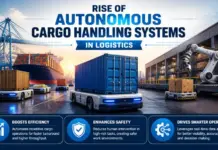
The benefits of advanced connectivity extend onshore, fundamentally reshaping port operations into what are known as smart ports. With high-speed 6G connectivity, ports can implement widespread automation, from autonomous cranes and cargo handling equipment to intelligent traffic management systems for vessels and trucks. The seamless exchange of data between arriving vessels (powered by satellite), port infrastructure, and land-based logistics networks will significantly reduce turnaround times, alleviate congestion, and optimize resource allocation. This integrated ecosystem, where vessels and ports are digitally synchronized, promises to enhance efficiency, reduce emissions from idling ships, and streamline the entire global trade process.
Crew Welfare and Communication
Beyond operational efficiencies, 6G and satellite connectivity in smart maritime transport will profoundly impact the lives of seafarers. Access to high-bandwidth internet will become standard, enabling reliable communication with family, access to online educational resources, and telemedicine services. This improved connectivity can significantly boost crew morale, reduce feelings of isolation, and ensure better mental and physical well-being. Furthermore, it facilitates continuous professional development and training, ensuring that seafarers are equipped with the skills needed to manage increasingly sophisticated vessels and technologies.
Addressing Challenges and Ensuring a Seamless Transition
While the vision of a digitally transformed maritime sector powered by 6G and satellite connectivity is compelling, its realization is not without significant challenges. Cybersecurity emerges as a paramount concern. An interconnected, data-rich environment presents a larger attack surface, making robust cyber defenses, encryption, and resilient network architectures absolutely critical to protect against malicious actors who could compromise navigation, control systems, or sensitive data.
Furthermore, the lack of standardized regulatory frameworks across different maritime jurisdictions poses a complex hurdle. International cooperation will be essential to develop unified regulations for autonomous shipping, data privacy, and spectrum allocation for 6G and satellite services. Significant investment in infrastructure both at sea (new antenna systems, onboard digital platforms) and ashore (port upgrades, 6G deployment) will be required from governments, private companies, and industry consortia. Finally, bridging the skills gap through extensive training and education programs will be vital to ensure that the maritime workforce is equipped to operate and maintain these advanced digital systems.
The Future of Maritime Transport
The convergence of 6G and satellite technologies is not just an incremental upgrade. It represents a foundational shift that will redefine the future of maritime transport. We are moving towards an era where ships are digitally aware entities, capable of intelligent self-navigation, predictive self-maintenance, and seamless integration into a globally connected supply chain. The insights gleaned from real-time data will unlock unprecedented efficiencies, significantly reduce operational costs, and most importantly, elevate safety standards to new heights.
This transformative wave will also play a critical role in the industry’s drive towards sustainability. Optimized routing, reduced fuel consumption through precise navigation, and continuous monitoring of emissions will contribute significantly to a greener shipping industry. New business models will emerge, driven by the ability to offer highly specialized and transparent services, from autonomous cargo delivery to advanced maritime logistics and data analytics.
Conclusion
The journey towards a truly smart, connected, and autonomous maritime transport system is being charted by the rapid advancements in communication technologies. 6G and satellite connectivity in smart maritime transport are not merely buzzwords. They represent the essential pillars upon which the industry’s future will be built. From enabling ultra-precise real-time vessel tracking and the gradual rollout of autonomous shipping to fostering robust maritime IoT ecosystems and transforming ports into intelligent hubs, these technologies promise to unlock efficiencies and safety levels previously unimagined. While challenges such as cybersecurity and regulatory harmonization demand concerted effort, the trajectory is clear. Transport Advancement believes that global maritime industry is poised to navigate into a new era of digitalization. Intelligent connectivity transforms the vast blue expanses into a seamlessly integrated and highly optimized network, ensuring a safer, more sustainable, and profoundly more efficient future for global trade.
