







In preparation for co-hosting the prestigious 2030 FIFA World Cup alongside European neighbors Spain and Portugal, Morocco is orchestrating a massive financial commitment to its national infrastructure. Central to this monumental effort is the rollout of transport projects worth USD 40 Billion, a sweeping initiative heavily concentrated on modernizing the country’s aviation capabilities, expanding its railway networks, and drastically increasing the operational fleet of its national carrier, Royal Air Maroc. Although the upcoming global football tournament serves as a primary catalyst for these developments, government officials and media reports emphasize that these transport projects worth USD 40 Billion are fundamentally designed to achieve enduring national progress rather than serving as a fleeting response to a single sporting event.
Emphasizing this broader perspective, Moroccan Transport Minister Abdel Samad Qayouh noted, “These investments are part of a strategic vision that extends beyond the sporting event itself, aiming to create a long-term economic and logistical shift.”
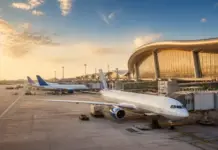
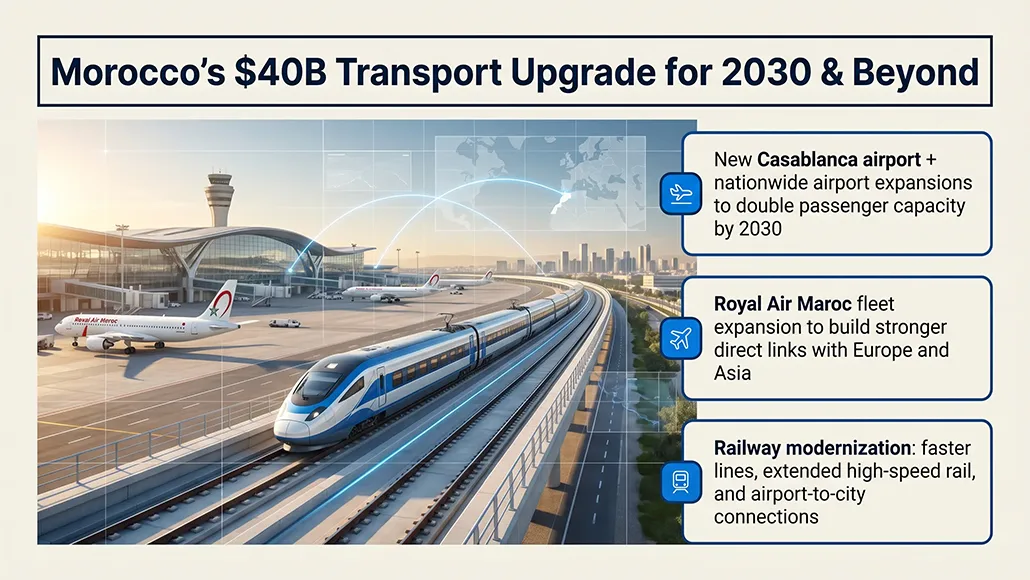
A massive proportion of the overall funding from these transport projects worth USD 40 Billion is dedicated strictly to the nation’s aviation sector, which leaders have identified as a cornerstone for future national development. Specifically, financial blueprints outline more than $4 billion slated for comprehensive expansions of numerous prominent airports spread across the nation, including the construction of a brand-new international airport in Casablanca. By initiating these upgrades, the country aims to completely double its current annual passenger handling capacity, soaring from the present 40 million travelers to an impressive 80 million by the start of the 2030 tournament. Ultimately, this aviation overhaul is projected to solidify Morocco’s reputation as an essential transit gateway bridging North Africa, sub-Saharan Africa, and the European continent. Simultaneously, the flagship airline Royal Air Maroc is embarking on an unprecedented fleet expansion campaign, pushing its current inventory of approximately 70 airplanes to nearly 200 operational aircraft by the year 2035. Costing an estimated $25 billion, this airline growth heavily prioritizes creating direct flight connections with lucrative European and Asian commercial markets, further cementing Casablanca’s status as an international aviation nexus.
Beyond the skies, the terrestrial transportation infrastructure is equally scheduled to receive a massive influx of capital through these transport projects worth USD 40 Billion. Planners have officially reserved nearly $10 billion strictly for overhauling the national railway systems. This funding will finance critical improvements to currently active rail lines, push forward the geographical expansion of the country’s high-speed rail framework, and drastically enhance the vital transit connections linking major airports directly to bustling urban metropolitan centers. These terrestrial improvements are deliberately intended to streamline the massive influx and movement of football fans throughout the World Cup festivities while simultaneously forging a more cohesive and deeply integrated domestic transport network for everyday citizens.
Highlighting these specific enhancements, the cited government report explained, “On the ground, the railway sector is also witnessing an investment boom of nearly $10 billion, including the development of existing lines, the expansion of the high-speed rail network, and its connection to airports and major cities to facilitate the movement of fans during and after the World Cup.”
The report further stated, “These mega projects, part of a comprehensive investment vision of nearly $40 billion, are not designed solely to serve a global sporting event, but rather reflect a strategic direction towards strengthening Morocco’s position as an economic and logistical hub between Africa, Europe, and the world.”
